Eukaryote
noun and adjective (n. / adj.)
Definition
A eukaryote is an organism whose cells possess a true cell nucleus surrounded by an envelope with DNA carried by chromosomes. All animals, all plants and algae, and all fungi are eukaryotes.
Eukaryotes are a group of complex unicellular or multicellular organisms whose genetic information is organized within membrane-bound nuclei.
A eukaryote:

Every living organism belongs to one of the following two groups: eukaryotes or prokaryotes. Cell structure determines which group an organism belongs to. Eukaryotes are organisms whose cells have a nucleus and other organelles enclosed by a plasma membrane. Prokaryotes lack intracellular compartments.
Explanations
The eukaryote has cells containing complex membrane-enclosed structures (organelles). It thus differs from the prokaryote. eukaryotic cells are large (about 10 to 100 µm) and complex. They contain mitochondria, chloroplasts, and other structures (organelles) that, along with a defined nucleus, are absent in prokaryotic cells (protocytes).
Eukaryotes are cells commonly identified by the presence of a nucleus. The eukaryote group is one of the three domains of life (bacteria and archaea being collectively called prokaryotes) and encompasses unicellular organisms as well as all multicellular life.
Eukaryotes are more formally known under their domain taxon: Eukaryota. See also a protoeukaryote, which is one of the earliest eukaryotes, and a picoeukaryote, measuring less than 3 µm in size.
Cross-sectional diagram of a eukaryotic mitochondrion:

In simplified terms, a eukaryote has chromosomes enclosed within a nucleus and possesses organelles such as the mitochondrion.
Structure and shape are imparted to eukaryotic cells by the cytoskeleton, which also serves to aid locomotion. It is composed of microtubules, intermediate filaments, and microfilaments.
A eukaryotic animal cell:
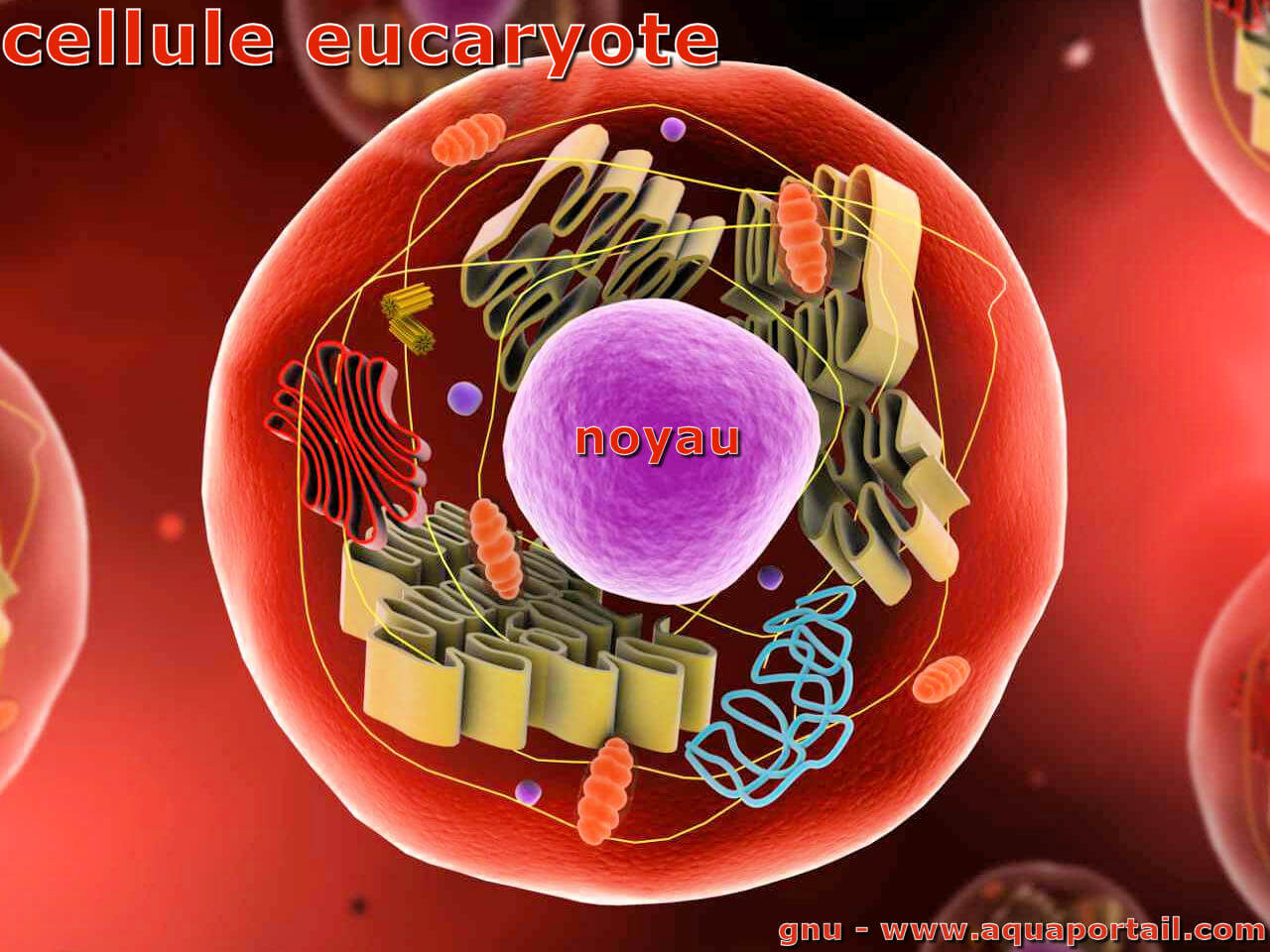
The eukaryotic cell is distinguished by the presence of a nucleus (here from an animal). The presence of complex cellular structures in eukaryotes allows for specialized functions and greater cellular compartmentalization, promoting their diversity of biological activities.
✅ The major distinction between eukaryotes and prokaryotes lies in the presence or absence of a nucleus. Prokaryotic cells, such as those of bacteria, lack a true nucleus, and their DNA lies freely within the cell. In contrast, eukaryotic cells, such as those of plants and animals, possess a well-defined nucleus that protects the DNA, as well as various internal organelles.
Synonyms, antonyms
Spanish translation: eucariota
5 synonyms (similar meaning) for "eukaryote":
- eucaryote
- Eukaryota
- eukaryotic
- organism
- protoeukaryote
1 antonym (opposite meaning):
Related words and expressions to EUKARYOTE are directly connected by general or specific meaning.
The word EUKARYOTE is listed on page 1 of words starting with E in the dictionary glossary.
Related to "eukaryote"
eukaryotic

Eukaryotic describes that which possesses the characteristics of eukaryotes, and thus refers to living organisms whose cells have a structured nucleus.
eukaryotic flagellum

A eukaryotic flagellum (vs. prokaryotic) is a flexible, whip-like cellular organelle composed of an axoneme and a kinetosome, used for locomotion in motile...
heterokaryote
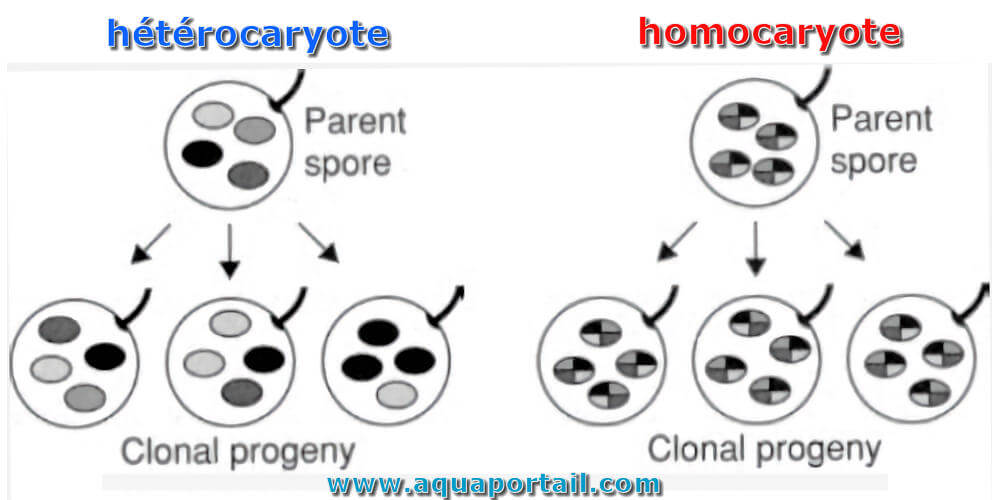
In biology, heterokaryotic describes a cell possessing at least two nuclei of different genetic origins, pertaining to heterokaryons and heterokaryotes.
E=mc2
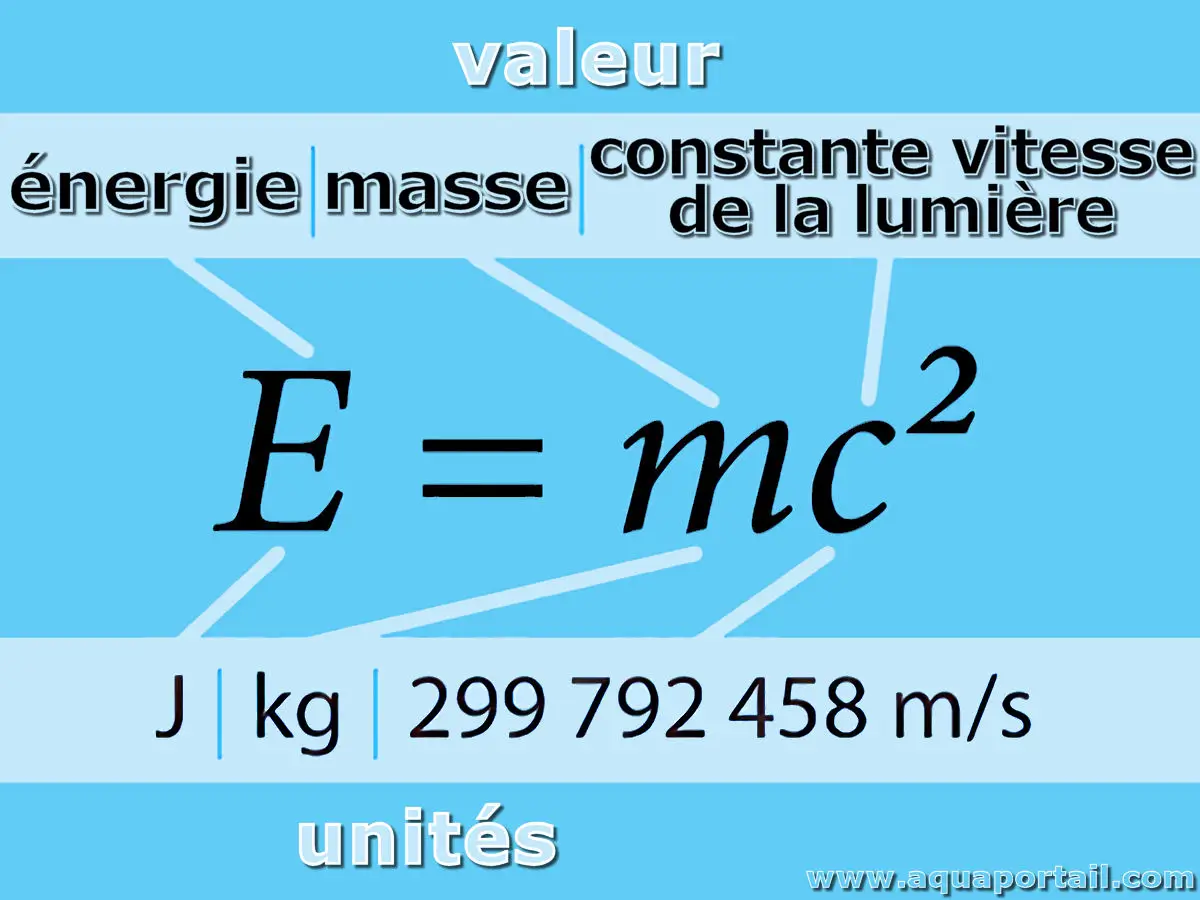
The formula E=mc2 (E = m. c²) is a mass-energy equivalence equation according to the theory of relativity developed by Albert Einstein. It expresses that...
Simple summary
A eukaryote is an organism characterized by cells possessing a true nucleus bounded by a nuclear membrane, as well as other membrane-bound organelles. This structural organization distinguishes eukaryotes from prokaryotes, which lack a nucleus and membrane-bound organelles. Eukaryotic organisms can be unicellular or multicellular and include groups such as animals, plants, fungi, and protists.
