Estuary
noun (n.)
Definition
An estuary is the mouth of a river, a coastal body of water created by a watercourse flowing into the marine environment. This more or less funnel-shaped terminal section of a river is characterized by the predominance of marine phenomena over fluvial ones. An estuary differs from a delta by having a single channel rather than multiple channels.
Consequently, an estuary is a generally widened section of a freshwater river near its outlet where the influence of the marine body of water into which it flows is felt. The boundary line is the mean tide level, delimiting an amphibiotic zone.
A river estuary:
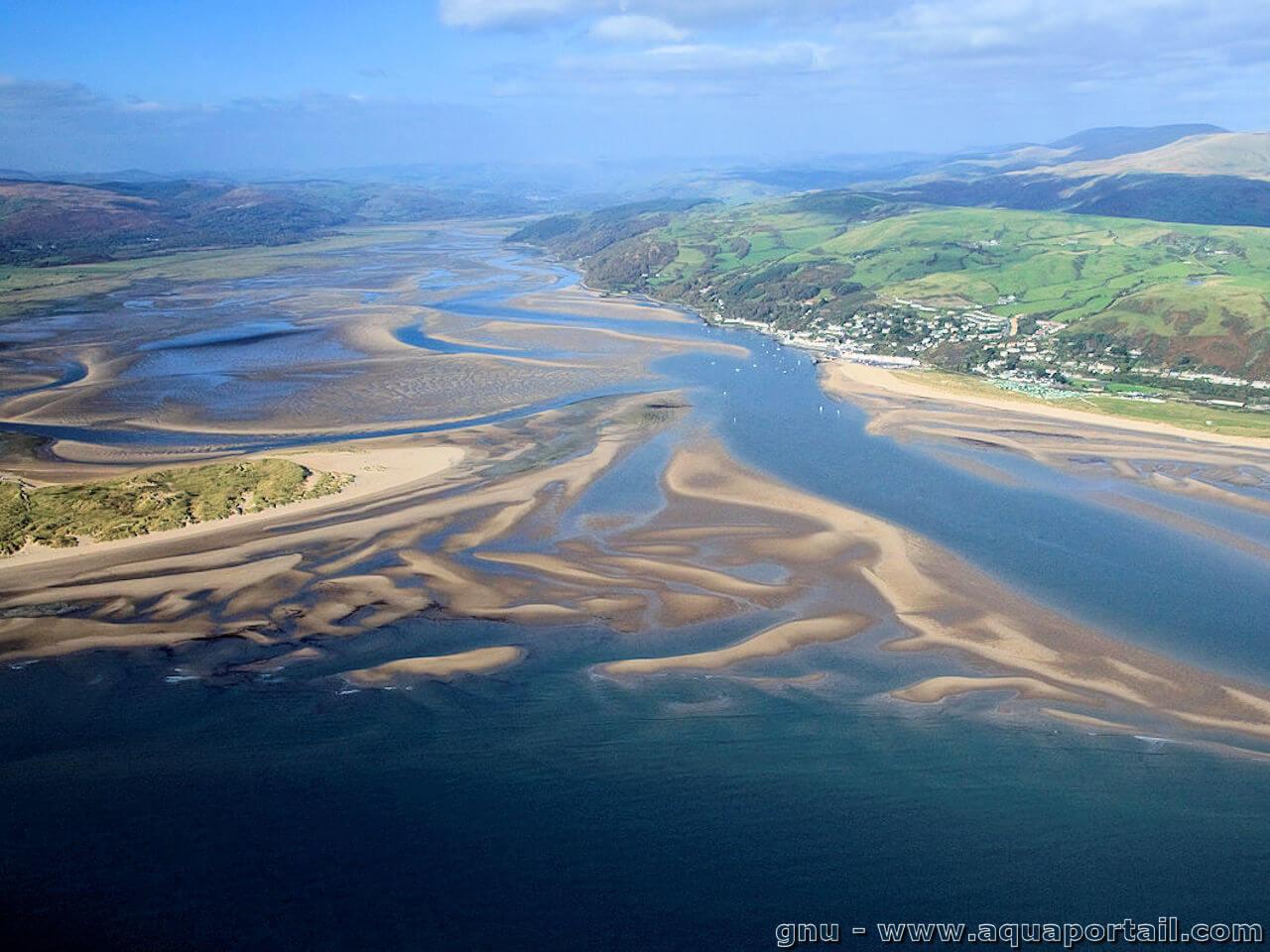
An estuary is a partially enclosed coastal body of water with brackish water resulting from the mixing of freshwater from a river flowing into it and an open connection to the sea.
Explanations
Organisms living in an estuary are subject to salinity variations created by tides.
Estuaries form a transition zone between freshwater and marine environments. They are subject both to marine influences such as tides, waves, and the influx of saltwater, and to freshwater influences such as freshwater flows, sediments, and alluvium.
Inputs of seawater and freshwater provide high levels of nutrients both in the water column and in sediments, making estuaries among the most productive natural habitats in the world.
Most existing estuaries were formed during the Holocene epoch, with the flooding of eroded valleys or scoured glacial troughs when sea level began to rise about 10,000 to 12,000 years ago. Estuaries are generally classified according to their geomorphological features or water circulation patterns.
They may have several different names, such as bays, gulfs, harbors, lagoons, or inlets, although some of these water bodies do not strictly meet the above definition of an estuary and may be entirely saline.
The shores of many estuaries are among the most densely populated areas in the world, with about 60% of the global population living along estuaries and coasts.
As a result, many estuaries suffer degradation from numerous factors, including soil sedimentation, erosion, deforestation, overgrazing, and other poor agricultural practices, as well as overfishing, drainage and filling of wetlands, eutrophication due to excess nutrients from sewage and animal waste, and pollutants including heavy metals, polychlorinated biphenyls, radionuclides, and hydrocarbons from wastewater discharges.
The construction of dikes or dams for flood control or water diversion also considerably alters estuaries.
The word "estuary" is derived from the Latin word aestuarium meaning "tidal inlet of the sea". Many definitions have been proposed to describe an estuary. The most widely accepted definition is: a semi-enclosed coastal body of water that has a free connection with the open sea, and within which seawater is measurably diluted with freshwater derived from land drainage.
However, this definition excludes a number of coastal water bodies such as coastal lagoons and brackish seas.
A more comprehensive definition of an estuary is a semi-enclosed aquatic environment connected to the sea up to the tidal limit or the limit of salt intrusion and receiving freshwater runoff, though the freshwater input need not be perennial; the connection to the sea may be closed for part of the year and tidal influence may be negligible.
This broad definition also includes fjords, lagoons, river mouths, and tidal creeks.
An estuary is a dynamic ecosystem connected to the open sea through which seawater enters with the rhythm of the tides. Seawater entering the estuary is diluted by freshwater flowing from rivers. The dilution pattern varies among estuaries and depends on freshwater volume, tides, and water evaporation within the estuary.
The most important variable characteristics of estuarine water are dissolved oxygen concentration, salinity, and sediment and alluvial load. There is extreme spatial variability in salinity, ranging from near zero at the tidal limit of tributaries to 3.4% at the mouth of the estuary.
At any given point, salinity varies considerably over time and across seasons, making it a challenging environment for organisms. Sediments often form intertidal mudflats that are extremely difficult to colonize. No attachment points exist for algae, so vegetation-based habitat is not established.
Sediments can also clog the feeding and respiratory structures of species, and special adaptations exist among mudflat species to cope with this problem. Finally, variations in dissolved oxygen (dioxygen) can cause problems for life forms.
Nutrient-rich sediments from artificial sources can promote primary production life cycles, eventually leading to the depletion of dissolved oxygen in the water, with the possible development of hypoxic or anoxic environments.
Estuaries provide habitats for a large number of organisms and support very high productivity. Estuaries serve as habitats for many fish nurseries, depending on their location worldwide, such as salmon and sea trout, and overall for amphidromous, anadromous, or potamodromous species, the estuary facilitates fish migration.
Migratory fish take advantage of the estuary, foreshore, or tidal creek for their diadromous migration.
Synonyms, antonyms
Spanish translation: estuario
4 synonyms (similar meaning) for "estuary":
0 antonyms (opposite meaning).
Related words and expressions to ESTUARY are directly connected by general or specific meaning.
The word ESTUARY is listed on page 1 of words starting with E in the dictionary glossary.
Related to "estuary"
foreshore

A foreshore is a coastal zone subject to tidal variations, under the influence of the rise and fall of the tides, in the intertidal or tidal zone.
E=mc2

The formula E=mc2 (E = m. c²) is a mass-energy equivalence equation according to the theory of relativity developed by Albert Einstein. It expresses that...
ebb tide
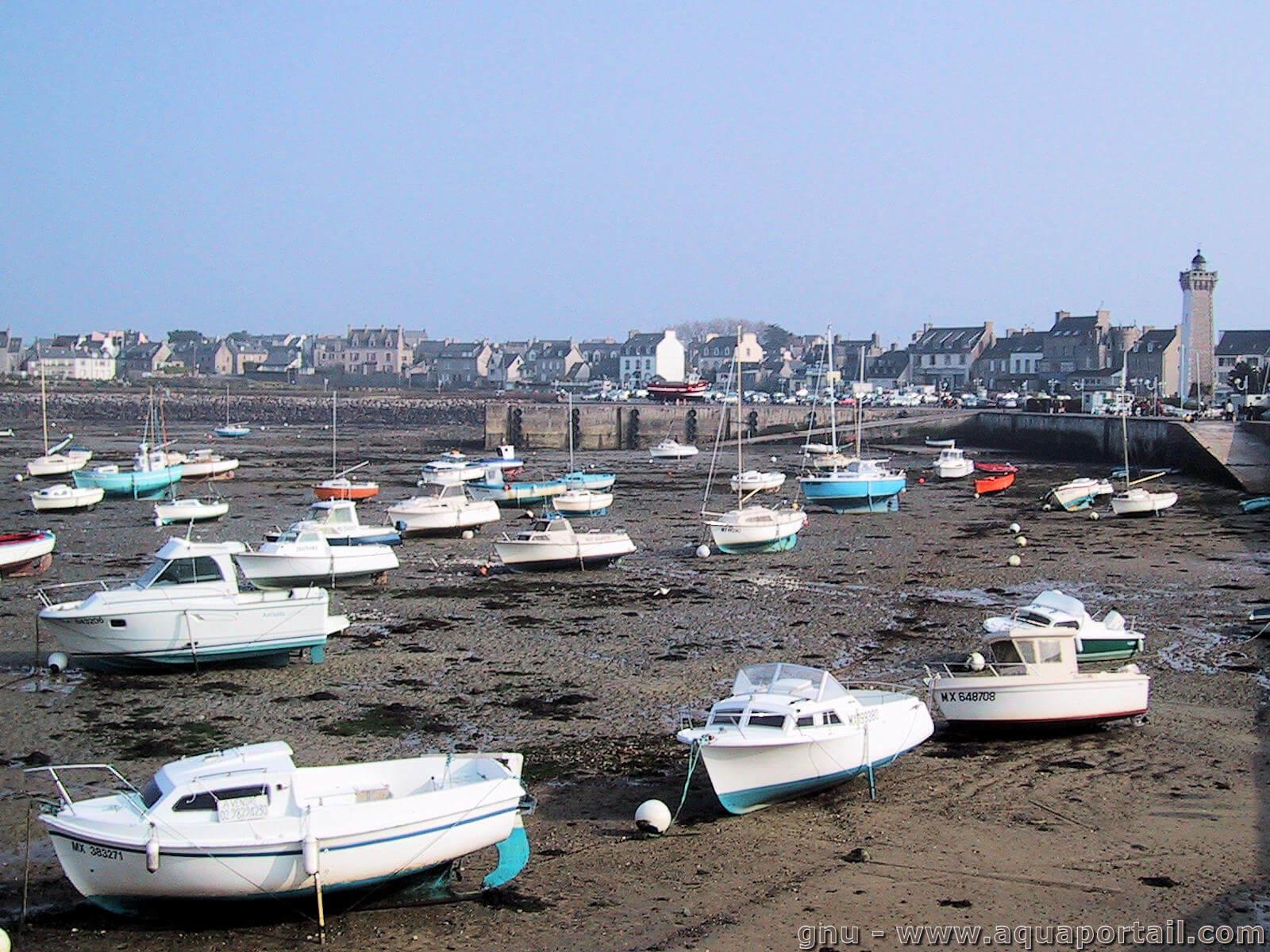
Ebb tide designates the outgoing, falling tide of the sea that begins at high water, also known as reflux.
Ecdysozoa

Ecdysozoans, of the superphylum Ecdysozoa, are protostomes undergoing ecdysis within Bilateria.
Simple summary
An estuary is a coastal area where freshwater from rivers and streams meets and mixes with saltwater from the ocean. This environment is characterized by high biodiversity and provides an important habitat for various species. Estuaries serve as essential breeding and feeding grounds for many aquatic organisms and are vital to maintaining ecological balance.
