Eutrophication
noun (n.)
Definition
Eutrophication is an ecosystem response to the excessive addition of nutrients. This environmental problem causes strong growth and an increase in certain plant species. This generally leads to a considerable decrease in species richness (loss of biodiversity).The stages of eutrophication and dystrophication:

Eutrophication is an excessive accumulation of nutrients in an aquatic ecosystem. These accumulations progress in stages according to the diagram above. If the phenomenon continues, the environment loses its aquatic state to become terrestrial: it undergoes dystrophication.
Stages and diagram
Eutrophication of a closed aquatic environment goes through various stages: oligotrophic, mesotrophic, mesoeutrophic, and eutrophic. Carbonaceous, nitrogenous, and/or phosphatic matter in stagnant water first causes plant proliferation and ultimately leads, after the death and degradation of the plants, to the deoxygenation of the environment.
For example, eutrophication occurs in freshwaters with the leaching of many fertilizers, in particular nitrogen (nitrates, nitrites) and phosphate from manure and agricultural industry fertilizers. The result is a heavy proliferation of algae. This can be noticed in dark waters that smell considerably foul. Eutrophication can lead to hypoxia, a lack of oxygen in the water.
Eutrophication, or hypertrophication, of waters is an artificial over-fertilization of waters resulting from agricultural and urban pollution. This results in a proliferation of algae with a decrease in dissolved oxygen content in the deep layers following the decomposition of the dead organic matter thus produced, and increased sedimentation.
Eutrophication causes accelerated aging of continental surface waters. In the case of a lake, the environment becomes eutrophic: see eutrophic lake.
✅ Eutrophication is rarely a natural process. During the siltation of a lake, more nutrients may enter the lake. In the past, nutrient inputs increased due to climate changes, such as in Scandinavian lakes after the retreat of glaciers at the end of the last glacial period.
Ultimately, it is an accumulation of organic matter leading to oxygen depletion. This phenomenon results from an excessive enrichment of water in mineral salts, which has the consequence of accelerating the multiplication of certain organisms such as unicellular algae.
The word eutrophication comes from Greek, meaning "well-nourished". It is therefore not synonymous or equivalent to pollution. It simply denotes the natural or artificial process of adding nutrients to bodies of water and the effects resulting from this addition.
Eutrophication is part of the natural aging process of lakes that occurs independently of human activities, the difference being the duration: thousands of years by natural means, a few decades by humans.
Consequences
Eutrophication is an excessive enrichment of an aquatic environment giving rise to a production of organic matter too abundant to be entirely eliminated by self-purification processes. This enrichment leads to a proliferation of aquatic vegetation and a decrease in the oxygen content of this environment.
biomass development in an ecosystem is limited, most of the time, by the scarcity of certain chemical elements, such as nitrogen in continental environments and phosphorus in marine ones, which primary producers need to grow and which we therefore call limiting factors.
Point-source water pollution, from urban effluents, or diffuse pollution, from agricultural or atmospheric pollution, can supply significant amounts of these limiting elements. The result is an increase in primary production (photosynthesis) with major consequences on the composition, structure, and dynamics of the ecosystem.
Eutrophication generally produces an increase in biomass and an impoverishment of diversity.
In terrestrial ecosystems, the plants that come to dominate are ecologically pioneer herbaceous species, often cosmopolitan, with a high reproduction rate, unable to compete in oligotrophic (nutrient-poor) or mesotrophic environments. In aquatic ecosystems, with eutrophication, unicellular algae begin to proliferate, generally green algae.
In the oceans, local eutrophication, sometimes due to natural causes, can cause a red tide or a white tide: the population explosion of a single species of algae, which in many cases causes the poisoning of large fauna.
The algal bloom that accompanies the first phase of eutrophication causes turbidity that prevents light from penetrating to the bottom of the ecosystem. As a result, photosynthesis, producing free oxygen, is impossible at the bottom, while increasing the oxygen-consuming metabolic activity (aerobic respiration) of decomposers, which begin to receive excess organic matter produced near the surface.
In this way, oxygen is rapidly depleted by aerobic activity and the environment quickly becomes anoxic. The radical alteration of the environment that these changes entail renders the existence of most species that previously formed the ecosystem unviable.
✅ A reduced soil zone describes the eutrophication of a soil layer in a deoxygenated, chemically reduced state (as indicated by a low redox potential). It is a zone formed in flooded rice paddy soils, a few centimeters (about an inch) below the soil surface, which is oxidized. The solubility of most trace element cations and phosphorus increases in the reduced soil zone. Any nitrate present in this zone is denitrified, thus involving a gaseous loss of nitrogen.
Solutions
The solution to eutrophication is de-eutrophication (its reverse process, its reversal). Lagooning of the affected area with an ecological treatment basin allows biorehabilitation of the aquatic ecosystem. All anthropogenic pollution must first be combated.
Thus, to combat eutrophication, interventions are needed to reduce nutrient inputs into waters (reduction of fertilizers in agriculture, purification of civil and industrial waste, treatment of wastewater from crops using sequestering agents and phytoremediation facilities).
🚩 Global warming is expected to contribute to aggravating the phenomenon of eutrophication. Indeed, an increase in surface water temperature (a phenomenon observable in summer, for example) decreases the solubility of gases (and therefore also of oxygen).
Synonyms, antonyms
Spanish translation: eutrofización
1 synonym (similar meaning) for "eutrophication":
1 antonym (opposite meaning):
Related words and expressions to EUTROPHICATION are directly connected by general or specific meaning.
The word EUTROPHICATION is listed on page 1 of words starting with E in the dictionary glossary.
Related to "eutrophication"
eutrophic
A eutrophic environment refers to water subject to the phenomenon of eutrophication, as opposed to oligotrophic, and generally describes a lake, a eutrophic...
remediation

Remediation (pollution cleanup) is the process or result of removing pollutants from an environment.
bio-purification
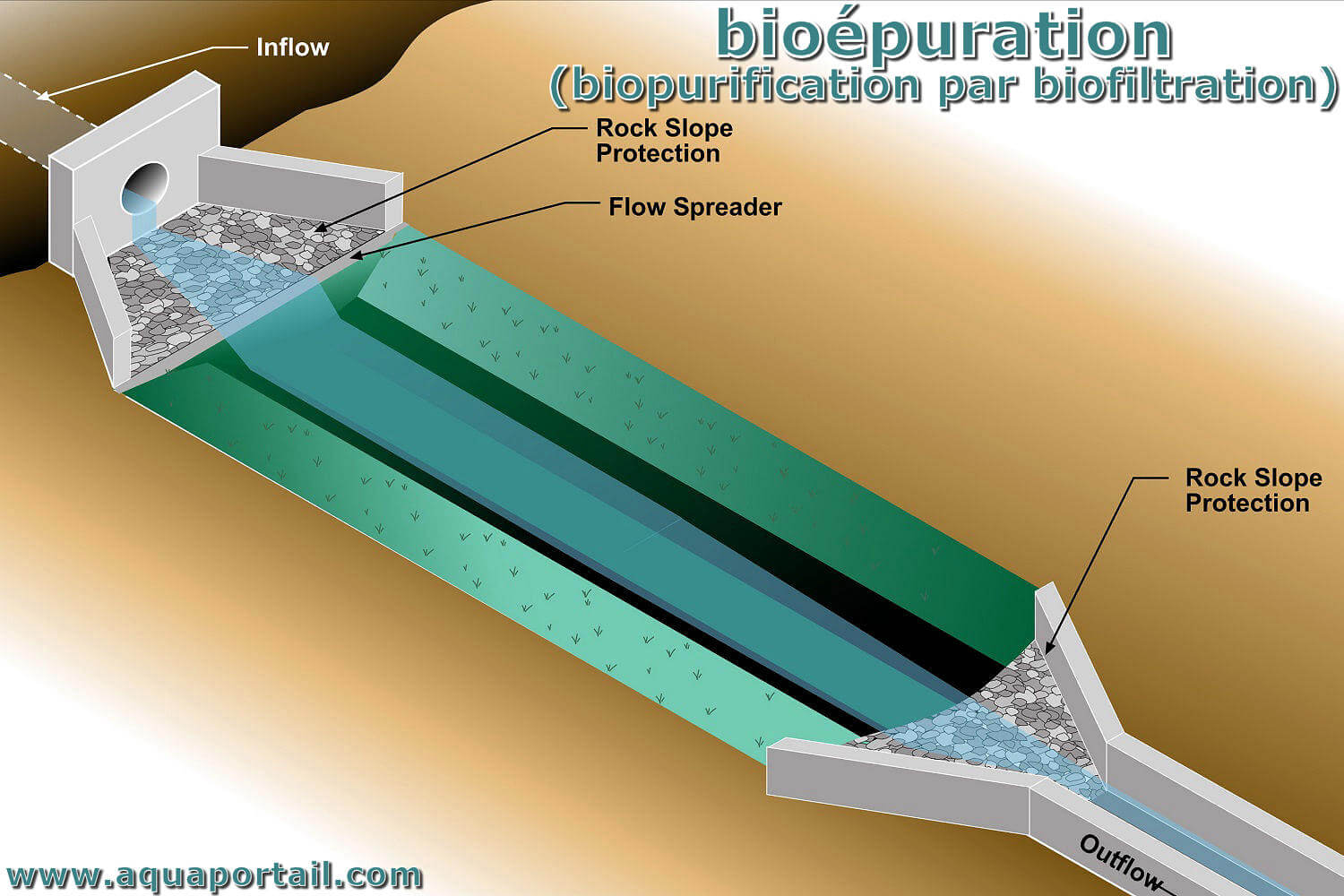
Bio-purification (biodepuration) refers to harnessing living organisms—such as plants, fungi, and symbiotic bacteria—to reduce pollution in an environment.
civilization

A civilization is generally defined as an advanced state of human society containing highly developed forms of government, culture, industry, and social...
