Exon
noun (n.)
Definition
An exon is a region of a eukaryotic gene (composed of several parts) that codes for a protein. Each coding region is separated by a non-coding portion (intron).
An exon is the sequence of pre-messenger RNA that is not excised during processing (RNA processing). The mRNA (messenger RNA) is thus formed by joining all the exons together.
Exons and introns during transcription:

DNA sequences that code for proteins are called exons. They are called exons because they are expressed during protein synthesis. During splicing, introns are removed while exons are joined together, forming an mRNA strand. The complex that performs splicing is called a spliceosome.
Explanations
Together with introns, exons constitute the part of a gene (eukaryote or archaebacterium) that is transcribed by RNA polymerase during the transcription process. Exons, after the splicing process of the primary transcript, called hnRNA, are found in mature mRNAs; sometimes, the primary transcript may undergo an alternative splicing process as a result of which, in mature mRNAs, introns or parts thereof may also be found.
It is often mistakenly said that exons constitute the coding part of the genome. This is only partially true: while it is true that the entire sequence coding for a protein must reside on one or more exons, it is not always true that an exon codes: non-coding exons have been identified in many human genes. In eukaryotic DNA, a gene is composed of a certain number of exons and introns; the size of the latter can vary greatly, even on the order of hundreds of thousands of bases.
Many phases of the mechanisms for exon recognition and intron removal during mRNA processing are still unknown, though certain steps are beginning to be understood: for example, exons are generally flanked by two pairs of nucleotides, a GT and an AG, but this is not enough to define the exon: it remains a very precise process that must identify a small exon of a few tens or hundreds of bases within a chromosomal region that may span hundreds of thousands of bases. Moreover, if these mechanisms fail, as occurs for example when the GT and AG sequences undergo mutation, exons are not properly recognized and result in the production of an abnormal RNA unable to produce the normal protein: this is what happens in many patients affected by genetic diseases. Mature mRNA, in eukaryotes, is generally composed not only of the coding part (coding DNA sequence or CDS), but also of two untranslated regions (UTRs) located one at the 5′ end and the other at the 3′ end of the transcript. This therefore implies the existence of totally or partially non-coding exons, namely those that will form the UTRs of the mature transcript.
A heterogeneous nuclear RNA (hnRNA) that is an mRNA transcript has not yet undergone RNA editing or pre-mRNA processing. Exons can include both amino acid-coding sequences (in red) and untranslated sequences. Exons, and in some cases also introns or parts thereof, are joined to form a functional final mRNA; in fact, it should be noted that mature mRNA is not always composed exclusively of exonic features, but may sometimes contain intronic portions. The 5′ and 3′ annotation refers to the direction of DNA splicing in the chromosome and is used to distinguish the two untranslated regions (UTRs). Some of the exons will form part or all of the 5′ untranslated region or the 3′ untranslated region of each transcript. UTR regions are important for the translation efficiency of the transcript and for controlling the translation rate and half-life of the transcript.
Transcripts from the same gene may not have the same exonic structure, as parts of the mRNA can be removed by the alternative splicing process. Some mRNA transcripts have exons without an ORF, so they are sometimes considered non-coding RNAs.
Exonization
Exonization is the creation of a new exon, following mutations in intronic sequences. Polycistronic messengers have multiple open reading frames (ORFs) in the same transcript and small regions of untranslated sequences between each ORF.
In addition to the aforementioned division into coding and non-coding exons, exons can therefore be divided into constitutive and alternative exons. Constitutive exons of a gene are present in all mRNAs produced by that gene, whereas alternative exons are found only in a subset of transcripts derived from the gene. Proteins resulting from the translation of alternative transcripts of the same gene are called isoforms.
Exon shuffling
Exons are involved in a shuffling process, a mechanism that enables the creation of new genes. The evidence supporting the existence of this phenomenon is as follows:
- within proteins encoded by genes, it appears that each exon encodes an independent unit of the protein (domain)
- many genes and respective proteins composed of repeated units (such as immunoglobulins) have partially evolved through exon duplication and divergence: the presence of introns between each exon would make duplication more likely
- similar exons are sometimes found in unrelated genes, which could indicate that certain exons were likely reused in genes encoding different proteins (for example, the LDL receptor gene contains exons evolutionarily related to exons present in the gene encoding the epidermal growth factor precursor and those of the complement C9 gene).
The greater length of introns, compared to that of exons, ensures that recombination events occur more easily within introns rather than at the level of exons. Consequently, exons are more likely to be redistributed rather than interrupted.
Number of exons
✅ The number of exons in human genes averages 9 and is generally related to gene length. However, variations sometimes occur, as in the case of the titin gene, characterized by a very high number of exons (363). The sizes of internal exons normally vary little and average 122 base pairs. In contrast, the 3′ exons of genes can be considerably longer. Furthermore, while we can affirm this reduced variability in exon sizes, we cannot say the same for intron sizes, which on the contrary can be highly variable.
Synonyms, antonyms
Spanish translation: exón
0 synonyms (similar meaning) for "exon".
1 antonym (opposite meaning):
Related words and expressions to EXON are directly connected by general or specific meaning.
The word EXON is listed on page 1 of words starting with E in the dictionary glossary.
Related to "exon"
intron
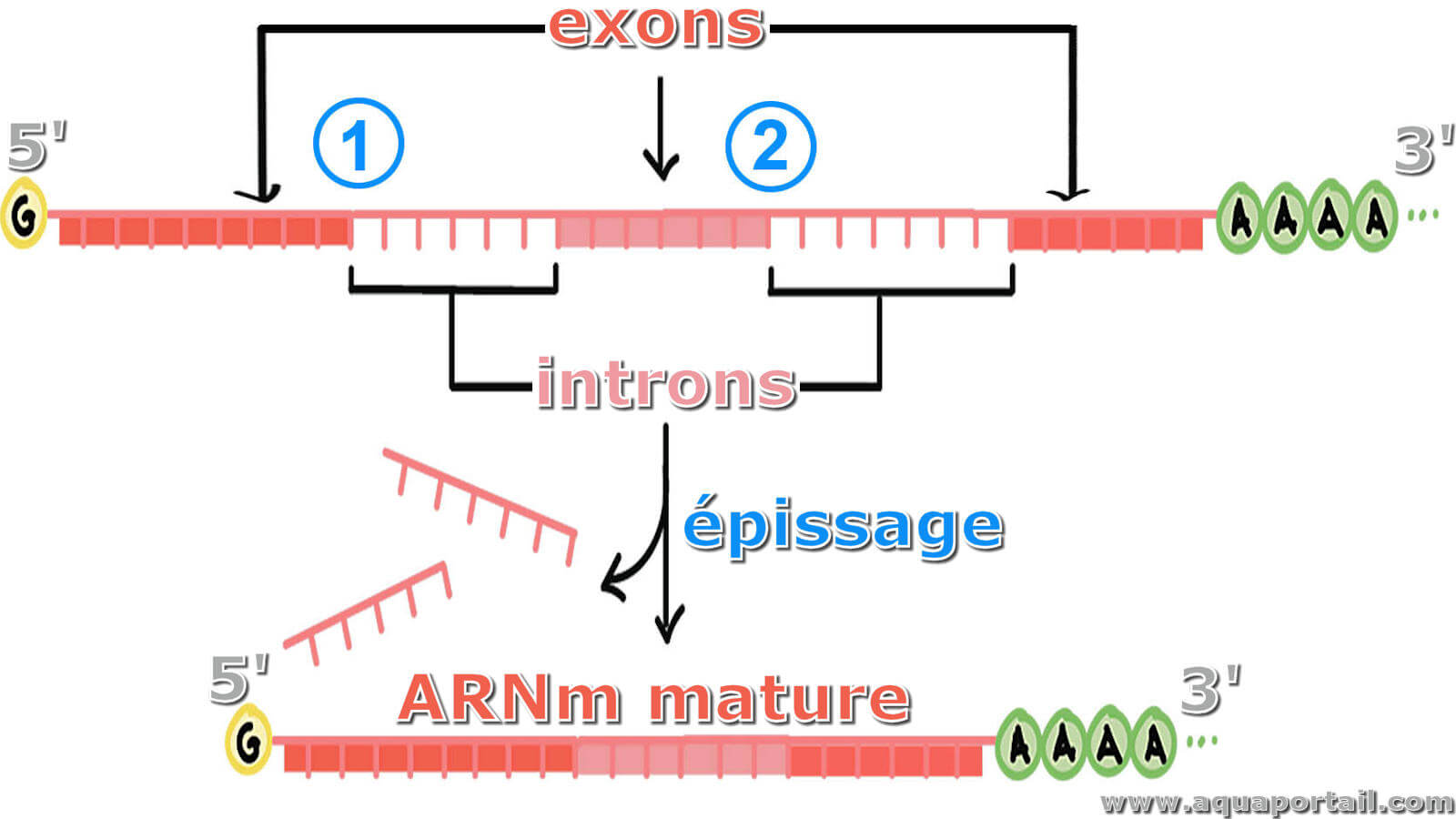
An intron is a non-coding DNA sequence interrupting the coding sequence of a split gene. The counterparts of introns during RNA splicing are exons.
splicing
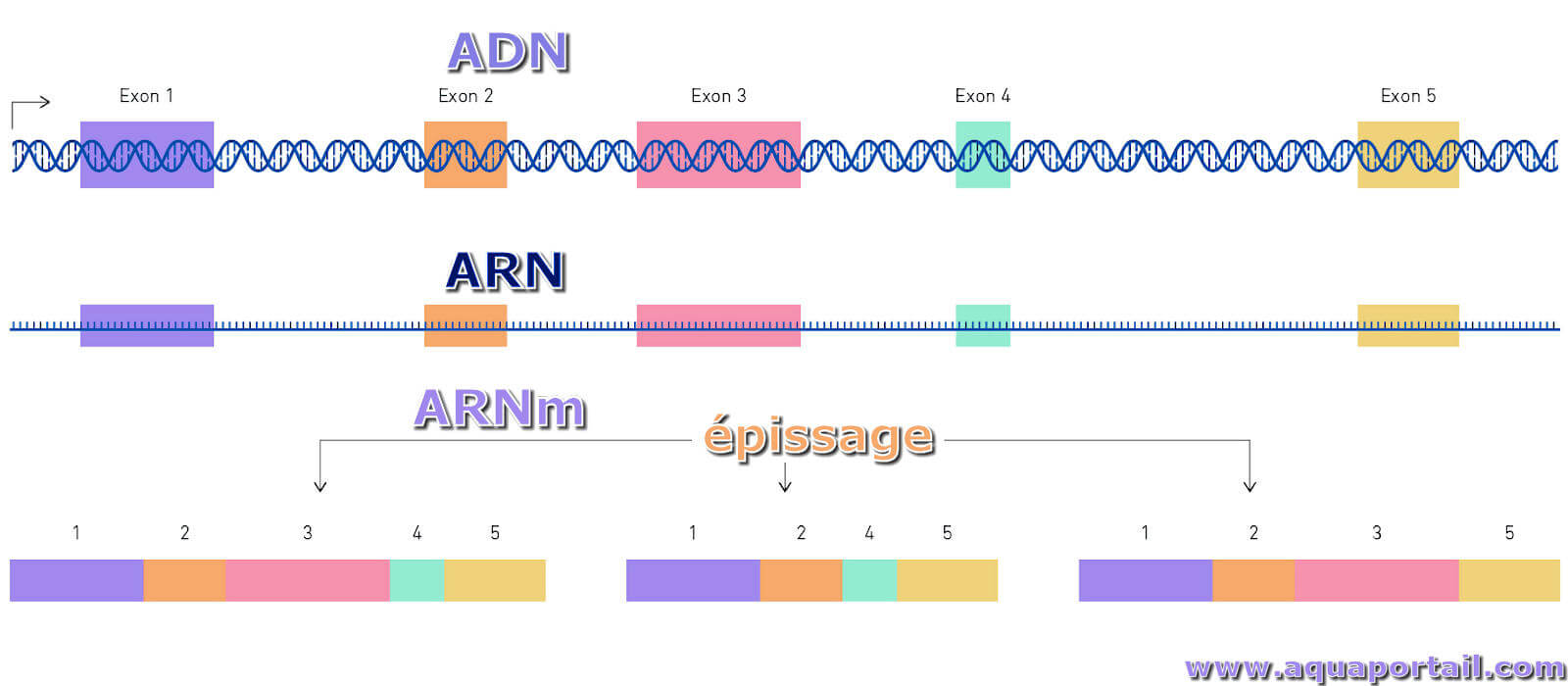
Splicing is the processing of the primary transcript (RNA) of a gene, resulting in the production of a messenger RNA that directs the synthesis of a protein.
E=mc2
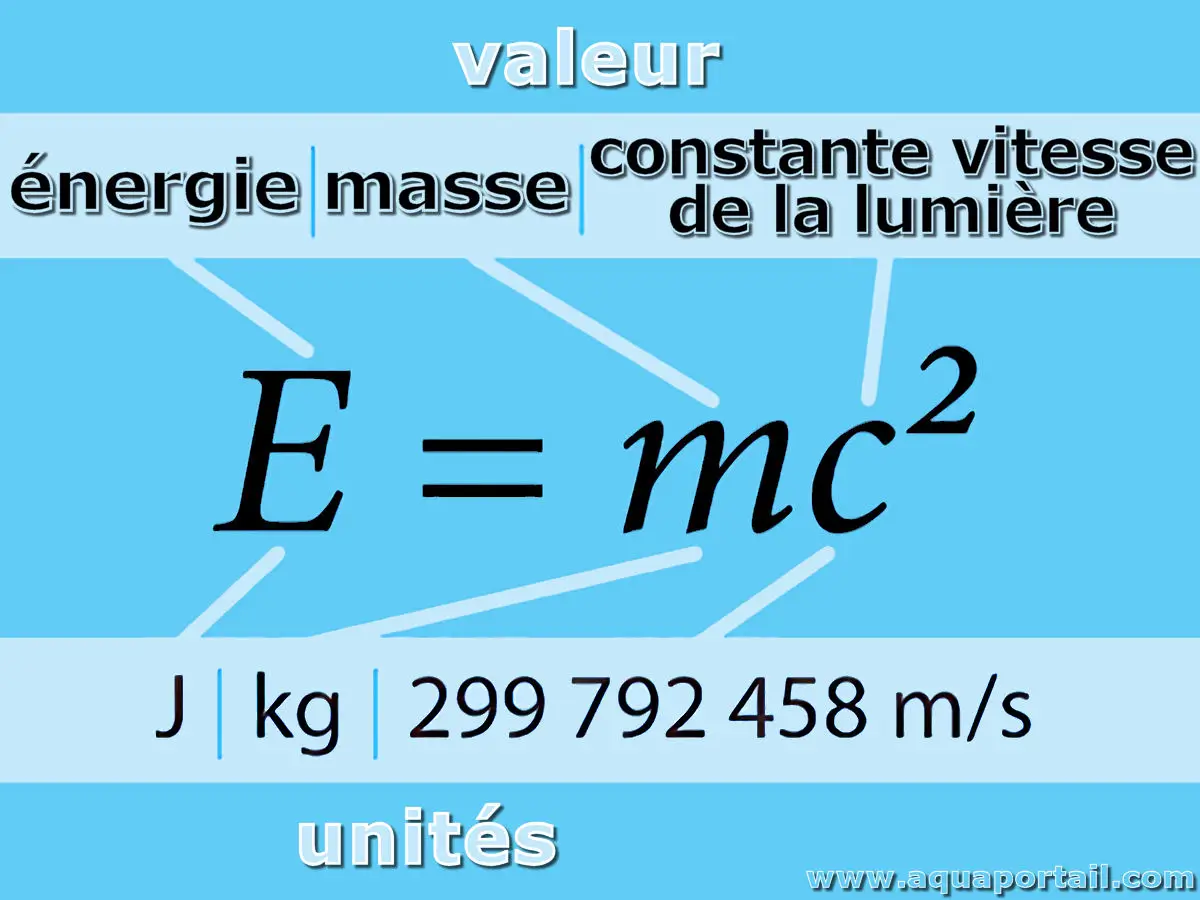
The formula E=mc2 (E = m. c²) is a mass-energy equivalence equation according to the theory of relativity developed by Albert Einstein. It expresses that...
ebb tide

Ebb tide designates the outgoing, falling tide of the sea that begins at high water, also known as reflux.
