Intron
noun (n.)
Definition
An intron is a non-coding DNA sequence interrupting the coding sequence of a split gene. The counterparts of introns during RNA splicing are exons. An intron is a gene segment situated between two exons; introns are present in immature pre-mRNA and absent from mature mRNA.
Non-coding intervening regions of a gene are defined as introns, and together with exons, they are transcribed by RNA polymerases. Transcription of a DNA sequence yields a primary transcript (pre-mRNA) that undergoes splicing, the process removing introns to generate mature mRNA. In complex organisms, the primary RNA transcript can undergo alternative splicing, in which certain exons may be skipped and certain introns—or portions thereof—may be retained (intron retention).
Splicing with exons and introns:
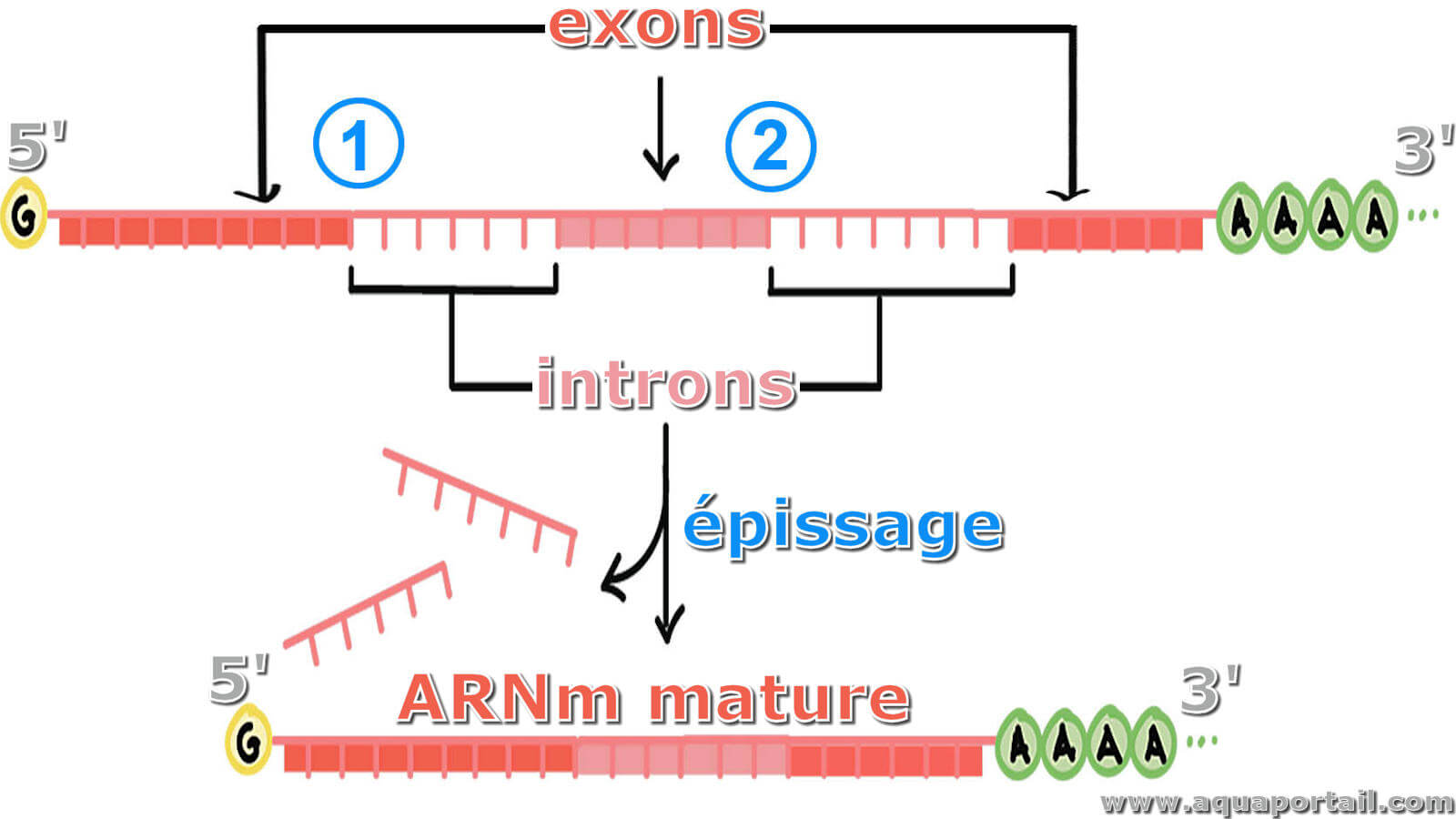
Introns are also called the non-coding regions of a gene because these sequences do not code for a protein. They lie between sequences called exons, which are the portions of DNA joined together to encode proteins during RNA splicing.
Explanations
Introns occur in eukaryotes and archaea, whereas they are largely absent in eubacteria, where transcribed RNAs remain intact in mRNA (or tRNA, rRNA).
✅ One of the primary goals of the Human genome Project was identifying all protein-coding genes. Analysis revealed that the actual number of protein-coding genes lies between 20,000 and 25,000, spanning roughly 55,000,000 base pairs—about 1.9% of the entire genome.
The evolutionary purpose of introns has long been investigated, as nothing in the cell is entirely without function. Several plausible roles exist:
- introns can harbor enhancers or regulatory sequences that promote transcription of the gene, increasing the polymerization rate of RNA polymerase
- they govern alternative splicing, which is essential for synthesizing numerous distinct protein isoforms
- in the case of overlapping genes, they may contain exons belonging to nested genes
- they encode microRNAs (miRNAs) and other non-coding RNAs
- they contain sequences complementary to specific DNA segments that act as regulators of gene expression
- they can drive increased genetic and proteomic diversity
The exact origin of all introns remains uncertain, though three main hypotheses have been proposed, none of which satisfies the entire scientific community:
- they may derive from viral genome fragments: certain viruses (such as retroviruses), integrating into host cell DNA, may have left remnants of their genetic material that became inactivated in non-coding regions
- they may be remnants of exons that, following severe mutations, were silenced by the cell
- they may result from "exon shuffling", a theory proposing that introns facilitate the recombination of discrete protein functional domains into novel, evolutionarily advantageous combinations
Early genomic DNA studies across diverse organisms revealed that the exon–intron architecture of homologous genes varies widely. More recent whole-genome studies in eukaryotes have shown that intron length and density vary dramatically even among related species: for example, while the human genome averages 8.4 introns per gene, the unicellular microsporidian fungus Encephalitozoon cuniculi averages only 0.0075 introns per gene.
Because eukaryotes evolved from a common ancestor, massive intron gain or loss must have occurred over evolutionary history.
In general, an intron sequence features two highly conserved GT nucleotides at its 5′ splice site and two highly conserved AG nucleotides at its 3′ splice site. At a nearly fixed distance upstream of the 3′ end lies a polypyrimidine tract of roughly 15 bp, along with a critical branch point site containing a conserved branch-point adenine. These sequence motifs are essential for intron recognition and excision by the spliceosome.
Synonyms, antonyms
Spanish translation: intrón
0 synonyms (similar meaning) for "intron".
1 antonym (opposite meaning):
Related words and expressions to INTRON are directly connected by general or specific meaning.
The word INTRON is listed on page 1 of words starting with I in the dictionary glossary.
Related to "intron"
exon

An exon is a region of a eukaryotic gene (composed of several parts) that codes for a protein.
splicing
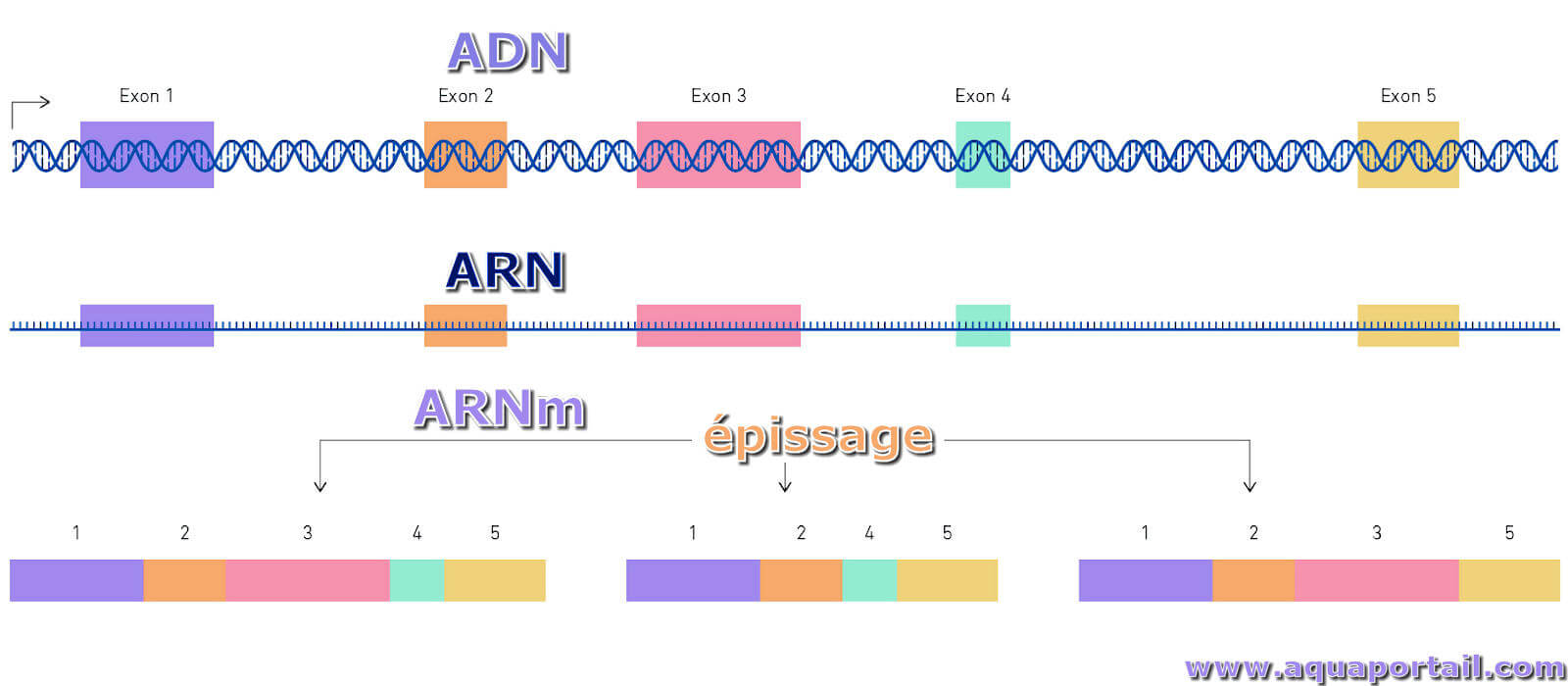
Splicing is the processing of the primary transcript (RNA) of a gene, resulting in the production of a messenger RNA that directs the synthesis of a protein.
ice sheet

An ice sheet constitutes vast, very thick glacial expanses covering a large terrestrial surface area, such as the Antarctic ice sheet for example.
ichthyologist

An ichthyologist is a scientist who studies fish in the field of ichthyology. They conduct research and fieldwork on fishes across all aquatic environments.
