Fixed
adjective (adj.)
Definition
Fixed describes an organism that attaches itself to a substrate. In plants and algae, the organism is naturally anchored to the substrate by an adhesive disc, holdfasts, rhizoids, a rhizome, a pedicel, or any other attachment organ.Something that is fixed is attached or positioned so as to be firm and difficult to move, such as firmly implanted or stationary.
Nitrogen is fixed by microorganisms:
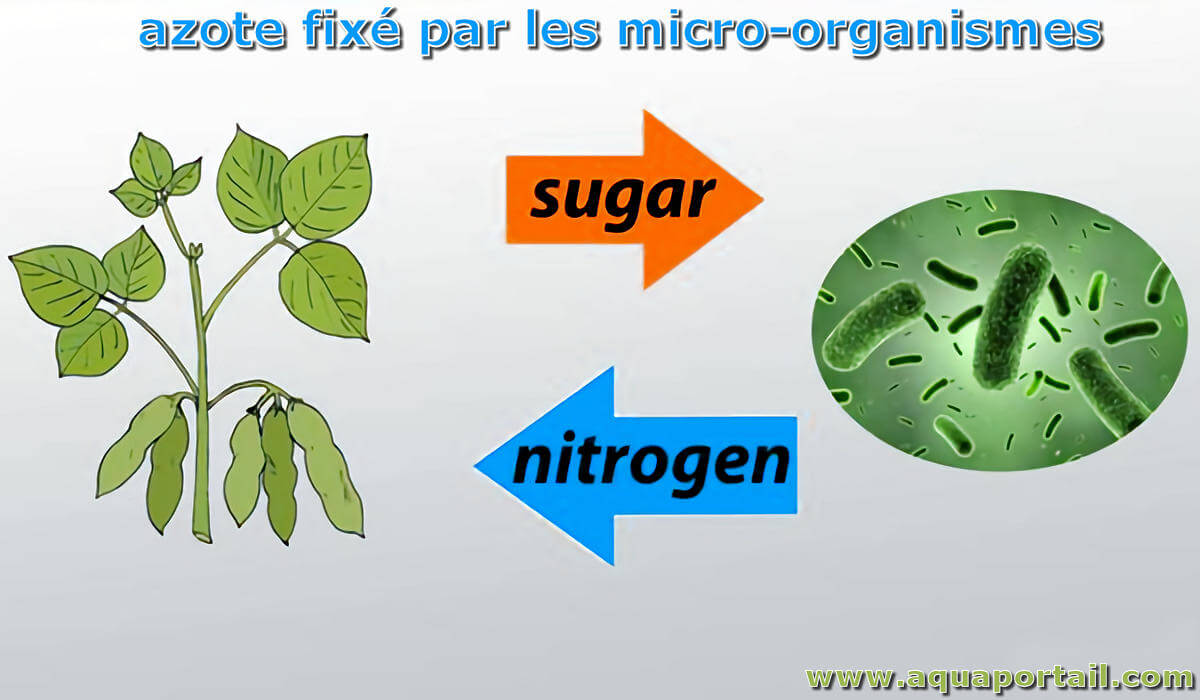
Nitrogen is fixed by living organisms into their tissues. Nitrogen is an essential element for all cells in synthesizing proteins, DNA, and amino acids in animals, and it also helps produce chlorophyll in plants.
Explanations
Examples of fixed (sessile, substrate-attached) organisms include ascidians, crinoids, and algae.
Nitrogenase is an enzyme found in two groups of diazotrophic microorganisms, namely symbiotic nitrogen-fixing bacteria and free-living nitrogen-fixing bacteria. The structure and activity of nitrogenase drive nitrogen fixation.
See also attachment positions such as medifixed, basifixed, dorsifixed, or apicifixed.
More generally, fixed specifies whatever is not subject to change or fluctuation. In psychology, what is fixed is firmly rooted in the mind.
Synonyms, antonyms
Spanish translation: fijado
4 synonyms (similar meaning) for "fixed":
- attached
- medifixed
- rigid
- stationary
2 antonyms (opposite meaning):
Related words and expressions to FIXED are directly connected by general or specific meaning.
The word FIXED is listed on page 1 of words starting with F in the dictionary glossary.
Related to "fixed"
fabrication

Fabrication is the act or process of making, constructing, or inventing something. The manufacturing or fabrication process, whether artisanal or industrial...
famine

Famine is prolonged hunger with acute undernutrition or malnutrition of a population in a region (country).
fang

A fang is a long, pointed, and curved tooth. All animals equipped with fangs use them to bite. Whereas in mammals the upper-jaw fangs (called canines)...
fatty acids

Fatty acids are molecules possessing a long hydrophobic hydrocarbon chain and a highly hydrophilic carboxyl group at one of its ends.
