Firefly
noun (n.)
Definition
A firefly is a winged coleopteran insect of the family Lampyridae that emits a yellow-green light. Fireflies of the subfamily Luciolinae, in which both males and females produce luminescence, are often confused with glowworms, in which only the females emit light.
A male firefly Photinus pyralis:

The common eastern firefly Photinus pyralis produces light through a chemical reaction that energizes a molecule so it can release a photon. The lower abdomen of a common firefly contains specialized cells that generate rapid flashes of light.
Explanations
In the strict sense, the word firefly (or luciola) refers to the genus Luciola, of the tribe Luciolini, in the subfamily Luciolinae of the family Lampyridae. This applies to the European firefly (found in France), represented by the species Luciola lusitanica. The head is not completely covered by the pronotum, whose margins are not flattened. Both sexes possess well-developed elytra and wings.
Species of the genus Luciola are capable of producing greenish-yellow light both as adults (males and females) and as larvae. While males often produce a continuous glow, the more discreet females emit an intermittent, flashing light.
Flight of male fireflies
As dusk falls over grassy meadows and forest edges, male fireflies flit about, switching bioluminescent lanterns on and off in their abdomens. On the ground, females flash back in response, attracting males for a reproductive rendezvous.
Flight of fireflies:
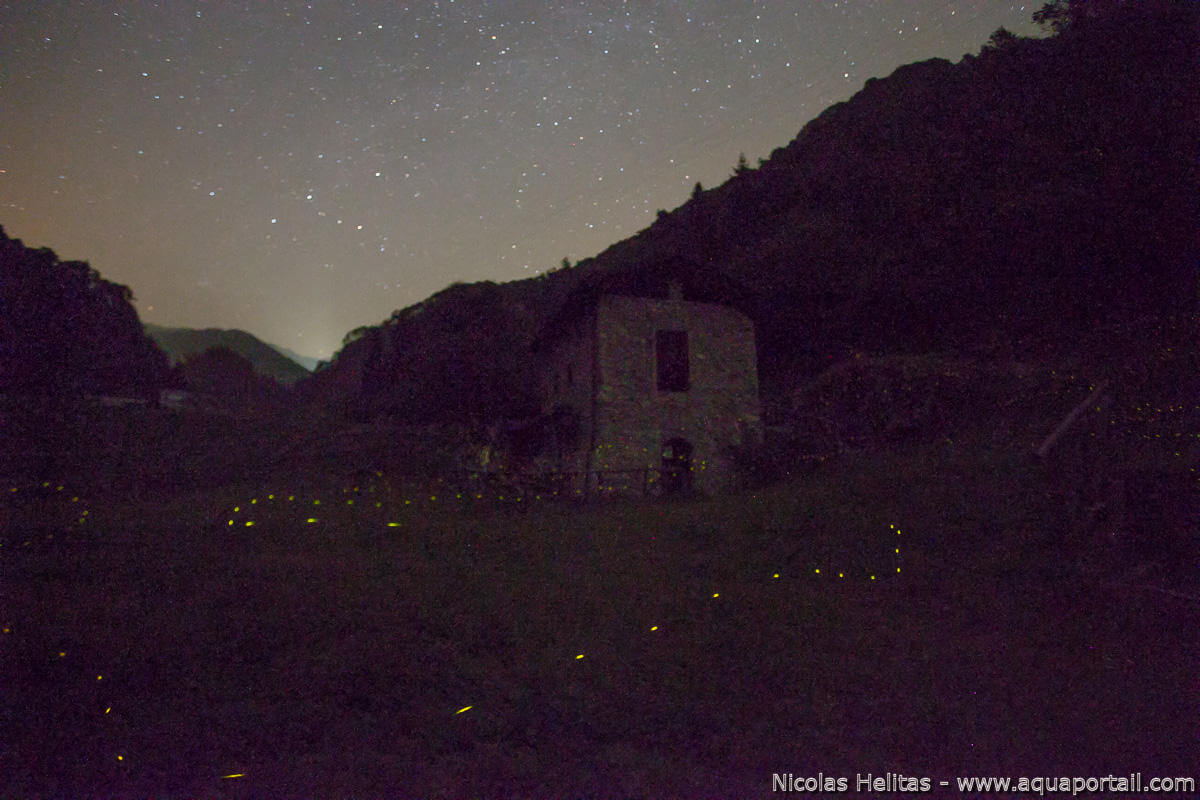
During the warm season, the flight of fireflies (green dots) Luciola lusitanica is a delicate and rare spectacle. Shown here near lake Garda in northern Italy. Few natural phenomena can match the magic of fireflies flashing in tall grass on a summer night.
Luminescent production
The romantic function of the light flash has long been known. What has been discovered more recently is a clear understanding of how it occurs. Scientists traced the trait to a set of five molecules located inside light-producing cells called photocytes that line a firefly's lantern: luciferin, luciferase, adenosine triphosphate (ATP), nitric oxide (NO), and oxygen.
A male firefly:

This firefly emits a yellow-green light. The male signals to the more discreet females. A luciferase molecule contains specialized pockets that it uses to bring two other molecules together, forming a complex that, when combined with oxygen, produces a flash of light.
Insects do not have lungs like humans, but instead transport oxygen throughout their bodies via tubes called tracheoles. Oxygen passes through the tracheoles and enters the photocytes, where it binds to mitochondria. Normally, mitochondria would use oxygen to release energy for regular cellular processes. However, when it is time to glow, fireflies send nitric oxide to bind to the mitochondria instead, freeing oxygen to fuel the light show about to begin. Oxygen enters another cellular structure, the peroxisome, where the reaction takes place.
Inside the peroxisome, bioluminescent reactions occur with the help of luciferase, an enzyme equipped with custom pockets (called "binding sites") for luciferin and ATP. Luciferin and ATP slip into these binding sites, bringing the two molecules close enough together to combine and form a luciferin-ATP complex.
A molecule of the freed oxygen then combines with the complex to form oxyluciferin, an "excited" molecule primed to release a burst of energy. When it does, it releases that energy in the form of a photon (a packet of light), creating the characteristic yellow-green glow. Another enzyme, luciferin-regenerating enzyme, then converts oxyluciferin back into luciferin, ready to produce another flash.
✅ In a firefly bioluminescence reaction, an enzyme known as luciferase uses adenosine triphosphate (ATP) to activate a molecule called luciferin. The product of this reaction combines with molecular oxygen to yield an excited-state oxyluciferin species. When oxyluciferin returns to its ground state, energy is released as light. Variations on this theme exist, of course. One fascinating aspect of bioluminescence is the sheer number of variations that have evolved, with different organisms developing structurally distinct luciferins and enzymes to achieve bioluminescence.
Potential in biomimicry
Because fireflies produce light without excess heat, mimicking their methods may help pave the way toward developing more energy-efficient artificial light sources. Moreover, the mechanism of using the presence of a single molecule (in this case, oxygen) as a switch could inspire new ways to alternate between light and darkness over extremely short timescales, an effect that could prove useful in display screens and other electronics.
Furthermore, because it requires ATP to glow and ATP is found in microorganisms, the luciferin-luciferase combination has been used to detect microbial contamination in beverages such as soy milk and tea.
Subfamily Luciolinae
Luciolinae is one of the largest subfamilies of fireflies (Lampyridae). All members appear to be "flashing" fireflies (as opposed to "continuous-glow" fireflies). They form a diverse lineage extending across warm regions of Eurasia into temperate Europe and East Asia, and south into the Australian region.
The larvae are campodeiform and lead either a terrestrial or aquatic lifestyle. They feed on slugs and terrestrial gastropods, entering their shells to consume them.
Winged adult fireflies, both male and female, have reduced mouthparts and do not feed, surviving on nutrient reserves accumulated during the larval stage.
Synonyms, antonyms
Spanish translation: luciérnaga
2 synonyms (similar meaning) for "firefly":
0 antonyms (opposite meaning).
Related words and expressions to FIREFLY are directly connected by general or specific meaning.
The word FIREFLY is listed on page 1 of words starting with F in the dictionary glossary.
Related to "firefly"
fabrication

Fabrication is the act or process of making, constructing, or inventing something. The manufacturing or fabrication process, whether artisanal or industrial...
famine

Famine is prolonged hunger with acute undernutrition or malnutrition of a population in a region (country).
fang
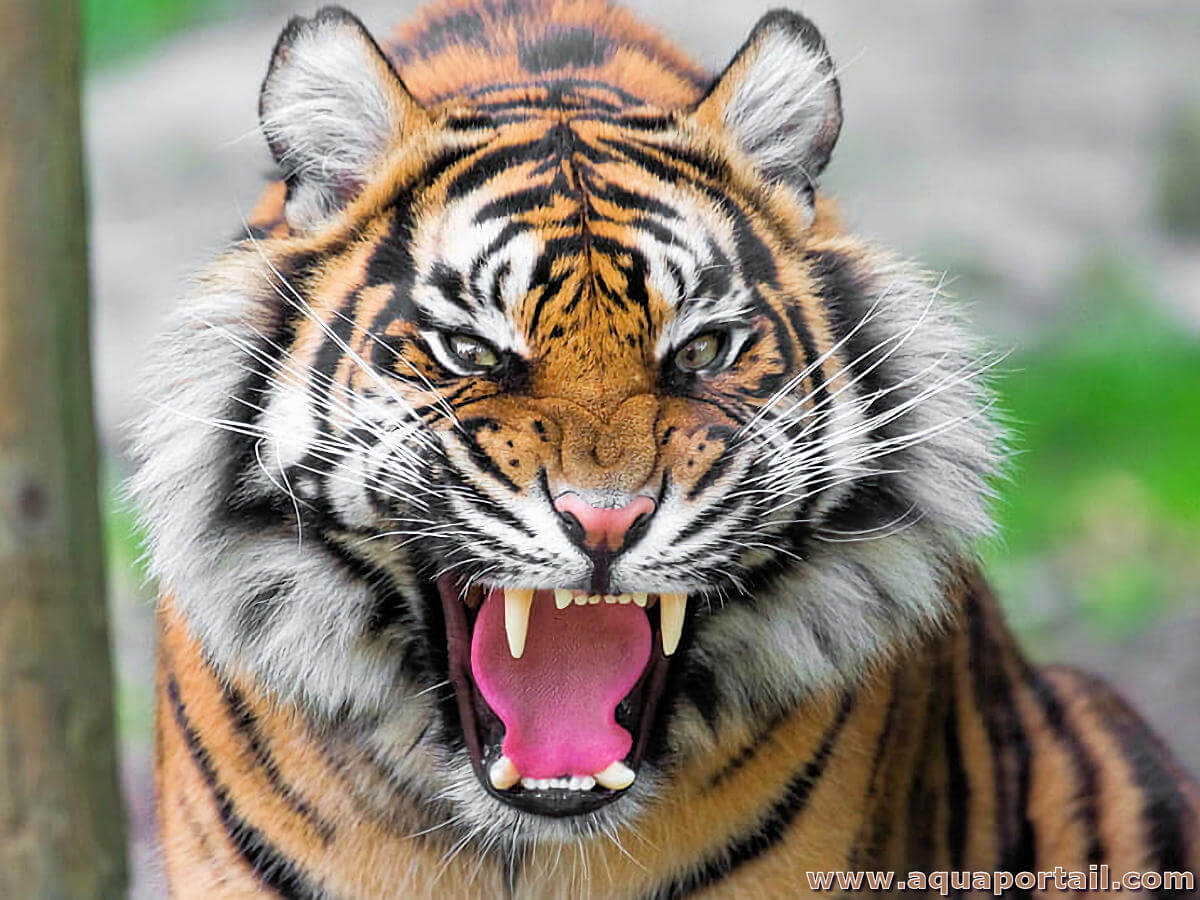
A fang is a long, pointed, and curved tooth. All animals equipped with fangs use them to bite. Whereas in mammals the upper-jaw fangs (called canines)...
fatty acids

Fatty acids are molecules possessing a long hydrophobic hydrocarbon chain and a highly hydrophilic carboxyl group at one of its ends.
