Invagination
noun (n.)
Definition
An invagination is an inward folding, cavity, or pocket, roughly resembling an inverted or folded-in finger of a glove. Invagination is the inward infolding of a membrane, tissue layer, or blastodermic sheet into an internal cavity.
Invagination of a blastula:
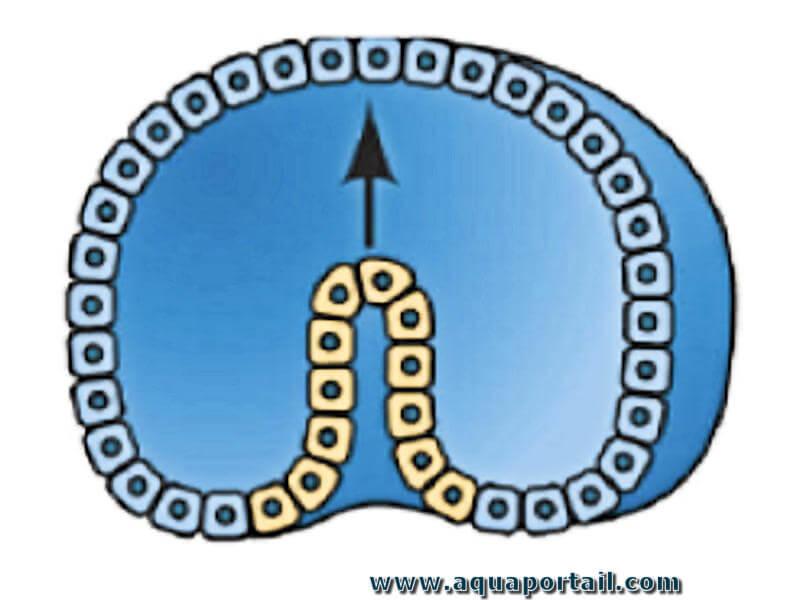
Invagination is the formation of a gastrula through the inward folding of part of the blastula wall. This blastula invagination diagram shows the ectoderm in blue and the endoderm in yellow.
Explanations
Applied to the intestine, invagination is intussusception, a medical condition in which one segment of the bowel telescopes into an adjacent section. It contrasts with evagination or eversion.
In embryology, invagination is one of the morphogenetic movements involved in gastrulation, characterized by the inward folding of a region of cells from the blastula wall into the interior of the embryo. This movement gives rise to the ectoderm, endoderm, and/or archenteron during the development of diverse organisms such as sea urchins, tunicates, Drosophila, and amphibians.
Multinucleation may be accompanied by intranuclear invaginations within large nuclei of variable size.
In medicine, intestinal invagination is intussusception, a serious condition in which a portion of the intestine slides into an adjacent bowel segment. This telescoping action often obstructs the passage of food or fluids and cuts off blood supply to the affected segment.
See also pusule in dinophyte algae, and caveolae in the plasma membrane.
Primary invagination
Primary invagination is driven by cell-shape changes in the vegetal plate bordering the blastocoel, forming an infolded pocket called the archenteron (primitive gut) whose opening is the blastopore. After a pause following initial infolding, the second phase of archenteron formation occurs as it elongates through convergent extension: this is secondary invagination, continuing alongside cell division so that additional endodermal and mesenchymal cells form as the archenteron lengthens.
In cases of intestinal intussusception, few resolve spontaneously; if left untreated, most lead to bowel infarction, perforation, peritonitis, and death.
Invaginate (verb)
To invaginate means to fold inward by invagination, undergoing the action or process of turning inside out or folding back into itself to form a cavity or pouch. An invaginated structure folds inward, just as mammalian lungs arise via embryonic outpocketing and branching invaginations of the foregut endoderm. An abnormally invaginated bowel has undergone intussusception. Organs capable of invaginating or inverting include the uterus, vagina (from which the Latin term originates), rectum, and intestines. There is also a congenital condition involving inverted (umbilicated) nipples, which can hinder breastfeeding when the nipple does not protrude sufficiently.
In the ocean, sea anemones invaginate their tentacles inward for protection (whereas sea stars evert their stomachs over prey).
Rhynchodeum
A rhynchodeum, in nemerteans (lophotrochozoan protostomes), designates an ectodermal invagination opening externally via a dorsal pore relative to the mouth, within which the eversible proboscis lies.
Ampulla
In Euglenophyceae, an ampulla (reservoir) is a flask- or bulb-shaped invagination located at the anterior pole of the cell from which the eukaryotic flagellum or flagella emerge. This root also gave rise to the name apple snails (Ampullariidae), a family of freshwater gastropods.
Loreals / Pit organ
In zoology, a pit organ designates a thermosensitive sensory organ resulting from an invagination of the integument in pit vipers (Crotalinae, loreal pit) and boas (Boidae, labial pits).
Synonyms, antonyms
Spanish translation: invaginación
2 synonyms (similar meaning) for "invagination":
2 antonyms (opposite meaning):
Related words and expressions to INVAGINATION are directly connected by general or specific meaning.
The word INVAGINATION is listed on page 1 of words starting with I in the dictionary glossary.
Related to "invagination"
bio-purification
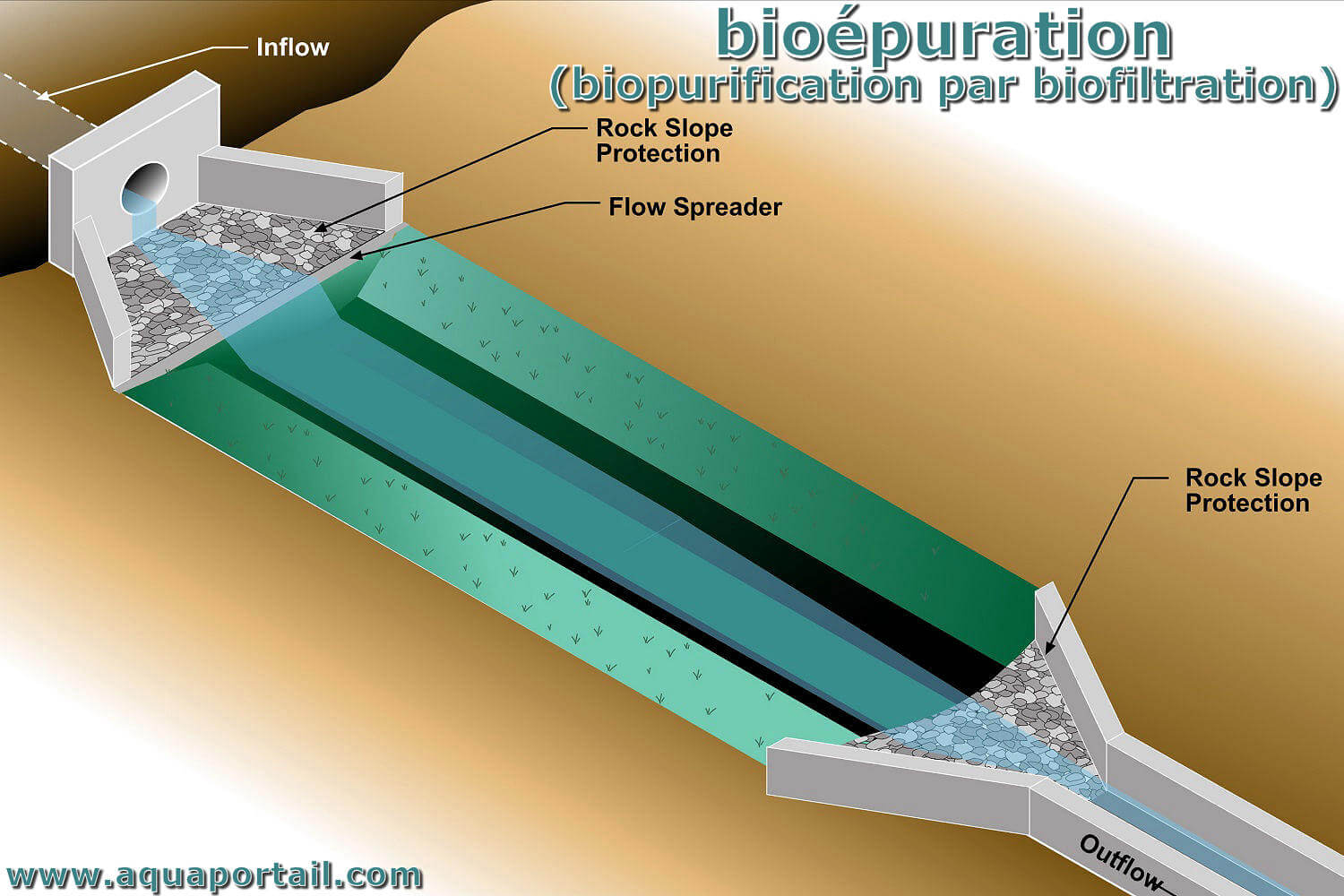
Bio-purification (biodepuration) refers to harnessing living organisms—such as plants, fungi, and symbiotic bacteria—to reduce pollution in an environment.
civilization

A civilization is generally defined as an advanced state of human society containing highly developed forms of government, culture, industry, and social...
cohabitation

Cohabitation is the simultaneous coexistence of several elements, similar or different, in the same place (habitat) over the same (extended) period.
concentration

Concentration (geographic) is the clustering of numerous elements around a central location.
Simple summary
Invagination designates a process or state in which part of a structure folds inward or turns back into itself. In biology, it describes the inward infolding of a cell membrane or tissue layer during developmental stages, while in anatomy it refers to the inward folding of a hollow organ.
