Eukaryotic
adjective (adj.)
Definition
Eukaryotic describes that which possesses the characteristics of eukaryotes, and thus refers to living organisms whose cells have a structured nucleus. Eukaryotes are organisms containing eukaryotic cells. Eukaryotic cells are relatively larger (about 10 to 200 µm) and more complex. Prokaryotes consist of a single prokaryotic cell.Differences between a prokaryotic and a eukaryotic cell:

Every living organism is made up of cells. Whether unicellular or multicellular, "cells" are the fundamental units of life. All living organisms belong to one of the following two categories: eukaryotic or prokaryotic. Cell structure determines which type an organism belongs to.
Explanations
Eukaryotic cells exist in plants, animals, fungi, and protists. Their cells are organized into compartmentalized structures such as nuclei, mitochondria, chloroplasts, and Golgi bodies. Their diameter ranges from 10 to 100 µm and their DNA is contained within a membrane-bound nucleus.
Eukaryotic organisms have cells that contain a nucleus and other membrane-bound organelles. There is a wide range of eukaryotic organisms, including all animals, plants, fungi, and protists, as well as most algae. Eukaryotic forms can be unicellular or multicellular.
For a flagellum, see eukaryotic flagellum.
✅ Eukaryotic describes organisms or cells possessing a well-defined nucleus surrounded by a membrane. Unlike prokaryotic cells, eukaryotic cells contain other membrane-bound organelles, such as mitochondria, the endoplasmic reticulum, and the Golgi apparatus, specialized in various cellular functions. Animals, plants, fungi, and protists are examples of eukaryotic organisms.
Synonyms, antonyms
Spanish translation: eucariótico
1 synonym (similar meaning) for "eukaryotic":
1 antonym (opposite meaning):
Related words and expressions to EUKARYOTIC are directly connected by general or specific meaning.
The word EUKARYOTIC is listed on page 1 of words starting with E in the dictionary glossary.
Related to "eukaryotic"
eukaryote

A eukaryote is an organism whose cells possess a true cell nucleus surrounded by an envelope with DNA carried by chromosomes.
eukaryotic flagellum

A eukaryotic flagellum (vs. prokaryotic) is a flexible, whip-like cellular organelle composed of an axoneme and a kinetosome, used for locomotion in motile...
E=mc2
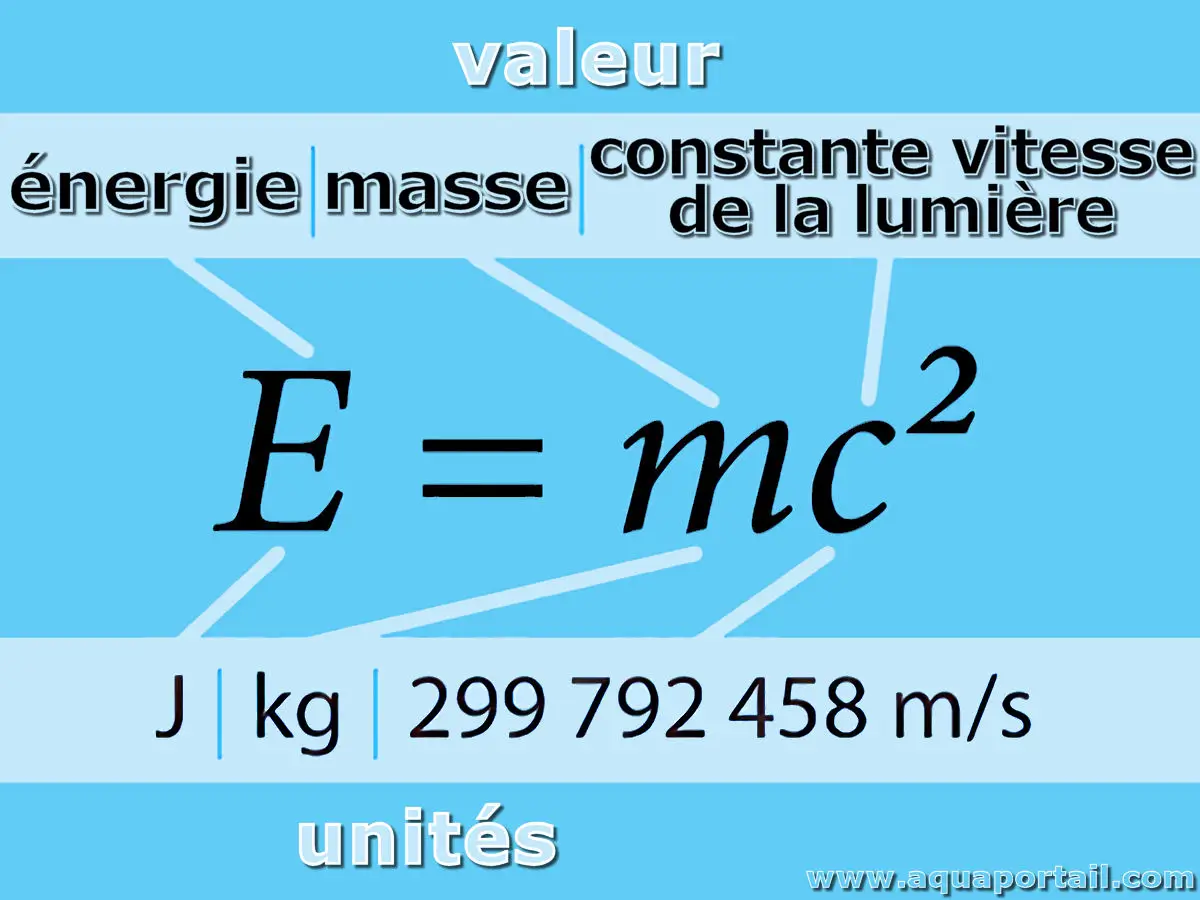
The formula E=mc2 (E = m. c²) is a mass-energy equivalence equation according to the theory of relativity developed by Albert Einstein. It expresses that...
ebb tide

Ebb tide designates the outgoing, falling tide of the sea that begins at high water, also known as reflux.
