Exoskeleton
noun (n.)
Definition
In biology, an exoskeleton is a continuous external skeleton that covers, protects, and supports the body of an animal, fungus, or protist. It contrasts with the endoskeleton and complements the hydroskeleton. It is a hard outer integument that protects the body of certain invertebrates, such as a shell, a test, or a cuticle.
The detailed exoskeleton of a crustacean:
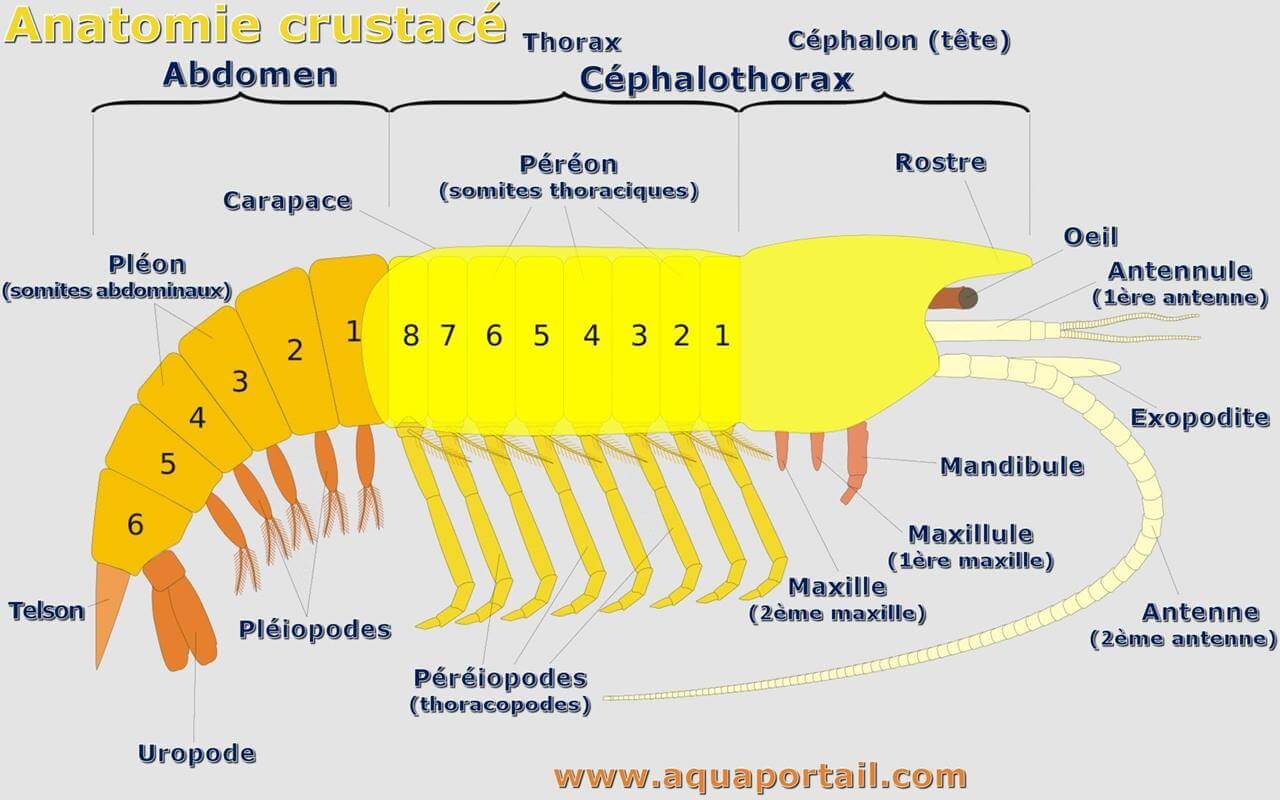
The exoskeleton of a crustacean is covered with chitin. Invertebrates are characterized by the absence of a backbone or internal bones and possess an external protection called an exoskeleton.
Explanations
An exoskeleton covers the entire surface of all animals in the phylum Arthropoda (arachnids, insects, crustaceans, myriapods, and related groups, the largest phylum in the animal kingdom), where it fulfills a protective, respiratory, and mechanical function, providing the support necessary for the efficiency of the muscular system.
This is typically the case for sea urchins, which have an exoskeleton beneath their coat of spines.
See also the process of skeletogenesis, a hydrostatic skeleton, or a cytoskeleton.
In arthropods
It is an outer covering, a cuticle, normally hard and resistant, produced by the secretion of integumentary cells. The exoskeleton is composed of a polysaccharide, chitin, a polymer formed by straight, unbranched chains of N-acetylglucosamine, a monosaccharide that includes nitrogen in its composition.
In some cases, the exoskeleton appears calcified, reinforced by the deposition of calcium carbonate; this is the case in many crustaceans, such as crabs, shrimp, or lobsters. The exoskeleton also serves as a reservoir for excretory products, such as guanine, which is sometimes a cause of bright or metallic iridescent colors, as observed in many arthropods (such as spiders, etc.).
The exoskeleton is truly continuous, yet structured into thickened regions (sclerites) articulated by lines or zones of lesser thickness. In terrestrial arthropods, such as insects or arachnids, the exoskeleton continues into the respiratory cavities (book lungs or tracheae) where they open to the outside, lining them. Similarly, the anterior and posterior ends of the digestive tract are lined with exoskeleton.
The exoskeleton promotes fossilization, particularly in marine forms such as crustaceans or trilobites, which often exhibit mineralization.
Mollusk shell
In the case of mollusks, bivalve shells of mussels, snails, nautiluses, etc., constitute exoskeletons (as in ammonites). Others possess phylogenetically derived internal skeletons, such as nudibranchs or certain cephalopods, or corresponding rudimentary parts.
Endosternite
In zoology, an endosternite is a part of the arthropod exoskeleton made of cartilage, sometimes calcified. While the exoskeleton provides both support and protection, arthropods also have a hard internal structure called the endosternite, which anchors muscles.
Artificial exoskeletons
Humans have long used armor as artificial exoskeletons for protection, especially in combat. These mechanical exoskeletons incorporate the concept of biomimicry.
Orthoses are a limited medical form of exoskeleton. An orthosis is a mechanism attached to a leg or torso to improve or correct the function of that leg or spine. A prosthetic leg is a device that replaces the missing part of a leg.
If the prosthesis forms its own outer shell, it is considered an exoskeleton. If the structure and mechanism are used internally and covered with a soft, non-structural material, it is considered an endoskeletal prosthesis.
Mechanical exoskeletons have begun to be used for medical and industrial purposes, moving out of the realm of science fiction, though they are still at the prototype stage. However, the United States government funded a 50 million dollar project to integrate mechanical exoskeletons into Marine units in order to enhance their performance.
Perisarc
The perisarc refers to a non-living chitinous cuticle serving as support, a skeleton called an exoskeleton, secreted by the epidermis surrounding most hydroids. In marine zoology, it is therefore the chitinous outer layer secreted by colonial hydrozoan coelenterates.
See also coenosarc in stony corals.
Synonyms, antonyms
Spanish translation: exoesqueleto
3 synonyms (similar meaning) for "exoskeleton":
3 antonyms (opposite meaning):
Related words and expressions to EXOSKELETON are directly connected by general or specific meaning.
The word EXOSKELETON is listed on page 1 of words starting with E in the dictionary glossary.
Related to "exoskeleton"
endoskeleton
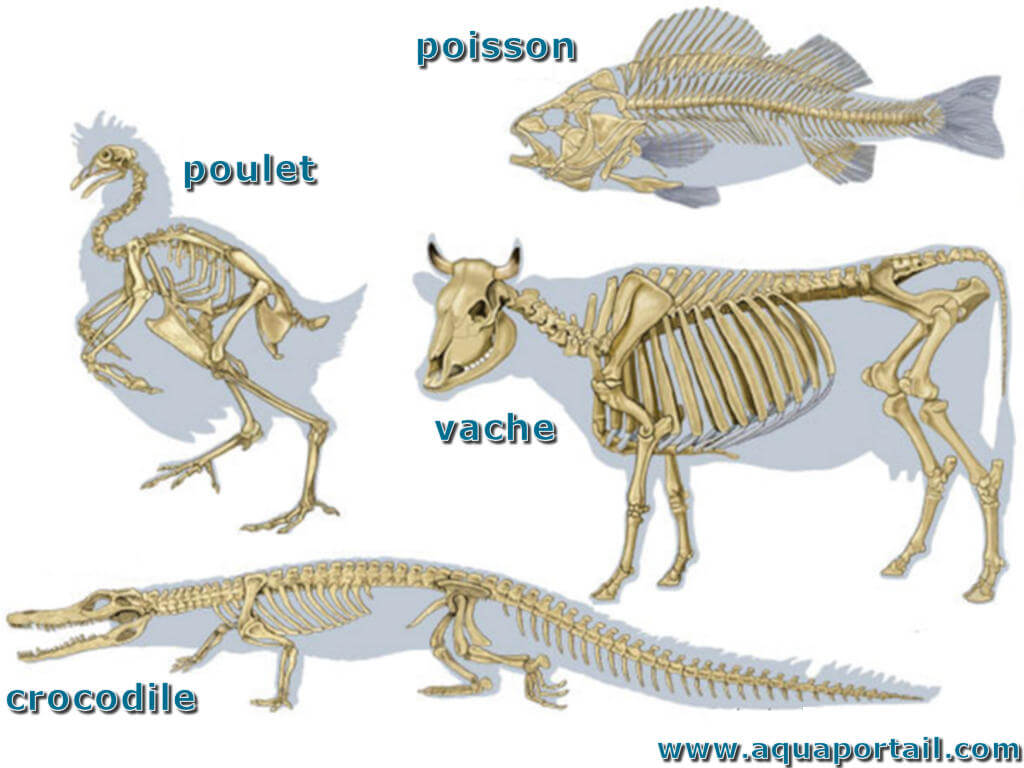
An endoskeleton is an internal skeleton and therefore contrasts with the exoskeleton (external) and the hydroskeleton.
skeleton

In biology, the skeleton or skeletal system is the anatomical system that provides support and protection for the soft tissues and muscles of living organisms...
E=mc2

The formula E=mc2 (E = m. c²) is a mass-energy equivalence equation according to the theory of relativity developed by Albert Einstein. It expresses that...
ebb tide

Ebb tide designates the outgoing, falling tide of the sea that begins at high water, also known as reflux.
