Extrusome
noun (n.)
Definition
An extrusome is a membrane-bound structure in certain eukaryotes that, under specific conditions, discharges its contents outside the cell. Extrusomes are extrusible bodies of various types such as: trichocysts, haptocysts, toxicysts, and mucocysts.
The extrusomes of a typical ciliate cell:

Extrusomes are vesicles containing an organized substance that generally changes shape when the vesicle undergoes exocytosis and releases its contents outside the cell, often within a few milliseconds.
Explanations
Extrusomes are membrane-bound organelles found in the cells of certain eukaryotic organisms that, under specific conditions, usually triggered by different types of stimuli (for example mechanical or chemical), discharge their contents outside the cell.
An extrusome is another name that can be given to a trichocyst (see also lattice organelle), used particularly for euglenophyceans. An extrusome is close to an ejectosome.
Notable extrusomes include mucocysts, which discharge a mucous mass sometimes used in cyst formation, and trichocysts, which discharge a fibrous rod. Stinging nematocysts found in cnidarians can also be considered extrusomes. Extrusomes found in dinoflagellates are important in the formation of red and black tides.
Certain predatory ciliates capture their prey with special structures called extrusomes. Among the different types of extrusomes are toxicysts, which are located in the oral region and release toxins that paralyze prey.
⭐ Extrusome is a term designating various cellular organelles, primarily in protists. Extrusomes have an intravacuolar, ejectable content. This is generally formed by dictyosomes.
There are different, probably non-homologous types with diverse functions. They include:
- mucocysts: organelles that discharge a mucous mass. They exist in certain protists, which use them to form protective envelopes, cysts, or to support movement in the case of diatoms and euglenoids. In dinophyte algae, a mucocyst is each of the polyhedral secretion-like bodies that, once propelled, form mucous clumps
- trichocysts or ejectosomes: organelles that fire filaments. They appear in certain protists, which use them for defense and to anchor food. Generally, the organelles are rod-shaped and arranged in rows perpendicular to the cell surface. The filament usually ends in a barbed arrowhead-like tip. This tip is not visible while inside the cell, so it is assumed to polymerize upon firing. They exist, for example, in ciliates, dinoflagellates, and cryptophytes. Three types of trichocysts are distinguished: discobolocysts (disc-shaped, for example in Ochromonas), taeniobolocysts (in the form of a spirally coiled ribbon, for example in Paramecium), and acanthobolocysts (cylindrical in shape, for example in Cryptomonas)
- toxicysts: organelles that discharge toxic components. They occur in certain protists that are active predators. Two types are distinguished: one shaped like an invaginated tube, the other shaped like a bottle (haptocysts)
- nematocysts: organelles present in certain cells of cnidarians. The cells are oval in shape and distributed across the animal's body surface, concentrating mainly on the tentacles. Nematocysts contain a stylet and a coiled filament, bathed in a stinging fluid. A pressure-sensitive operculum triggers the stylet. The stylet remains connected by the hollow filament through which the stinging fluid flows. When triggered, the cell dies and is replaced by a new one from undifferentiated cells. Nematocysts are used for defense and to capture prey.
Synonyms, antonyms
Spanish translation: extrusoma
1 synonym (similar meaning) for "extrusome":
0 antonyms (opposite meaning).
Related words and expressions to EXTRUSOME are directly connected by general or specific meaning.
The word EXTRUSOME is listed on page 1 of words starting with E in the dictionary glossary.
Related to "extrusome"
ejectosome
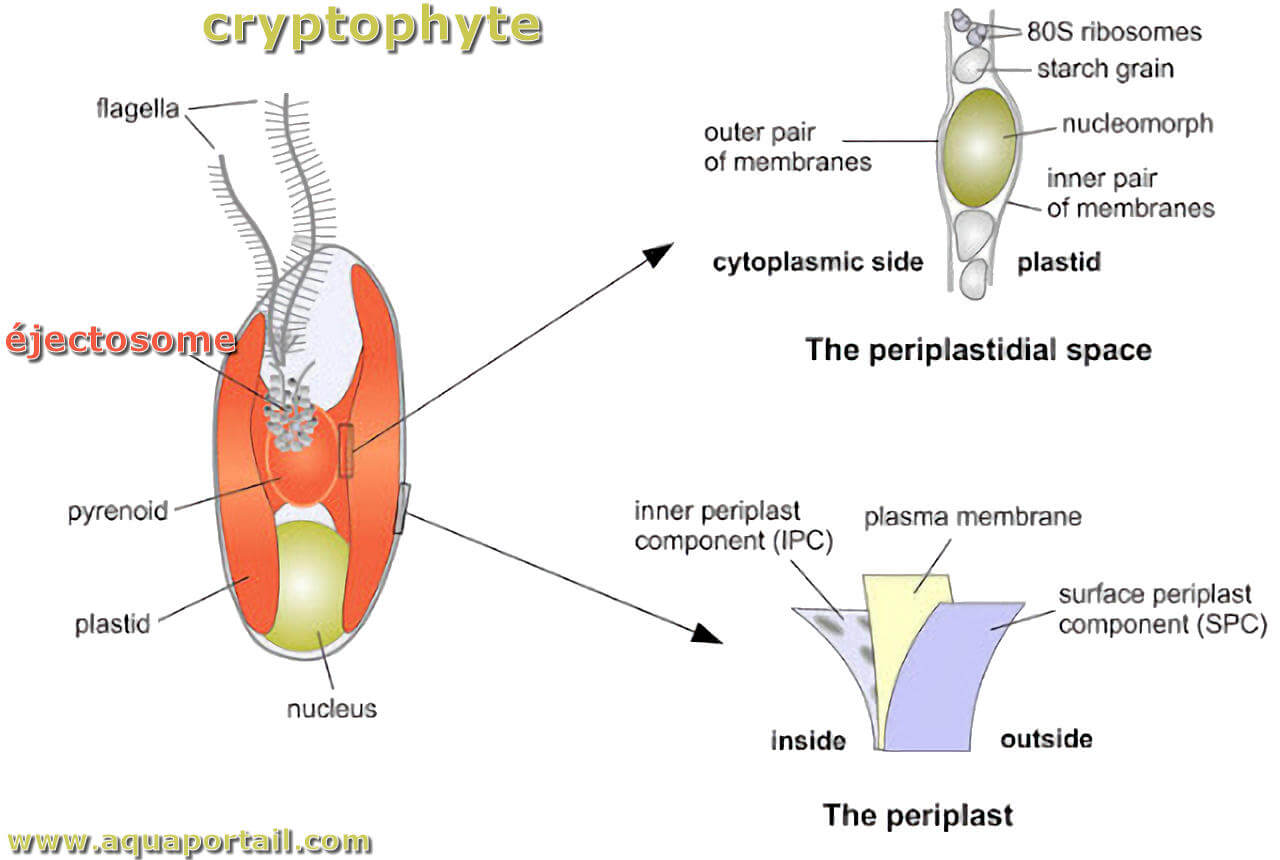
An ejectosome is a cellular organelle responsible for ejecting its contents from the cell. In cryptophytes, it is also referred to as a trichocyst.
E=mc2
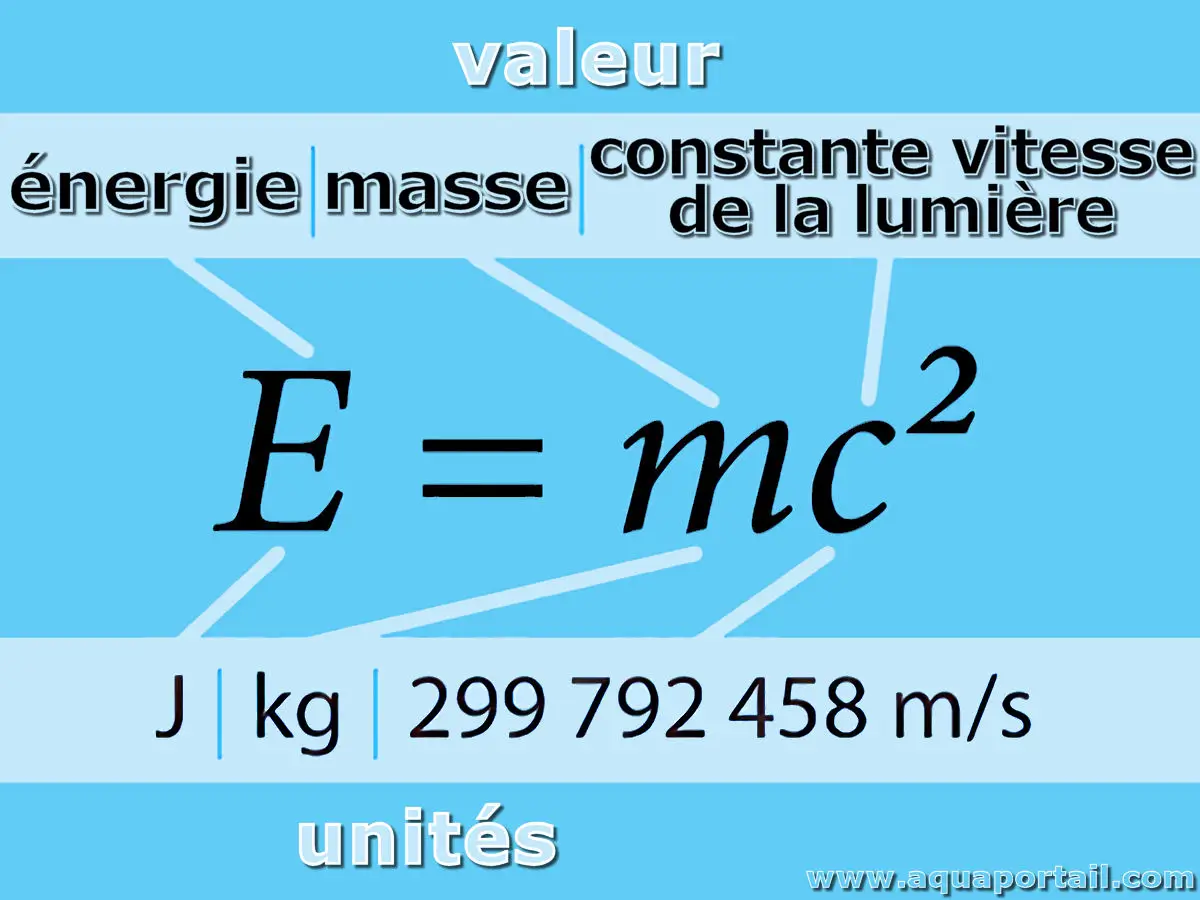
The formula E=mc2 (E = m. c²) is a mass-energy equivalence equation according to the theory of relativity developed by Albert Einstein. It expresses that...
ebb tide

Ebb tide designates the outgoing, falling tide of the sea that begins at high water, also known as reflux.
Ecdysozoa

Ecdysozoans, of the superphylum Ecdysozoa, are protostomes undergoing ecdysis within Bilateria.
