Epidermis
noun (n.)
Definition
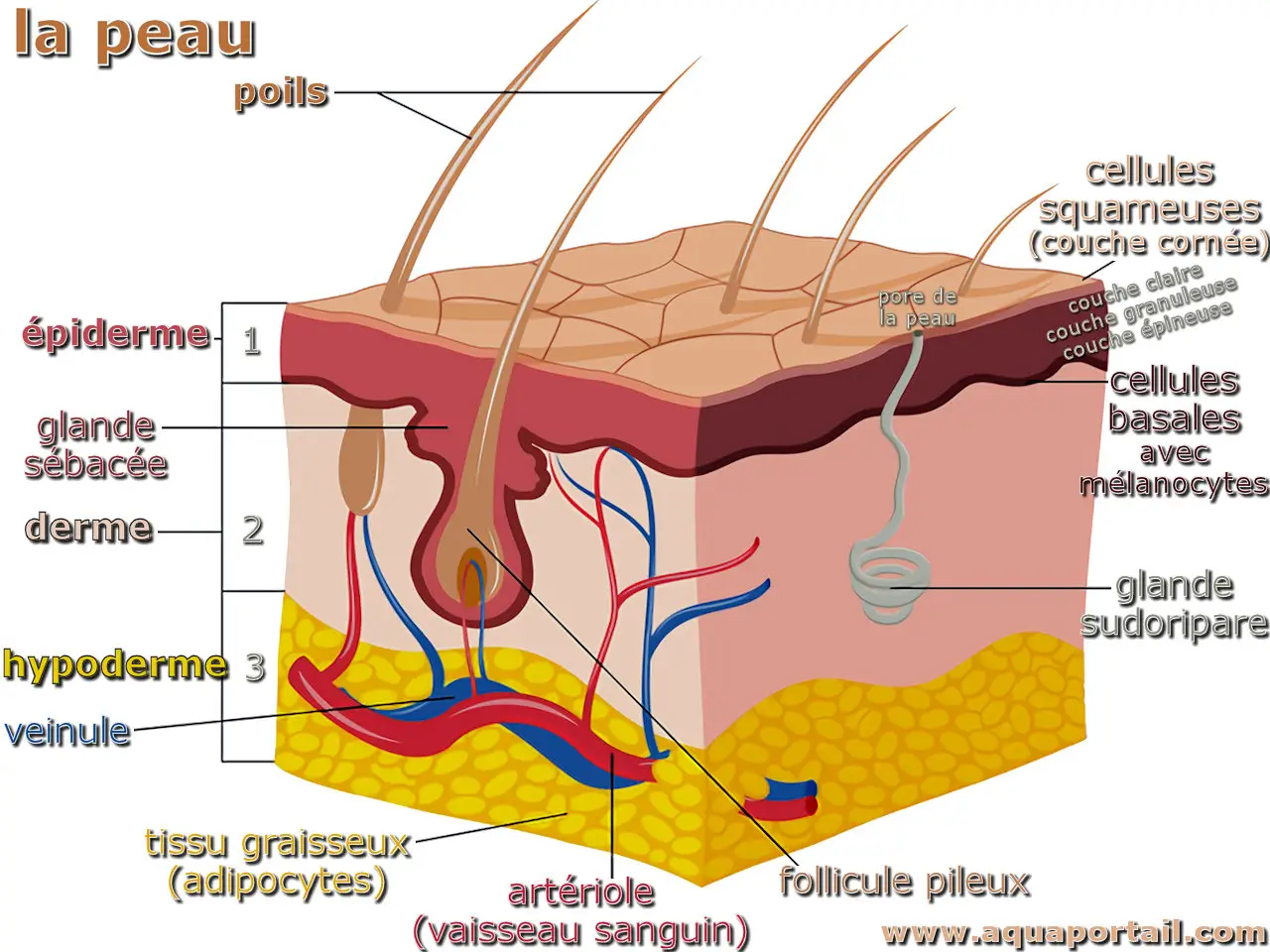
The epidermis is a multi-layered stratified squamous epithelial tissue that forms the outer covering of the organism. This membrane forms the outermost layer of the skin, located above the dermis. The epidermal zone is a superficial, cornified, and desquamated layer.
Diagram of skin showing the epidermis:

The epidermis is the outermost layer of the skin, forming a protective barrier between the body and the external environment. This epidermis is mainly composed of keratinocytes, which produce keratin, a protein essential for maintaining the integrity and suppleness of the skin. The epidermis is avascular, meaning it lacks blood vessels, and receives nutrients by diffusion from the underlying dermis.
The skin epidermis in zoology
The epidermis is the outermost layer of the skin and protects the body from the environment. The thickness of the epidermis varies depending on skin type; it is only 0.05 mm (0.002 in) thick on the eyelids and 1.5 mm (0.06 in) thick on the palms and soles of the feet.
The epidermis contains melanocytes (the cells in which melanoma develops), Langerhans cells (involved in the skin's immune system), Merkel cells, and sensory nerves. The epidermal layer itself is composed of five sublayers that work together to continuously rebuild the surface of the skin.
In vertebrates, the epidermis is always stratified; in terrestrial vertebrates, it also undergoes keratinization, causing the outermost layers to die and gradually exfoliate. This loss is compensated by continuous regeneration of the epidermis from its deepest region.
The epidermis produces glands that generally sink into the underlying connective tissue called the dermis. Also in terrestrial vertebrates, there are cornified epidermal formations such as claws, nails, hooves, horns, reptile scales, feathers, or hair.
In aquatic vertebrates, the epidermis is only involved in the formation of enamel on placoid or cosmoid scales.
5 layers of the epidermis
The cells of each layer of an epidermis change as they move from the basal layer toward the surface of the skin. In order, the epidermal layers are:
- Basal cell layer (stratum basale): layer of actively dividing columnar (cuboidal) cells attached to a basement membrane (basal lamina) marking the junction of the dermis and epidermis
- Spinous cell layer (stratum spinosum): prickle cell layer (Malpighian layer) with cells similar to basal cuboidal cells but shorter
- Granular cell layer (stratum granulosum): layer of cells containing keratohyalin granules, an early precursor of keratin
- Clear cell layer (stratum lucidum): thin translucent layer made of a substance called eleidin, a precursor of keratin
- Cornified cell layer (stratum corneum): outer layer of flattened, overlapping squamous cell remnants that have lost their nucleus and are filled with keratin, a water-insoluble protein
The 5 layers of the epidermis:
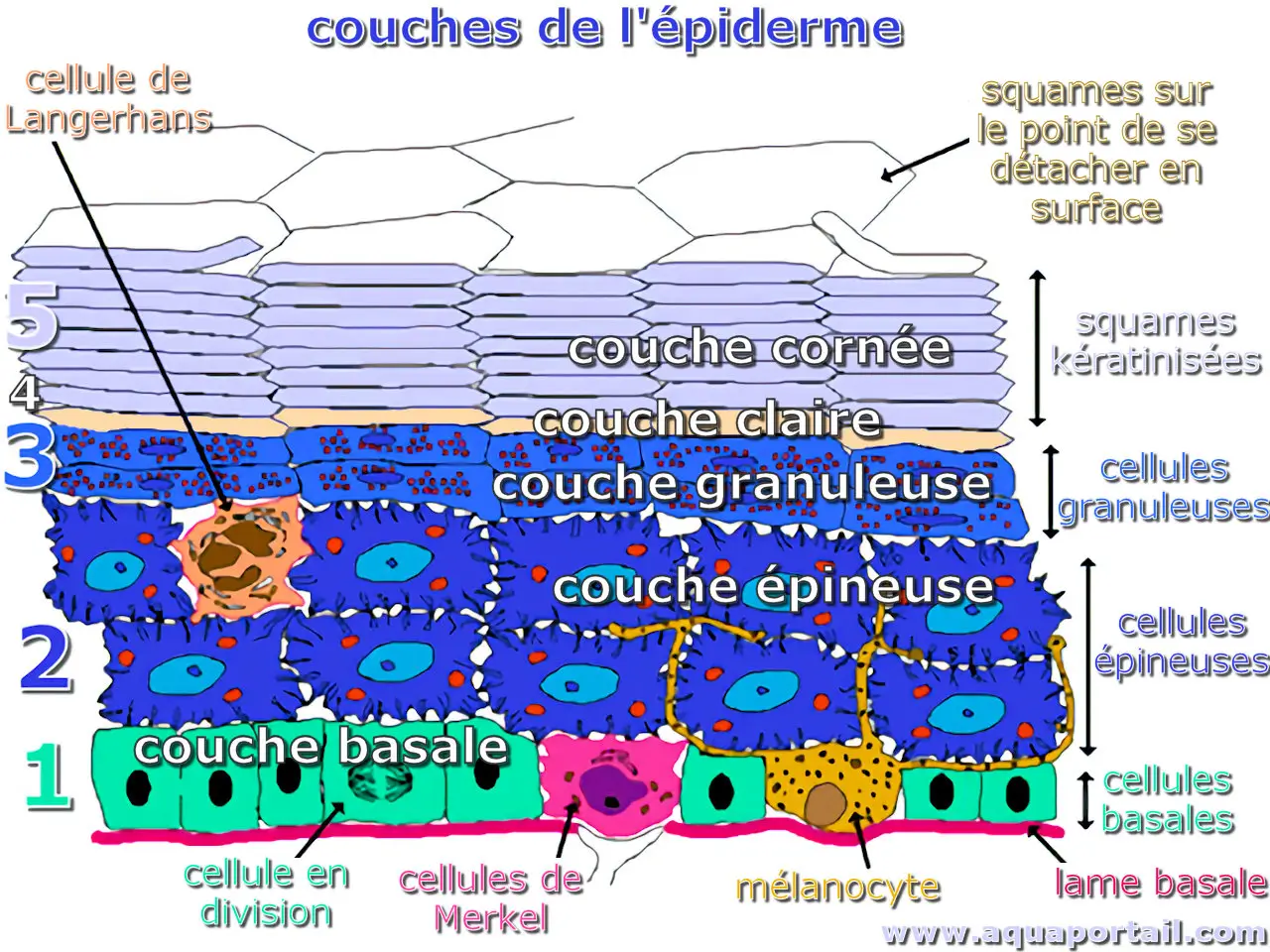
The epidermis consists of 5 layers (also called strata): basal layer, Malpighian spinous layer, granular layer, clear layer, and cornified layer. The clear (translucent) layer is sometimes absent in thin skin.
Stratum basale and stratum spinosum
The basal cell layer (basal layer, stratum basale, stratum germinosum) is a single layer of cells closest to the dermis. Cell division generally occurs only in this layer. Some of the dividing cells move up to the next layer.
The epithelial cell layer (Malpighian spinous layer, stratum spinosum) is the next layer (8 to 10 cell layers). The cells in these layers have numerous desmosomes, which anchor the cells to one another, and contain thick bundles of intermediate filaments (keratin).
When the cell shrinks slightly during fixation, the desmosomes of neighboring cells remain tightly bound to each other, and these connections resemble "spines", giving spinous cells their name.
Stratum granulosum and stratum lucidum
The granular cell layer (stratum granulosum) is the next layer (3 to 5 cell layers). As cells move upward into this layer, they begin to lose their nuclei and cytoplasmic organelles and transform into the keratinized squames of the next layer. The granules contain a lipid-rich secretion that acts as a waterproofing agent.
In thick skin, a fifth layer (stratum lucidum) is sometimes identified, between the granular layer and the cornified layer. It is a thin transparent layer that is difficult to distinguish in routine histological sections.
Stratum corneum
The layer of keratinized squames (cornified layer, stratum corneum) is the final layer. These are layers of dead cells reduced to flattened scales, or squames, filled with densely packed keratin. In histological sections, these cells are flat and difficult to see.
If soaked in sodium hydroxide, they swell, revealing stacks of 10 to 20 (or even 35) layers of cells packed in hexagonal columns. The squames at the surface of this layer flake off (making up most household dust).
Epidermal growth factor
Epidermal growth factor refers to a 53-amino-acid polypeptide, abbreviated "EGF"; it stimulates the proliferation of epidermal cells and many other cell types.
Keratinized surface cell remnants are continuously worn away or shed while new cells are formed by the lower layers of the epidermis. As they form, they are pushed outward toward the surface, gradually flattening and filling with keratin.
Keratin is a term derived from the Greek word keras meaning "horn". Melanocytes (pigment cells), located mainly in the basal layer of the epidermis, produce melanin (a dark pigment). The presence of melanin is one of the factors that determine skin color.
All individuals except albinos have melanin in their skin. It is vital for protection against the harmful effects of ultraviolet radiation. The epidermis is an epithelial tissue derived from the ectoderm.
A slight abrasion of the epidermis is called an excoriation.
The epidermis in botany
In botany, the epidermis is a thin film covering leaves as well as young stems and roots. In algae, it refers to the superficial cell layer, generally more pigmented than the others, without implying any specific functional organization.
Epidermal canal of fishes
An epidermal canal, in fishes, refers to each of the canals of the lateral line system resulting from the invagination of the epidermis and housing the neuromasts. There are 4 cephalic epidermal canals and a single thoracic epidermal canal.
Synonyms, antonyms
Spanish translation: epidermis
3 synonyms (similar meaning) for "epidermis":
- envelope
- papillary dermis
- skin
1 antonym (opposite meaning):
Related words and expressions to EPIDERMIS are directly connected by general or specific meaning.
The word EPIDERMIS is listed on page 1 of words starting with E in the dictionary glossary.
Related to "epidermis"
skin
The skin is the outer integumentary membrane enveloping the body of animals. It consists of three layers : the superficial epidermis, the dermis...
epidemic
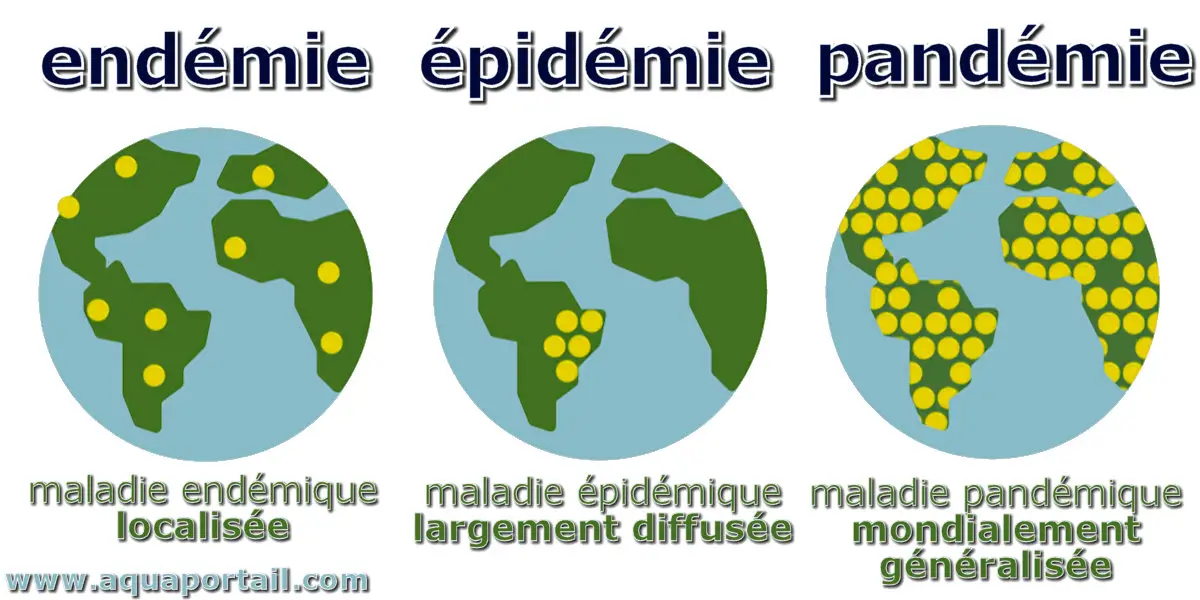
An epidemic is the widespread outbreak of an infectious disease within a community at a given time.
E=mc2
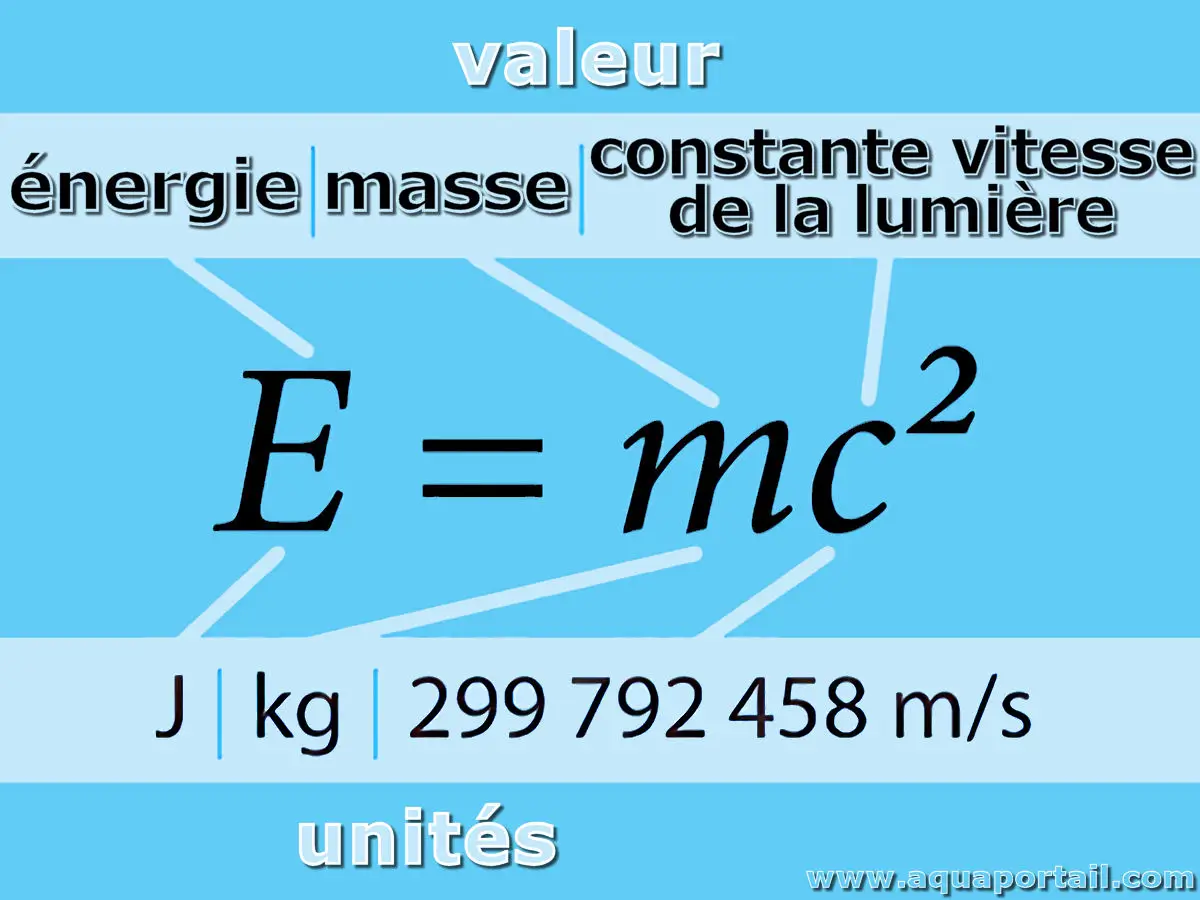
The formula E=mc2 (E = m. c²) is a mass-energy equivalence equation according to the theory of relativity developed by Albert Einstein. It expresses that...
ebb tide

Ebb tide designates the outgoing, falling tide of the sea that begins at high water, also known as reflux.
