Fertilization
noun (n.)
Definition
In biology, fertilization is the process by which a spermatozoon penetrates the oocyte, as in humans and most other animals, or in which the pollen tube penetrates the plant ovule during the reproduction process. This conception is a syngamy.
Fertilization with insemination:
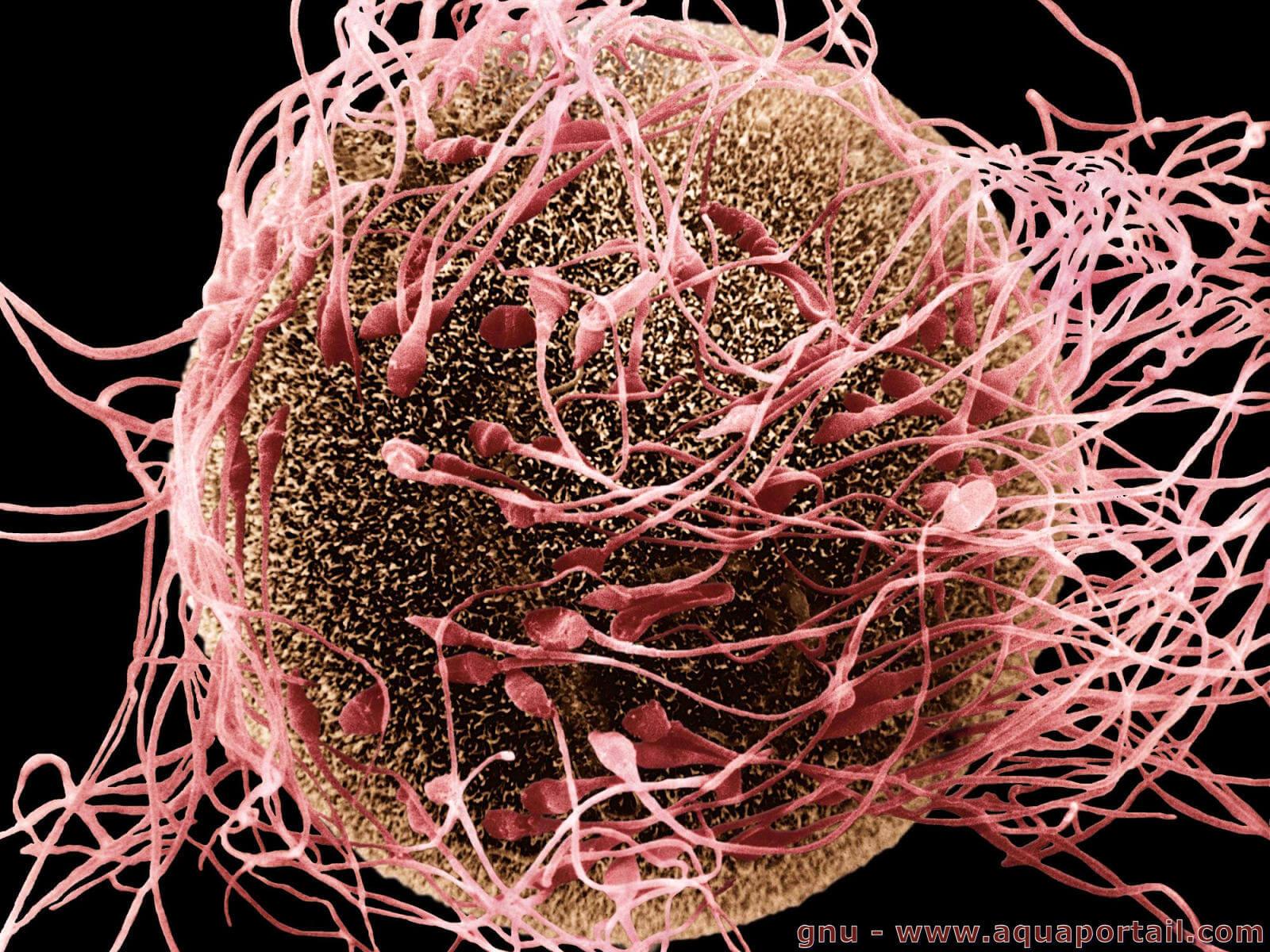
Fertilization refers to the fusion of male and female germ cells (see germ cell) in the context of sexual reproduction. Spermatozoa and an ovum are at the beginning of insemination and shortly before fertilization.
Explanations
Fertilization is the union of two gametes, a gamy; it brings about the genesis of an egg with 2n chromosomes through the union of two gametes with n chromosomes, of opposite sexes, during the process of sexual reproduction to form a zygote. This syngamy involves the fusion of gametic nuclei (karyogamy) and cytoplasm (plasmogamy).
Fertilization, when occurring during a sexual encounter, comes down to the union of two gametes to form a zygote. Note that an ovum only becomes an egg once it has been fertilized by a spermatozoon!
It therefore describes the fusion of a male gamete and a female gamete resulting in the formation of a diploid zygote. It includes plasmogamy (fusion of the two cytoplasms) and karyogamy (fusion of the two nuclei), the two phenomena possibly being separated in time, which leads to an intermediate dikaryophase (higher fungi).
In unicellular organisms, the zygote corresponds to the new individual. In metazoans, it undergoes the different phases of embryonic development (cleavage, blastulation, gastrulation). In angiosperms, fertilization is double and forms two embryos, one diploid which will give rise to the new individual and the other triploid which will give rise to the endosperm. Some species carry out self-fertilization (or autogamy), meaning the fusion of gametes from the same individual.
In animals, fertilization can be external or internal (inside the female's body). The main functions of fertilization are to restore the diploid state, transmit hereditary traits to the offspring, and activate the egg for cleavage.
See also: dual fertilization, pair fertilization, group fertilization, clustered fertilization, multiple fertilization.
In plants
In the case of plants, it is necessary to distinguish the phenomena of fertilization proper (intimate union of two sex cells to the point of merging their respective nuclei and, to a greater or lesser extent, their cytoplasms) from the biological process that precedes it, pollination, in which pollen grains develop in the pollen sacs of each anther of a stamen (male reproductive organ), are transported by wind or insects to the stigmas, where they germinate by emitting a pollen tube that reaches the ovary.
In this case, they are not gametes but spores, since each pollen grain contains two male gametes or reproductive cells, which are transported to a female reproductive organ (carpel) of another flower (cross-pollination) or of the same flower (self-pollination).
In animals
In the case of internal fertilization, spermatozoa, after mating, travel toward the fallopian tubes. The nourishing seminal fluid and the mucus of the female reproductive tract facilitate their movement toward the secondary oocyte, which has been released by the ovary and is located in one of the fallopian tubes.
Animal eukaryotic fertilization:

eukaryotic fertilization (fertilization and insemination) of an animal leads to the formation of the zygote which, from the very first cell division, forms the embryo, which develops into the morula, then the blastocyst. Fertilization follows oogenesis and spermatogenesis.
During human reproduction, the nucleus, centrioles, and flagellum of the spermatozoon enter the oocyte. The sperm's mitochondria remain outside the ovum. The entered and non-directly usable components of the spermatozoon are metabolized within the ovum.
Clustered fertilization is a mode of fertilization involving several males; see group fertilization. Group fertilization refers to a mode of fertilization characterized by a group of males spawning with a single female. During this group spawning, multiple fertilization may occur.
In women
For fertilization to occur in a human female, there are three main players: the ovum, sperm, and cervical fluid. Cervical fluid is produced under the influence of high estrogen levels in the first phase of the menstrual cycle and guides spermatozoa through the cervix, a critical process for conception. Because spermatozoa can survive for up to 5 days in this fluid, it is possible to have intercourse on Monday and conceive on Friday!
If the ovum is fertilized, it releases human chorionic gonadotropin (hCG), the pregnancy hormone, which signals the corpus luteum to continue releasing progesterone beyond the 16 days of the second half of the menstrual cycle. This is essential for maintaining the uterine lining necessary for the survival of the newly fertilized ovum. After a few months, the placenta takes over to maintain the lining and nourish the fetus.
If no fertilization occurs right after the follicular phase, followed by the ovulatory phase and ovulation, the luteal phase is marked by the transformation of the ruptured ovarian follicle (having released the oocyte) into a corpus luteum.
Gametogamy
Gametogamy, related to gametogenesis, is a type of fertilization involving the fusion of a male gamete with a female gamete to produce a zygote.
Synonyms, antonyms
Spanish translation: fecundación
6 synonyms (similar meaning) for "fertilization":
- conception
- gametogamy
- implantation
- insemination
- reproduction
- syngamy
1 antonym (opposite meaning):
Related words and expressions to FERTILIZATION are directly connected by general or specific meaning.
The word FERTILIZATION is listed on page 1 of words starting with F in the dictionary glossary.
Related to "fertilization"
fertile

Fertile describes any organism, animal or plant, that has the capacity to produce offspring, embryos, fruits, etc.
foliar fertilizer
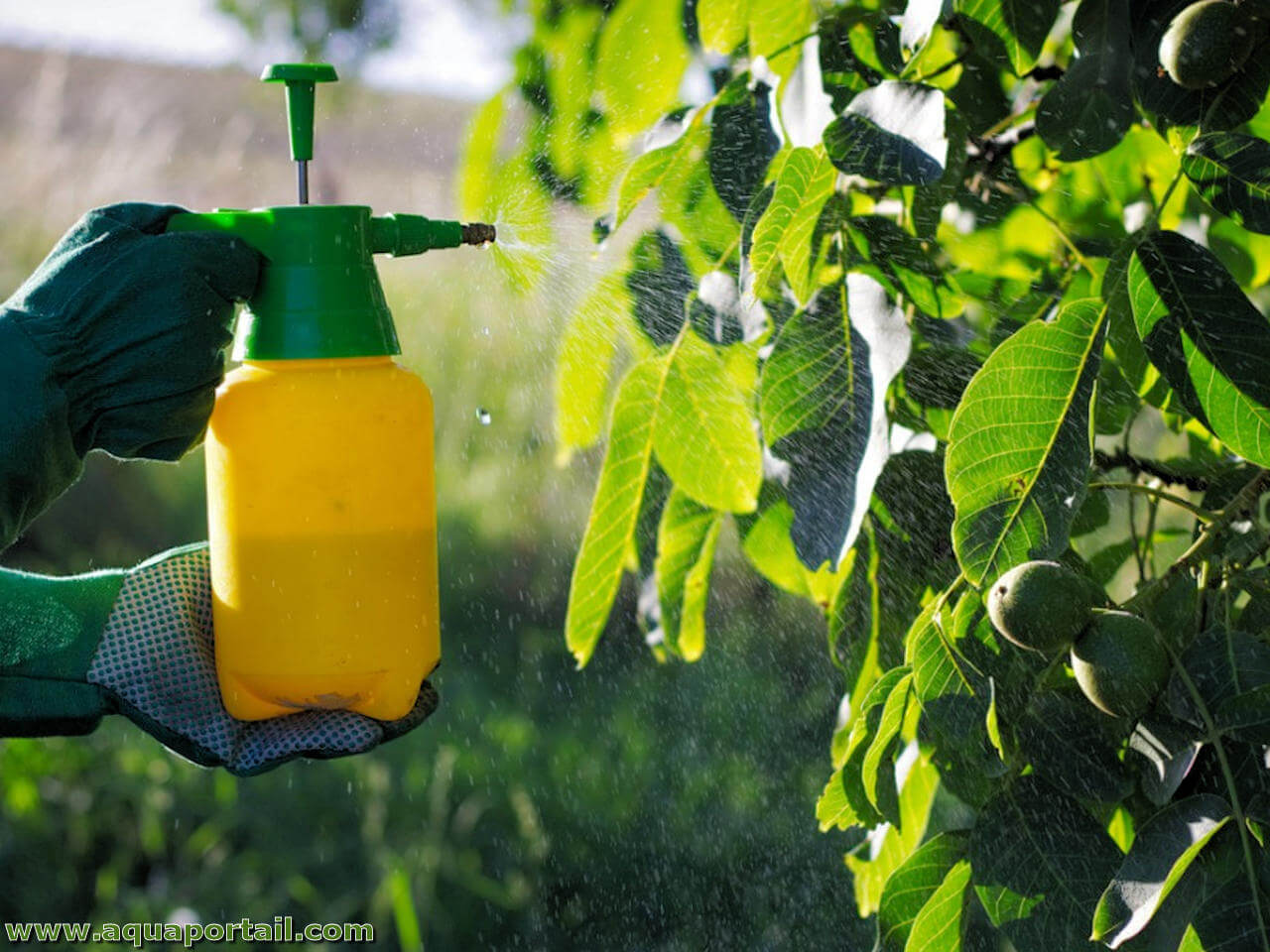
A foliar fertilizer is a fertilizer sprayed onto the leaves of a plant to improve its quality or fertilization.
self-fertile

A self-fertile organism fertilizes itself, and this property is called self-fertility. Self-fertile organisms, as opposed to self-sterile ones such...
bio-purification
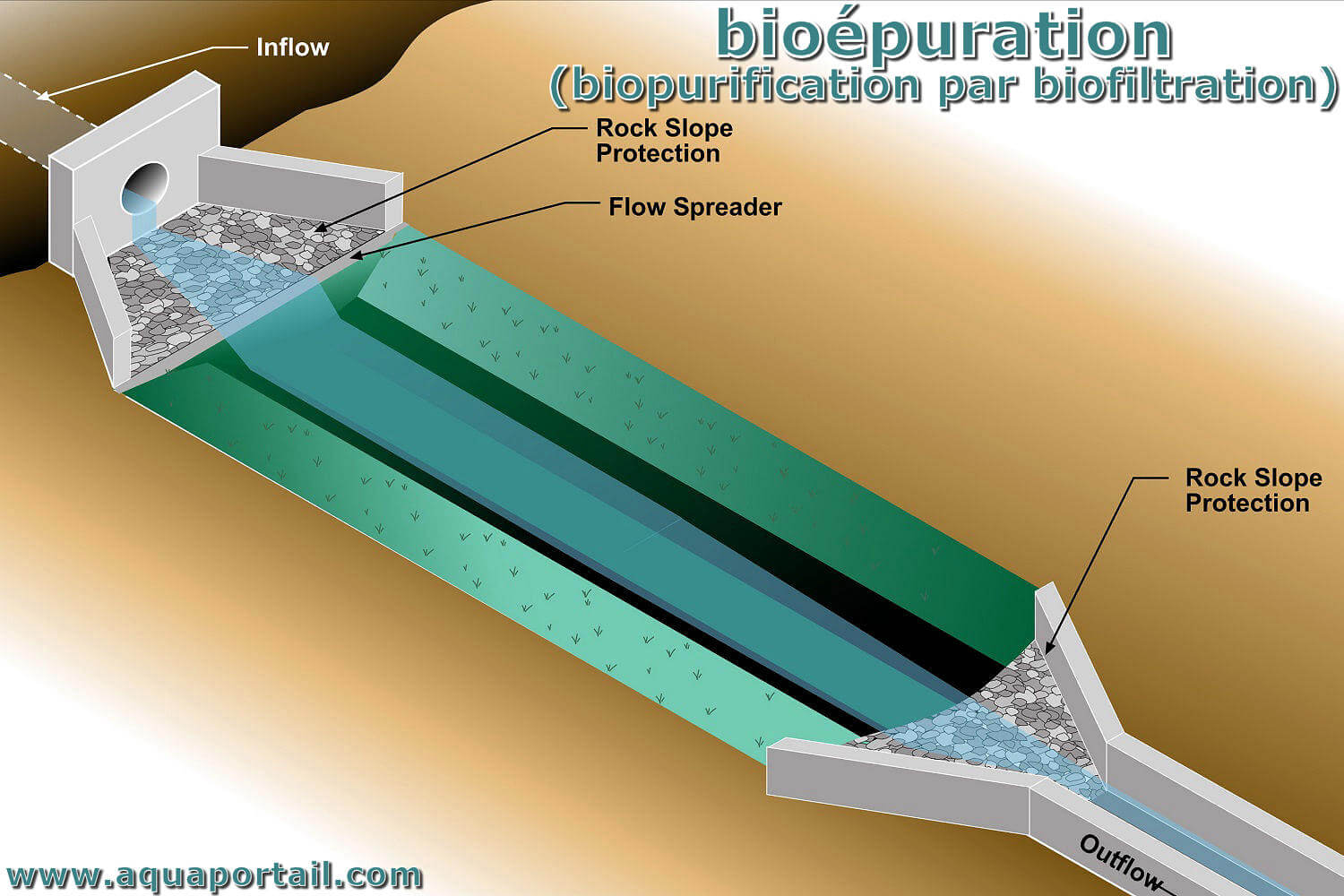
Bio-purification (biodepuration) refers to harnessing living organisms—such as plants, fungi, and symbiotic bacteria—to reduce pollution in an environment.
