Precipitation
noun (n.)
Definition
In meteorology, precipitation encompasses products, in liquid or solid form, resulting from the condensation of water vapor. These products fall from clouds and mists, or are deposited by humid air onto the ground.
Precipitation eventually forms a drainage network within a drainage basin.
Example of a precipitation formation process:

Precipitation is measured by the depth of drizzle, rain, hail, or snow. When rainfall originates from the evaporation of marine waters forced to condense and precipitate on the flank of a mountain acting as a geological barrier, it is called orographic precipitation.
Explanations
In chemistry, precipitation is the action or process of crystallizing a substance out of a solution, thereby forming a precipitate.
Precipitation is any liquid or frozen water that forms in the atmosphere and falls back to Earth. It comes in many forms, such as rain, sleet, and snow. Along with evaporation and condensation, precipitation is one of the three major parts of the global water cycle.
Types
Directly related types include:
- artificial precipitation consists of the precipitation of water particles, in liquid or solid form, attributable to human intervention on clouds such as seeding. Synonymous with induced precipitation; see also cloud seeding
- convective precipitation relates to precipitation caused by convective air movements in the atmosphere
- cyclonic precipitation describes precipitation caused by the activity of an atmospheric low-pressure system
- frontal precipitation specifies that precipitation is caused by the expansion of moist air rising along or near a frontal surface
- probable maximum precipitation, abbreviated as PMP, estimates the theoretical physical upper limit of precipitation of a given duration that can accumulate over a specified basin
- areal mean precipitation is the average depth of precipitated water over a given surface area, related to precipitation depth measurement
- in relation to mountains, orographic precipitation (as opposed to convective precipitation)
- point precipitation is precipitation falling at a specific gauge location whose depth is relatively localized, in contrast to areal mean precipitation
- induced precipitation
- channel precipitation designates and quantifies precipitation that falls directly onto the water surface within a channel
⭐ In chemistry, see the precipitation reaction, for instance involving precipitins and agglutinins.
Precipitation of water (H2O), including its impurities, originating from clouds, mists, or fog (both in contact with the ground) or from air containing water vapor (atmospheric humidity):
- falls to Earth in liquid or solid form under the pull of gravity
- or is driven by wind
- or is deposited on the ground or via runoff
- or accumulates in solid form from supercooled water as rime or glaze ice on surfaces
- or is deposited directly onto objects through condensation or deposition (resublimation)
Through evaporation and sublimation, water vapor enters the atmosphere. Clouds form from condensation nuclei through the condensation of moisture in the air. To fall back to the Earth's surface as precipitation, the size (or mass) of the condensed particles must exceed a certain threshold. Precipitation closes the water cycle.
Essentially, all atmospheric water precipitation, regardless of its state (solid or liquid), is produced by the condensation of water vapor contained in air masses, which occurs when those air masses are forced to rise and cool.
For condensation to occur, the air must be saturated with moisture and condensation nuclei must be present.
- Air is saturated when it holds the maximum possible amount of water vapor. Its relative humidity is then 100%, and saturation is normally reached by cooling the air, as cold air becomes saturated with less water vapor than warm air. For example, 1 m3 (35.3 cu ft) of air at a temperature of 25 °C (77 °F) containing 11 g (0.39 oz) of water vapor is unsaturated; however, those 11 g saturate it at 10 °C (50 °F), at which point condensation becomes possible.
- Condensation nuclei (which allow water vapor to return to its liquid state) are microscopic particles suspended in the air, such as particles from smoke or microscopic salt crystals left by the evaporation of sea spray. This is how clouds form. The minute size of the droplets and crystals enables them to remain suspended in the air and be carried by winds. Roughly 500 can be counted per cm3, yet 1 m3 of cloud holds barely three grams of water.
Products and designation
Depending on the nature of the precipitation element, liquid or solid, falling or deposited, the characteristics of the resulting products are:
- rain: water in drop form; related types include drizzle and freezing rain (supercooled water that freezes abruptly upon impact)
- fog (mist/drizzle): water in very tiny droplets, resulting in very light precipitation
- snow: loose, solid form (below roughly -12 °C / 10 °F, water vapor condenses directly into tiny ice crystals, a process called deposition or resublimation, which then aggregate into snowflakes)
- graupel / sleet: irregular, firm, very light (air-filled) ice pellets of 2 to 5 mm (0.08 to 0.20 in) that can form in strong updrafts along cold fronts
- hail: frozen raindrops (ice), larger than 5 mm (0.20 in) in diameter, composed of a condensation nucleus and multiple frozen layers. Hailstones may also consist of distinct irregular grains or clusters of grains. Formation occurs in heavy showers and thunderstorms; weather events can be severe
- diamond dust (ice crystals): ice needles that form directly by deposition from water vapor in ambient air during severe frosts and then settle to the ground
- dew (and mist): water vapor that condenses onto objects as fine water droplets
- hoarfrost: water vapor that deposits onto objects and covers cold surfaces (snowfields or ice) with up to 5 cm (2 in) of ice crystals
Products forming precipitation:

The main forms of precipitation are rain (and freezing rain), snow (and sleet), drizzle, and hail.
Effects
The frequency and average amount of precipitation are characteristic of their respective geographic zones. Precipitation is a major factor influencing local climate. This is especially relevant for agriculture, since only a sufficient amount of rainfall allows successful rainfed farming.
From a given ecozone, one can therefore approximate the average precipitation.
During the condensation of moist air, the deposition of water vapor, or the freezing of water, latent heat is released into the surrounding environment (air, water, vegetation, and other surfaces).
In the case of fog or weakly cooled rain, heat transfer is minimal. When precipitation evaporates or sublimates, heat is drawn from the environment, producing a cooling effect on the Earth's surface and partially regulating the microclimate.
Measurement of precipitation
To be valid, precipitation values must be scientifically comparable. In sustainable development, measuring surface retention is an important metric for studying runoff generated by light or moderate rainfall.
Precipitation is measured using a rain gauge and a pluviograph, the latter being used to record short-duration, high-intensity rainfall. These instruments must be installed in suitable locations free from interference by buildings, trees, or orographic features such as tall rocks.
Precipitation is measured in mm, corresponding to the depth of the water layer that would accumulate from precipitation on a flat, impermeable surface, which equals liters of water per square meter of ground (L/m2).
Since 1960, measuring precipitation with weather radars has become increasingly widespread. These are generally coupled directly with mathematical models to determine regional rainfall intensity and real-time streamflow in a given section of a river within that region.
Antecedent precipitation index
The antecedent precipitation index measures and sums weighted daily rainfall, serving as an indicator of soil moisture.
The antecedent precipitation index is an indicator of moisture stored in a watershed prior to a storm. It is a weighted sum of daily precipitation amounts used as a proxy for soil moisture.
It is generally assumed that the weight assigned to each day's precipitation is an exponential or inverse function of time, with the most recent rainfall carrying the greatest weight in the summation.
See also antecedent soil moisture.
If a watershed is already wet before a storm, more rainfall is likely to run off. A saturated watershed combined with heavy rain can trigger flooding. While remote-sensing methods exist to measure soil moisture for flood forecasting, this empirical method provides a simple, low-technology approach.
The antecedent precipitation index (API) is a daily measure of watershed wetness based on rainfall that occurred over preceding days. More recent rain contributes more to the API than rain from earlier days. This can be expressed simply as "today's rain plus a decay factor multiplied by yesterday's API". Originally proposed for flood forecasting, it is a longstanding concept that remains relevant today.
High API values mean the watershed is wet and any additional rain is likely to run off. Low values mean little rain has fallen recently and the watershed is dry, so rainfall is likely to infiltrate the soil and wet vegetation without reaching a stream. API has been linked to initial abstraction, that is, the amount of rain "lost" before runoff begins. As API increases, the watershed becomes wetter, so initial abstraction decreases and more rain runs off.
Other meanings
Beyond meteorological precipitation, the word precipitation is used to describe undue haste in an action.
In chemistry, precipitation is the formation of a precipitate in a solution using a precipitant. Precipitation is the creation of a solid from a solution. When the reaction occurs in a liquid solution, the solid formed is called a "precipitate". The chemical agent that induces solid formation is called a "precipitant".
Synonyms, antonyms
Spanish translation: precipitación
2 synonyms (similar meaning) for "precipitation":
0 antonyms (opposite meaning).
Related words and expressions to PRECIPITATION are directly connected by general or specific meaning.
The word PRECIPITATION is listed on page 1 of words starting with P in the dictionary glossary.
Related to "precipitation"
bio-purification
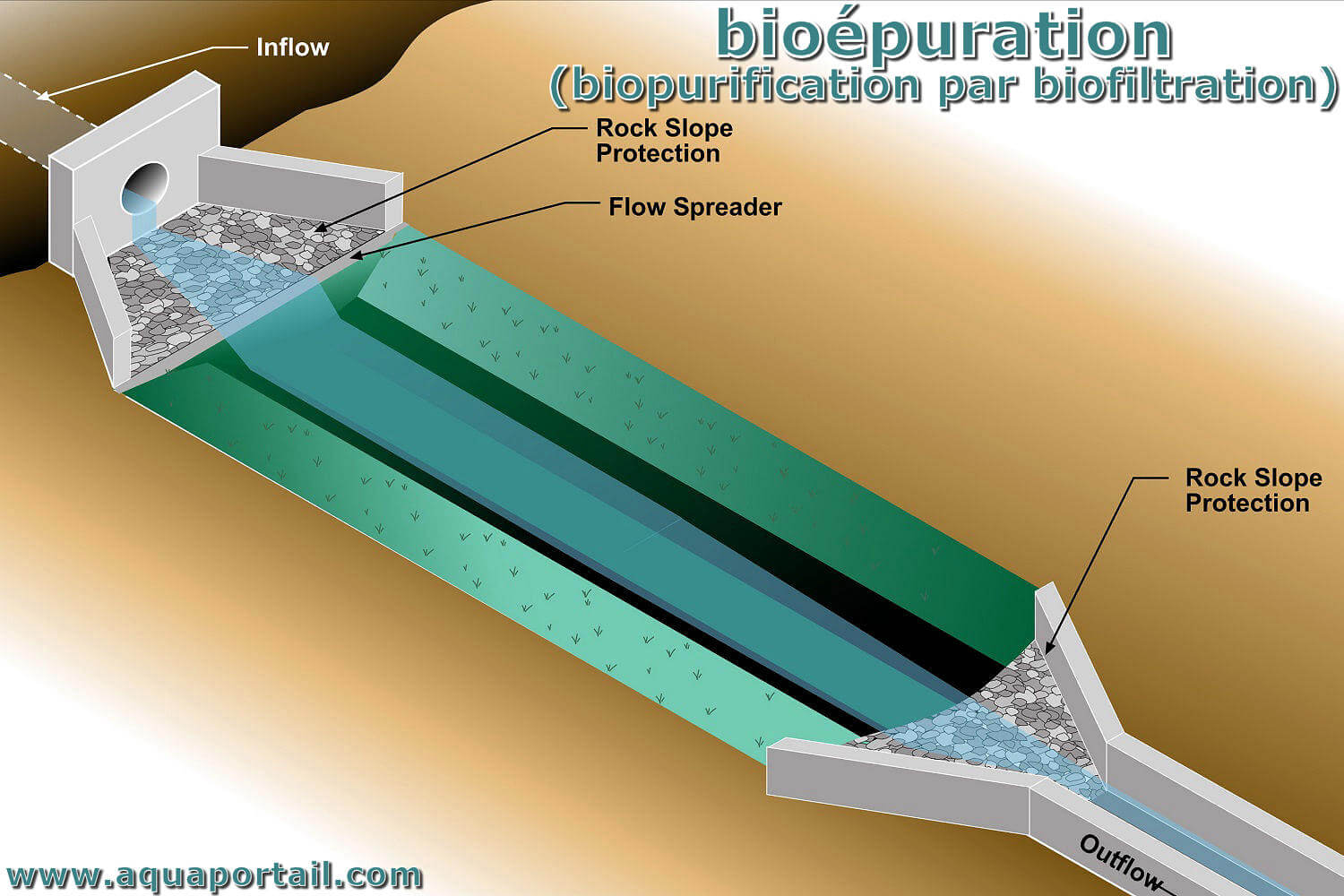
Bio-purification (biodepuration) refers to harnessing living organisms—such as plants, fungi, and symbiotic bacteria—to reduce pollution in an environment.
civilization

A civilization is generally defined as an advanced state of human society containing highly developed forms of government, culture, industry, and social...
cohabitation

Cohabitation is the simultaneous coexistence of several elements, similar or different, in the same place (habitat) over the same (extended) period.
concentration

Concentration (geographic) is the clustering of numerous elements around a central location.
