Centrosome
noun (n.)
Definition
The centrosome is a cytoplasmic cellular organelle that acts as a microtubule-organizing center for nucleation in animal cells. This cell center consists of a pair of centrioles. It is embedded in an aggregate of surrounding proteins called pericentriolar material.
A centrosome in an animal cell:
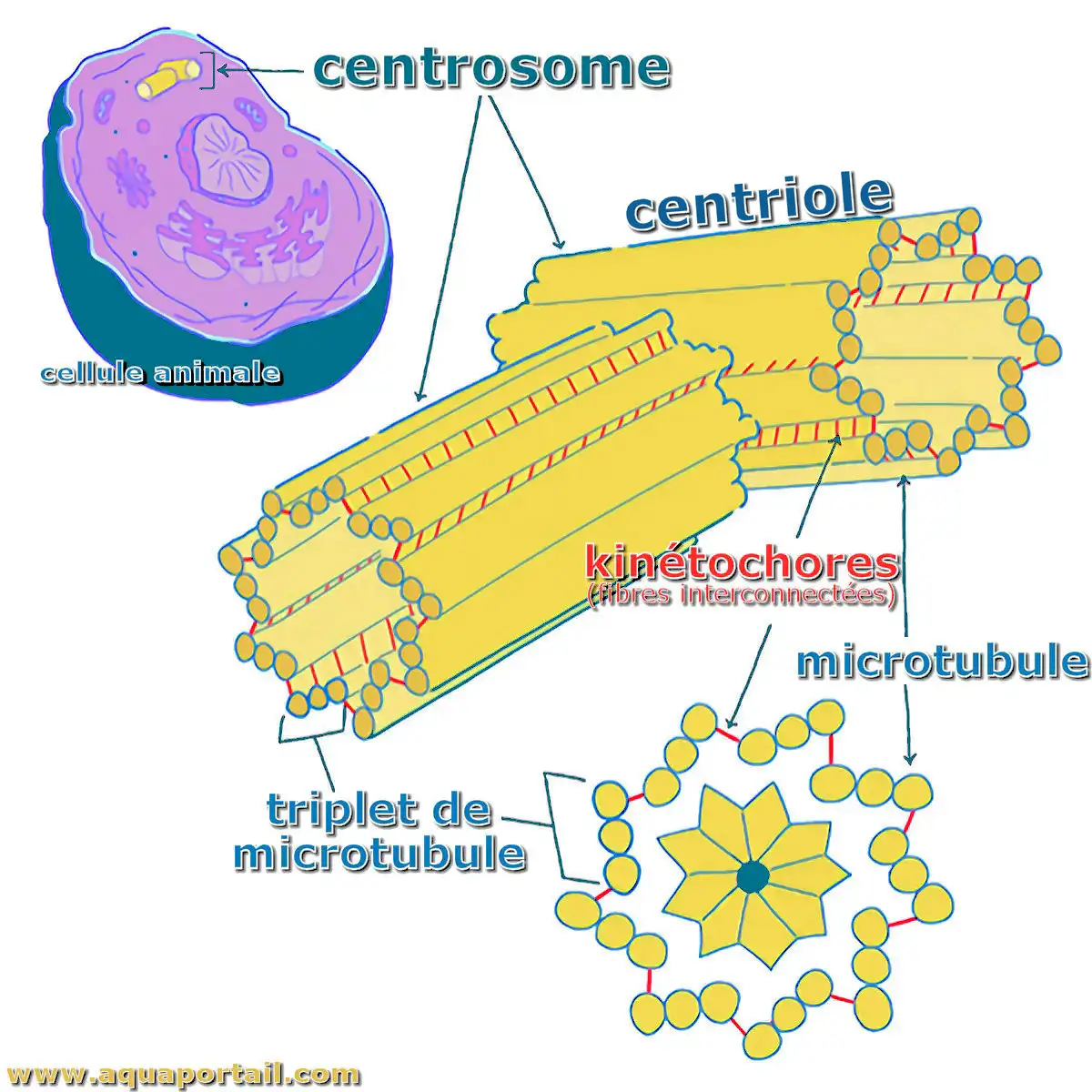
The centrosome of an animal cell consists of two centrioles, themselves formed of microtubule triplets and connected by protein fibers.
Explanations
A centrosome is an assembly, a non-membrane-bound cellular structure located near the nucleus and composed of amorphous material surrounding, in most animal cells, a pair of centrioles arranged perpendicularly to each other, which divides in two during mitosis and serves as a microtubule-organizing center. The centrosome is composed of tubulin and other specific proteins. It is the site of microtubule polymerization.
Plant cells generally do not contain centrosomes. Thus, centrosomes are absent in spermatophytes and other higher plants (angiosperms).
In higher plants, there are no centrioles. Higher plants and the oocytes of most animal species lack centrosomes; in these cases, the bipolar spindle is formed by alternative, centrosome-independent mechanisms. In fungi and diatoms, the centrosome is a plaque bound to the nuclear membrane and is called the spindle pole body.
Role and structure
The main functions of a centrosome are the nucleation and organization of microtubules, so these structures (along with spindle pole bodies) are generally called microtubule-organizing centers. Around centrosomes, an array of microtubules is formed, radially creating an aster.
A centrosome and its centrioles:
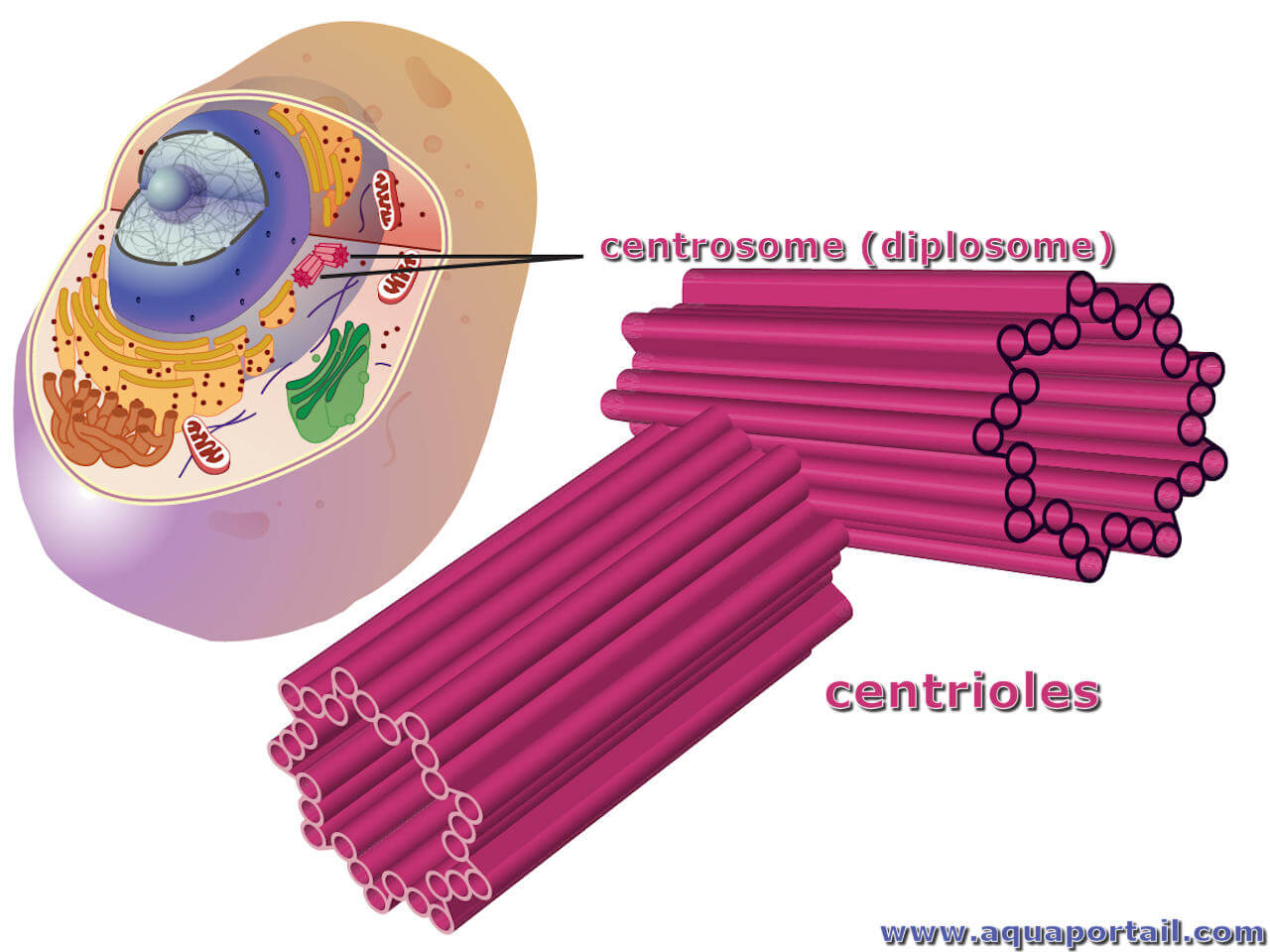
The centrioles of the centrosome are involved in organizing the microtubules that serve as the skeletal system of the cell. They help determine the location of the nucleus and other organelles within the cell.
Centrosomes play a fundamental role in establishing the interphase microtubule network and the mitotic spindle. During interphase of the cell cycle, microtubules determine cell shape, polarity, and motility, whereas during mitosis they form the mitotic spindle, necessary for chromosome segregation between the two daughter cells.
The single centrosome (formed of two centrioles and pericentriolar material) existing during the G1 phase of mitosis must be duplicated (only once). Consequently, during the G2 phase, the cell contains two centrosomes, each with two closely linked centrioles. These two centrosomes separate at the onset of mitosis and position themselves at opposite poles of the cell, thereby facilitating the assembly of a bipolar mitotic spindle.
The centrosome is a clearly visible region in the cytosol, generally located centrally and near the nucleus. It consists of a pair of orthogonal, cylindrical centrioles embedded in a protein matrix, the pericentriolar matrix.
Each centrosome gives rise to a large number of microtubules constituting the mitotic spindle apparatus. Following nuclear and cell division, each daughter cell receives one of the two centrosomes.
Centrosome and centrioles
Centrioles are small barrel-shaped structures that are structurally related to (and can develop into) the basal bodies of centrosomes, which is essential for the formation of cilia and flagella.
In vertebrates, centrioles are composed of nine microtubule triplets, whereas in Drosophila and Caenorhabditis elegans (a small, transparent, non-parasitic nematode worm about one millimeter / 0.04 in long), they almost always have doublet or singlet microtubules, respectively.
The pericentriolar material surrounding the centrioles has a fibrous appearance and, in a human centrosome, contains more than 100 different proteins. These include proteins necessary for MT nucleation (such as γ-tubulin) and other associated proteins, some of which are conserved in fungal spindle pole bodies (the functional equivalents of the centrosome in that group).
Other proteins are not as well conserved, yet many possess coiled-coil domains indicating they likely serve a structural function, particularly in capturing cell-cycle regulatory proteins.
In most animal species, the sperm contributes to embryo formation by providing a set of chromosomes and, depending on the species, one or two centrioles, which combine with proteins present in the oocyte to reconstitute a functional centrosome. Once the first centrosome is formed in the embryo, this organelle must be duplicated and segregated in each cell cycle synchronously with the genome.
Cycle
A centrosome undergoes the fundamental steps of the nucleation cycle. In a dividing cell (M phase), at each end of the mitotic spindle lies a centrosome composed of two orthogonally positioned centrioles (at a 90° angle). In this way, at the end of mitosis, each daughter cell receives 1 centrosome with 2 centrioles.
At the end of M phase, the 2 centrioles separate in a process called "disengagement" (or "disorientation"). According to a recent model, centriole disengagement is a necessary event to permit subsequent duplication, ensuring that centrioles are duplicated only once per cell cycle. Disengagement is also thought to allow the establishment of a proteinaceous tether that keeps the 2 future "mother" centrioles closely linked into the next cell cycle.
In animal cells, the initiation of DNA replication and centrosome duplication is at least partially coupled by the G1-specific activation of cyclin-dependent kinase 2 (CDK2). Centrioles (like DNA) are duplicated during the S phase of the cell cycle. During this key process of the centrosome cycle, alongside each "mother" centriole, exactly 1 procentriole is formed.
The 2 new procentrioles continue to elongate later, so that in G2 the centrosome consists of two pairs of centrioles. Up to this point, the two pairs of centrioles function as a single microtubule-organizing center, indicating they are structurally connected.
At the G2/M transition, the connection between the 2 "mother" centrioles is severed and the two new centrosomes are separated by the action of microtubule-dependent motor proteins. Simultaneously, a process called centrosome "maturation" results in the incorporation of new γ-TuRC complexes (see γ-tubulin), enabling an increase in microtubule nucleation activity.
After mitotic spindle formation, the 2 centrosomes associate with the 2 spindle poles, segregating with the two future daughter cells and thus completing the centrosome cycle.
During the cell cycle, the mechanisms ensuring DNA replication and proper chromosome segregation are primarily post-translational: phosphorylation and proteolysis (see also regulation of cell cycle progression). Phosphorylation of the retinoblastoma protein (pRb) is a critical event in cycle coordination.
Proteolysis takes place at the end of mitosis, when the tight association between the 2 centrioles at each spindle pole is broken. Some studies indicate that the protease responsible for this process is separase, an enzyme originally identified for its role in sister chromatid separation.
Synonyms, antonyms
Spanish translation: centrosoma
3 synonyms (similar meaning) for "centrosome":
- cell center
- centrosphere
- procentriole
0 antonyms (opposite meaning).
Related words and expressions to CENTROSOME are directly connected by general or specific meaning.
The word CENTROSOME is listed on page 1 of words starting with C in the dictionary glossary.
Related to "centrosome"
central nodule

A central nodule, or median nodule, is a thickening located at the center of the valve between the two branches of the raphe in diatoms.
bacterial artificial chromosome
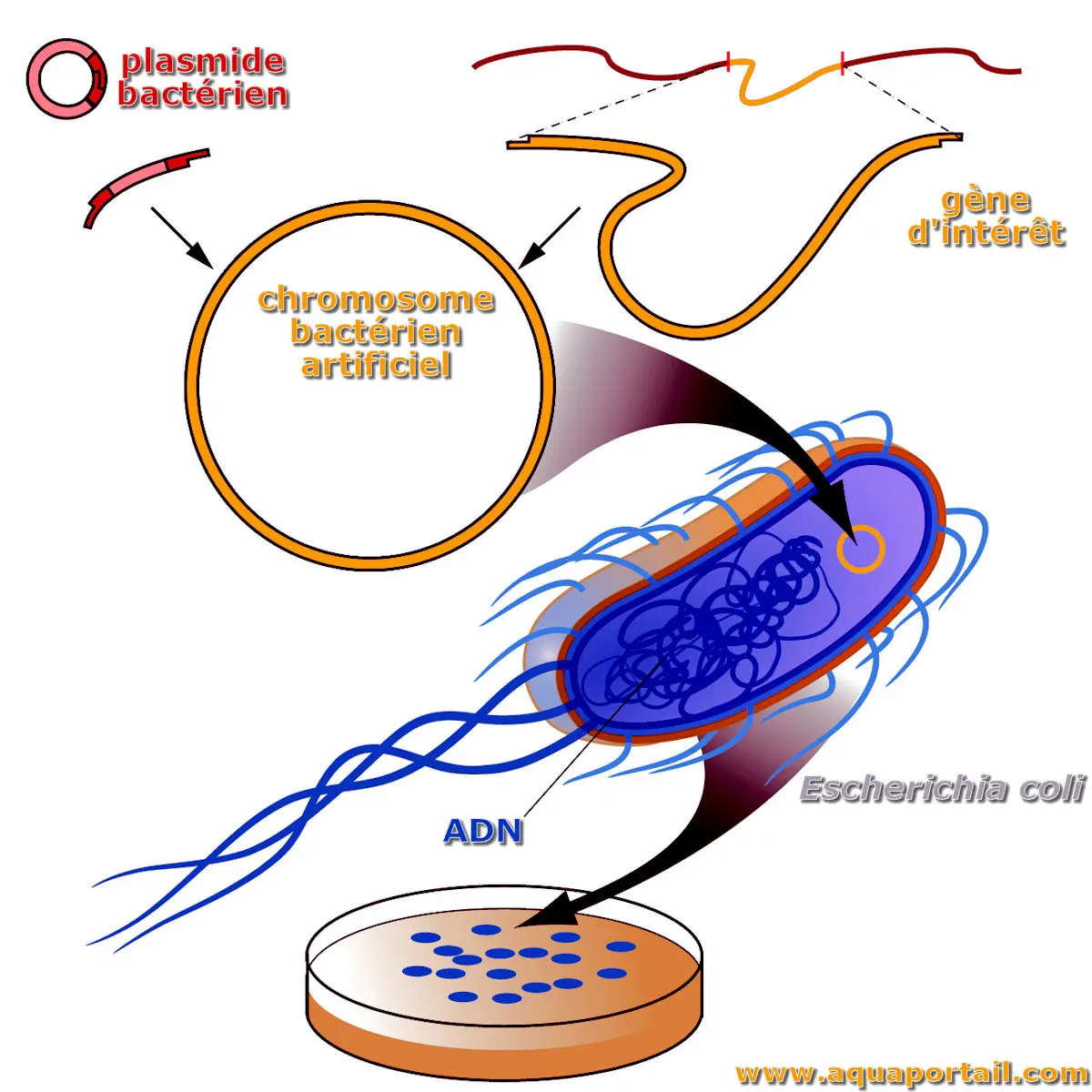
A bacterial artificial chromosome (BAC) is a DNA construct, based on a functional fertility plasmid or F-factor, used for transformation and bacterial cloning...
dictyosome
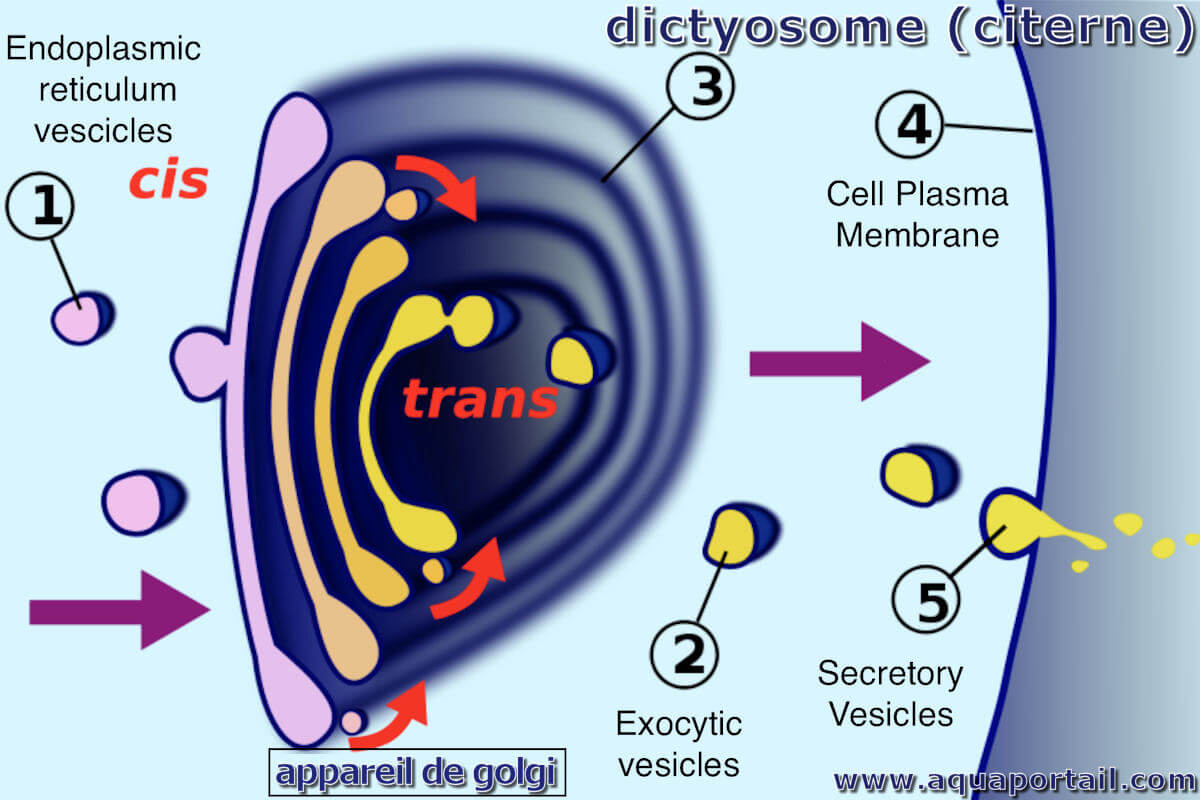
A dictyosome is a stack of flattened, membrane-bound cellular cavities shaped like small concave disks; these cavities are called cisternae.
ejectosome
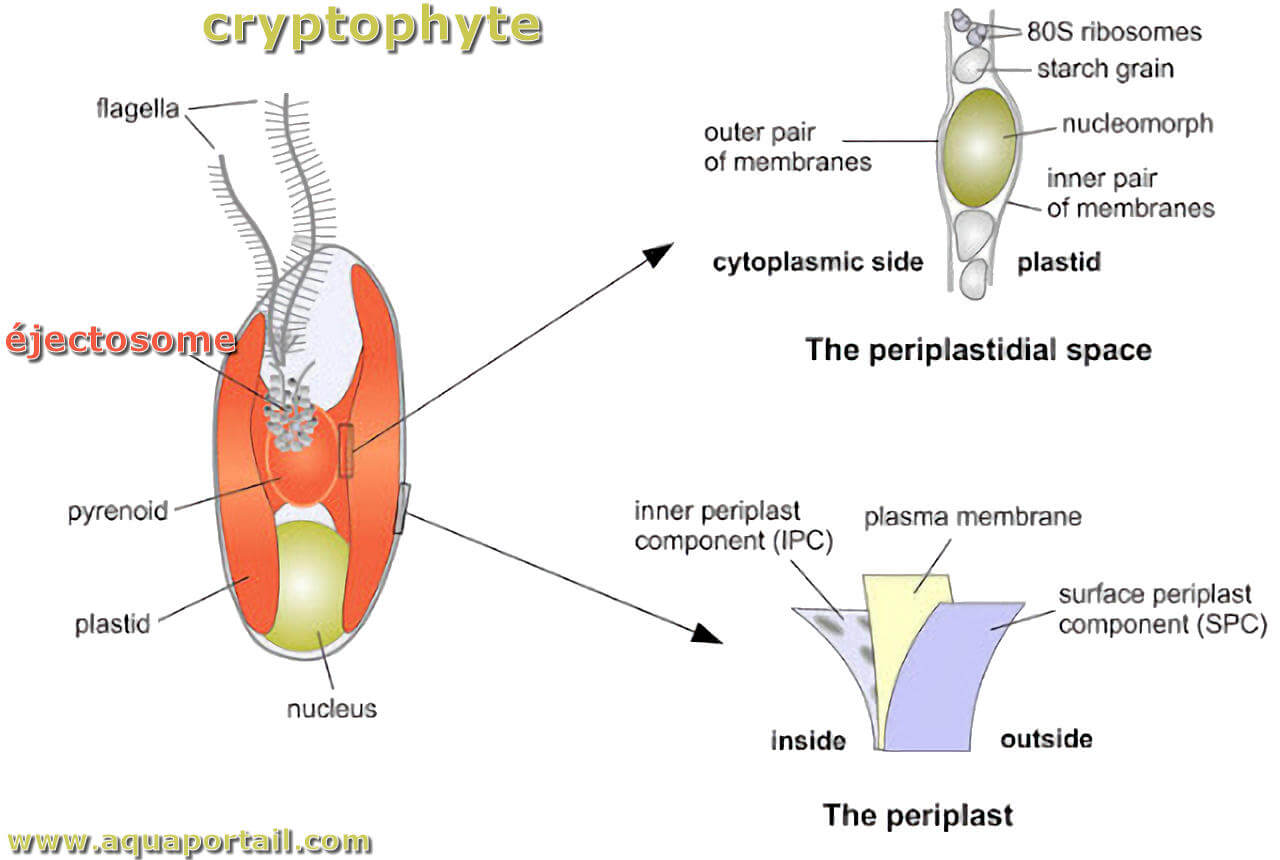
An ejectosome is a cellular organelle responsible for ejecting its contents from the cell. In cryptophytes, it is also referred to as a trichocyst.
Simple summary
The centrosome is a cellular structure that regulates microtubules within the cell. Located near the nucleus in most eukaryotic cells, it serves as the primary microtubule-organizing center, helping maintain the structural integrity of the cytoskeleton. This organelle is composed of a pair of centrioles, cylindrical structures formed of microtubule triplets, surrounded by an amorphous protein mass called pericentriolar material. The latter is responsible for organizing and anchoring the microtubules that extend throughout the cytoplasm.
