Fly
noun (n.)
Definition
A fly is an insect of the order Diptera with two transparent wings of the suborder Brachycera with short antennae. The best-known species is the fruit fly (Drosophila melanogaster). The housefly (Musca domestica) is the most common and widespread species in the world.
The term fly is commonly used for almost any small flying insect.
The gray flesh fly (Sarcophaga carnaria):

The gray flesh fly, species Sarcophaga carnaria, is a large species yet similar in appearance to other members of the fly group.
Explanations
Flies are found worldwide and occur in regions ranging from the Arctic to the tropical rainforests of the equator.
A fly is one of many insects characterized by using a single pair of wings for flight and the reduction of the second pair of wings into small club-shaped organs (called halteres or balancers) used for balance. The halteres vibrate with the wings and sense changes in direction.
Flies generally have sucking mouthparts (or piercing-sucking mouthparts in certain species) and may feed on plant juices or decaying organic matter. While certain nematocerans (such as mosquitoes) feed on blood, a few brachycerans (such as horseflies, tsetse flies, or the stable fly) are also hematophagous.
Flies love the smell of food, garbage, feces, and other foul-smelling substances. They are also attracted to the human body if a layer of natural oils, salt, or dead skin cells has accumulated.
Flies are more than just a nuisance. These buzzing insects also play an important role in nature, notably by pollinating plants, decomposing organic matter, and serving as food for other insects and animals. Certain fly species, including hoverflies, act as pollinators for a variety of plants that do not attract bees.
✅ The first recorded use of flies in a criminal investigation dates back to 13th-century China. By studying the fly population and their larval stages at a crime scene, these insects help forensic doctors estimate the time of death. The most useful fly species in forensic investigations include houseflies, blowflies, and flesh flies.
Flies are superb mimics (Batesian mimicry), particularly in the families Bombyliidae (bee flies), Syrphidae (flower flies), and Asilidae (robber flies). Bee flies are generally fast-flying insects resembling small bees, whereas robber flies are generally larger, fly more slowly, and a few resemble bumblebees.
Anatomy
Flies do not have chewing mouthparts. Instead, they regurgitate salivary enzymes that liquefy solid food so they can suck it up.
Flies have chemoreceptors on their tarsi, or feet, which help them determine whether the sandwich they have just landed on makes a tasty snack.
There are a few flies, mostly parasites or inhabitants of islands or alpine zones, that have no wings at all (apterous species).
A housefly Musca domestica:
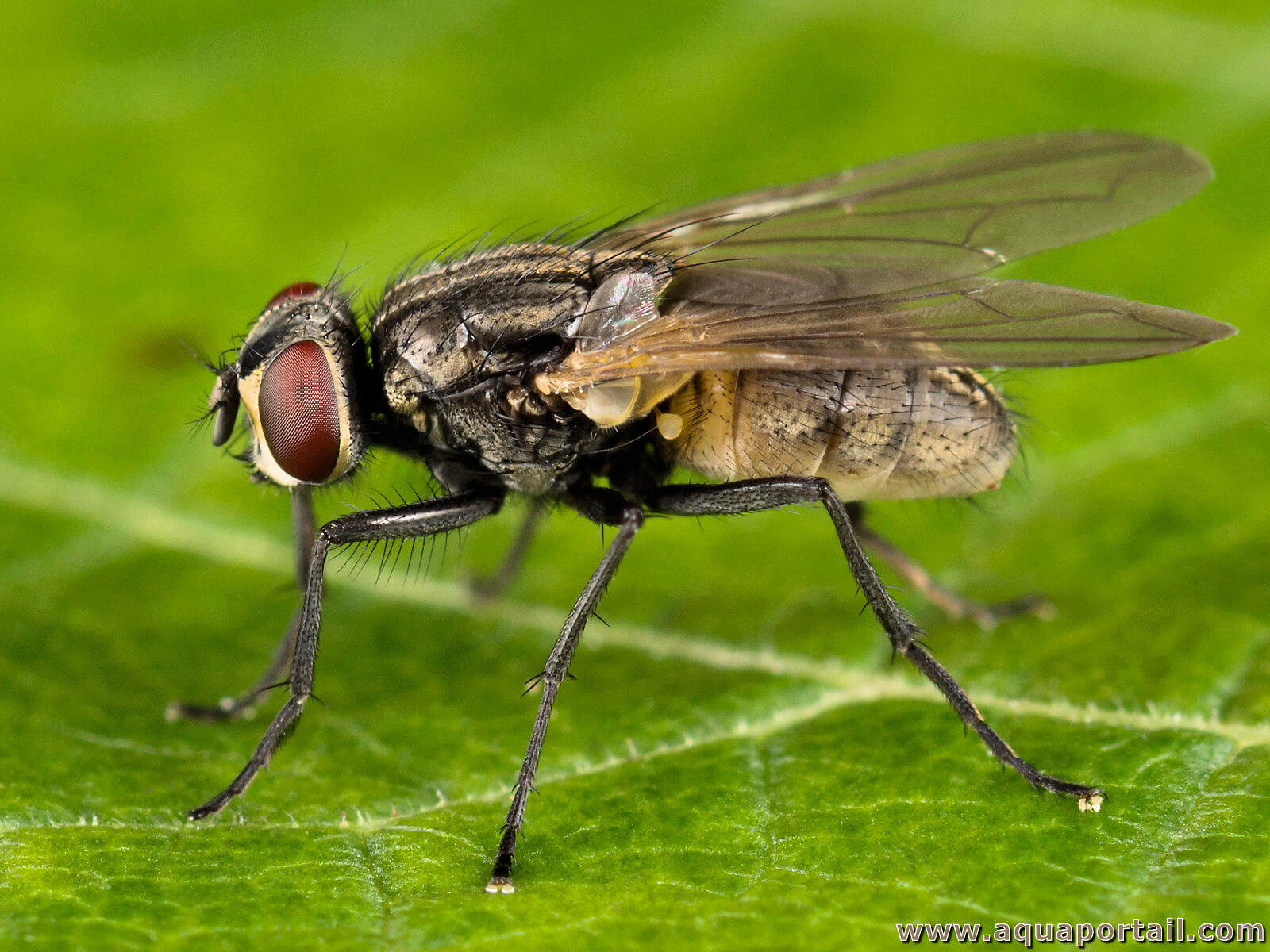
Musca domestica is the brown housefly, common in homes and around anthropic areas.
✅ An adult timber fly (Pantophthalmidae) can reach 8 centimeters (3.1 in). These gigantic flies live in Central and South America and get their name from laying their eggs in dying trees. Despite their large size, timber flies are completely harmless.
Diet
Carrion flies, including flesh flies (gray flies), lay their eggs in decaying animal carcasses. As repulsive as it may seem, their maggots feed on the decomposing tissues and then return nutrients to the soil through digestion.
Other types of flies frequently use animal feces as a breeding and feeding site. As their maggots feed, they break down organic matter and release nutrients that plants, fungi, and bacteria can use. The attraction of these insects to droppings is why picking up after your dog in the yard helps keep flies away from your home.
Reproduction
If you have ever wondered why a fly infestation can get out of control so quickly, it is due to their rapid reproductive cycle. A single fruit fly can lay about 500 eggs in its lifetime, and the entire life cycle from egg to adult takes only about a week. Not to be outdone, a single female housefly can lay up to 500 eggs in just three to four days and repeat the cycle several times throughout her life.
Differences between female and male of a fruit fly:
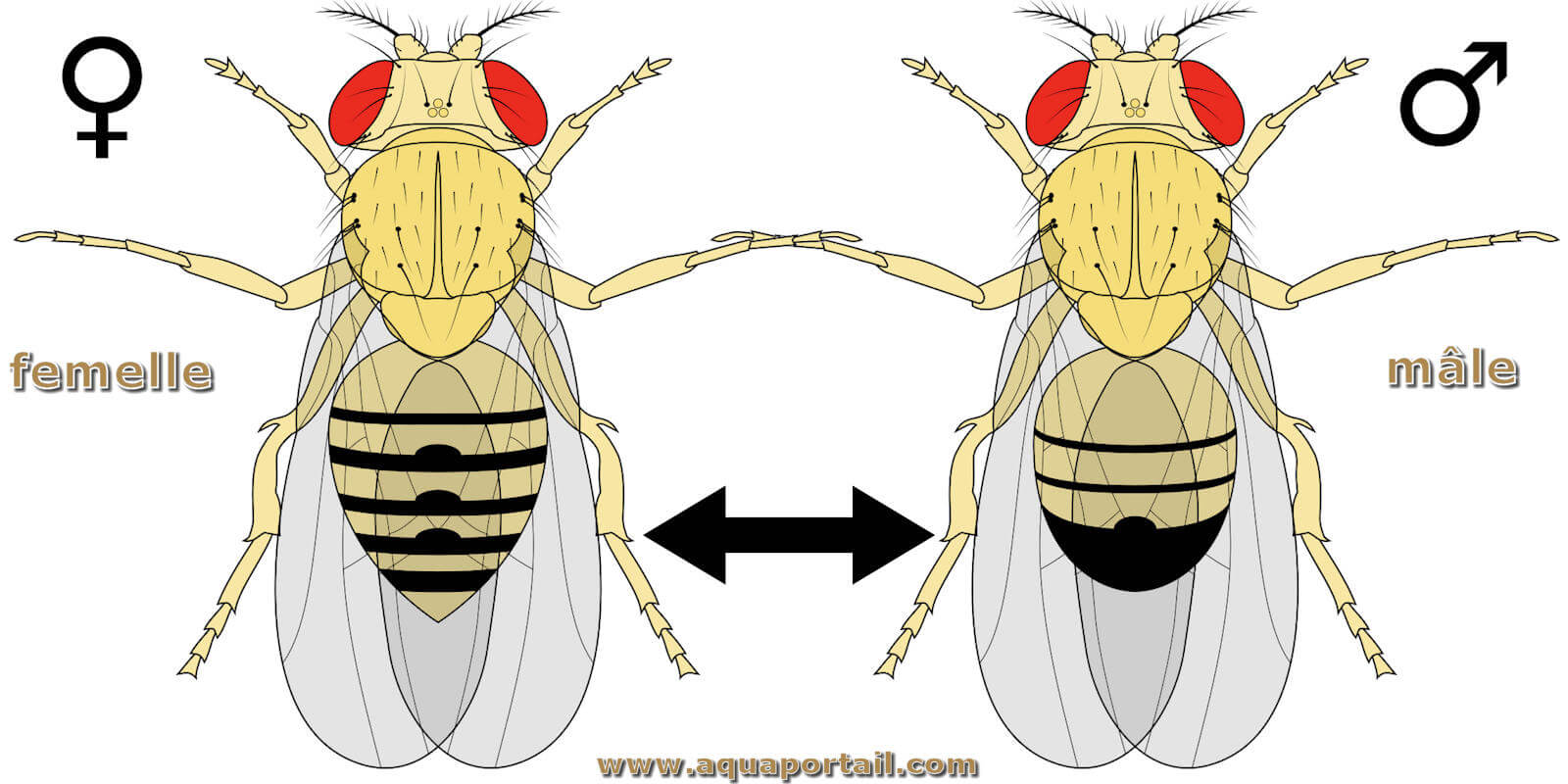
Female and male flies exhibit anatomical differences and sexual dimorphism. The upper rear of the female's abdomen is striped, whereas it is solid dark in the male.
Houseflies generally live for 15 to 25 days, but can survive up to two months under optimal conditions. You can therefore imagine how rapidly their populations can increase!
⭐ The active immature stages of flies are called maggots, and most live in water or in some type of moist, decaying plant or animal tissue.
Disease transmission
Because houseflies regularly feed and lay eggs on feces, garbage, decaying animals, and other soiled places, they can transmit disease-carrying microbes when they land on humans, household surfaces, and uncovered food. For this reason, many fly species are known to spread diseases to humans.
In fact, the common housefly is suspected of transmitting more than 60 diseases to humans.
Synonyms, antonyms
Spanish translation: mosca
2 synonyms (similar meaning) for "fly":
1 antonym (opposite meaning):
Related words and expressions to FLY are directly connected by general or specific meaning.
The word FLY is listed on page 1 of words starting with F in the dictionary glossary.
Related to "fly"
fabrication

Fabrication is the act or process of making, constructing, or inventing something. The manufacturing or fabrication process, whether artisanal or industrial...
famine

Famine is prolonged hunger with acute undernutrition or malnutrition of a population in a region (country).
fang

A fang is a long, pointed, and curved tooth. All animals equipped with fangs use them to bite. Whereas in mammals the upper-jaw fangs (called canines)...
fatty acids

Fatty acids are molecules possessing a long hydrophobic hydrocarbon chain and a highly hydrophilic carboxyl group at one of its ends.
Simple summary
A fly refers to a member of the order Diptera. These insects are characterized by the presence of a single pair of wings, the second pair being reduced to small structures called "halteres" that ensure balance in flight. Flies are renowned for their rapid flight and complex eyes, which provide them with a wide field of vision. Found worldwide, they play varied roles within ecosystems, ranging from pollination to decomposition, although some species can also be pests or disease vectors.
