Fluorescence
noun (n.)
Definition
Fluorescence is the spontaneous emission of light shortly after excitation of a material by light. The emitted photons are generally less energetic than those absorbed. Fluorescence and phosphorescence are forms of luminescence.Fluorescent corals:
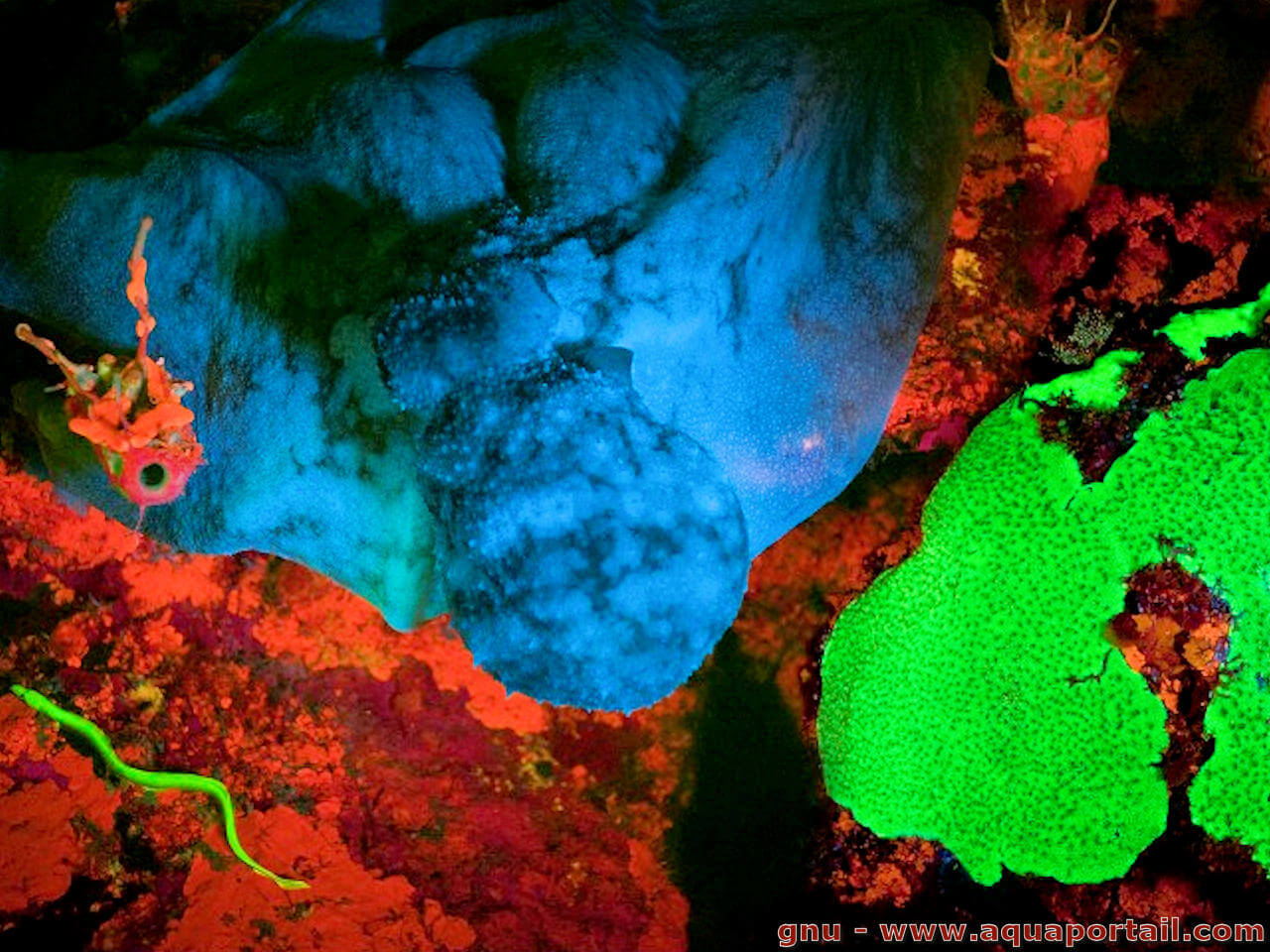
The fluorescence of certain corals makes it possible to characterize species. Ultraviolet light allows them to become visible.
Explanations
Fluorescence identifies a property of certain substances that, when they receive radiation, subsequently emit less energetic radiation, that is, of a longer wavelength. Fluorescence is the emission of light by a substance that has absorbed light or other electromagnetic radiation. It is a form of luminescence.
This energy loss is thus the property of a substance to emit light of a given color when exposed to a light source, for example, ultraviolet (UV) light. Moreover, fluorescent minerals emit visible light when exposed to ultraviolet light.
In most cases of fluorescence, the emitted light has a longer wavelength, and therefore lower energy, than the absorbed radiation. However, when the absorbed electromagnetic radiation is intense, it is possible for an electron to absorb two photons; this two-photon absorption can lead to the emission of radiation having a shorter wavelength than the absorbed radiation. The emitted radiation can also be of the same wavelength as the absorbed radiation, known as "resonance fluorescence".
✅ Unlike phosphorescence, there are allowed transitions between two electronic states in fluorescence. Excited states therefore have a short lifetime and fluorescence decays after a short period of time. Fluorescence and phosphorescence are forms of luminescence (cold glow) and are photophysical processes. However, fluorescence is characterized by the fact that it ends rapidly (typically within one millionth of a second) after the radiation stops. In contrast, phosphorescence leads to an afterglow that can last from fractions of a second to several hours.
⭐ Fluorescence is associated with bioluminescence, phosphorescence, luminescence, and brightness.
The physical systems in which fluorescence occurs are called fluorophores. Fluorescent substances used for staining are called fluorochromes or fluorescent dyes. If the stimulable material is part of an organism, it is referred to as biofluorescence (by analogy with bioluminescence). If an object is fluorescent on its own, that is, without having to be stained, it is called autofluorescence.
⭐ Fluorescence labeling can be used to attach fluorescent chemical groups to large biomolecules, which then serve as a highly sensitive marker for that molecule. For example, fluorescent proteins such as GFP (green fluorescent protein) or FMN-binding fluorescent proteins serve as markers or tags for a wide variety of molecules and cellular regions (cell membrane, cytoplasm, cell nucleus, etc.). Confocal fluorescence microscopy can be used to visualize biological processes within cells.
Synonyms, antonyms
Spanish translation: fluorescencia
4 synonyms (similar meaning) for "fluorescence":
0 antonyms (opposite meaning).
Related words and expressions to FLUORESCENCE are directly connected by general or specific meaning.
The word FLUORESCENCE is listed on page 1 of words starting with F in the dictionary glossary.
Related to "fluorescence"
bioluminescence
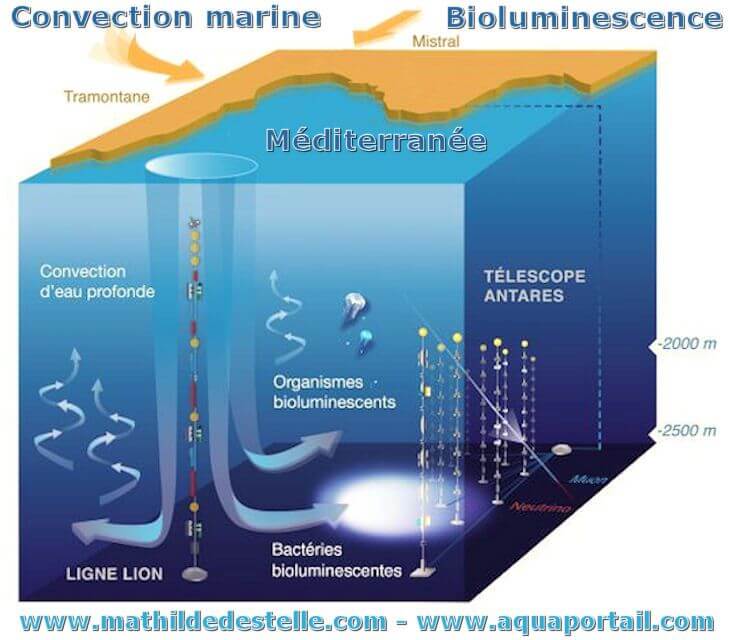
Bioluminescence consists of the production of visible light by chemiluminescence in certain living organisms.
efflorescence

In botany, efflorescence is a term often applied to terrestrial plants for flowering or to aquatic algae and phanerogams that may bloom simultaneously...
inflorescence

An inflorescence is a group or cluster of flowers arranged on a stem. It corresponds to the mode of development and arrangement of flowers along a floral...
fabrication

Fabrication is the act or process of making, constructing, or inventing something. The manufacturing or fabrication process, whether artisanal or industrial...
