Reduction
noun (n.)
Definition
In chemistry, chemical reduction is the opposite of oxidation. During a chemical reduction reaction, a substance gains electrons from another substance called the reducing agent. The combined process of reduction and oxidation is called an oxidation-reduction (redox) reaction. In inorganic chemistry, it refers to the removal of oxygen. In metallurgy, it is called deoxidation.
Sales are price reductions:
A reduction is the act of losing or decreasing something (volume, quantity, importance), or reducing its size (dimensions, number). A price reduction is a lowering of the selling value.
Range of meanings
The term reduction has numerous meanings in the fields of:
- cooking (simmering, concentrating a sauce, thickening or intensifying the flavor of a liquid mixture)
- philosophy (phenomenological reduction, reductionism, eidetic reduction, intertheoretic reduction, ego reduction)
- mathematics (Gaussian elimination, graph reduction, recursion theory, variance reduction, reducible as the opposite of irreducible, reduced form, reduced homology)
- computer science (algorithm reduction, data reduction, bitrate reduction, partial order reduction, reducing a higher-order function, reducing an instruction set)
- medicine (fracture reduction, lung volume reduction surgery, selective or fetal reduction, ventricular reduction, breast reduction)
- physics (dimensional reduction)
- quantum physics (wave packet reduction)
- linguistics (word abbreviation, vowel reduction)
- accounting (a discount)
- music (piano reduction)
- thanatology (reduction of a body to relics)
- acoustics (noise reduction).
See also chromatic reduction.
In chemistry
Reduction is a partial chemical reaction in which electrons are gained by a particle (atom, ion, or molecule). The oxidation number of the particle decreases. The process always occurs alongside oxidation. Together, both phenomena are called a redox reaction.
Historically, reduction was regarded as the removal of oxygen from an oxide. Reduction was thus a reaction in which oxidation was reversed. Oxidation was defined as the combination of a compound or element with oxygen, based on the conclusions of Antoine-Laurent de Lavoisier.
Several specific cases and derived terms follow from this:
- organic oxidation-reduction reaction, a redox reaction occurring with organic compounds
- gas reduction (reduced gas), a gas with a low oxidation state
- reducing agent, an element or compound in a redox reaction that donates an electron to another species
- reducing atmosphere, an oxygen-poor gaseous environment that inhibits oxidation
- reductase, an enzyme that catalyzes a reduction reaction
- reduction potential, a measure of the tendency of a chemical species to acquire electrons
- ore reduction (mineral reduction): see smelting.
Today, a broader view exists that is not restricted to reactions of oxygen-containing compounds and incorporates the classical definition.
Organic reduction
Reduction is a reaction in which a monoatomic or polyatomic particle Ox gains one or more electrons. This forms the particle "Red" (reduced): Ox + n e- → Red.
Ox acts as an electron acceptor, and Ox and Red form a redox couple. The electrons originate from a second redox couple undergoing oxidation. Whereas in electrochemistry, such as in electrolysis or a galvanic cell, electron transfer between the two redox couples is a measurable quantity, in other cases reduction can only be recognized by the associated decrease in the oxidation number of Ox.
Considering reduction as an equilibrium reaction, the reverse reaction is oxidation. Such equilibria occur, for example, in an idle storage battery. While discharging drives the half-reaction in one direction, charging reverses the direction of the reaction.
Although reduction never occurs without oxidation and therefore always forms part of a redox reaction, a reaction is often viewed from the perspective of the desired product. Thus, iron ore is reduced to elemental iron, or alumina undergoes cathodic reduction to aluminum.
Synonyms, antonyms
Spanish translation: reducción
5 synonyms (similar meaning) for "reduction":
1 antonym (opposite meaning):
Related words and expressions to REDUCTION are directly connected by general or specific meaning.
The word REDUCTION is listed on page 1 of words starting with R in the dictionary glossary.
Related to "reduction"
contraction

A contraction is the process of becoming smaller. A contraction is the process by which a contractile muscle becomes or is shortened and tightened.
kin selection
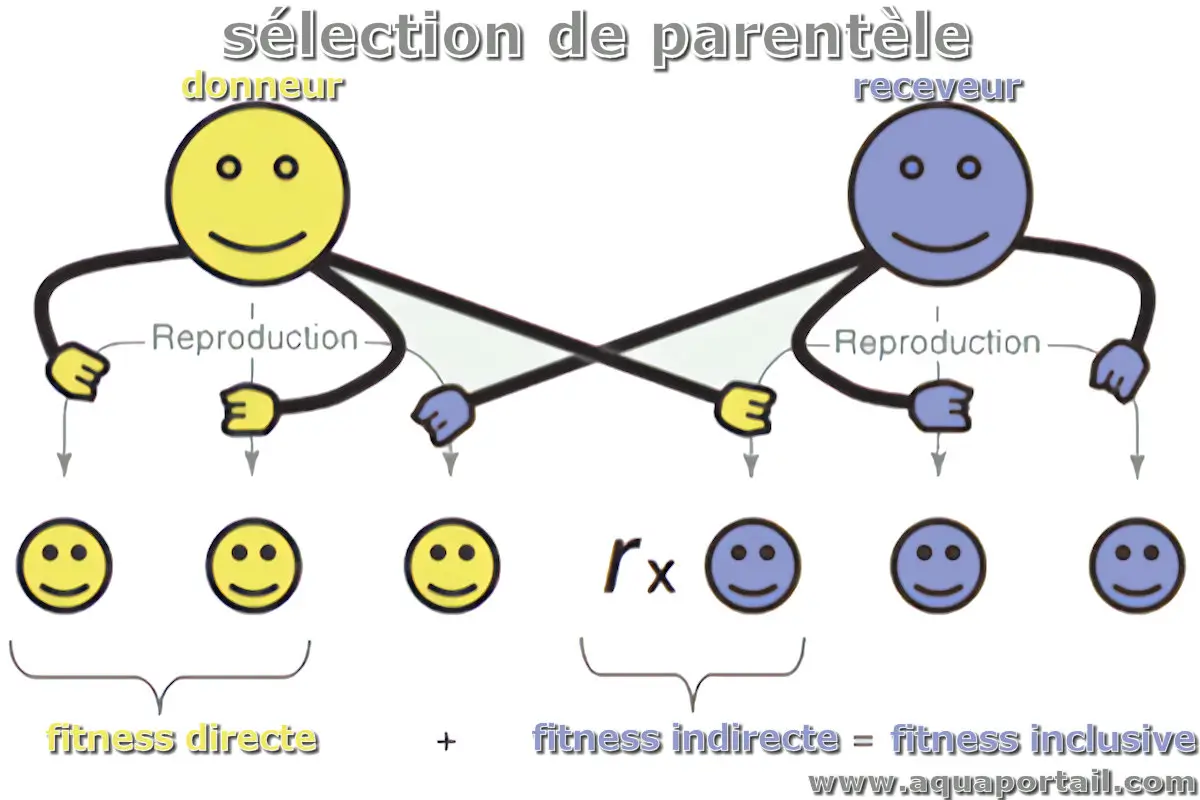
Kin selection is a theory of natural selection stating that a generally altruistic behavior or trait that decreases the fitness of a particular individual...
plant reproduction

Plant reproduction is of two types : sexual and asexual. Sexual reproduction is the fusion of male and female gametes within the flower in flowering plants.
ramulus

A ramulus is a small branching of branches or stems of a plant that has undergone a metamorphosis resulting in growth arrest.
