Fluoride
noun (n.)
Definition
A fluoride is a salt of hydrofluoric acid (HF). Fluorides contain fluoride anions F- in their ionic lattice. Furthermore, calling non-ionic covalent fluorine compounds—such as fluorocarbons or acyl fluorides (carboxylic acid derivatives)—"fluorides" is now considered outdated.
Fluorite crystals, calcium fluoride:
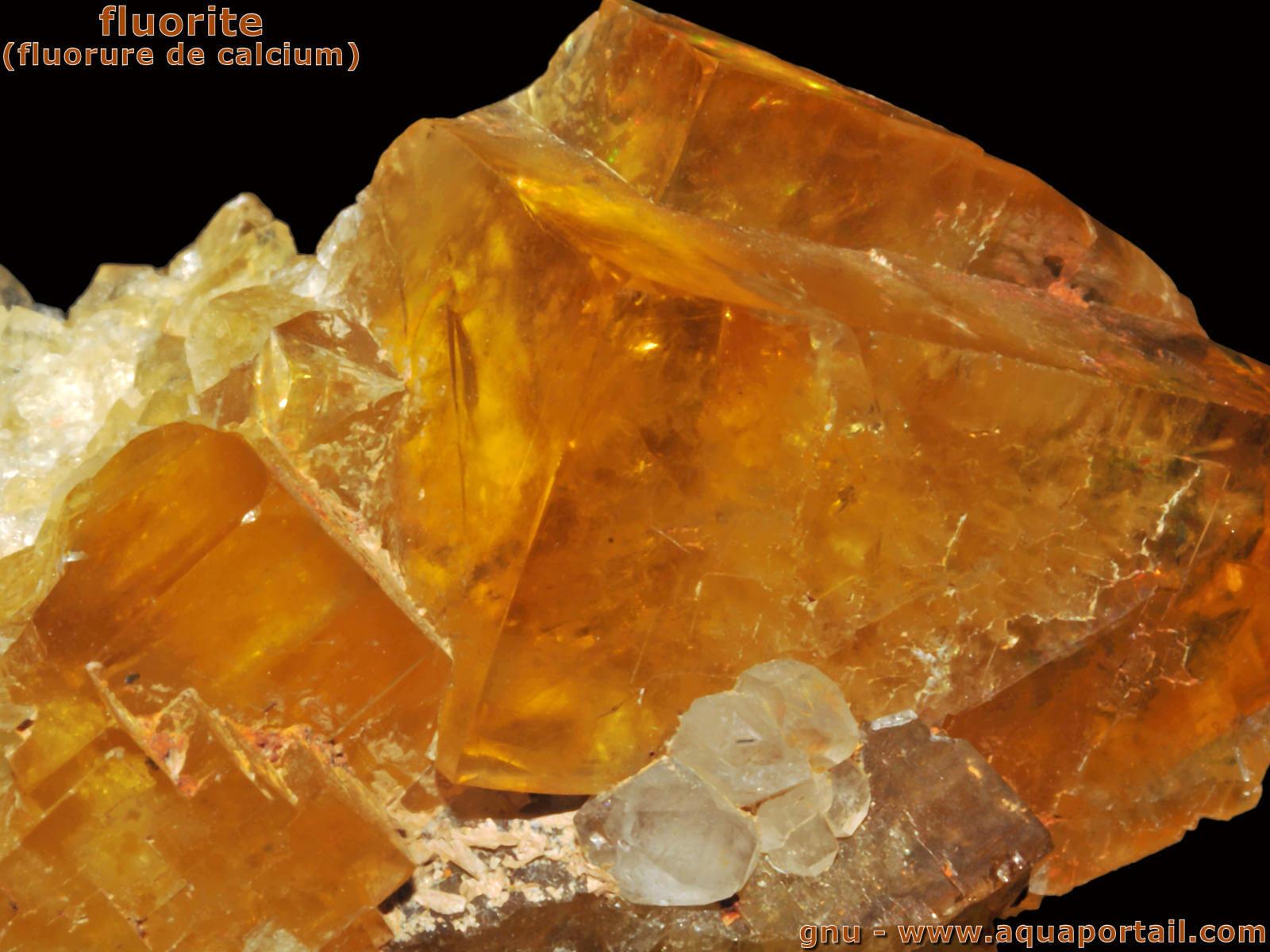
Fluorite is a crystal of calcium fluoride.
Explanations
Fluorides are generated from the corresponding base and hydrofluoric acid. Thus, sodium fluoride can be obtained from caustic soda: NaOH + HF → NaF + H2O.
✅ It is also possible to resort to anion exchange from other salts. Direct reaction of the elements is generally very violent.
⭐ See also bromides, iodides, chlorides.
Generalities
Fluorides are generally colorless compounds (if not bound to a colored group). Alkali metal fluorides are soluble in water and hygroscopic, whereas alkaline earth fluorides, particularly calcium and barium, are sparingly soluble. Calcium fluoride occurs in nature as fluorite (the element fluorine and fluorides were named after it), the main mineral of this element. Oxygen difluoride (OF2) is the only binary compound containing oxygen in the +2 oxidation state.
Fluoride cannot be chemically oxidized by other elements or compounds into elemental fluorine; fluorides can therefore stabilize the highest oxidation states of elements.
🚩 Excess fluoride compounds disrupt microorganisms in the digestive system. In the long term, they can cause digestive disorders and certain colon problems.
Applications
In the household environment, inorganic fluorides are mainly found in dental hygiene products. They are applied so as to make the tooth more resistant to decay when exchanged with hydroxyl groups in tooth enamel. Sodium fluoride, fluorophosphates, or amine fluorides are commonly used in toothpaste formulations (see fluoride therapy and tooth remineralization). In some countries, fluoride is added to drinking water to promote dental health (see water fluoridation).
Fluorides are also used in industry:
- sulfur hexafluoride (SF6) is a very dense gas (about five times heavier than air) used notably as an electrical insulator and sometimes to pressurize certain sports balls
- calcium fluoride is used in metallurgy to make slags more fluid
- ammonium bifluoride (NH4HF2) is used in treating glass surfaces to frost them and render them opaque
- cryolite (Na3AlF6) is used as an electrolyte in aluminum production
- since there is only one stable isotope of fluorine, fluorides are also used in the isotopic separation of other elements. Thus, separating uranium 235U from 238U proceeds via uranium hexafluoride
- certain fluorides such as boron trifluoride (BF3) are strong Lewis acids and are used as such and as catalysts.
Analysis
The classic method to qualitatively determine the presence of fluoride is treating the sample with concentrated sulfuric acid. This releases hydrofluoric acid, which etches glass and converts silicate into silicon tetrafluoride, a volatile substance. Due to surface corrosion, it is no longer wetted by acid or water.
A drop of water placed near the sample under these conditions becomes cloudy when silicon tetrafluoride hydrolyzes in it and regenerated silica precipitates: SiF4 + 2 H2O → SiO2 + 4 HF.
Toxicology
At high concentrations, fluorides are toxic. The reason is, on the one hand, the precipitation of calcium as calcium fluoride and, on the other hand, their ability to form complexes with the metal centers of certain enzymes.
They inhibit enolase by reacting with its magnesium atoms and forming complexes with inorganic phosphates. This prevents 2-phosphoglycerate from being metabolized into phosphoenolpyruvate, thereby halting glycolysis.
About one-third of the world's population draws its drinking water from groundwater reserves. It is estimated that about 10% of the world's population, or roughly 300 million people, draws water from underground reservoirs contaminated with arsenic and fluoride. Contamination by these trace elements is generally of natural origin and results from the release of contaminants into the aqueous environment through weathering and/or desorption mechanisms of minerals contained in rocks and sediments.
In 2008, the Swiss Federal Institute of Aquatic Science and Technology (Eawag) presented a new method for mapping risk for geogenic toxic substances present in groundwater. The main advantage of this approach is that it makes it possible to establish, for each extraction zone, the probability of whether water is contaminated or not, facilitating sampling work and the identification of new potentially contaminated areas.
In 2016, this group of researchers made this knowledge available via the GAP Groundwater Assessment Platform. This platform allows experts worldwide to use and visualize their own analytical data to prepare risk maps for a specific area of interest. The GAP platform simultaneously operates as a discussion forum for knowledge exchange, to continue developing and refining methods for removing harmful substances from water intended for human consumption.
Organic fluorides
Organic fluorides are compounds containing fluorine bonded to a carbon atom. These are generally colorless substances inert toward many reactions due to the high energy of the C-F bond. Only in certain activated fluorinated derivatives can fluorine be displaced during nucleophilic attack.
The best-known fluoropolymer is Teflon (polytetrafluoroethylene), a plastic material with high chemical and thermal resistance.
In pharmacology, introducing a fluorine atom often increases the half-life of a drug in the patient's metabolism because the C-F bond resists oxidation by our body's enzymes.
Organofluorine compounds are generally generated by exchanging other halides with inorganic fluorides dissolved in organic solvents. Electrolysis techniques (electrochemical fluorination) have also been developed for synthesizing perfluorinated compounds.
Inorganic fluorides
Some important inorganic fluorides are:
- aluminum fluoride AlF3
- ammonium fluoride NH4F
- calcium fluoride CaF2, fluorite
- sodium fluoride NaF
- tin(II) fluoride SnF2.
In addition to simple fluorides, there are also hydrogendifluorides of composition M+[HF2]-, such as sodium hydrogendifluoride NaHF2 and potassium hydrogendifluoride KHF2. These contain the linear anion [FHF]-. Preparation is possible from aqueous solutions of fluorides in the presence of excess hydrogen fluoride (HF). Upon heating, hydrogendifluorides release hydrogen fluoride again.
Inorganic fluorinated compounds with a molecular structure such as platinum(VI), uranium(VI), or plutonium(VI) hexafluorides are also often referred to as fluorides.
Synonyms, antonyms
Spanish translation: fluoruro
0 synonyms (similar meaning) for "fluoride".
0 antonyms (opposite meaning).
Related words and expressions to FLUORIDE are directly connected by general or specific meaning.
The word FLUORIDE is listed on page 1 of words starting with F in the dictionary glossary.
Related to "fluoride"
fluorescence
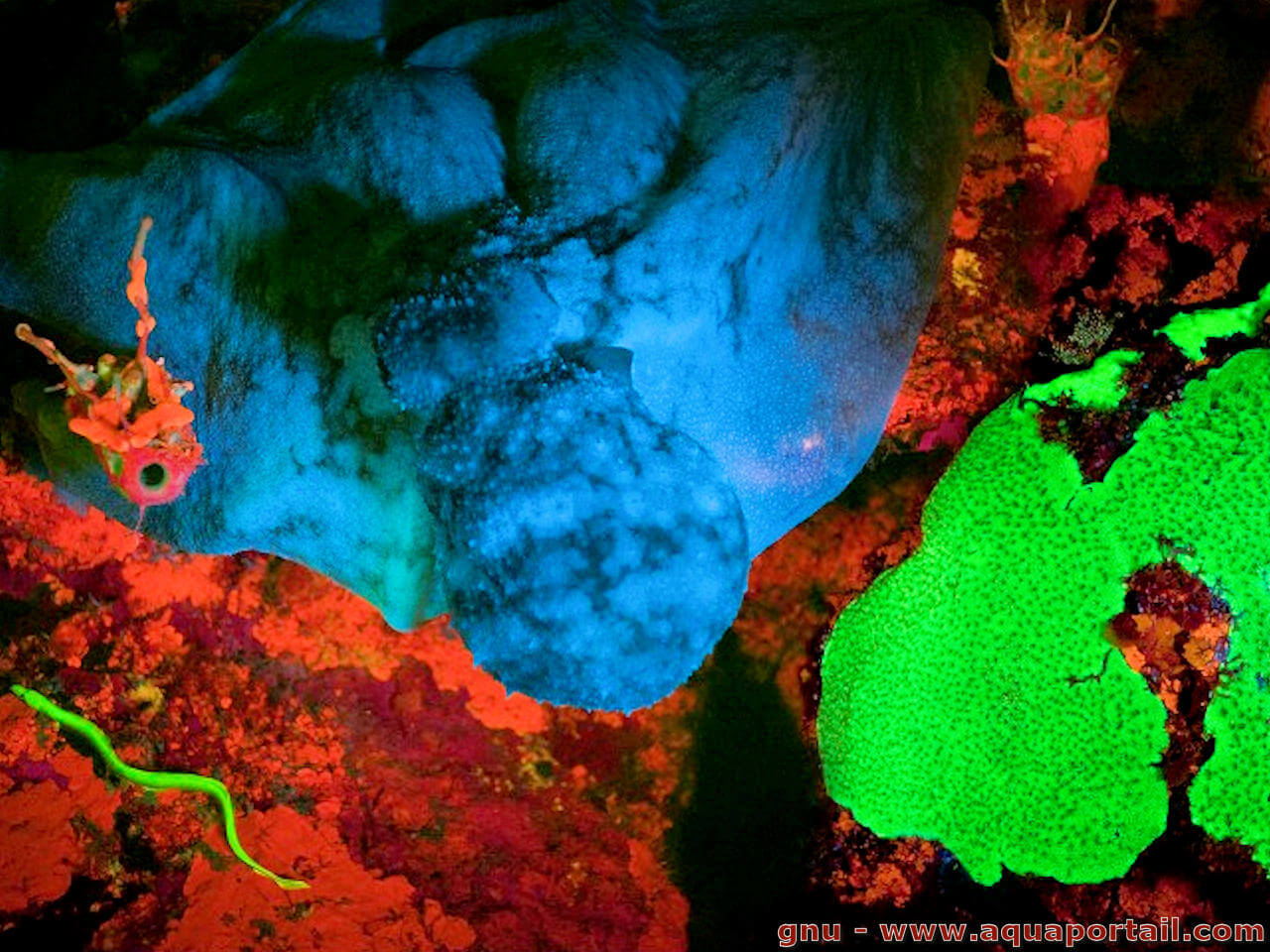
Fluorescence is the spontaneous emission of light shortly after excitation of a material by light.
fabrication

Fabrication is the act or process of making, constructing, or inventing something. The manufacturing or fabrication process, whether artisanal or industrial...
famine

Famine is prolonged hunger with acute undernutrition or malnutrition of a population in a region (country).
fang

A fang is a long, pointed, and curved tooth. All animals equipped with fangs use them to bite. Whereas in mammals the upper-jaw fangs (called canines)...
