Corrosion
noun (n.)
Definition
Corrosion is the electrochemical process of deterioration of a metal, rock, or other materials due to oxidation. rust is the oxidation of iron in the presence of air and moisture. Corrosion begins when a refined metal is naturally converted into a more stable form such as its oxide, hydroxide, or sulfide state, leading to deterioration of the material.Corrosion of a steel chain:
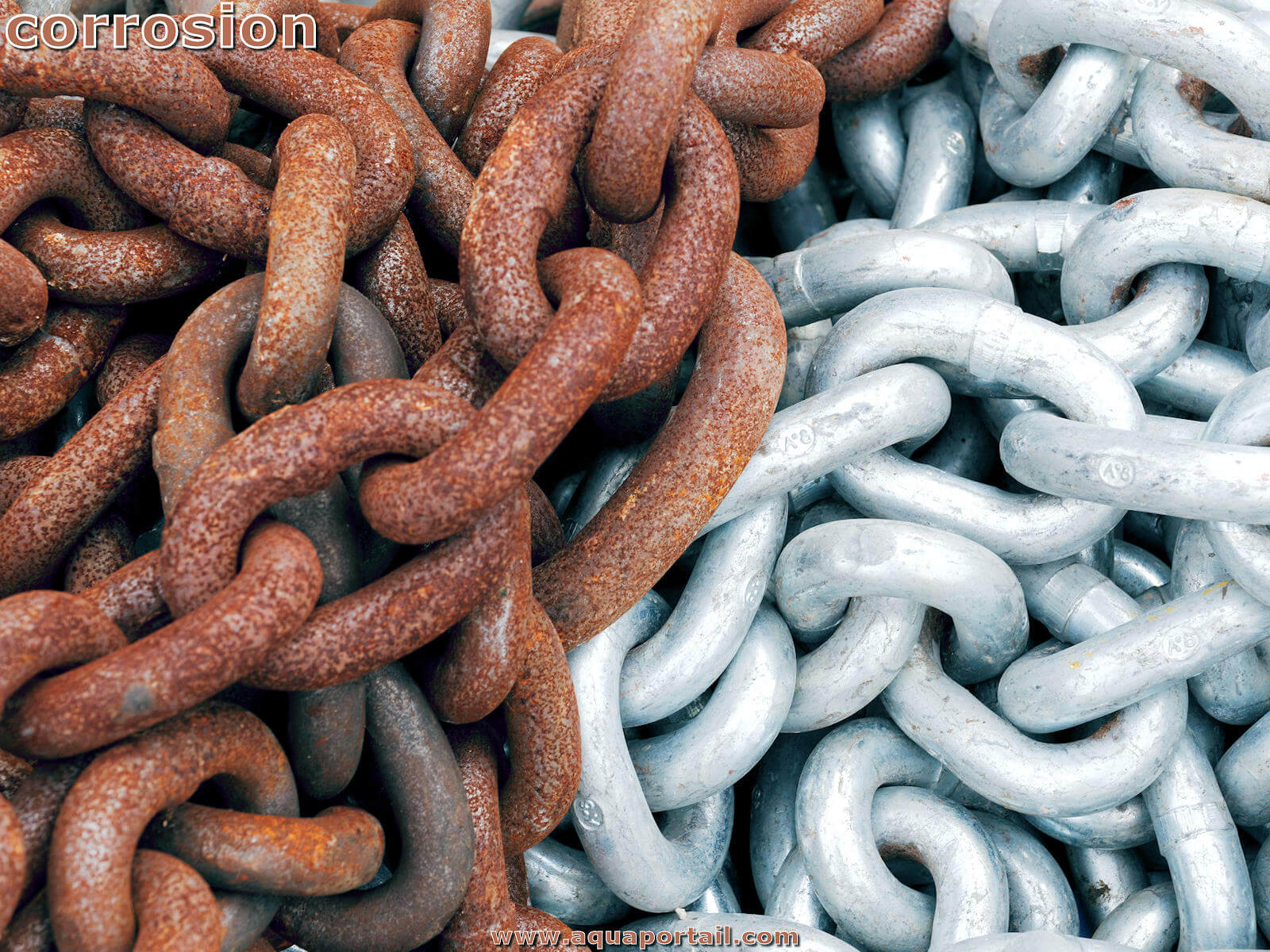
Corrosion of steel leads to the formation of rust. Common synonyms for corrosion include deterioration, oxidation, rust, and erosion.
Explanations
General corrosion occurs when most or all of the atoms on the same metal surface are oxidized, damaging the entire surface. Most metals oxidize readily: they tend to lose electrons to oxygen (and other substances) in air or water. When oxygen is reduced (gains electrons), it forms an oxide with the metal.
Corrosion is the process of decomposition of a material caused by a chemical reaction with its environment. Metal corrosion occurs when an exposed surface comes into contact with a gas or liquid, and the process is accelerated by exposure to warm temperatures, acids, and salts.
⭐ In the corrosion process, metals are converted into more stable compounds such as metal oxides, metal sulfides, or metal hydroxides. Examples of corrosion: rusting of iron, corrosion in aluminum alloys and stainless steels.
✅ Corrosion is a dangerous and extremely costly problem. Because of it, buildings and bridges can collapse, pipelines rupture, chemical plants leak, and bathrooms flood. Corroded electrical contacts can cause fires and other problems, corroded medical implants can lead to blood poisoning, and air pollution has caused corrosion damage to artworks worldwide. Corrosion threatens the safe disposal of radioactive waste that must be stored in containers for tens of thousands of years.
The most common types of corrosion result from electrochemical reactions. General corrosion occurs when most or all of the atoms on the same metal surface are oxidized, damaging the entire surface. Most metals oxidize readily: they tend to lose electrons to oxygen (and other substances) in air or water. When oxygen is reduced (gains electrons), it forms an oxide with the metal.
When reduction and oxidation occur on different types of metals in contact with one another, the process is called galvanic corrosion. In electrolytic corrosion, which occurs most often in electronic equipment, water or other moisture is trapped between two electrical contacts that have an electrical voltage applied between them. The result is an unintended electrolytic cell.
Some metals acquire natural passivity, or resistance to corrosion. However, the metal must react with or corrode in atmospheric oxygen. The result is a thin oxide film that blocks the metal's tendency to undergo further reaction. The patina that forms on copper and the weathering of certain sculpture materials are examples. Protection fails if the thin film is damaged or destroyed by structural stress (on a bridge, for example) or by scratching or abrasion. In such cases, the material may "repassivate", but if this is not possible, only parts of the object corrode. Damage is then often worse because it is concentrated at those sites.
Harmful corrosion can be prevented in many ways. Electrical currents can produce passive films on metals that do not normally have them. Some metals are more stable than others in particular environments, and scientists have invented alloys such as stainless steel to improve performance under specific conditions. Some metals can be laser-treated to give them a non-crystalline structure, which resists corrosion. In galvanization, iron or steel is coated with more active zinc; this forms a galvanic cell where the zinc corrodes rather than the iron. Other metals are protected by electroplating with an inert or passivating metal. Non-metallic coatings (plastics, paints, and oils) can also prevent corrosion.
Synonyms, antonyms
Spanish translation: corrosión
5 synonyms (similar meaning) for "corrosion":
0 antonyms (opposite meaning).
Related words and expressions to CORROSION are directly connected by general or specific meaning.
The word CORROSION is listed on page 1 of words starting with C in the dictionary glossary.
Related to "corrosion"
degradation

Degradation is a process of deterioration by which the quality of something is destroyed or negatively altered.
deterioration

Deterioration is a progressive degradation or alteration in the quality, functioning, or condition of something.
cactus

A cactus is a thick, fleshy plant that grows in many hot, dry regions of the world. Cacti do not have leaves, and many are covered with spines.
caecilian

A caecilian (gymnophione) is a limbless, burrowing, worm-like amphibian whose legs are vestigial or absent.
Simple summary
Corrosion is the gradual destruction or deterioration of materials, usually metals, due to chemical reactions with their environment. This process often involves the reaction of the material with oxygen and moisture, leading to the formation of rust or other forms of degradation that can weaken structures and shorten the lifespan of the affected material.
