Carbon
noun (n.)
Definition
Carbon, from the non-metal group, is unique in its chemical properties because it forms a number of compounds exceeding the total formed by all other elements combined with one another. It is the foundational element of all organic molecules. See also carbohydrate, carbon dioxide..., and in ionic form, carbonates and bicarbonates.The carbon atom:

Carbon is the king of elements in the periodic table.
Explanations
The largest group of all organic compounds is that formed by carbon and hydrogen. A number of pure allotropic forms of carbon are known: diamond, graphite, fullerenes, and graphene. Diamond is a colorless, transparent crystalline solid and the hardest known natural material. Graphite is black and lustrous yet soft. Nano-forms, fullerenes and graphene, occur as black or dark brown powders resembling soot.
Carbon exists as organic carbon (DOC, POC) and inorganic carbon (DIC).
Uses
Carbon is unique among elements in its ability to form strongly bonded chains sealed by hydrogen atoms. These hydrocarbons, extracted naturally as fossil fuels (coal, petroleum, and natural gas), are primarily used as fuels. A small yet significant fraction is used as raw material for petrochemical industries producing polymers, fibers, paints, solvents, and plastics, etc.
Impure carbon in the form of charcoal (derived from wood) and coke (derived from coal) is used in metal smelting. It is particularly important in the iron and steel industries.
Graphite is used in pencils, to make brushes in electric motors, and in furnace linings. Activated carbon is used for purification and filtration. It is found in respirators and kitchen range hoods.
Carbon fiber finds numerous uses as a very strong yet lightweight material. It is currently used in tennis rackets, skis, fishing rods, rockets, and aircraft.
Industrial diamonds are used for rock cutting and drilling. Diamond films are used to protect surfaces such as razor blades.
The more recent discovery of carbon nanotubes, other fullerenes, and thin graphene sheets has revolutionized material developments in the electronics industry and in nanotechnology in general.
In chloride form, carbon tetrachloride is an older compound formerly used in fire extinguishers.
150 years ago, the natural concentration of carbon dioxide in Earth's atmosphere was 280 ppm. In 2013, following the burning of fossil fuels with oxygen, it reached 390 ppm. Atmospheric carbon dioxide lets visible light enter while preventing some infrared radiation from escaping (the natural greenhouse effect). This keeps Earth warm enough to sustain life. However, an enhanced greenhouse effect is underway due to a human-induced increase in atmospheric carbon dioxide. This affects living beings as our climate changes.
Atomic characteristics
| Atomic number | 6 |
| Atomic mass | 12.011 g.mol-1 |
| Pauling electronegativity | 2.5 |
| density | 2.2 g.cm-3 at 20 °C (68 °F) |
| Melting point | 3,652 °C (6,606 °F) (sub) |
| Boiling point | 4,827 °C (8,721 °F) |
| Atomic radius (Van der Waals) | 0.091 nm |
| Ionic radius | 0.26 nm (-4) 0.015 (+4) |
| Isotopes | 3, including 1 radioactive |
| electron configuration | [He] 2s22p2 |
| First ionization energy | 1,086.1 kJ.mol-1 |
| Second ionization energy | 2,351.9 kJ.mol-1 |
| Third ionization energy | 4,618.8 kJ.mol-1 |
| Discovery | Carbon was already known in antiquity. However, it was not until the 19th century that its multiple forms (diamond, graphite, etc.) were recognized. |
Biological role
Carbon is essential to life. Indeed, it is capable of forming a wide variety of chains of different lengths. It was once believed that carbon-based molecules of life could only be obtained from living organisms. They were thought to contain a "spark of life". However, in 1828, urea was synthesized from inorganic reagents, uniting the branches of organic and inorganic chemistry.
Living organisms draw nearly all their carbon from carbon dioxide, either from the atmosphere or dissolved in water. Photosynthesis by green plants and photosynthetic plankton uses solar energy to split water into oxygen and hydrogen. Oxygen is released into the atmosphere, fresh water, and seas, while hydrogen combines with carbon dioxide to produce carbohydrates.
Some carbohydrates are used, along with nitrogen, phosphorus, and other elements, to form the other monomeric molecules of life. These include bases and sugars for RNA and DNA, and amino acids for proteins.
Living organisms that do not photosynthesize must rely on consuming other living organisms as their source of carbon molecules. Their digestive system breaks down carbohydrates into monomers they can use to build their own cellular structures. Respiration provides the energy needed for these reactions. During respiration, oxygen combines with carbohydrates to form carbon dioxide and water once again. The energy released during this reaction is made available to cells.
Natural abundance
Carbon is found in the Sun and other stars, formed from the debris of an earlier supernova. It is synthesized by nuclear fusion in larger stars. It occurs in 3 isotopic forms: 12C, 13C, and 14C (the number indicates the atomic mass).
It is present in the atmosphere of many planets, generally in the form of carbon dioxide. On Earth, the concentration of carbon dioxide in the atmosphere is currently 390 ppm and continues to rise.
Graphite occurs naturally in many locations. Diamond is found as microscopic crystals in certain meteorites. Natural diamonds occur in kimberlite, with deposits found in Russia, Botswana, the Democratic Republic of the Congo, Canada, and South Africa.
In combination, carbon is found in all living things. It is also found in fossilized remains as hydrocarbons (natural gas, crude oil, oil shale, coal, etc.) and carbonates (chalk, limestone, dolomite, etc.).
History
Carbon occurs naturally as anthracite (a type of coal), graphite, and diamond. Historically, soot or charcoal were more readily available. Ultimately, these various materials were recognized as forms of the same element. Unsurprisingly, diamond posed the greatest identification challenge. Naturalist Giuseppe Averani and physician Cipriano Targioni of Florence were the first to discover that diamonds could be destroyed by heating.
In 1694, they focused sunlight onto a diamond using a large magnifying glass and the gem eventually disappeared. Pierre-Joseph Macquer and Godefroy de Villetaneuse repeated the experiment in 1771. Then, in 1796, English chemist Smithson Tennant finally proved that diamond was simply a form of carbon by showing that upon burning it formed only CO2.
Synonyms, antonyms
Spanish translation: carbono
2 synonyms (similar meaning) for "carbon":
- inorganic carbon
- organic carbon
0 antonyms (opposite meaning).
Related words and expressions to CARBON are directly connected by general or specific meaning.
The word CARBON is listed on page 1 of words starting with C in the dictionary glossary.
Related to "carbon"
carbonic anhydrase
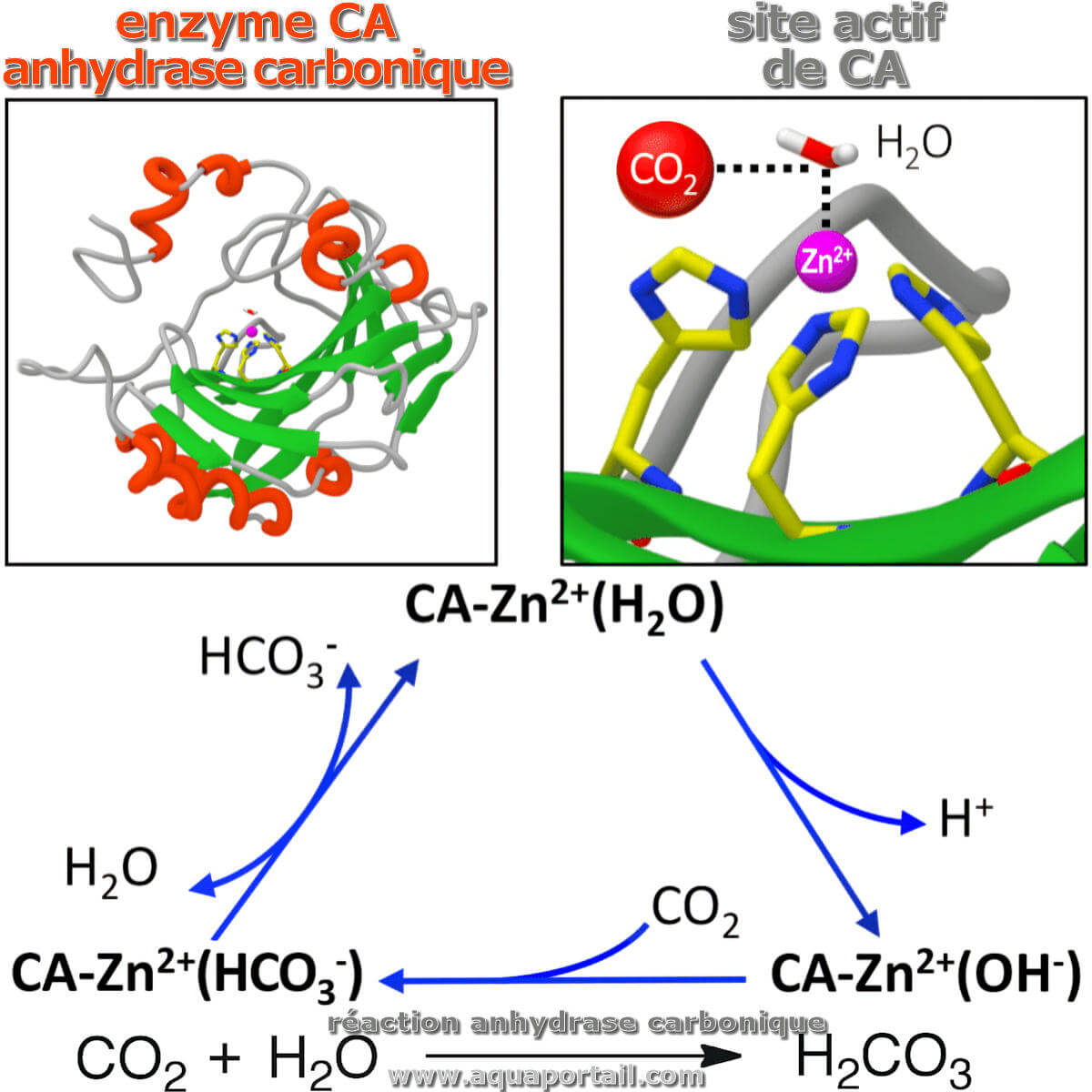
Carbonic anhydrase (CA) catalyzes the reversible hydration and dehydration reactions of CO₂/H₂CO₃.
hydrocarbon

A hydrocarbon is an organic molecule composed exclusively of carbon and hydrogen atoms, representing the most fundamental class of organic compounds.
carbohydrate

A carbohydrate is an organic compound, a biomolecule composed of carbon, hydrogen, and oxygen.
cactus

A cactus is a thick, fleshy plant that grows in many hot, dry regions of the world. Cacti do not have leaves, and many are covered with spines.
Simple summary
Carbon is a chemical element with symbol C and atomic number 6. A fundamental constituent of living matter, it is present in all known forms of life on Earth. Carbon possesses the unique ability to form stable bonds with many other elements, including itself, enabling it to enter into the composition of an immense variety of compounds. These compounds range from simple molecules, such as carbon dioxide, to complex organic structures, such as DNA. Carbon is also an essential component of fossil fuels, diamond, and graphite.
