Chemoreceptor
noun and adjective (n. / adj.)
Definition
A chemoreceptor is a structure designed to receive (recognize) one or more chemical substances and, optionally, translate this reception into a signal. A chemoreceptor is thus a sensory receptor sensitive to chemical substances. It triggers chemoreception. This sensory receptor transduces a chemical signal into an action potential.
Used as a qualifying adjective, it means: "behaving like a chemoreceptor".
⭐ In French, the synonymous term chémorécepteur is a lexical loan derived from the English chemoreceptor, though it has come into common usage.
Role and process of chemoreceptors:
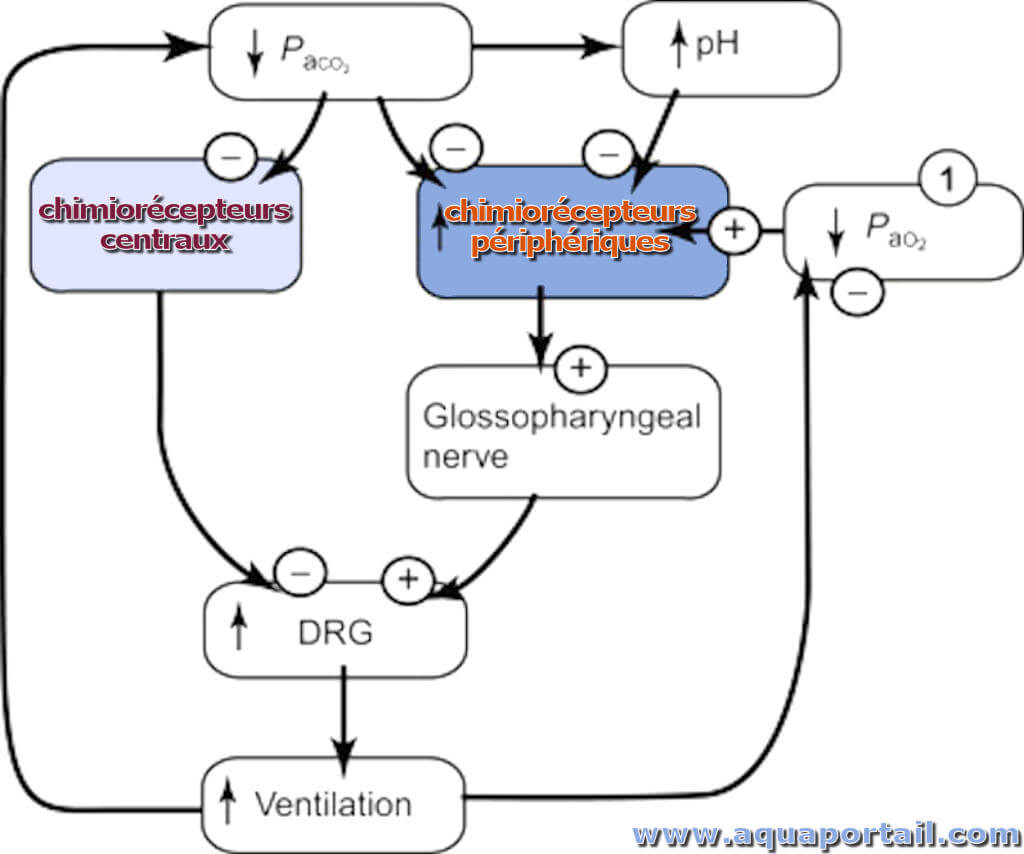
Peripheral chemoreceptors include the carotid bodies and aortic bodies which respond to a decrease in O2 and pH and an increase in CO2 by increasing ventilation. acid-base and cerebrovascular reactivity factors affect the environment of central chemoreceptors and determine their role in respiratory control.
Explanations
In other words, a chemoreceptor is a receptor capable of detecting certain chemical stimuli from the environment. These stimuli can be both external (such as the senses of taste and smell) and internal (partial pressure of oxygen or carbon dioxide, pH). Chemoreceptors are responsible for regulating respiration.
⭐ Certain interoceptors are chemoreceptors, whereas many exteroceptors are mechanoreceptors (or photoreceptors).
These receptors play a key role in regulating breathing (respiratory chemoreflexes). Depending on their location, they can be classified into central and peripheral.
Central chemoreceptors
Central chemoreceptors are located in the medulla oblongata, within the brainstem of the central nervous system, near the exit of the ninth and tenth cranial nerves, and indirectly measure the pH of cerebrospinal fluid (CSF).
CO2 in the blood can exist in dissolved and acidic forms according to the reaction: H2O + CO2 ⇌ H2CO3 ⇌ H+ + HCO3-. H+ and HCO3- ions cannot readily cross the blood-brain barrier, whereas CO2 can. Consequently, the higher the CO2 content in the blood, the more the H+ concentration in the CSF also increases (hence, pH decreases).
H+ ions stimulate the chemoreceptors, inducing hyperventilation in response.
Peripheral chemoreceptors
Peripheral chemoreceptors correspond to the carotid bodies (which transmit their information via the glossopharyngeal nerve) and the aortic bodies located in the aortic arch (which transmit information via the vagus nerve).
These receptors respond to a decrease in O2, a drop in pH, and an increase in CO2. The response is the same and triggers hyperventilation.
Synonyms, antonyms
Spanish translation: quimiorreceptor
3 synonyms (similar meaning) for "chemoreceptor":
0 antonyms (opposite meaning).
Related words and expressions to CHEMORECEPTOR are directly connected by general or specific meaning.
The word CHEMORECEPTOR is listed on page 1 of words starting with C in the dictionary glossary.
Related to "chemoreceptor"
photoreception

Photoreception is mediated by photoreceptors arranged in the retina of vertebrate eyes and in invertebrates.
photoreceptor

A photoreceptor is a cell or pigment responsible for converting light into signals sent to the brain.
receptacle

A receptacle is an object or space used to receive and hold something smaller. The noun receptacle denotes any type of vessel (that receives) or container...
chemonasty

Chemonasty is a nastic response to chemicals or nutrients—a reaction to chemical agents such as pH variations, water activity, etc.
