Chitin
noun (n.)
Definition
Chitin is a polymeric substance comparable to cellulose, yet nitrogenous since it is a polymer of N-acetylglucosamine. Notably, it enters into the composition of the integument of arthropods (insects, arachnids, and crustaceans), nematodes, as well as the cell wall of eumycetes.In a crustacean, chitin covers the abdomen and cephalothorax:
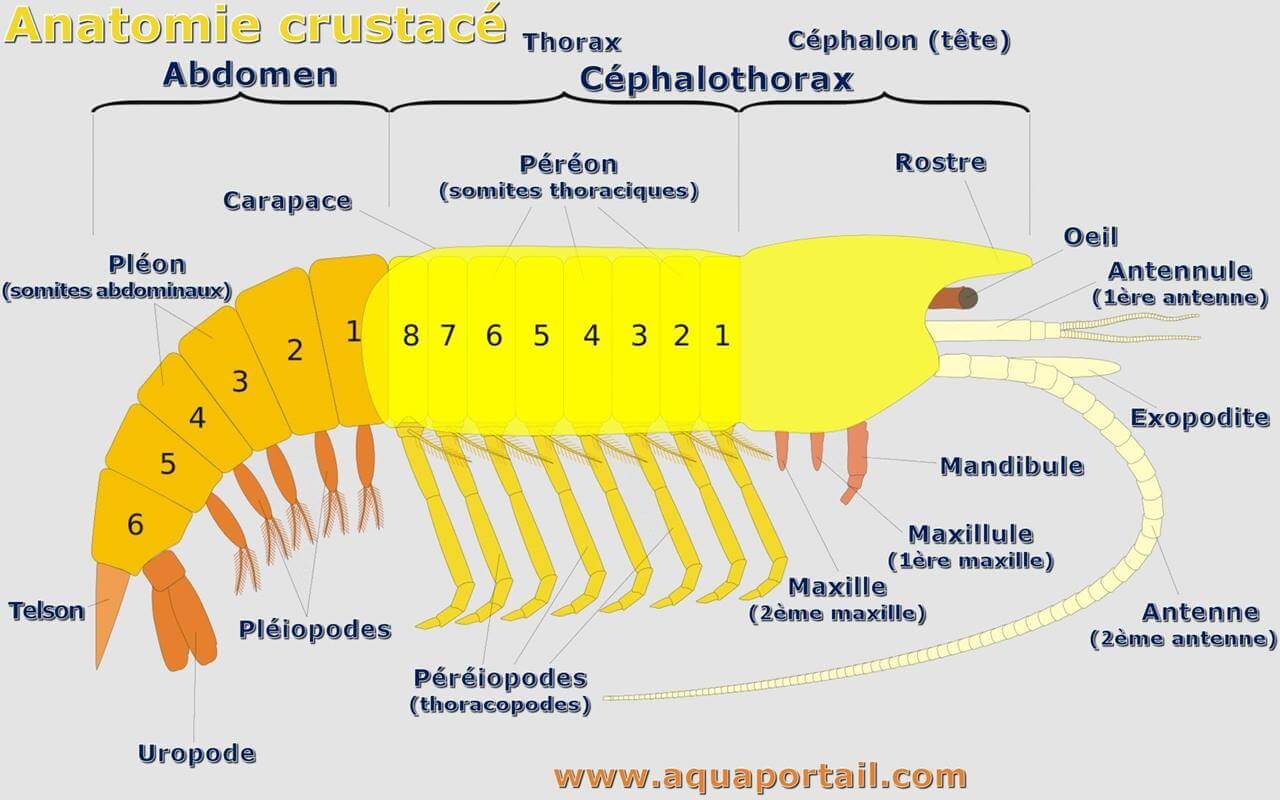
Chitin covers part of a crustacean's exoskeleton, reinforcing the hardness of the carapace. Being a specific chemical compound and a unique biological polymer of N-acetylglucosamine, chitin has no direct synonyms.
Explanations
More simply, chitin is a nitrogenous organic substance (an amino polysaccharide, often associated with proteins in the cuticle) of crustaceans (shrimp, crabs, lobsters, spiny lobsters, crayfish...) and other arthropods (insects, spiders) that forms their exoskeleton. This chitin is quite hard, reinforced by calcium carbonate, and provides protection that is difficult to pierce. See also chitosan and chitinoid.
History
Chitin was first isolated in 1811 by Braconnot from certain higher fungi (Fungi) as an alkali-resistant fraction called fungine. In 1823, Odier isolated an insoluble residue in potassium hydroxide (KOH, caustic potash) solutions from the elytra of a beetle and named it chitin, from the Greek khitôn, tunic or covering. Odier identified chitin from the demineralized crab shell and suggested that it is the basic structural material of the exoskeleton of all insects and possibly arachnids.
The first person to correctly describe its chemical structure was Albert Hofmann in 1929.
Summary
Chitin is synthesized in the body from glucose derivatives using certain enzymes, notably chitin synthase (chitin synthetase). The enzymatic hydrolysis of chitin into N-acetylglucosamine is carried out by a system consisting of two hydrolases: chitinase and chitobiase. Chitinases are widely distributed enzymes synthesized by bacteria, fungi, and the digestive glands of animals whose diet includes chitin.
Structure
By far the most abundant and extensively studied form is α-chitin, found in the cuticle of arthropods and in certain fungi. β-chitin is found in squid and exists as a crystalline hydrate of low stability since water can penetrate between the chains of the layers. Chitin is also found in the cocoons of certain beetles. The unit cell of α-chitin is orthorhombic (a = 4.74 Å, b = 18.86 Å, and c = 10.31 Å).
Chitinoid
A zone particularly rich in chitin is described as chitinoid, for example the chitinoid ring of certain asci, stainable with Congo red when the iodine reaction is negative.
Industrial production
α-chitin is commercially obtained from the exoskeleton of crabs and shrimp. The exoskeleton has chitin, calcium carbonate, and proteins as its main components. It also contains pigments and lipids in small amounts. Chitin is very stable to dilute acids and alkalis and is insoluble in ordinary solvents.
Consequently, it can be isolated as a residue remaining after acid and alkali removal of the other substances present in the exoskeleton. The exoskeleton is first cleaned and treated with acid to remove calcium carbonate. For demineralization, HCl, HNO3, H2SO3, CH3COOH, or HCOOH are generally used, though HCl is preferred and is used at concentrations between 0.3 and 2 M for 1–48 h at temperatures ranging from 0 to 100 °C (32 to 212 °F). During the process, HCl also decreases the molecular weight of chitin. The decalcified exoskeleton is cut into small pieces or pulverized and deproteinized with alkaline treatments. The alkaline solution penetrates the interstices of the shell matrix to cleave the bond between proteins and chitin. It is typically treated with 1–2 M aqueous NaOH solutions for 1–72 h at temperatures ranging from 65 to 100 °C (149 to 212 °F).
Chitin is obtained as a whitish powder. Alkaline treatment also causes partial deacetylation of the chitin molecule, and methods complementary to acid-base treatment can also be used, for example enzymatic degradation of proteins with proteases under mild conditions. However, after enzymatic treatment, residual protein remains between 1 and 7% and the reaction time is longer compared to the chemical method.
Biotechnological process
Another method to obtain it is a biotechnological process using microorganisms, employed as a starter culture, and enzymes responsible for purifying proteins and minerals from crustacean exoskeletons. The starter culture also acts as a preservative, preventing putrefaction of the exoskeleton.
This process has shown two notable advantages over the traditional chemical process:
- using 50% less water, as it takes advantage of the natural moisture of crustacean waste
- reducing the use of harsh chemicals, yielding end products with few impurities.
This method also allows recovery of other byproducts: proteins, astaxanthin, and calcium, which cannot be obtained by the chemical process or are obtained with high impurity levels due to its corrosive nature.
Synonyms, antonyms
Spanish translation: quitina
3 synonyms (similar meaning) for "chitin":
- carapace
- poly-N-acetylglucosamine
- tunic
0 antonyms (opposite meaning).
Related words and expressions to CHITIN are directly connected by general or specific meaning.
The word CHITIN is listed on page 1 of words starting with C in the dictionary glossary.
Related to "chitin"
exoskeleton
In biology, an exoskeleton is a continuous external skeleton that covers, protects, and supports the body of an animal, fungus, or protist.
tunic
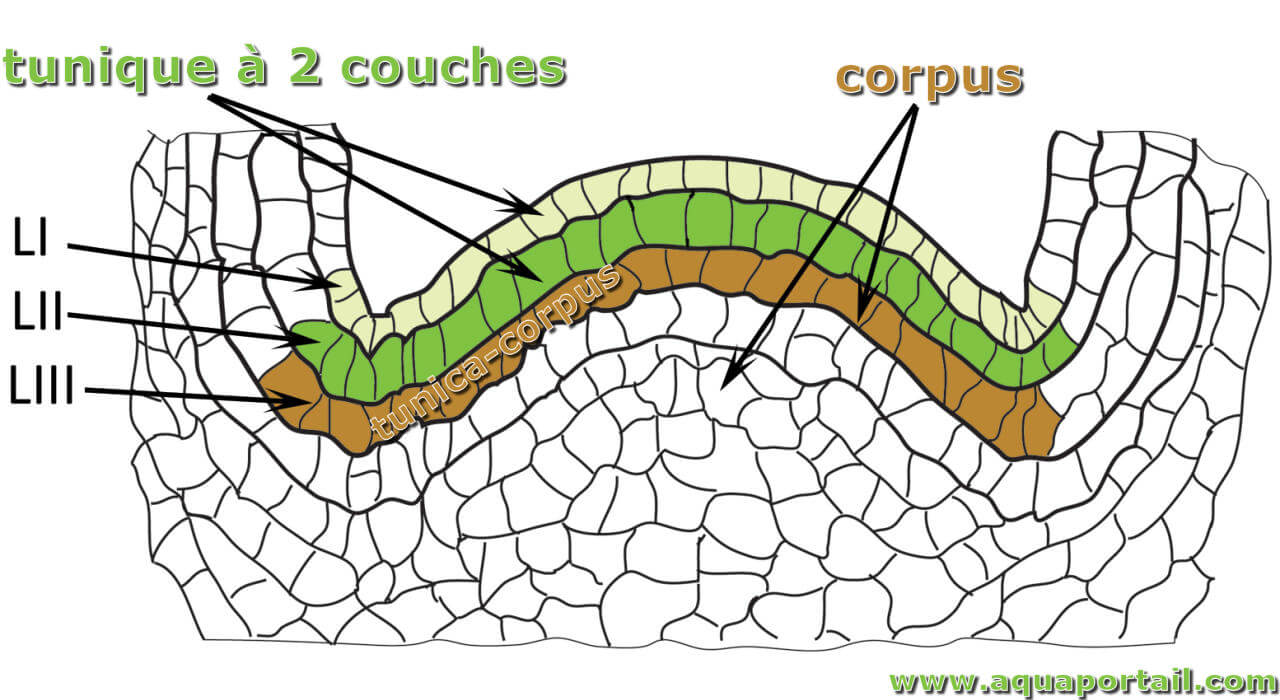
In invertebrates, the tunic is the external covering (cellulosic integument) of tunicates, serving protective and supportive functions, composed of water...
tunicate

A tunicate is a marine invertebrate belonging to the protochordate group Tunicata, comprising sessile Ascidiacea (sea squirts) and pelagic Thaliacea (salps...
cactus

A cactus is a thick, fleshy plant that grows in many hot, dry regions of the world. Cacti do not have leaves, and many are covered with spines.
Simple summary
Chitin is a natural biopolymer found in the exoskeleton of arthropods, such as insects and crustaceans, as well as in the cell walls of fungi. It provides structural support and protection, playing a role comparable to that of cellulose in plants.
