Integument
noun (n.)
Definition
An integument is a protective covering that encloses an organism along with all the peripheral tissues covering the bodies of animals. The internal integument forms an inner protective layer. Examples of integuments include: skin, dermis, scales, carapace, cuticle, bark, and shell.
The integument in a fruit seed:

In a drupe such as a peach, the seed integument separates the endosperm and embryo from the pericarp.
Explanations
The integument, the protective covering of a structure with an external envelope, is a fairly modern word. Its origin dates back to the 17th century. It can signify a material or layer with which something is covered, enclosed, or coated in the sense of "plated" or "clad", such as a skin or a shell.
In zoology
The integument of an organ in zoology normally includes connective tissue membranes, such as those surrounding the kidney or liver. Regarding the integument of an animal, the usual meaning is its skin and derivatives: the integumentary system, where "integumentary" compares to "cutaneous tissue".
In arthropods, the integument or "outer" skin consists of an epithelial-layered ectoderm from which emerges the cuticle, a rigid external chitin layer of variable chemical composition.
In vertebrates, the integument, or skin, comprises a superficial layer made of several cell thicknesses. In plants, integuments are single or double protective tissues of the ovule and subsequently the seed.
Integuments also contain pigment cells or chromatophores. It is at the level of the integument that part of the exchange of matter and information between the organism and its surrounding environment takes place.
In animals, the integument is the entirety of the tissues covering the body (such as the skin of humans or fishes).
In botany
In prespermatophytes and spermatophytes, the integument is a protective envelope of ovules and seeds. In prespermatophytes, the ovule integument is single and composed of three layers (sarcotesta, sclerotesta, and endotesta). In angiosperms, there are most often two integuments: an inner integument (tegmen) and an outer integument (testa).
In botany, the meaning of integument is similar to that in zoology, i.e., the covering of an organ, but when the context does not indicate otherwise, the word generally refers to a single- or multi-layered envelope, such as the cell layers covering the ovule, leaving only a pore, the micropyle, through which pollen can enter. For a seed, the integument is the seed coat (after fertilization, the integument becomes the seed envelope).
Historically, the developing ovule was thought to be generally covered by two membrane layers. The integument was described by the phrase "outer seed membrane", although studies have shown that only the inner membrane is the true membrane. Over time, the term was applied to both membranes, which began to be distinguished as inner and outer integuments.
As a general rule, the integument is:
- single-layered: unitegmic ovules, mainly in dicotyledonous plants
- double-layered: in almost all monocotyledons and certain dicotyledonous plants
The degree of integument development in different plants also varies. Even extreme reduction, down to initial cells, is found in a number of parasitic plants. Complete absence of the integument is observed only in the undifferentiated ovule.
In certain flowering plants, three integuments have been described. The third group included Arillus, the arils.
Derived terms and uses
Derived terms include various adjectival forms such as integumentary (e.g., system), integral (e.g., gland), and tegumented (as opposed to naked).
Other illustrative examples of usage include: the dorsal artery of the penis (an example of an integument enclosing an internal organ), and the integumentary system (meanings related to vertebrate skin and medical aspects).
The term, when applied to the outer part of seeds, is generally replaced by the seed coat or episperm.
Unitegmic and bitegmic
A unitegmic ovule describes an ovule possessing only a single integument enveloping it. These are the ovules of prespermatophytes, gymnosperms, and certain angiosperms. Contrasts with bitegmic.
A bitegmic ovule describes an ovule, and thus a seed in botany, whose nucellus is surrounded by two integuments, the inner and the outer. Said of the ovule (and seed) of most angiosperms when it possesses two integuments around the nucellus (inner and outer).
Synonyms, antonyms
Spanish translation: tegumento
15 synonyms (similar meaning) for "integument":
0 antonyms (opposite meaning).
Related words and expressions to INTEGUMENT are directly connected by general or specific meaning.
The word INTEGUMENT is listed on page 1 of words starting with I in the dictionary glossary.
Related to "integument"
capsule

A hard capsule (gelcap) is a small, hollow, hard-shelled capsule made of two interlocking halves containing a medication, nutraceutical, or dietary...
epidermis

The epidermis is a multi-layered stratified squamous epithelial tissue that forms the outer covering of the organism.
membrane
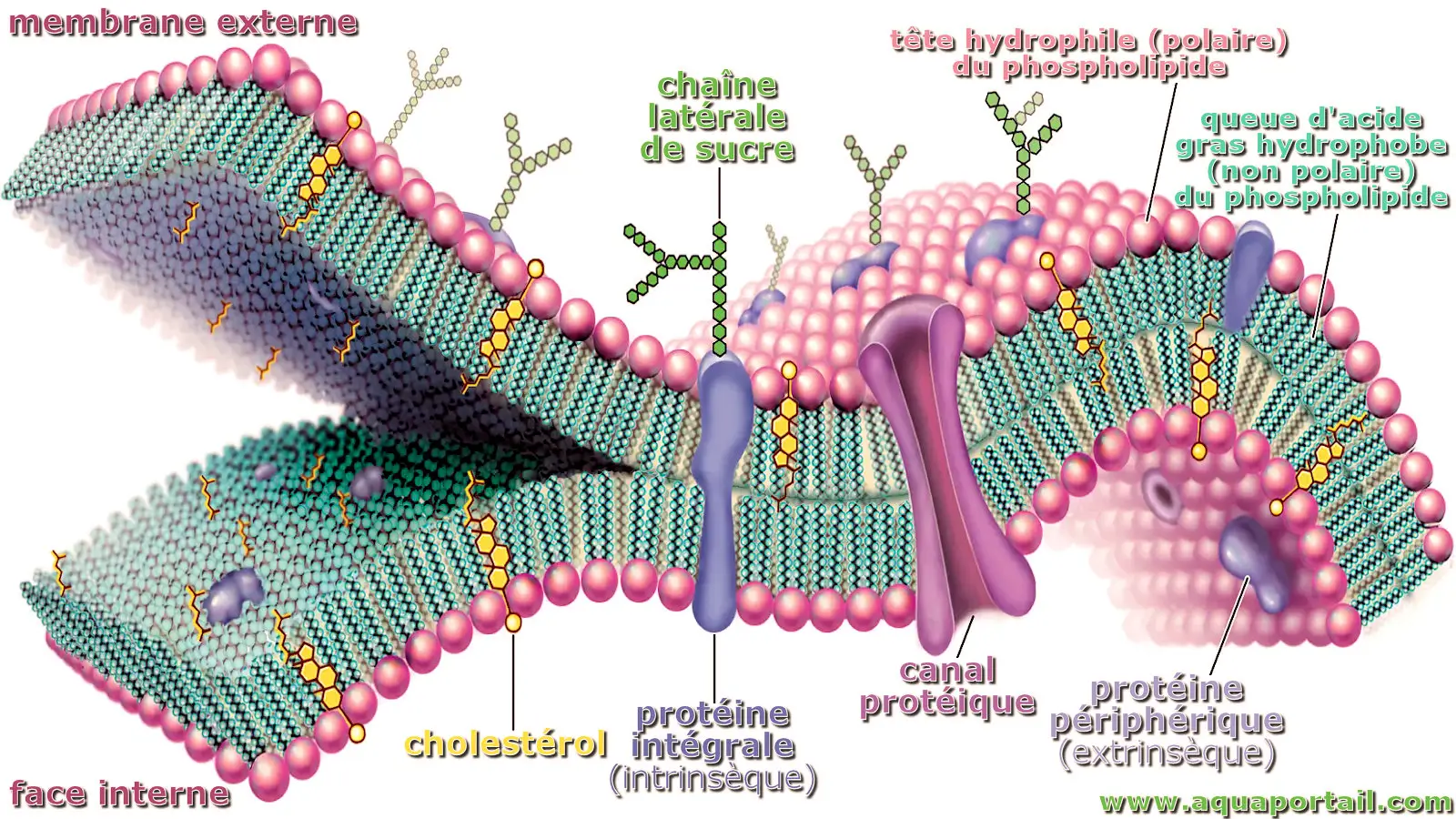
A membrane is a thin, soft, flexible sheet or layer, particularly of a plant or animal part (cell, tissue, or organ).
scale

A scale is a small, thin, horny or bony plate protecting the skin of fish and reptiles. Sets of scales generally overlap, partially covering one another...
Simple summary
The integument refers to a protective layer. It generally describes the outer surface or covering of an organism, such as animal skin or the protective envelope of certain parasites, such as flatworms or flukes.
