Astaxanthin
noun (n.)
Definition
Astaxanthin is a natural carotenoid pigment found in certain chlorophyceans such as the genera Dunaliella and Haematococcus, or extracted from krill, notably used to color the flesh of farmed fish. Astaxanthin also denotes an orange carotenoid pigment in the carapace and eggs of crustaceans, such as triops or crayfish.Flacon de gélules d'astaxanthine :

Astaxanthin is a carotenoid belonging to the phytochemical terpene series, classified as a xanthophyll. Like many carotenoids, it is a lipid-soluble colored pigment.
Origin and chemistry
Astaxanthin is a carotenoid belonging to a broader class of phytochemicals called terpenes, which are built from five-carbon precursors: isopentenyl diphosphate and dimethylallyl diphosphate. Astaxanthin is classified as a xanthophyll (originally derived from a word meaning "yellow leaves" from the yellow plant leaf pigments first recognized in the xanthophyll family of carotenoids), currently used to describe carotenoid compounds bearing oxygen-containing moieties, hydroxyl (OH) or ketone (=O) radicals, such as zeaxanthin and canthaxanthin.
Indeed, astaxanthin is a metabolite of zeaxanthin and/or canthaxanthin, containing both hydroxyl and ketone functional groups. Like many carotenoids, astaxanthin is a colored, lipid-soluble pigment. This color is due to the extended chain (alternating double and single bonds) of conjugated double bonds at the center of the compound. This conjugated double-bond chain is also responsible for the antioxidant function of astaxanthin (as well as other carotenoids), resulting from a region of delocalized electrons that can be donated to reduce a reactive oxidizing molecule.
Sources
Astaxanthin is found in microalgae, yeast, salmon, trout, krill, various shrimp, crayfish and other crustaceans, and the feathers of certain birds. It provides the red color of salmon flesh and the red color of cooked shellfish. Professor Basil Weedon was the first to prove the structure of astaxanthin by synthesis in 1975.
Astaxanthin can be found in the microalgae Haematococcus pluvialis, the yeast Xanthophyllomyces dendrorhous, salmon, trout, crustaceans (Pandalus borealis, krill, etc.), and certain bird feathers.
Binding at the beta-ionone ring to the hydrophobic region of salmon actomyosin has been proposed, though other factors exist, notably hepatic metabolism linked to the pigmenting effect: astaxanthin accumulates selectively in the blood and muscle of salmon, but not in non-pigmented species. A lipoprotein receptor appears to be the limiting factor in pigment metabolism and transport.
Antioxidant potency
Astaxanthin, unlike certain carotenoids, is not converted into vitamin A (retinol) in the human body. Excess vitamin A is toxic to humans, whereas astaxanthin is not. However, it is a potent antioxidant, roughly ten times stronger than other carotenoids.
Astaxanthin is used as a feed additive for fish and crustaceans (such as Penaeus monodon). It is used at a rate of 72 g/metric ton (2.3 oz/short ton) as a fish feed additive. Its E number is E161j.
Not to be confused with anthoxanthin, a flavonoid. See also fucoxanthin.
Synonyms, antonyms
Spanish translation: astaxantina
6 synonyms (similar meaning) for "astaxanthin":
- astacin
- dihydroxy-carotene-dione
- hematochrome
- ketocarotenoid
- red carotenoid pigment
- vitamin X
0 antonyms (opposite meaning).
Related words and expressions to ASTAXANTHIN are directly connected by general or specific meaning.
The word ASTAXANTHIN is listed on page 1 of words starting with A in the dictionary glossary.
Related to "astaxanthin"
xanthophyll

A xanthophyll is a yellow, orange, or red terpenoid pigment with a structure similar to that of carotenes, but containing oxygen atoms in addition...
zeaxanthin
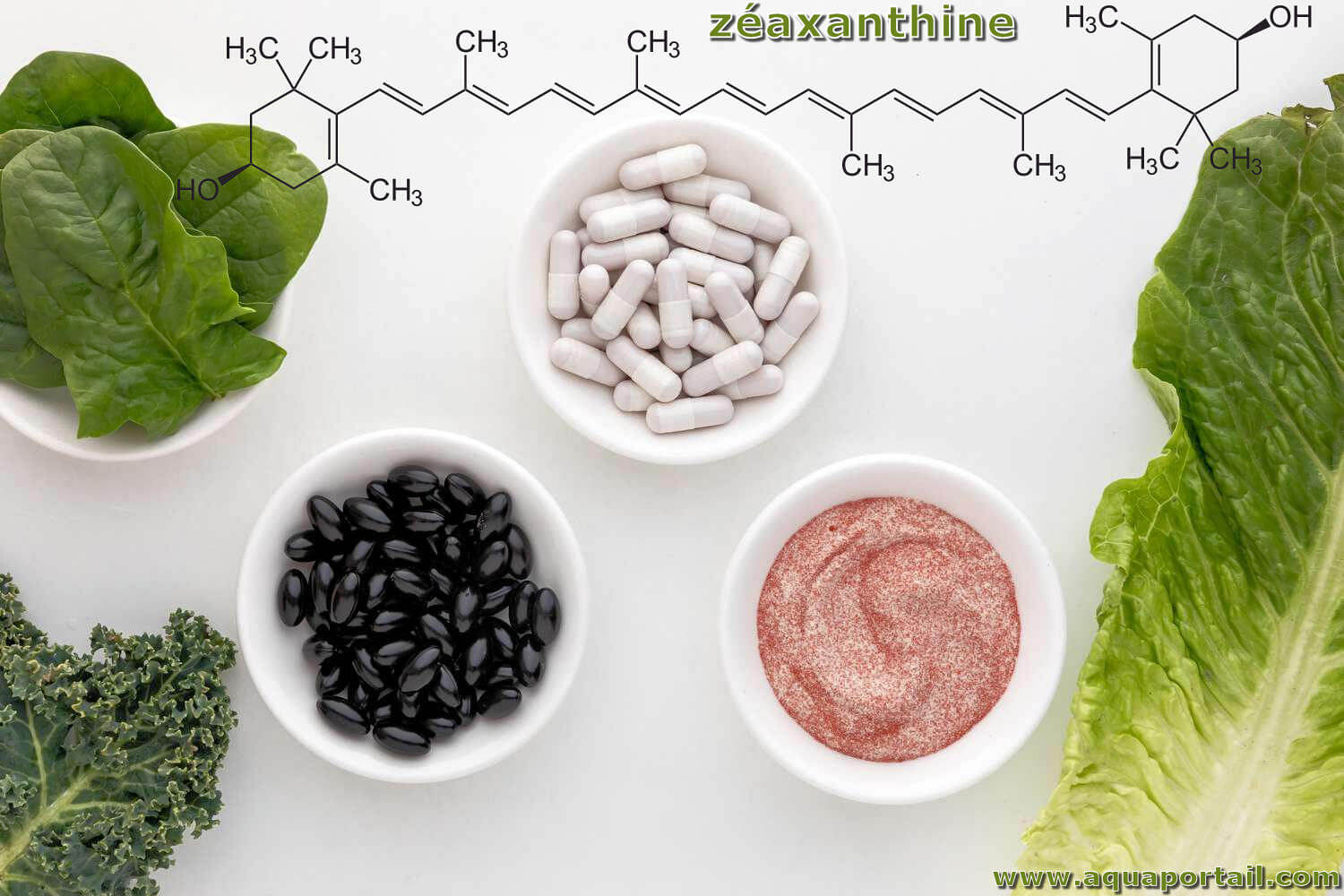
Zeaxanthin is a carotenoid pigment of certain algae such as red algae, cryptophytes, and others.
abiotic

In biology and ecology, abiotic refers to what is not biotic, that is, not part of living beings.
aboral

Aboral refers to what is situated away from or opposite the mouth in zoology, and especially in marine biology.
Simple summary
Astaxanthin is a red pigment belonging to the carotenoid family, recognized for its potent antioxidant properties. It occurs naturally in various marine organisms, notably microalgae, salmon, shrimp, and krill. Widely valued for its health benefits, astaxanthin is used in dietary supplements as well as a natural colorant in food and cosmetics. Its ability to combat oxidative stress makes it a sought-after ingredient for promoting skin health, reducing inflammation, and supporting eye and heart health.
