Nervous system
noun phrase (n. phr.)
Definition
The nervous system of an organism is a complex network composed of the brain and spinal cord (central nervous system), and nerves (peripheral nervous system).
The human nervous system:
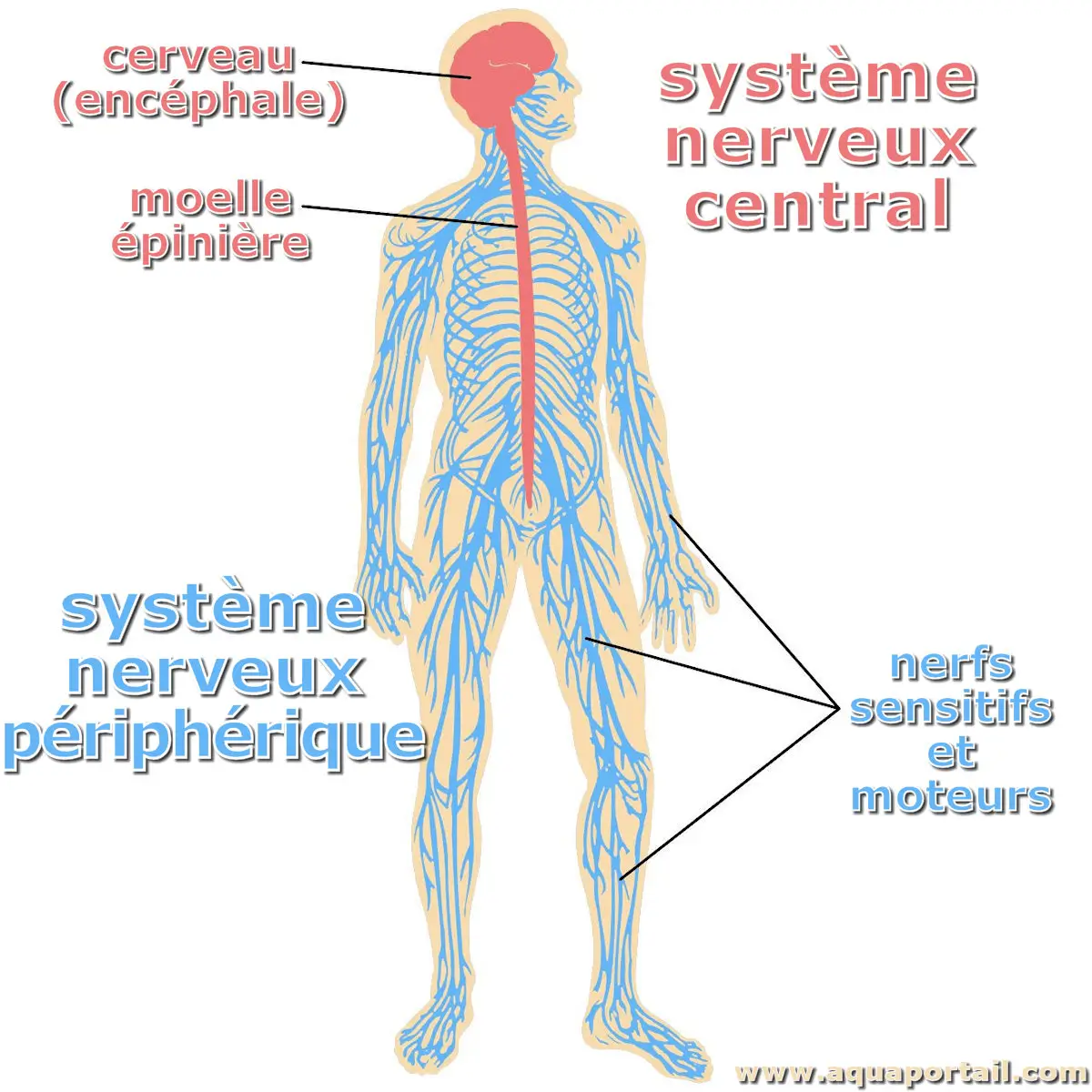
The nervous system includes the brain (encephalon), the spinal cord, and a complex network of nerves. This system transmits messages between the brain and the body. The brain controls all bodily functions. The spinal cord runs down from the brain into the back.
Explanations
The nervous system is the organized network of nervous tissue in the body. It is divided into two parts: the central nervous system (CNS) with the brain and spinal cord, and the peripheral nervous system (PNS) with the nerves extending from the spinal cord to the rest of the body.
The nervous system is the primary control, regulatory, and communication system of the body. It is at the core of all mental activity, including thought, learning, and memory. Together with the endocrine system, it is responsible for regulating and maintaining homeostasis. Through its receptors, it keeps us in touch with both our external and internal environments.
Like other body systems, the nervous system is composed of organs, primarily the brain, spinal cord, nerves, and ganglia. These in turn consist of various tissues, including nervous tissue, blood, and connective tissue. Together, they carry out the complex functions of the nervous system.
The various activities of the nervous system can be grouped into three overlapping general functions: sensory, integrative, and motor.
Millions of sensory receptors detect changes, called stimuli, occurring inside and outside the body. They monitor parameters such as temperature, light, and sound from the external environment. Inside the body, the internal environment, receptors detect variations in pressure, pH, carbon dioxide concentration, and levels of various electrolytes. All of this gathered information is called "sensory input".
Sensory inputs are converted into electrical signals, called nerve impulses, which are transmitted to the brain. There, these signals are brought together to create sensations, produce thoughts, or enrich memory. Decisions are made at every moment based on sensory input. This is called integration.
Based on sensory input and integration, the nervous system responds by sending signals to muscles, causing them to contract, or to glands, causing them to produce secretions. Muscles and glands are called effectors because they produce an effect in response to instructions from the nervous system. This is motor output or motor function.
Synonyms, antonyms
Spanish translation: sistema nervioso
1 synonym (similar meaning) for "nervous system":
0 antonyms (opposite meaning).
Related words and expressions to NERVOUS SYSTEM are directly connected by general or specific meaning.
The expression NERVOUS SYSTEM is listed on page 1 of words starting with N in the dictionary glossary.
Related to "nervous system"
ecosystem

An ecosystem is a system formed by the ecological and physicochemical environment (the biotope) and the living beings that inhabit it (the biocenosis).
photosystem
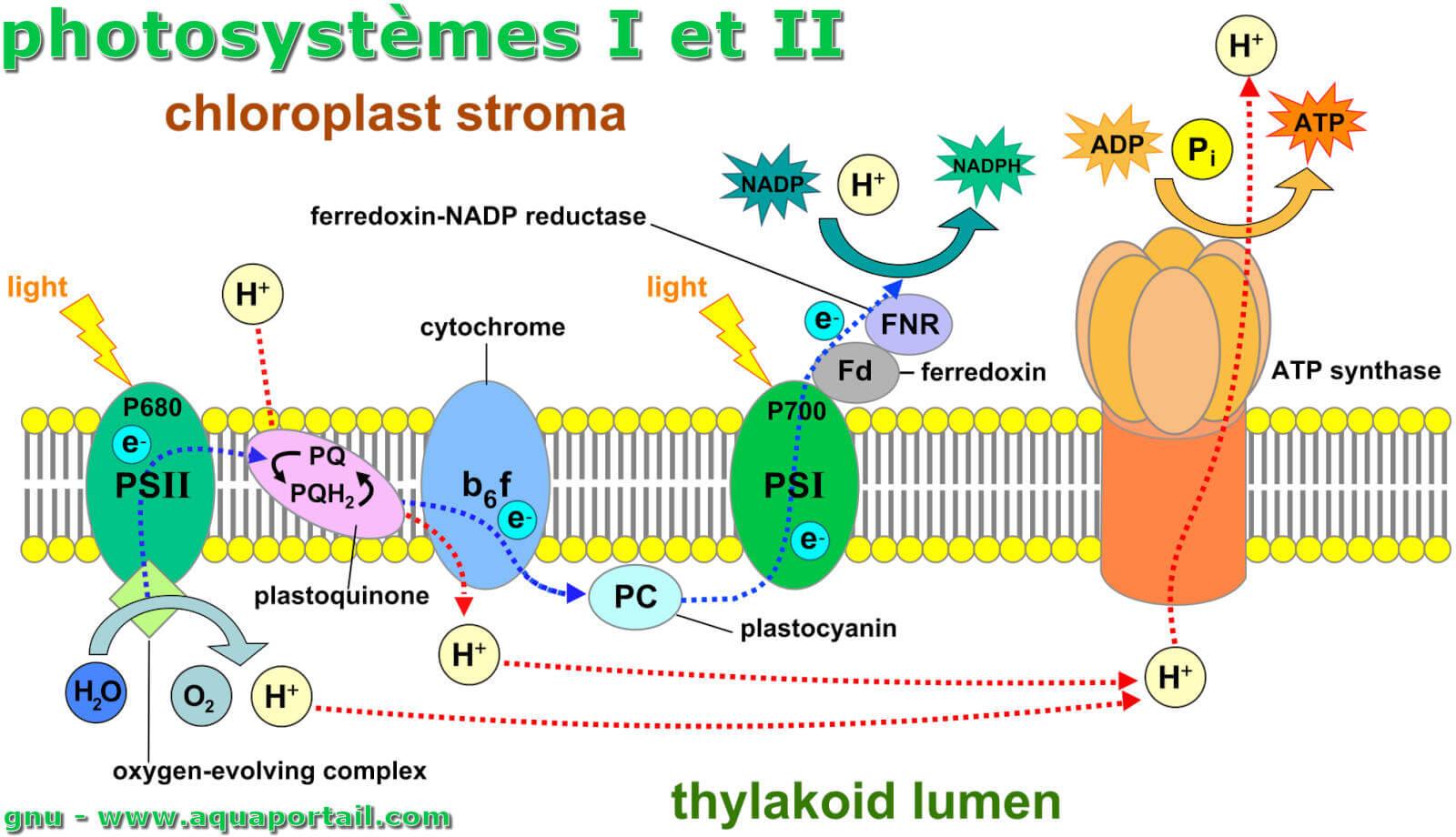
A photosystem designates the functional unit of photosynthesis, each of the protein complexes in photosynthetic cells formed of an antenna (the...
photosystem 1

Photosystem 1 (PSI) is a reaction center, an essential component, of photosynthesis containing the pigment P700.
photosystem 2
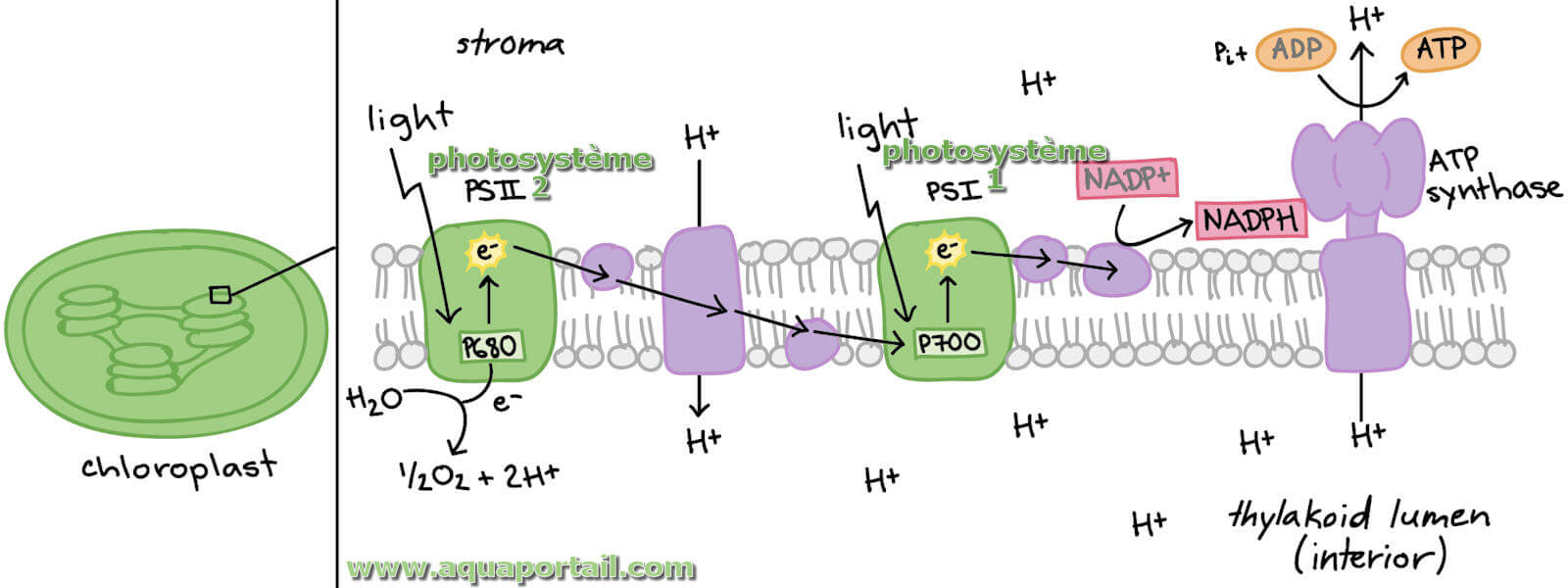
Photosystem II (PSII) is a membrane protein supercomplex that executes the initial reaction of photosynthesis in plants.
