Photosystem
noun (n.)
Definition
A photosystem designates the functional unit of photosynthesis, each of the protein complexes in photosynthetic cells formed of an antenna (the light-harvesting antenna) and a reaction center. They are located in the thylakoid membrane (associated with phycobilisomes in cyanobacteria and rhodophytes) or in the plasma membrane (associated with chlorosomes in certain photosynthetic bacteria).
✅ This photosynthetic system is thought to have evolved more than 3,000 million years ago in a primitive photosynthetic bacterium.
The two photosystems in a photosynthesis reaction:
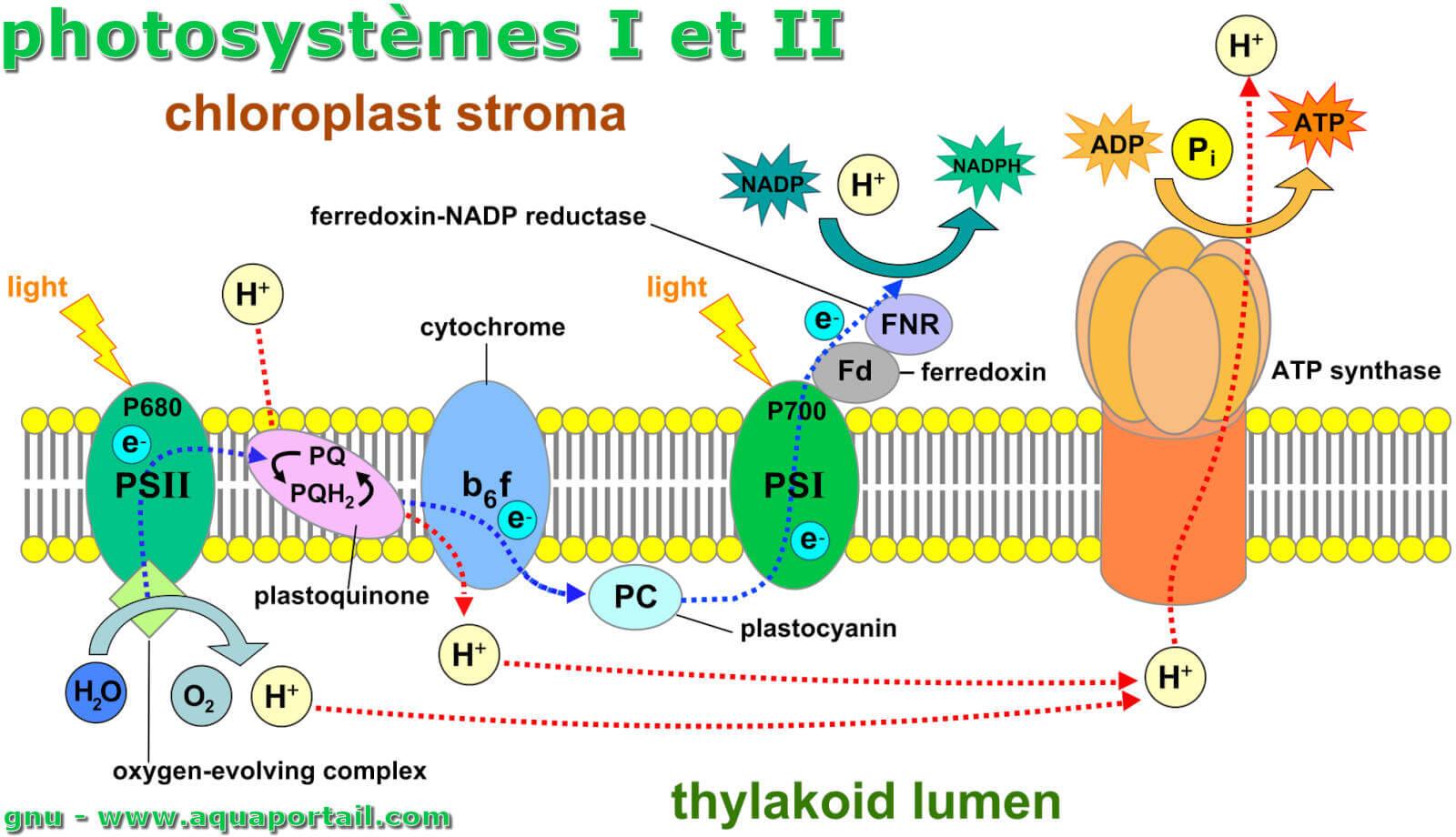
Photosystems intervene with cytochromes in the light reactions of photosynthesis.
Two types of photosystems
In plants, there are two photosystems:
- photosystem 1 (PSI), which is the second functional complex of the chloroplast electron transport chain
- photosystem 2 (PSII), which is the first functional complex of the chloroplast electron transport chain.
The two differ in the shape of their antenna, their location, and the proteins associated with the photopigments.
✅ In biology, a photosystem is a protein supercomplex that carries out the primary photochemical reactions of photosynthesis. Both photosystems, together with cytochromes, participate in photosynthetic phosphorylation (photophosphorylation).
Description and explanations
A photosystem is a functional and structural unit of protein complexes that carry out the primary photochemical reactions of photosynthesis: light absorption, energy conversion, and electron transfer. Photosystems are found in the thylakoid membrane of plants, algae, and cyanobacteria (located in the chloroplasts in plants and algae) or in the cytoplasmic membrane of photosynthetic bacteria (green bacteria and purple bacteria). In general, all photosystems are divided into two types: I and II.
✅ Photosystems are protein complexes located in the membranes of autotrophic organisms where photosynthetic pigments, such as chlorophyll, are grouped together. These molecules are capable of capturing light energy from the Sun and transforming it into useful energy. Photosynthesis, for example, uses visible white light, a mixture of several wavelengths. These protein complexes are present in certain photosynthetic microorganisms and in the chloroplasts of plant cells.
Components
There are two main components of a photosystem:
- a complex antenna in which light energy is captured as excitation energy that is transferred and distributed to the reaction center. It consists of a large number of pigments, hundreds of chlorophyll molecules, allowing a large amount of energy to be absorbed. In addition to chlorophylls and carotenoids, some antennas are also composed of phycobilins (in cyanobacteria and red algae): if chlorophylls are photooxidized when there is intense light, the plant would die, so carotenoids play an important protective role here. This first component is called a light-harvesting complex or complex antenna and functions like a funnel that collects light energy and directs it toward a single reaction center
- a reaction center, formed of protein molecules surrounding a special pair of chlorophyll a (while chlorophyll b is present in the antenna), as well as a primary electron acceptor. The structure of chlorophyll a is no different from that of the light-harvesting antenna, but some molecules transfer energy and others electrons. Consequently, in the chlorophyll pigment, one of the electrons jumps to a higher energy level and donates the electron to a primary acceptor which thus becomes reduced, while chlorophyll a recovers the electron it lost from the primary electron donor (which, in the case of PSII, is water), the latter being oxidized with dioxygen as a byproduct.
The antenna is formed of proteins that establish stable bonds with photosynthetic pigments (chlorophylls a and b and carotenoids). The reaction center is a dimer of chlorophylls a (or bacteriochlorophylls a) associated with a few proteins.
Reaction centers
At the center of the photosystem lies the reaction center, which is an enzymatic complex that uses light to excite electrons to high energy. This reaction center is surrounded by light-harvesting complexes that enable more efficient light absorption.
There are two types of photosystem reaction centers: a type I reaction center as in photosystem I (present in green sulfur bacteria) and a type II reaction center in photosystem II (present in purple non-sulfur bacteria). Both types of reaction centers are present in plant chloroplasts and cyanobacteria.
Each photosystem differs in the wavelength of light most actively absorbed by its primary pigment that releases electrons under the influence of light (700 and 680 nm for chloroplast PSI and PSII), the quantity and type of light-harvesting complexes, as well as the terminal electron acceptor.
Type I photosystems use ferredoxin-like proteins with an iron-sulfur cluster as terminal acceptors, whereas type II photosystems transfer electrons to a membrane-soluble quinone carrier. Both types of reaction centers are present in plant chloroplasts and cyanobacteria, where they work together to form a single electron transport chain enabling electrons to be obtained from water to form oxygen as a byproduct.
Structure
In eukaryotes, the photosystem comprises several protein subunits (more than 20 to 30), which provide an anchoring site for a number of cofactors. Cofactors may include pigments (for example, chlorophyll, pheophytin, carotenoids), quinones, and iron-sulfur clusters.
In bacteria, photosystems are generally embedded directly in the cell membrane or its surroundings and consist of a core reaction center surrounded by light-harvesting complexes and sometimes a small number of additional subunits. In purple bacteria, the reaction center consists of three subunits: L (light), M (medium), and H (heavy). The L and M subunits carry chromophores, and the H subunit forms the cytoplasmic domain. The purple bacterium Rhodopseudomonas viridis possesses an additional non-membrane subunit: the tetraheme cytochrome (4Hcyt), located on the periplasmic side.
In green sulfur bacteria, the reaction center comprises four types of subunits (assembled into a five-subunit complex): PscA-D. The two PscA subunits dimerize and hold the cofactors together, each binding one copy of PscD and PscC, which carries the heme. The PscB subunit is located at the center of the dimer and binds two iron-sulfur clusters transferring electrons to ferredoxin.
Synonyms, antonyms
Spanish translation: fotosistema
0 synonyms (similar meaning) for "photosystem".
0 antonyms (opposite meaning).
Related words and expressions to PHOTOSYSTEM are directly connected by general or specific meaning.
The word PHOTOSYSTEM is listed on page 1 of words starting with P in the dictionary glossary.
Related to "photosystem"
oxygenic photosynthesis
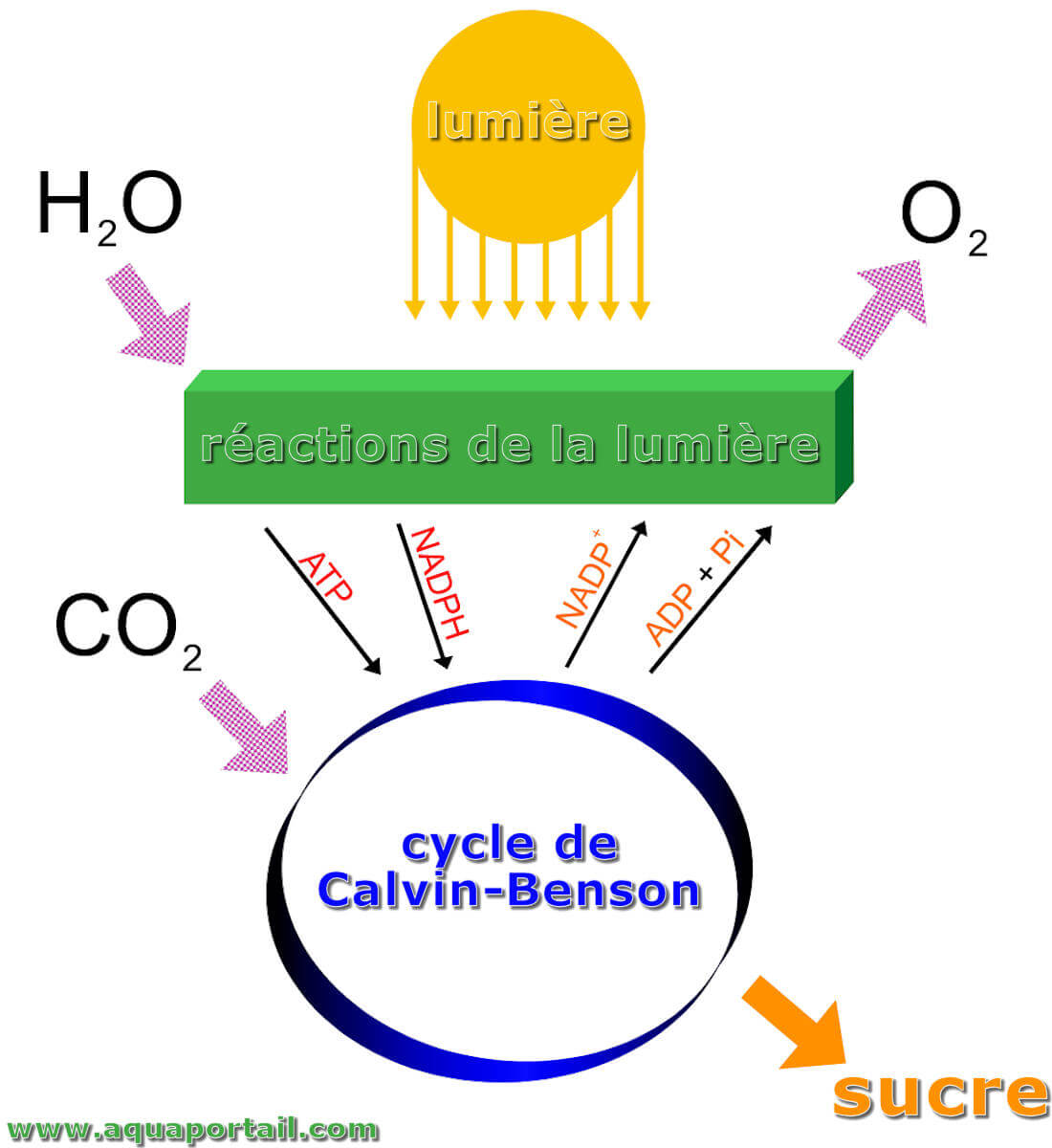
Oxygenic photosynthesis releases oxygen through the absorption of CO₂ via a non-cyclic photosynthetic electron chain in which the electron donor is water.
photosynthesis
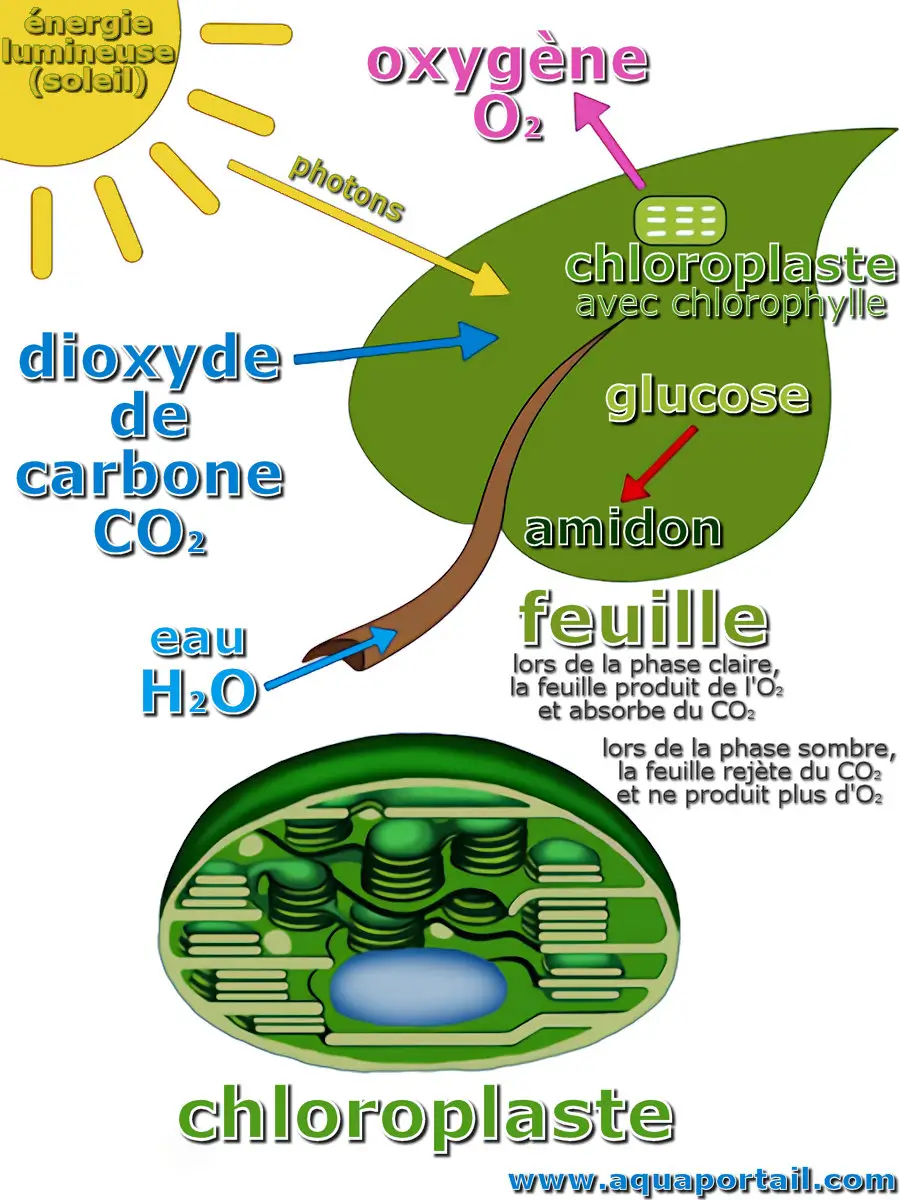
Photosynthesis is the bioprocess of converting inorganic substances (CO₂, water) into sugar while releasing oxygen (O₂) using the photonic energy of light.
photosystem 1

Photosystem 1 (PSI) is a reaction center, an essential component, of photosynthesis containing the pigment P700.
photosystem 2
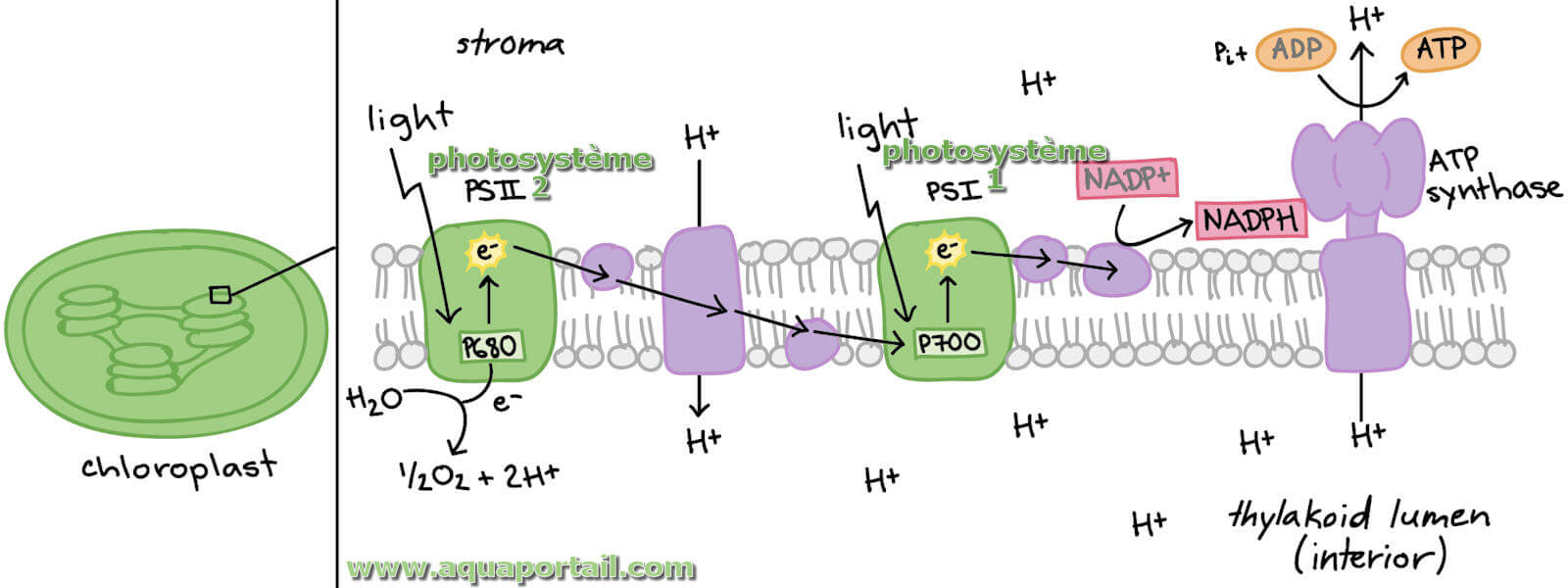
Photosystem II (PSII) is a membrane protein supercomplex that executes the initial reaction of photosynthesis in plants.
