Oxygenic photosynthesis
noun phrase (n. phr.)
Definition
Oxygenic photosynthesis releases oxygen through the absorption of CO2 via a non-cyclic photosynthetic electron chain in which the electron donor is water. This type of photosynthesis is carried out by plants, algae, and cyanobacteria.Oxygenic photosynthesis process:
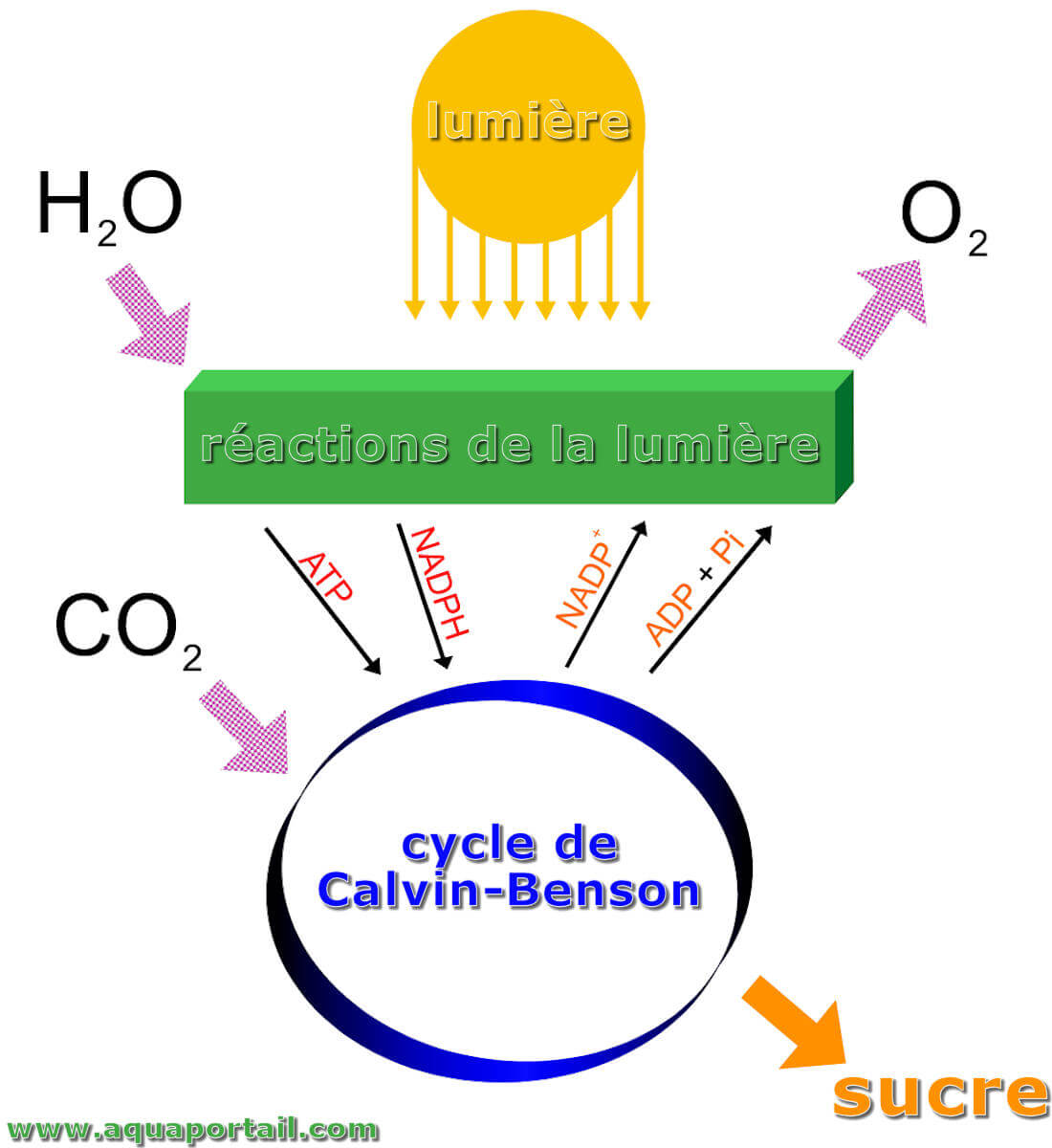
oxygenic photosynthesis converts sunlight into chemical energy, splits water to release O2, and fixes CO2 into sugar. This photosynthesis involves the Calvin-Benson cycle.
Explanations
Oxygenic photosynthesis is one of the four types of photosynthesis, using water as an electron donor and during which dioxygen O2 is produced. This is the case for certain photosynthetic bacteria, notably cyanobacteria (whereas purple bacteria carry out anoxygenic photosynthesis). Oxygenic photosynthesis supplies energy to the organism and enables carbon fixation, while producing oxygen as a byproduct. Using water requires a photosynthetic apparatus with two reaction centers.
Oxygenic photosynthesis, as opposed to anoxygenic photosynthesis, is a synthesis, by chlorophyllous plant cells and in the presence of light, of organic compounds with carbon (especially carbohydrates) from carbon dioxide CO2 and water, with simultaneous production of oxygen. This conversion of light energy into chemical energy is accompanied by the photooxidation of water.
The process takes place in the chloroplasts in plants and algae, and in the thylakoid membranes (or the plasma membrane in Gloeobacter) in cyanobacteria.
⭐ See also anoxygenic photosynthesis and purple non-sulfur bacteria. It is possible to induce this reaction artificially: this is artificial photosynthesis.
Complete photosynthesis, oxygenic and anoxygenic:

Oxygenic photosynthesis enables the absorption of light by photosynthetic pigments (chlorophylls in chloroplasts), the excitation of electrons and their transfer along a transport chain, the use of energy to produce ATP and NADPH, and finally the fixation of CO2 and synthesis of carbohydrates (Calvin cycle).
Photosynthesis is the opposite of cellular respiration, where glucose and other compounds are oxidized to produce carbon dioxide and water and release chemical energy. However, the two processes proceed through a different sequence of chemical reactions and in different cellular compartments.
Although different organisms may exhibit variations during oxygenic photosynthesis, they all follow the general equation: carbon dioxide + water + light energy → carbohydrates + oxygen.
✅ Oxygenic photosynthesis caused a major ecological upheaval about 2.45 billion years ago, shifting the CO2-rich atmosphere toward its present oxygen-rich composition.
Oxygen release
Oxygenic photosynthesis is the primary producer of oxygen and organic matter on Earth. The main step of this process (the conversion of sunlight into chemical energy) is driven by four multi-subunit membrane complexes known as photosystem I, photosystem II, cytochrome b6f, and F-ATPase.
In plants, algae, and cyanobacteria, photosynthesis releases oxygen. This is called oxygenic photosynthesis. Although there are certain differences between oxygenic photosynthesis in plants, algae, and cyanobacteria, the overall process is quite similar across these organisms. Photosynthesis is not only necessary for the photosynthetic organism for energy, but also for carbon fixation via the Calvin cycle.
Carbon dioxide is converted into sugars in a process called carbon fixation. Carbon fixation is a redox reaction, so photosynthesis must provide both an energy source to drive this process and the electrons needed to convert carbon dioxide into carbohydrate, which is a reduction reaction.
Origin
Oxygenic phototrophs played a fundamental role in Earth's history by enabling the rise of atmospheric oxygen (O2) and paving the way for animal evolution. Understanding the origins of oxygenic photosynthesis and cyanobacteria is essential for reconstructing the events surrounding Earth's oxygenation.
Photosynthesis likely evolved within bacterial lineages that are now extinct, so studying the earliest stages of photosynthesis can be challenging. Recent studies in genomic and molecular evolution have transformed the understanding of the evolution of photosynthetic reaction centers and the evolution of cyanobacteria.
✅ Oxygenic photosynthesis is one of the most important metabolisms to have evolved on Earth because it enabled the emergence of complex life forms. A fundamental question in biology is when oxygenic photosynthesis first developed. It underpinned both the biological and geological processes that LED to the rise of O2 during the early Earth. Regarding the timing of its origin, the fossil record of cyanobacteria is inconclusive. Similar studies have shown that certain ancient molecular biomarkers are no longer reliable.
Different lines of geochemical evidence have constrained the major oxygenation events observed during the early Earth. The first rise of oxygen in the atmosphere is known as the "Great Oxidation Event" (GOE). Dated to 2.32 to 2.4 billion years ago, the GOE has been well constrained based on geochemical proxies. The GOE represents the minimum age for the origin of oxygenic photosynthesis and the emergence and diversification of oxygen-requiring metabolic and biosynthetic pathways.
A second major oxygenation event is known as the "Neoproterozoic Oxygenation Event" (NOE). Between 800 and 600 million years ago, atmospheric O2 concentrations increased substantially, reaching levels close to those found in today's atmosphere. The NOE has also been linked to the origin of animals, major glacial events, and massive perturbations of the carbon cycle, and more recently to the emergence of marine planktonic groups.
Over geological time, O2 accumulated in our atmosphere because carbon fixation by oxygenic phototrophs exceeded the respiration of organic matter. Simultaneously, the imbalance between these two processes led to carbon drawdown and the burial of organic carbon in marine sediments.
Synonyms, antonyms
Spanish translation: fotosíntesis oxigénica
1 synonym (similar meaning) for "oxygenic photosynthesis":
2 antonyms (opposite meaning):
- anoxygenic photosynthesis
- cellular respiration
Related words and expressions to OXYGENIC PHOTOSYNTHESIS are directly connected by general or specific meaning.
The expression OXYGENIC PHOTOSYNTHESIS is listed on page 1 of words starting with O in the dictionary glossary.
Related to "oxygenic photosynthesis"
photosynthesis
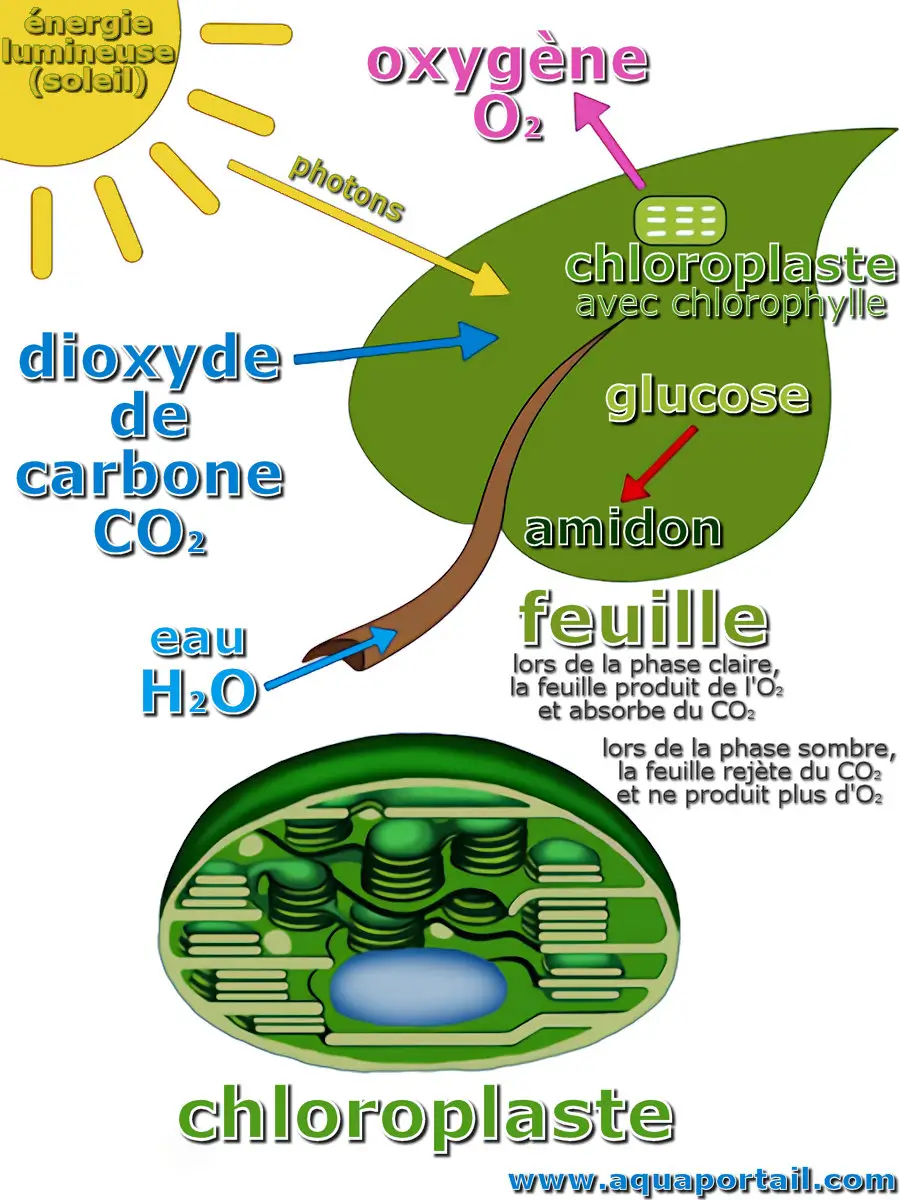
Photosynthesis is the bioprocess of converting inorganic substances (CO₂, water) into sugar while releasing oxygen (O₂) using the photonic energy of light.
oxygenic
In the context of photosynthesis, an oxygenic process is a biosynthetic pathway in which light energy, captured by chlorophylls, enables the use of carbon...
photosynthesis reaction centers

Photosynthesis reaction centers are specialized sites of photosynthesis where oxidation-reduction reactions take place.
oxygenase
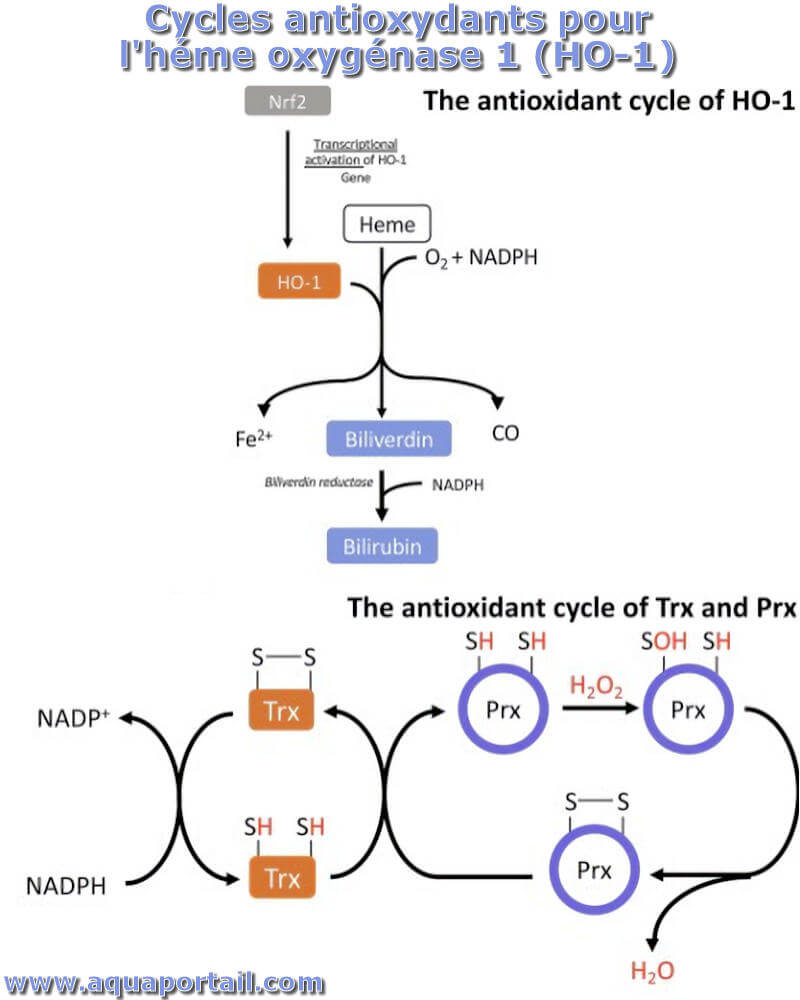
An oxygenase is an enzyme of the oxidoreductase group that catalyzes the addition of one (monooxygenase) or two (dioxygenase) oxygen atoms (dioxygen).
Simple summary
Oxygenic photosynthesis is a process used by plants, algae, and cyanobacteria to convert light energy into chemical energy. During this process, these organisms absorb sunlight and use water as well as carbon dioxide to produce glucose and oxygen. The released oxygen is a byproduct of the splitting of water molecules. It is essential for the survival of most life forms on Earth, as it contributes to the planet's breathable atmosphere and enables aerobic respiration.
