Lineage
noun (n.)
Definition
A lineage consists of a group of living organisms (or genes) descending from a common ancestor. It is a series of relatives by unilineal descent, a part of a pedigree. Lineages are generally visualized as subsets of a phylogenetic tree.
The lineage of elephants:

In the elephant lineage, the earliest known members of the order Proboscidea are the Moeritheria. This was a pig-sized creature that lived in North Africa between 55 and 60 million years ago. Somewhat later, the lineage of Palaeomastodons, which existed between 40 and 25 million years ago, branched off, and the earliest known descendants of the lineage gave rise to the two species of elephants alive today.
Explanations
By understanding evolutionary relationships among species, we can attempt to predict which lineages may be most vulnerable to human-induced environmental degradation, such as climate change or pollution.
Some conservation biologists also seek to focus on preserving the greatest evolutionary diversity, ensuring the protection of species representing many different branches of the Tree of Life rather than protecting numerous closely related species.
In phylogenetics, see breed/race. See also, in biology, pure line, germline, evolutionary lineage, cell lineage, and phylogenetic lineage. See also isogenic line.
In philosophy, lineage denotes a spiritual, intellectual, or artistic affiliation.
⭐ An evolutionary lineage is a sequence of species forming a line of descent, each new species being the direct result of speciation from an immediate ancestral species. Lineages are subsets of the evolutionary tree of life. Lineages are often determined using molecular systematics techniques.
In classification
The hierarchical taxonomic classification lineage of the source organism lists nodes as they appear from top to bottom in the taxonomic tree, with the most general group listed first.
Taxonomic classification is built primarily from sequence data, though it also relies on authoritative published literature whenever possible. It strives to accurately reflect current phylogenetic knowledge, despite the ambiguity inherent in evolutionary classification.
Taxonomy (along with its taxonomic lineage) aims to be informative and meets the specific needs of database users (for instance, attempting to trace the phylogenetic history of a group of organisms or elucidate the evolution of a molecule); nothing claims it to be the best or most exact system.
To find the complete taxonomic lineage of an organism, proceed as follows:
- first, search the taxonomy database using the organism's name (accepted common names generally work at all taxonomic ranks; use the scientific or formal name if no results are returned with the common name)
- click the desired taxon name in the results (for terminal taxa—usually subspecies, species, or strains—this link leads directly to the summary page; for higher taxa, this link leads to a selection of binomials showing the lower taxa contained within the higher taxon, in which case click the desired taxon name again)
- the complete taxonomic lineage is displayed at the top of the taxonomy browser or on the taxon information page (click "Lineage" to toggle between full and abbreviated lineage).
Today, taxonomic classification is used by nucleotide sequence databases (GenBank).
Crown group
A crown group (or divergence crown) is an expression used to signify that most eukaryotic lineages diverged nearly simultaneously, forming, when depicted graphically, a crown in which each arm represents a lineage. ✅ A stirps is a descendant of a lineage.
Synonyms, antonyms
Spanish translation: linaje
2 synonyms (similar meaning) for "lineage":
- phylogenetic lineage
- taxonomic lineage
0 antonyms (opposite meaning).
Related words and expressions to LINEAGE are directly connected by general or specific meaning.
The word LINEAGE is listed on page 1 of words starting with L in the dictionary glossary.
Related to "lineage"
L-form bacteria
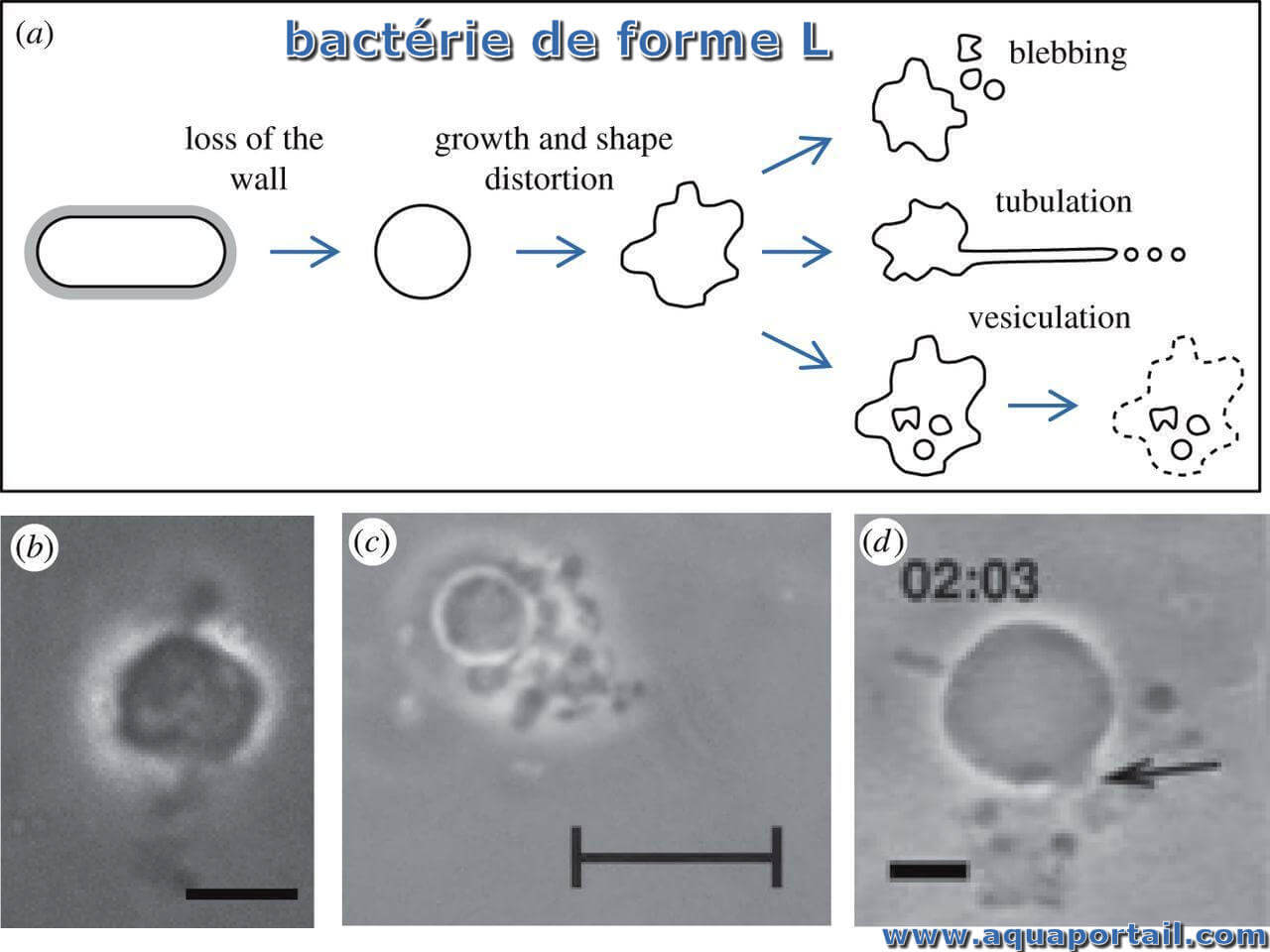
L-form bacteria originate from a strain of bacteria that lack cell walls while retaining the ability to grow.
lacustrine

A lacustrine organism lives, grows, or thrives in or near a lake. The lacustrine environment sometimes designates any body of calm, standing (lentic) water...
ladybug

The ladybug (ladybird or lady beetle) refers to a group of hemispherical coleopteran insects belonging to the family Coccinellidae.
lake

A lake is a large inland and continental body of freshwater, nearly stagnant or slow-moving.
