Ladybug
noun (n.)
Definition
The ladybug (ladybird or lady beetle) refers to a group of hemispherical coleopteran insects belonging to the family Coccinellidae. Their upper wings generally feature a varying number of visible spots. Many species feed on aphids and scale insects, thereby helping to control these pests.
A common ladybug:

The seven-spotted ladybug Coccinella septempunctata is the best-known European species of the family Coccinellidae. This species has seven spots: 3 on each wing cover and 1 central spot just behind the head.
Explanations
Ladybugs, also known in French as bêtes à bon Dieu ("God's little creatures"), are popular with the public and bear a variety of vernacular names. Their popularity stems largely from their usefulness in horticulture and agriculture, as each ladybug eats up to 3,000 aphids and related pests (mites, scale insects, etc.) during its larval stage, depending on the species.
Despite their apparent harmlessness and charming appearance, almost all Coccinellids are actually active predators endowed with considerable voracity, to the point that instances of cannibalism and fairly sophisticated predatory behavior are common.
For these reasons, they rank among the most valuable predators used in biological pest control.
Their appearance is variable, making species identification difficult. The same species can occur in dozens of pattern variants. Some, such as the alfalfa ladybird, even reach over 4,000 documented variants. Formerly, these variants were separated and given their own names—for example, the two-spotted ladybug Adalia bipunctata had over 150 names, which are no longer used today and hold no scientific validity.
In certain subgroups (for instance in the tribe Scymnini), reliable identification is only possible through examination of the genitalia. Aside from genitalia, the head capsule, head shield, and antennae often serve as reliable distinguishing traits among similar species.
These beetles fly well and achieve 75 to 91 wingbeats per second. Certain species, such as the cream-streaked or ten-spotted Calvia decemguttata, are attracted to artificial light at night, suggesting nocturnal dispersal flights.
Characteristics
Ladybugs range in size from 1 to 12 millimeters (0.04 to 0.47 in). The body is strongly domed, short, hemispherical, or oval. The head, thorax, and underside are generally black, though beetles with a light brown or rust-brown underside also exist. Head coloration usually depends on the color of the rest of the body and can vary widely. The antennae are relatively long, typically thickened into a club shape at the tip.
In certain species groups, the number of antennal segments is reduced. For example, the antennae of Chilocorini have only eight or nine segments and are thus shorter. The tips in Central European species are clubbed. Mandibles generally differ markedly between species, having adapted to specific diets.
Some species have a hairy body, whereas the elytra of the best-known species are unpatterned in texture and completely smooth. In certain species (Chilocorini, for example), the margin of the elytra is folded slightly upward.
Anatomy of a ladybug:
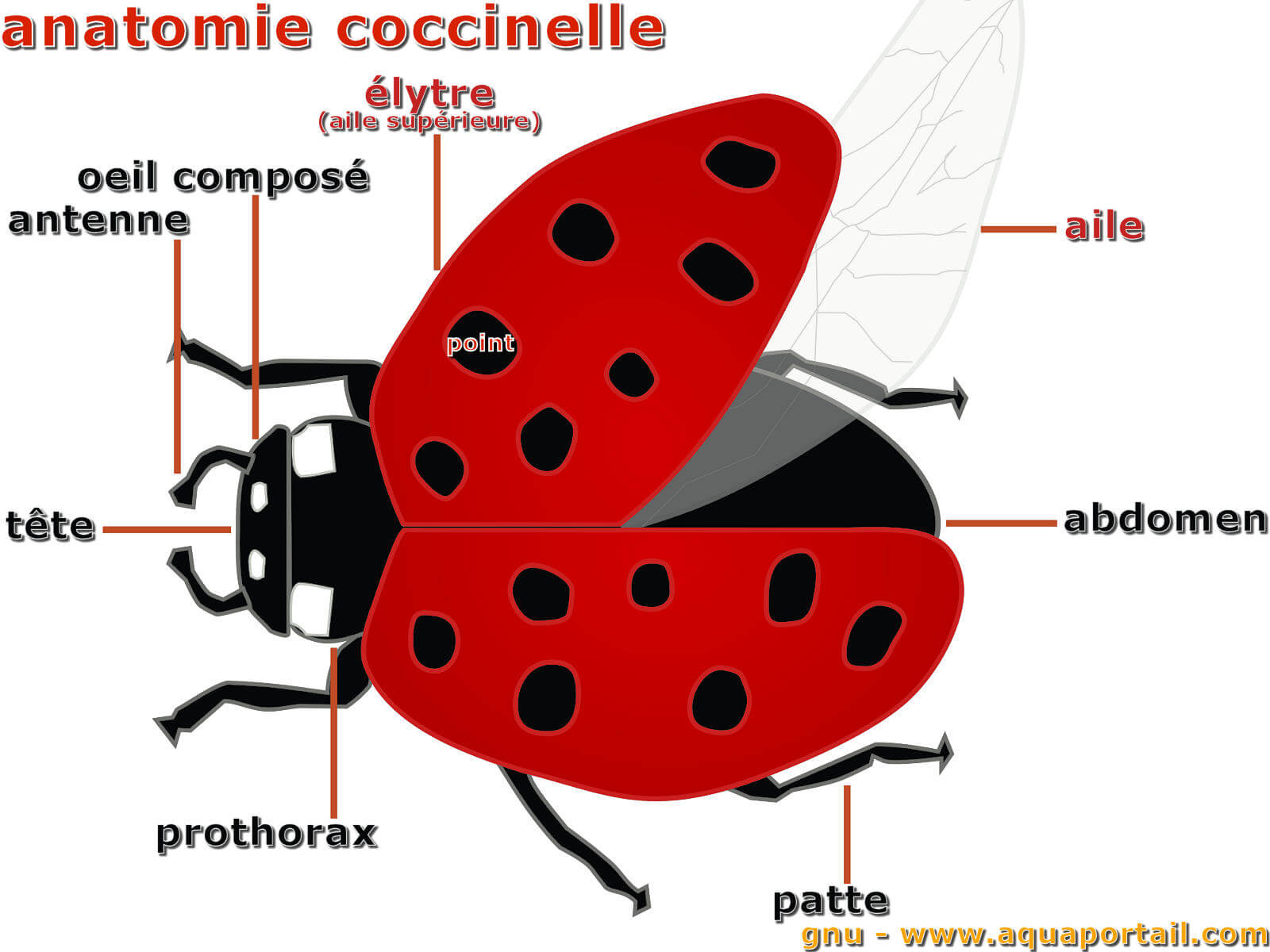
A ladybug has classic beetle anatomy, with the two forewings hardened into protective shields called elytra. The compound eyes are generally black. On the pronotum, which typically covers the head, there is a whitish spot on each side.
Ladybug legs have a structure similar to that of other beetles. The tarsus also consists of four segments, though the second is lobed and the third is often tiny. Only a few species exhibit a reduction to three tarsal segments.
Life cycle
The life cycle of a ladybug is identical to that of other beetles: egg, larva, pupa, followed by metamorphosis into a newly emerged adult (teneral) and then mature adult. Ladybugs mate while clinging to tree branches, leaves, trunks, or even human hands.
They lay yellow eggs singly or in clusters on leaves or stems, generally close to aphid colonies. After about a week, highly mobile six-legged larvae (campodeiform larvae) emerge. Some are spiny or warty, black in color with tiny white or orange spots, though a wide variety of colors exists depending on the species.
Life cycle of a ladybug Clitostethus arcuatus:
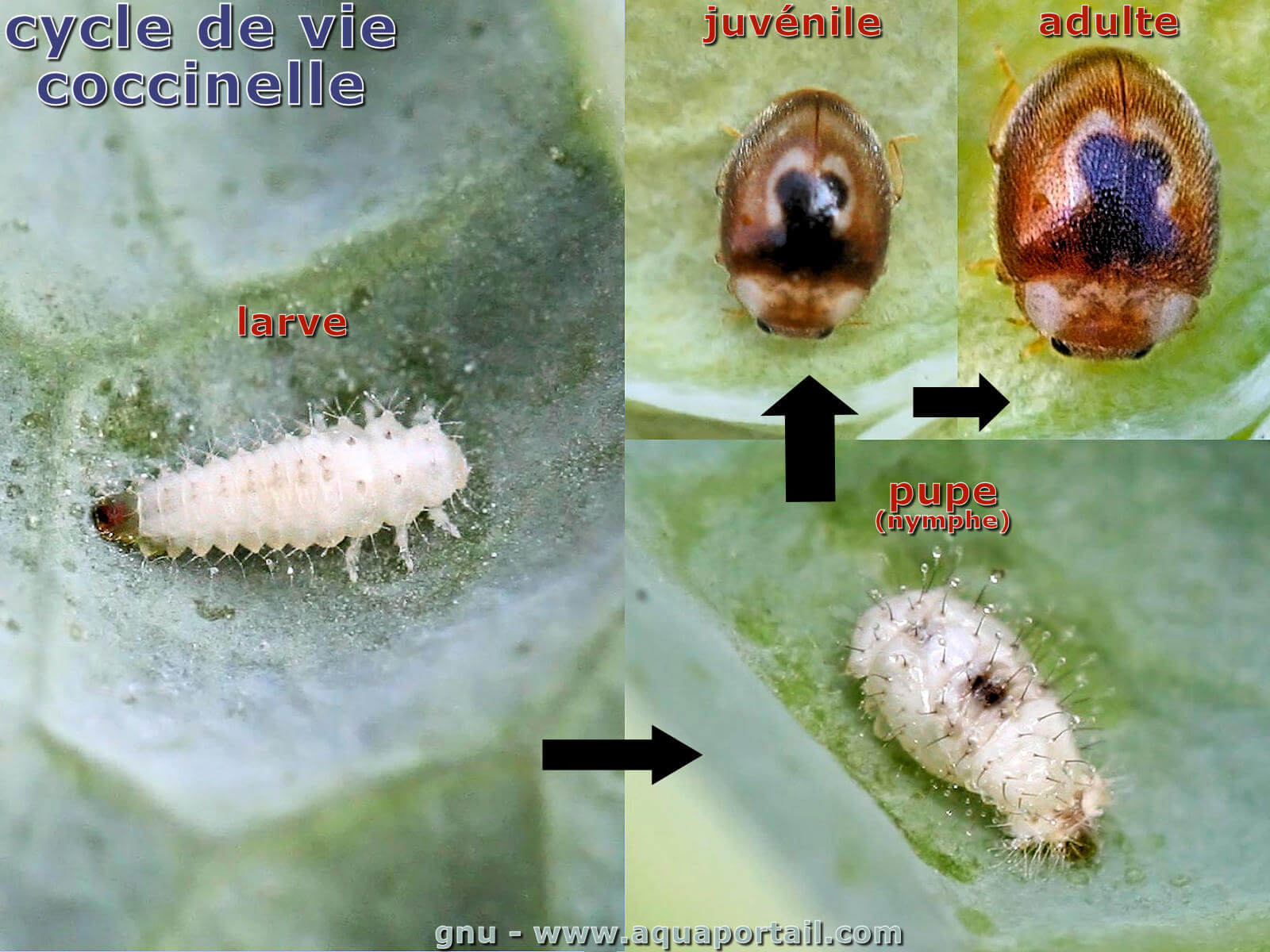
Ladybug larvae pass through four stages (4 larval instars) before becoming pupae. Pupae adhere to leaves, stems, or rocks and are usually orange and black, resembling bird droppings. A yellowish teneral adult emerges from the pupa without yet displaying the characteristic adult (imago) colors, which develop within a few hours.
Coccinellids produce one or more generations per year and typically overwinter in the adult stage. Mating begins in spring after a feeding period. The number of generations and duration of a developmental cycle are often tied to the biology of their primary prey.
Coloration
The color of the wing covers can range from pale beige to yellow, orange, and every shade of brown, pink, and red through to black. The best-known representatives of ladybugs have red, yellow, black, or brown elytra.
The most familiar ladybug in Western Europe, the seven-spotted ladybug Coccinella septempunctata, owes its color to lycopene—which also turns tomatoes red—as well as α-carotene and β-carotene, which likewise play a major role in the coloration of most other species. Black coloration is produced by melanin.
A black ten-spotted ladybug Adalia decempunctata:
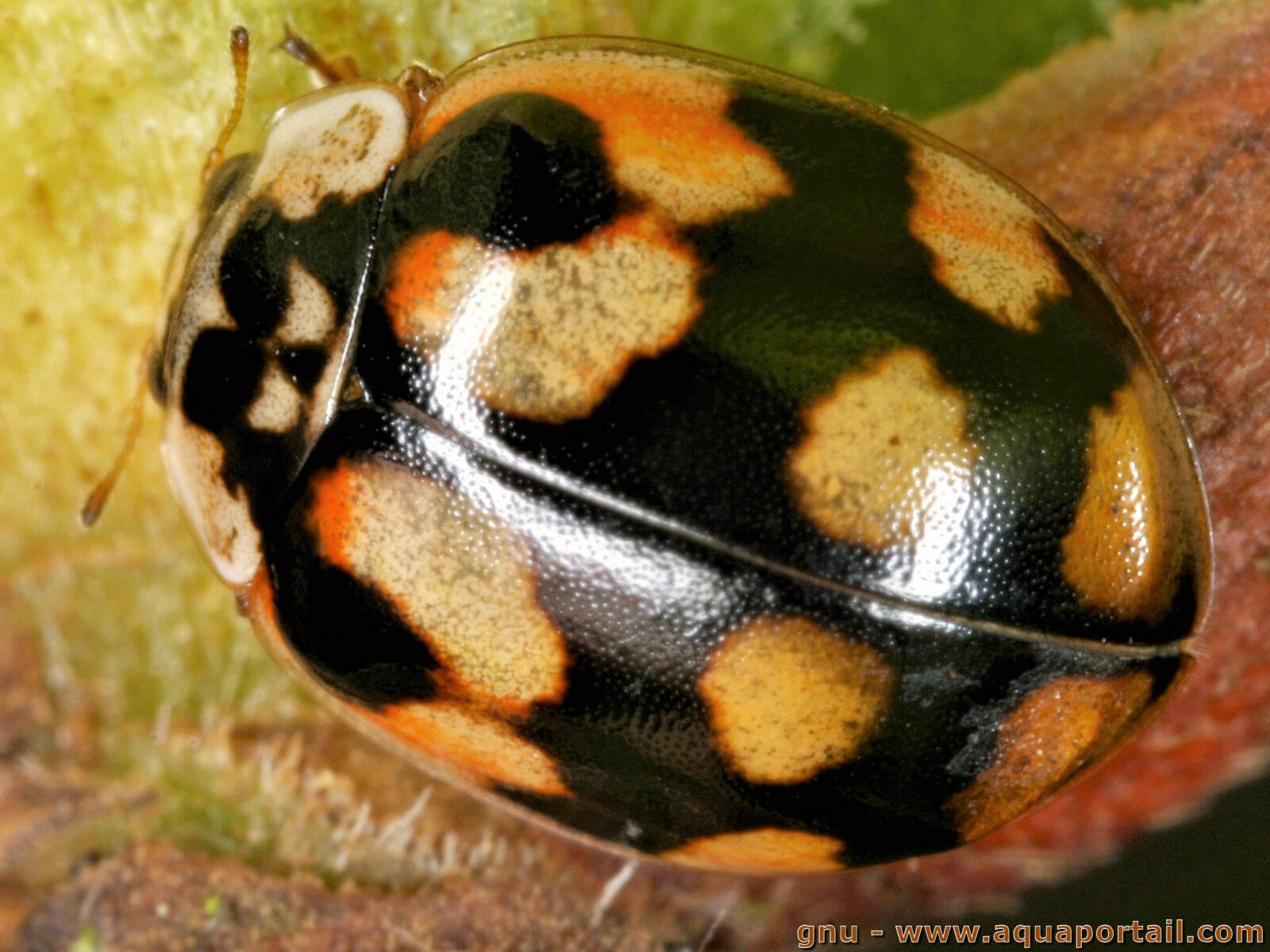
In the ten-spotted ladybug species Adalia decempunctata, the number of spots as well as the color pattern are highly variable, ranging from 0 to 15 spots and from beige-orange to black in background color.
In newly emerged ladybugs, full coloration appears after a few hours. The insects are almost white or yellowish at first, and their chitin has not yet hardened. In the species Sospita vigintiguttata, the beetles are brown during their first year and only turn black during overwintering.
Environmental influences (environmental factors) affect coloration. At temperatures below 20 °C (68 °F), darkening may occur, accelerated by high humidity and reduced by strong light radiation.
In certain species, different color morphs are also observed within the same species. There is a red two-spotted ladybug with black spots, as well as a black morph with red spots (melanism).
In maritime and humid areas and in large, heavily industrialized urban centers, black forms develop noticeably more often, further indicating environmental influence.
Black morphs are genetically dominant over red ones and therefore produce darker offspring. While the red form of the two-spotted ladybug has better survival odds during hibernation, black morphs reproduce more rapidly and offset winter losses.
The reason is that beetles, like all insects, are poikilothermic, meaning their body temperature depends on ambient temperature. Black-colored body parts absorb heat more strongly than red-colored ones. Under equal light, the body temperature of the black morph is roughly 5.5 °C (9.9 °F) above an ambient temperature of 18 °C (64.4 °F), compared to about 3 °C (5.4 °F) for the red morph.
This also accelerates the animals' metabolic activity. In winter, however, this proves disadvantageous due to sharp temperature fluctuations, causing the black morph to suffer higher mortality.
Their striking coloration serves as a warning signal to predators. In addition, ladybugs have an unpleasant, bitter taste that makes them unpalatable. When threatened, they can also exude a yellowish fluid from openings in their leg joints (reflex bleeding). These secretions deter enemies through their foul odor and contain toxic alkaloids (coccinellines).
At the same time, ladybugs play dead (thanatosis) and tuck their legs into small depressions on the underside of their body. In certain species, the yellow fluid is secreted by specialized dermal glands.
Spots
Ladybugs are characterized by spots arranged symmetrically on their upper wings. They are generally black, though beetles with pale, red, or brown spots also exist, with species having 2, 4, 5, 7, 10, 11, 13, 14, 16, 17, 18, 19, 22, and 24 spots.
Within individual species, spots can also vary: beetles may lack them altogether, or the spots may merge until nearly the entire body is black.
A sixteen-spotted ladybug Tytthaspis sedecimpunctata:
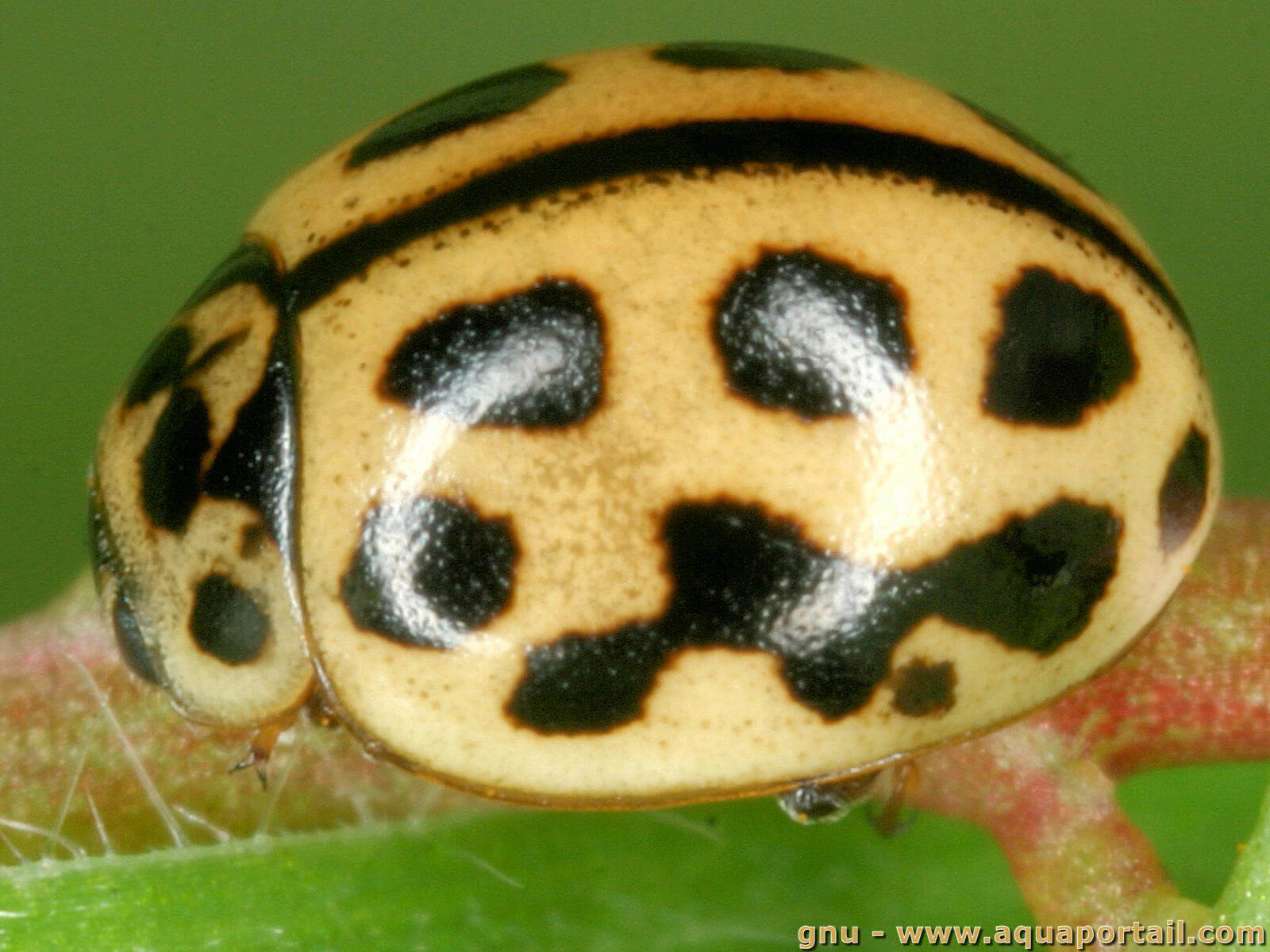
The 16-spotted ladybug Tytthaspis sedecimpunctata is a small polyphagous species about 3 mm (0.12 in) in size that is fairly common in the Netherlands and Belgium. Sometimes they gather in groups of several dozen individuals. The sixteen-spotted ladybug is whitish-beige and covered with 16 black spots, 3 of which are joined by a pale black stripe forming macules.
Contrary to a widespread myth, the number of spots does not indicate a ladybug's age; rather, spot count is characteristic of each species and does not change during the beetle's lifetime. Among closely related species (such as in the genus Coccinella), spot variations are similar.
Larvae
The appearance of ladybug larvae varies greatly by species. Most are elongated and somewhat clumsy in movement. Their length ranges from 1.5 to 15 millimeters (0.06 to 0.59 in). Most are bluish-gray, brown, or yellow and feature yellow, orange, or red markings. Their bodies bear black or red tubercles from which bristly hairs or spines protrude.
The larva of the 16-spotted ladybug Halyzia sedecimguttata:
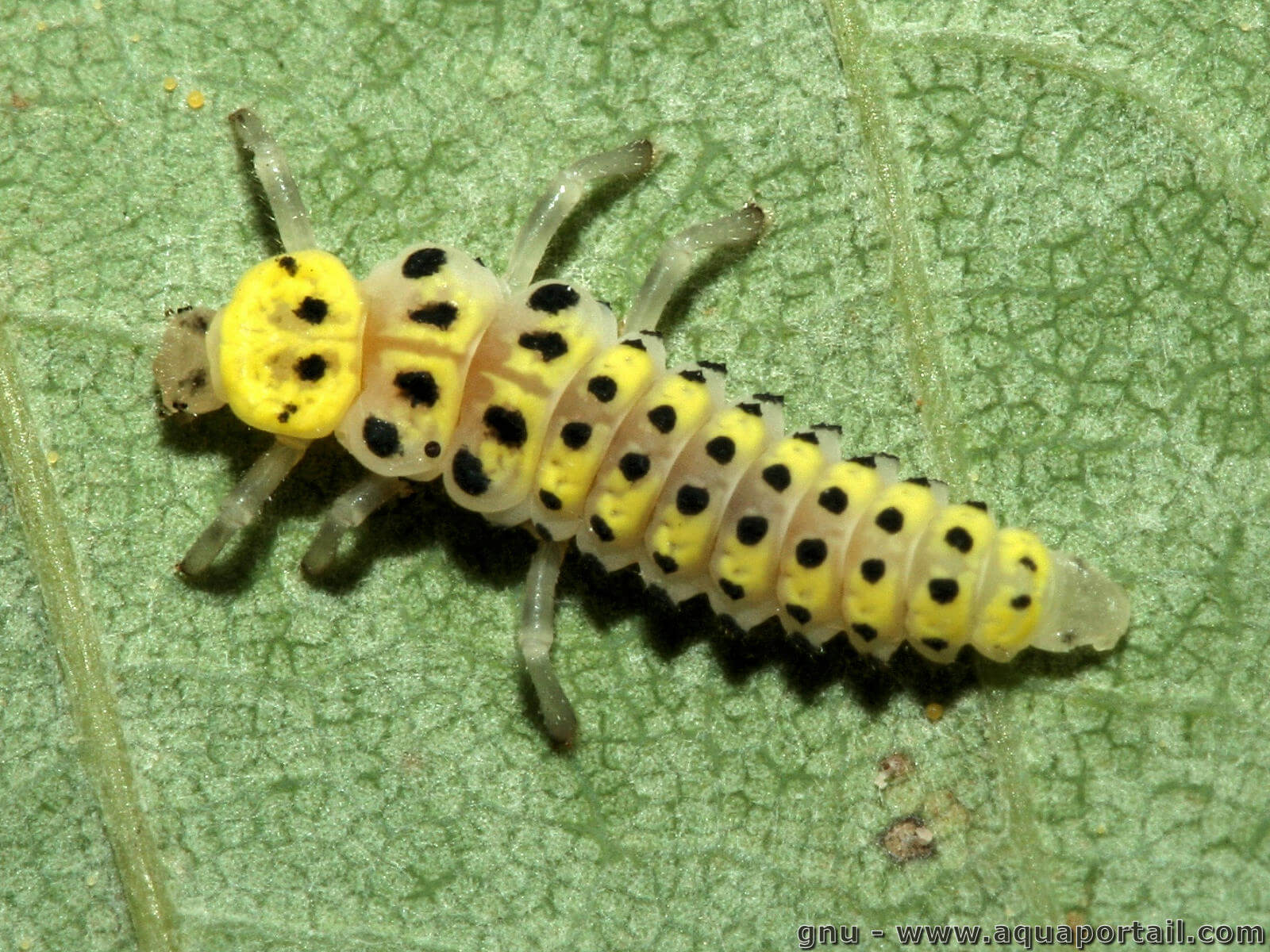
The larva of the sixteen-spotted ladybug Halyzia sedecimguttata is yellow to dark yellow in coloration, while the adult insect will be light brown.
Often, one can infer the coloration of the fully developed beetle from its larva. For example, the larva of the twenty-two-spotted ladybug is yellow and black just like the adult. They are coated in a waxy layer that protects them from ants.
The larvae of certain species (such as those of the seven-spotted ladybug) have relatively long legs and thus resemble "tiny dragonfly larvae."
Sexual dimorphism
In most ladybug species, the sexes differ very little. Males are generally slightly smaller and lighter than females, but the measurements overlap too closely and vary too much to make a reliable determination this way.
The fifth abdominal sternite of females is slightly more conical than that of males, though there are also species in which not only body build but also coloration differs. This is true of many species in the genus Scymnus or the fourteen-spotted ladybug Propylea quatuordecimpunctata.
Color differences also occur in the larch ladybug Aphidecta obliterata, in which males are uniform brown while only females develop variably pronounced dark markings on the elytra.
Diet
The primary food of many ladybug species and their larvae consists of leaf-dwelling insects such as aphids and mites. Ladybugs are aphidophagous (a form of entomophagy). Given sufficient food supplies, they eat up to 50 prey items per day and several thousand over their entire lifetime. These beetles are therefore counted among beneficial insects and are bred for biological pest control.
Predation by a ladybug Propylea quatuordecimpunctata:
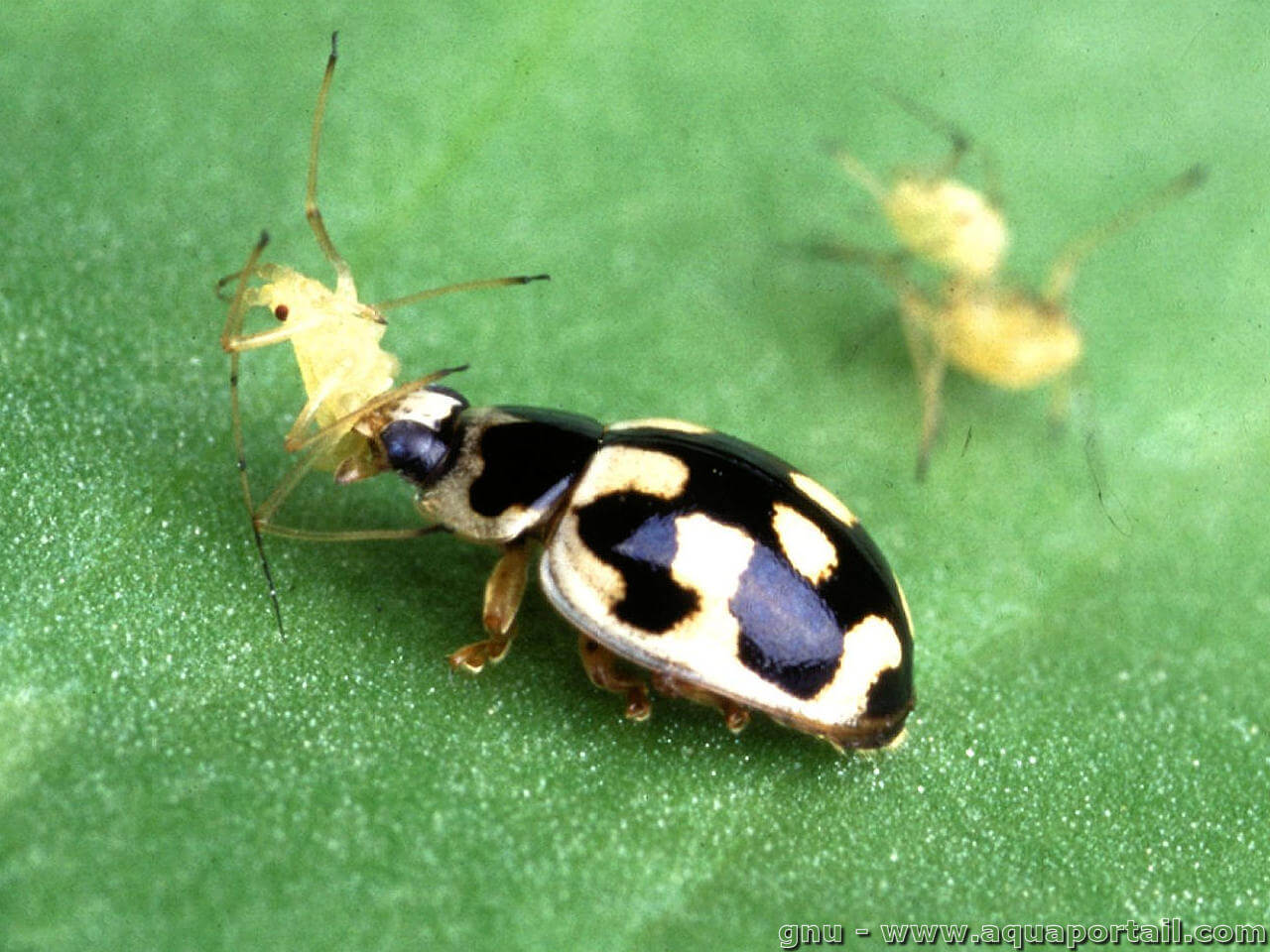
A fourteen-spotted ladybug eats an aphid captured on a leaf.
Besides aphids (a prized delicacy), the dietary spectrum of ladybugs also includes spider mites (ectoparasitic plant mites), heteropteran bugs, thysanopteran thrips, other small beetles, sawflies (hymenopterans), sandflies, and occasionally even butterfly and moth larvae (caterpillars).
However, there are also species that feed on plants and thus act as agricultural pests (subfamily Epilachninae, including the twenty-four-spotted alfalfa ladybug Subcoccinella vigintiquatuorpunctata).
Still other species feed on molds or powdery mildew (tribes Halyziini and Psylloborini), such as the orange sixteen-spotted ladybug Halyzia sedecimguttata, which feeds on mildew (Erysiphaceae), and the twenty-two-spotted ladybug Psyllobora vigintiduopunctata, which feeds exclusively on powdery mildew (pathogenic ascomycete fungi).
When prey is scarce, predatory species occasionally turn to plant-based foods, often fruits as well as pollen. The larvae of Bulaea lichatschovi are pollinivorous and feed exclusively on pollen.
In the final larval instar, larvae consume the bulk of their food. This stage is accelerated by high ambient temperatures. Consequently, they—particularly those in the genus Coccinella—become more voracious, yet eliminate fewer aphids overall, since aphids multiply faster under warmer conditions.
Conversely, under poor conditions for "aphids," Coccinella can contribute to the complete local eradication of aphid colonies.
Predator and prey populations remain interdependent. Because ladybug larvae are highly sensitive to food shortages, they surge following an aphid-rich year, and the resulting abundance of beetles produces few offspring the following year because too few prey remain to support the development of all new larvae. A form of year-to-year self-regulation thus occurs.
Ladybugs, and especially their larvae, are also cannibalistic. Particularly at high densities, they eat one another. The first larvae to hatch also regularly consume their unhatched siblings, often resulting in the loss of more than half of the eggs.
Reproduction
Immediately after hibernation, ladybug pairs begin mating. Copulation often lasts from 0.5 to 18 hours, though it is relatively unspectacular. The tip of the penis guide groove hooks into the female's eighth and ninth sternites to part the terminal sternite, allowing the male's penis to penetrate.
Mating of two ladybugs:
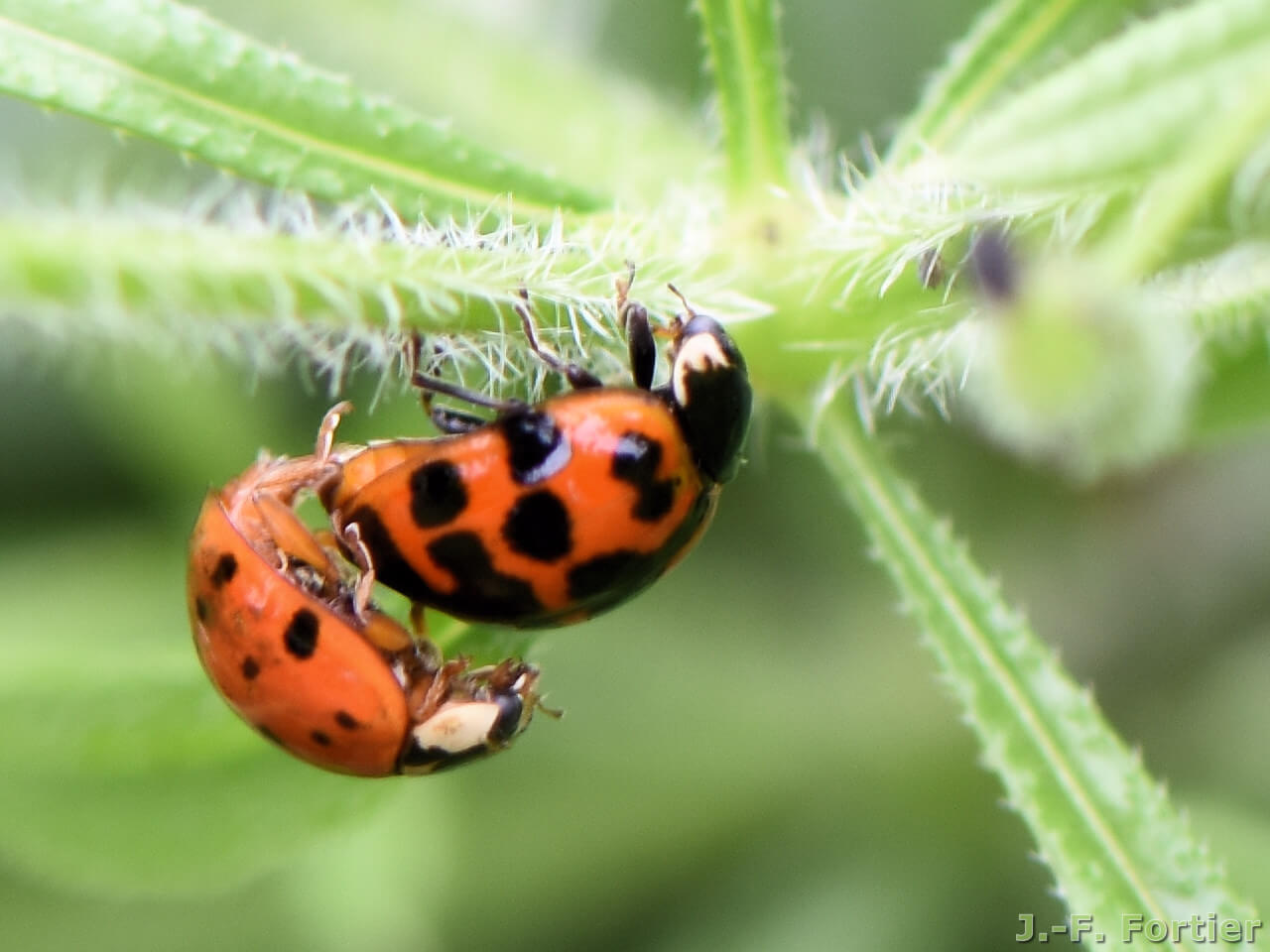
Ladybugs reproduce by pairing and mating on a leaf. reproduction occurs via zoogamy.
The mating pair clings tightly together. Three spermatophores are transferred, which is unusual among beetles. After mating, the male is dislodged either by the female's hind legs or by the female rolling sideways.
Although a single mating suffices to fertilize a female permanently, females often mate up to 20 additional times with other males (genetic mixing). In most species, sperm is stored by the female in a spermatheca.
However, in Stethorus punctillum, a spermatheca is absent, which is why new mates are required throughout the fertile period to continue fertilizing maturing eggs.
High temperatures influence the sexual behavior of certain species: the genus Aphidecta multiplies explosively under warm conditions. However, population dynamics do not depend solely on temperature. For example, mating activity in the two-spotted ladybug Adalia bipunctata declines in summer despite rising daytime temperatures.
This reduces infestation of the beetle by the parasitic mite Coccipolipus hippodamiae, which is transmitted and spread during mating and can cause female infertility.
Hybridization
Closely related species occasionally interbreed (hybridize). For instance, hybridization occurs in Central Asia where the ranges of the ladybugs Chilocorus bipustulatus and C. geminus overlap.
Fundamentally, offspring from intrageneric crosses, if they develop and are viable, are sterile and cannot produce offspring. Hybrids often display a distinctive pattern resembling a blend of both parent species.
Egg-laying and eggs
From late April to early May, up to 400 eggs per female ladybug, laid in batches of 10 to 60 eggs or singly, are deposited on plants near suitable food sources.
This usually takes place on the underside of leaves, lined up along pine needles, or in bark crevices. Egg color and shape vary considerably among species.
A ladybug laying its eggs:
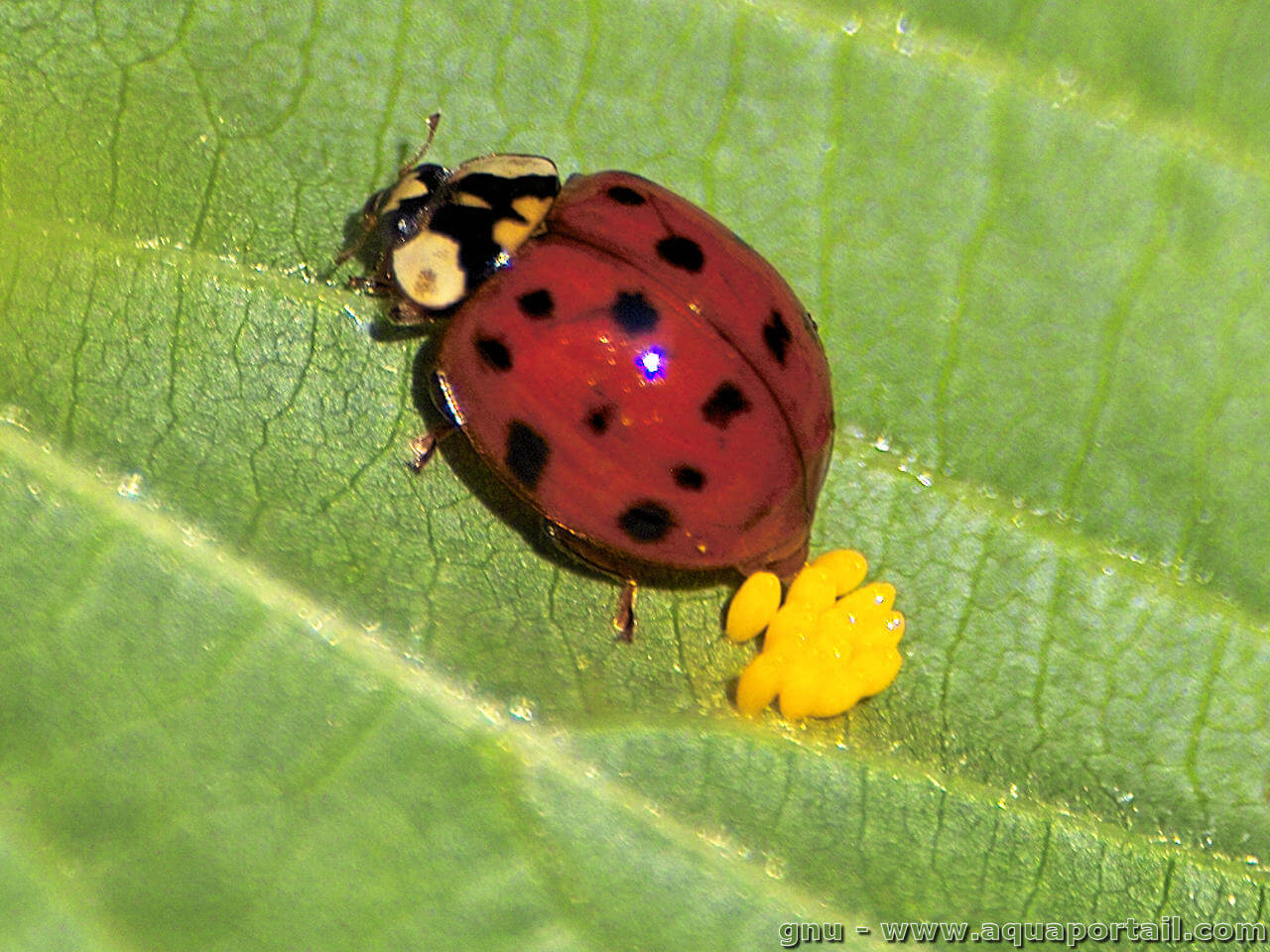
A ladybug laying yellow eggs (in a cluster) will repeat this spawning several times a year.
Ladybug egg length ranges from 0.4 to 2 millimeters (0.016 to 0.079 in), and the shape may be slender, normal, or stout. Epilachna argus is an exception with elongated, pointed eggs. Their color is generally pale yellow to orange, or ashy gray to blackish-gray in Stethorus punctillum, up to grayish-white.
Among other factors, egg development depends on temperature and humidity and completes in roughly five to eight days. When the temperature drops below the tolerance threshold (around 12 °C / 53.6 °F in Stethorus punctillum), growth halts.
Just before hatching, the larva is visible through the thin eggshell (chorion). To break free from the egg, larvae of many species are equipped with hatching spines (egg bursters) on the head, back, and prothorax, which are shed only at the first molt. It takes about an hour to split the egg open and another hour to completely shed the shell.
Larval development
Hatched larvae develop within 30 to 60 days. During development, they molt three to four times, depending on the species. Growth varies across body regions, just as bristles and coloration differ from instar to instar.
When mature, they use a secretion on leaves, twigs, trunks, or bark to anchor their abdomen. They then metamorphose and push the larval skin back toward the attachment point on the plant, transforming into a pupa (the equivalent of a butterfly chrysalis).
The emerging pupa of the ladybug H. sedecimguttata:
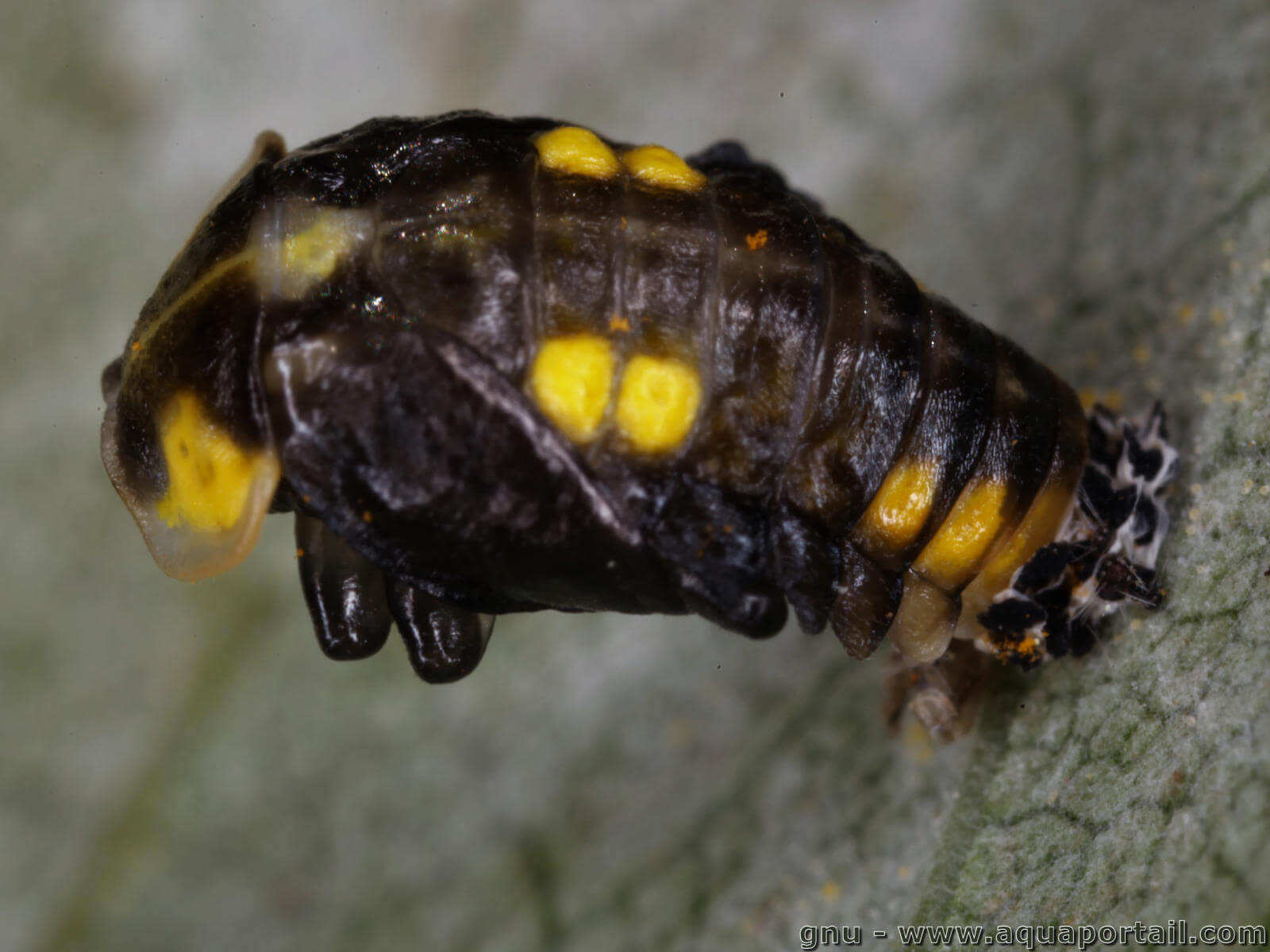
During metamorphosis from larva to pupa, the limbs and antennae are not exposed, but held tightly against the body.
Pupa color ranges from dark to pale, reddish-brown, or gray and is influenced by ambient temperature. The newly attached pupa begins to contract during development and turns brighter in color before eclosion of the adult beetle after six to nine days.
Once again, development depends on temperature and humidity. Initially, newly emerged beetles are still pale or brightly colored, acquiring their true adult coloration after a few hours.
Development from larva to fully formed ladybug can take up to a year.
Larvae all live on plants and pursue their prey (particularly plant aphids) or feed on mildew or molds.
Lifespan
Ladybugs generally breed twice a year in Central Europe. The second generation hatches and overwinters in July or August before laying eggs again in spring. Usually, adult ladybugs in Central Europe live for one year and hibernate only once.
Total lifespan across the complete life cycle—from egg to larva, then pupa to adult, through to death—is roughly 30 to 42 months.
The fourteen-spotted ladybug Propylea quatuordecimpunctata and the Asian lady beetle Harmonia axyridis are known to survive two winters, giving them a higher rate of generations produced.
Overwintering
The beetles like to overwinter in large groups (aggregations) and can become quite a nuisance, particularly between double-glazed windows. Particularly thermophilic species, whose prey appears only briefly, form massive aggregations, both to bridge food shortages and to pass hot summers in dormancy.
Before entering dormancy, they accumulate fats, lipids, and glycogen in their bodies to be consumed while resting. ✅ In California, roughly 42 million individuals of the species Hippodamia convergens were recorded at a single overwintering site, though such cases are rare.
They rarely overwinter alone. Hibernation generally occurs in aggregations (described above) or in small groups on the ground, under stones, bark, or leaves, in moss, or in grass.
Synonyms, antonyms
Spanish translation: mariquita
3 synonyms (similar meaning) for "ladybug":
- beetle
- coccinellid
- ladybird
0 antonyms (opposite meaning).
Related words and expressions to LADYBUG are directly connected by general or specific meaning.
The word LADYBUG is listed on page 1 of words starting with L in the dictionary glossary.
Related to "ladybug"
Colorado potato beetle

The Colorado potato beetle Leptinotarsa decemlineata is an oligophagous phytophagous insect species of the leaf beetle family (Chrysomelidae).
L-form bacteria
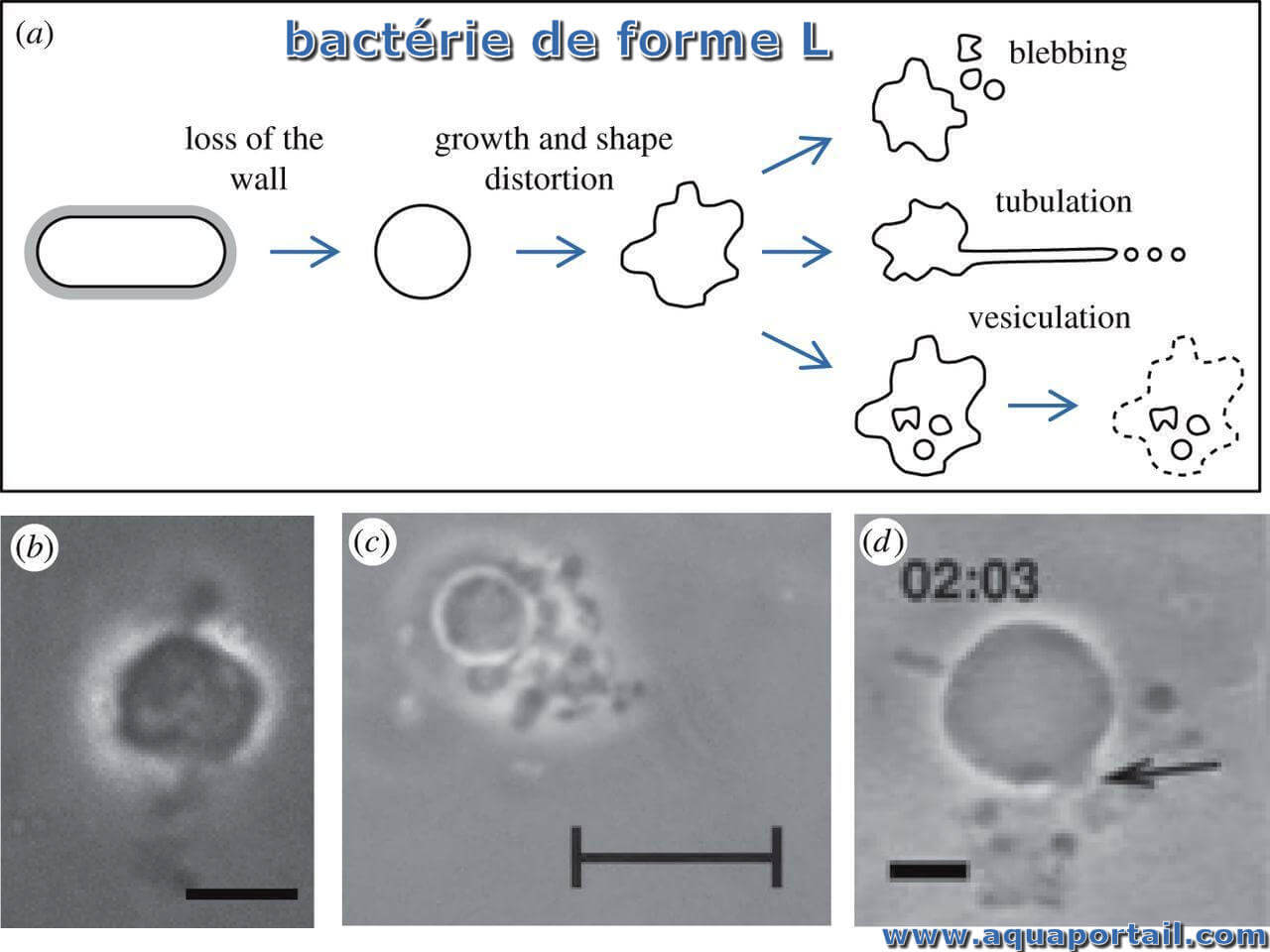
L-form bacteria originate from a strain of bacteria that lack cell walls while retaining the ability to grow.
lacustrine

A lacustrine organism lives, grows, or thrives in or near a lake. The lacustrine environment sometimes designates any body of calm, standing (lentic) water...
lake

A lake is a large inland and continental body of freshwater, nearly stagnant or slow-moving.
