Tomato
noun (n.)
Definition
The tomato is the red seed-bearing fruit of the vegetable plant Solanum lycopersicum (Solanaceae). Tomatoes are generally easy to grow, and a few plants provide an adequate harvest for most families.
Today, the tomato is the most popular simple edible garden fruit in much of the world.
Tomatoes on a plant:
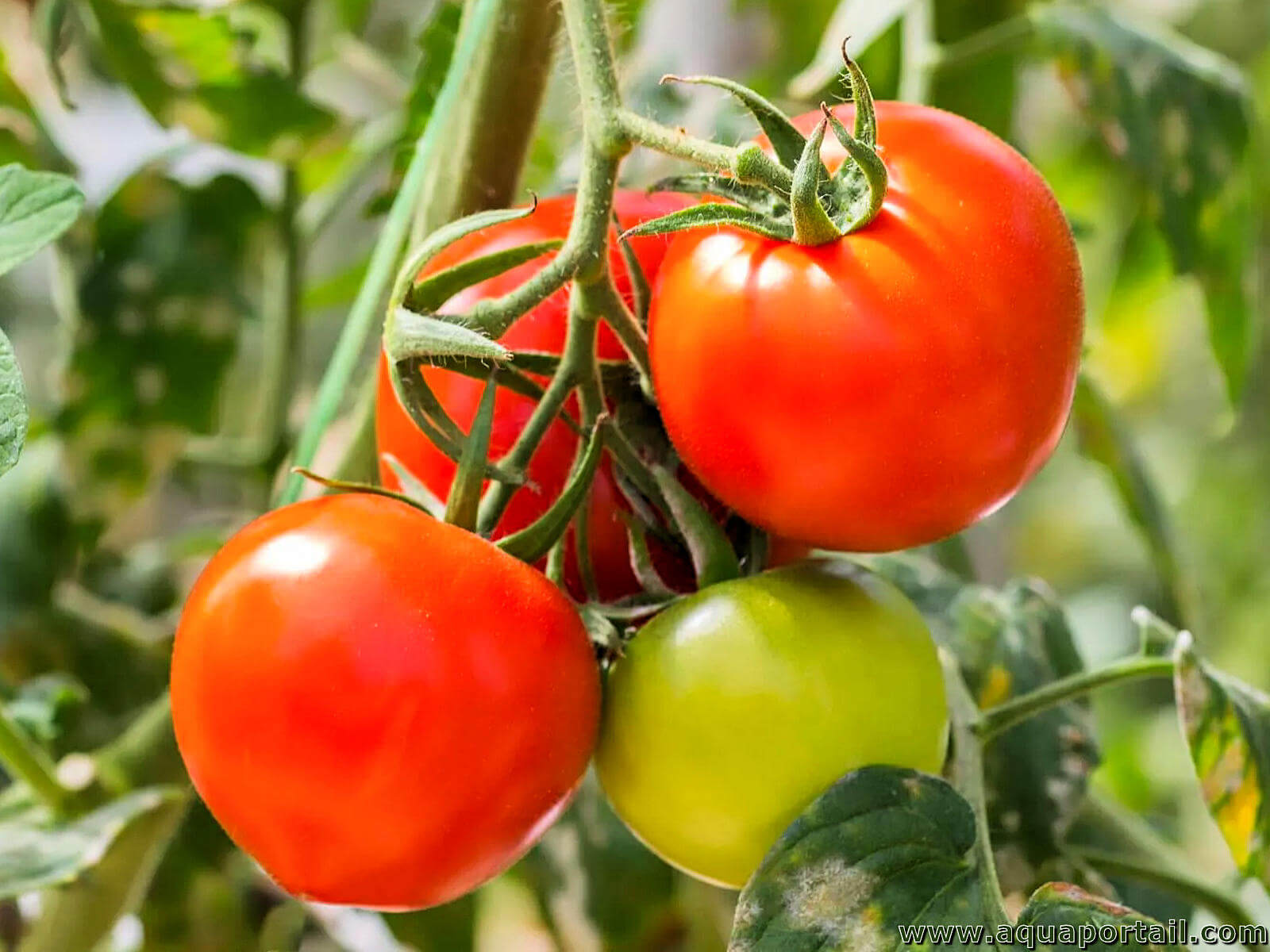
Tomatoes ripen on the tomato plant; they are recognized by their red color compared to the green tomato which indicates a fruit that is not yet mature (ripe).
Explanations
For many years, tomatoes (then called love apples) were considered poisonous and grown only for their ornamental value. Since then, however, things have changed.
The quality of fruit picked from the garden at full ripeness far exceeds anything available on the market, even in season. The tomato plant is a tender warm-season perennial">perennial that is grown as an annual in summer gardens across any continental temperate climate zone. Spring and autumn frosts limit the outdoor growing season.
Hundreds of tomato varieties are now available to the home gardener. They vary greatly in size, shape, color, plant type, disease resistance, and season of maturity. Catalogs, garden centers, and greenhouses offer a wide selection of tomato varieties, and choosing the best variety or varieties can be extremely difficult. Assess your needs, then select the varieties best suited to how you intend to use them and your growing method.
Tomatoes are excellent for canning, freezing, and drying.
✅ It is desirable for tomatoes, cucumbers, lettuce, and other vegetables to have an atmosphere containing approximately 2% carbon dioxide for accelerated growth and increased accumulation of aromatic compounds.
⭐ There are grafted plants based on tomatoes such as pomatoes (tomato and potato).
Types
Tomato plants belong to one of two types that affect ultimate plant height and cultural requirements. Tomatoes are determinate if they eventually form a flower cluster at the terminal growing point, causing the plant to stop growing taller. Plants that never form terminal flower clusters, producing only lateral clusters and continuing to grow indefinitely, are called indeterminate.
The tomato is a seed-bearing fruit:
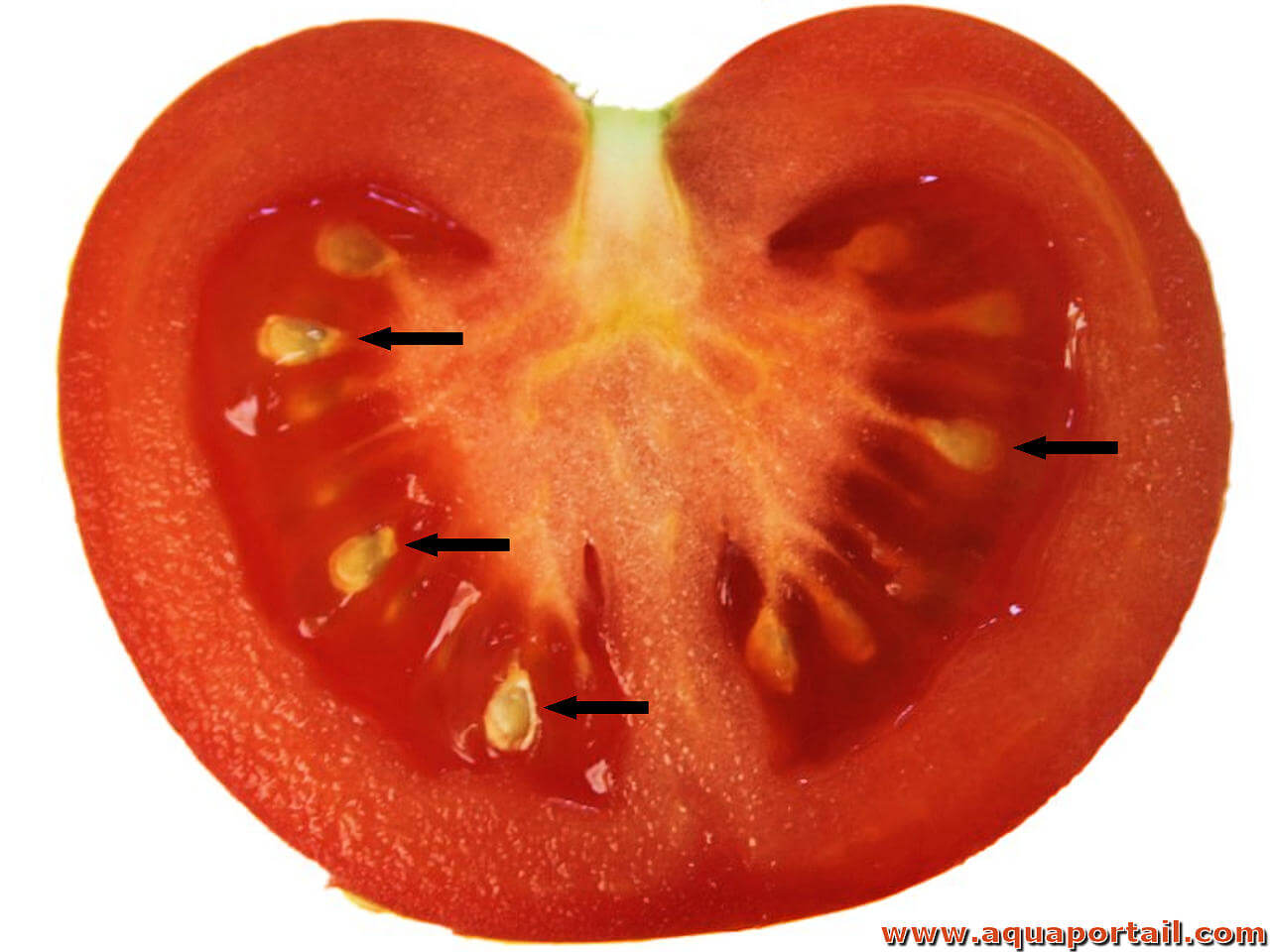
The tomato is a fruit containing more or less seeds (pips) depending on the variety.
Older heirloom varieties are almost all indeterminate. They can be relied upon to produce abundant foliage and ripen flavorful fruit. Heirloom tomato plants can, however, be extremely late to mature.
The earliest modern varieties developed suffered from insufficient leaf cover and flavor, though they ripened very early.
Newer varieties produce better foliage, can yield larger fruits, and ripen with quality similar to heirloom varieties. Determinate varieties still tend to ripen their fruit over a shorter period, so successive plantings may be desirable for harvest to continue throughout the season. They are easier to control and stake during the growing season.
Some of the extreme dwarf types include both heirloom and modern varieties, producing truly tiny mature plants.
Selection and storage
Tomatoes are favorites of small-plot gardeners, and nothing tastes better than one truly vine-ripened on the plant. Although tomatoes are available year-round, vine-ripened tomatoes are available only during the growing season. ⭐ In fact, prefer peak-season fruit.
Dozens of tomato varieties are available in seed catalogs and as grafted plants. The fruits come in a wide range of sizes, colors (red, black, green, yellow...), and shapes. A single tomato plant will grow well in a large flowerpot or bucket. The fact is, if you plant nothing else, plant a tomato and eat fresh tomatoes often.
Tomatoes generally fall into three categories: round slicing tomatoes, Italian (plum) tomatoes, and small cherry tomatoes. Variety selection should be tailored to how you will use them.
The locules of a cut tomato:
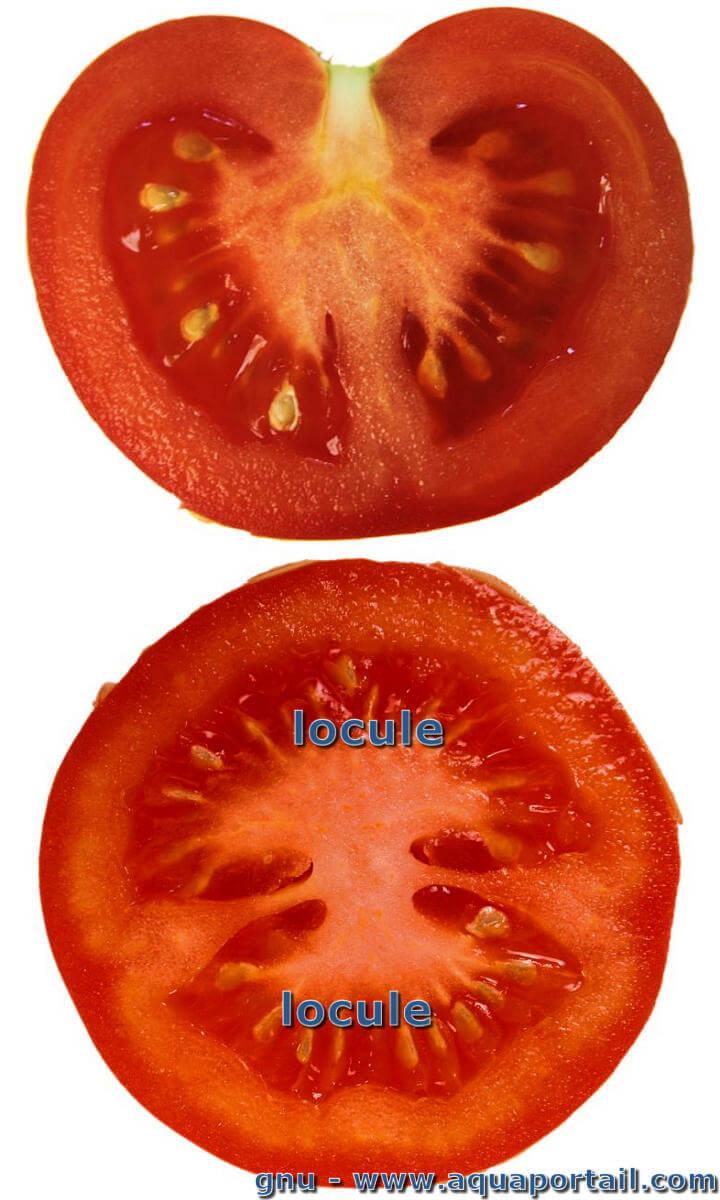
The tomato is a seed-bearing fruit (derived from a flowering plant). Cut in half, it reveals two locules: it is described as plurilocular.
Slicing tomatoes are large round varieties that contain more juice and seeds. They are ideal for eating raw in various ways. Italian tomatoes are meaty, eggplant- or plum-shaped, and can be red or yellow. They are excellent for making sauces, canning, and pizzas. Small cherry-type tomatoes are usually served whole, though they can be halved and sautéed in any dish. They contain plenty of seeds and juice.
Fresh ripe tomatoes should not be stored in the refrigerator. Unfortunately, refrigeration makes them flavorless and turns the flesh into a mealy mush. Flavor and texture begin to deteriorate when the temperature drops below 12 °C (54 °F). Temperatures above 27 °C (81 °F) cause tomatoes to spoil quickly. Store tomatoes at room temperature for 2 to 3 days, away from direct sunlight until ready to use (sunlight accelerates ripening).
Refrigeration also slows down tomato ripening. Refrigerate only overripe tomatoes that you want to keep from ripening further (rotting). To reverse some of the damage, bring refrigerated tomatoes to room temperature before serving raw, or simply add them to cooked preparations.
To ripen tomatoes, place them in a paper bag, stem end up. Punch several holes all around the bag and fold down the top. The bag will help trap some of the natural ethylene gas, aiding the ripening process. Depending on their degree of ripeness, tomatoes may take one to five days to ripen. Check progress daily.
Nutritional value and health benefits
Nutritionists have always known that tomatoes are good for the diet, and now research-based information explains why. Tomatoes are packed with vitamin C, potassium, fiber, and vitamin A in the form of health-promoting beta-carotene, which the body converts into vitamin A.
Lycopene gives ripe tomatoes their red color:

The lycopene content of the tomato gives it its characteristic red color. In ripe (and mature) tomatoes, lycopene is stored in chromoplasts.
Tomatoes are also a source of lycopene, which is currently the subject of promising research on the role of health-promoting plant compounds. Research suggests that lycopene may play a role in fighting cancer, particularly prostate cancer. Like beta-carotene, lycopene is a carotenoid, responsible for the bright red color of tomatoes, watermelon, and grapefruit. Although lycopene is available in all ripe tomatoes, greater intake is more beneficial to the body from cooked tomatoes.
Nutritional values (serving size, one cup chopped raw):
- calories: 24
- protein: 1.1 grams (0.04 oz)
- carbohydrates: 5.3 grams (0.19 oz)
- dietary fiber: 1 gram (0.04 oz)
- potassium: 254 mg
- vitamin C: 22 mg
- vitamin A: 1,133 IU.
Preparation and serving
Tomatoes are, of course, delicious raw, sautéed, grilled, stewed, and added to many dishes. Use a serrated knife or a very sharp non-serrated knife to slice or chop tomatoes, or score the skin to get a clean slice. Cut tomatoes lengthwise, from stem to blossom end, to retain more juice in each slice.
To peel tomatoes, blanch them by dropping them into boiling water for about 30 seconds, or longer for firm tomatoes, then plunge them into a bowl of ice water until cool enough to handle. Cut an X on the stem end and use a paring knife to remove the skin. The skin will slip off easily if the tomatoes were blanched long enough.
To seed tomatoes, cut the tomato in half horizontally. Holding one half in the palm of your hand, squeeze out the gelatinous juice and seeds over a strainer and remove any remaining seeds with your fingertips. Do not discard the juice; strain it and use it in another recipe or drink it.
Home preservation
With a forced-air dehydrator (desiccator), you can make your own Sun-dried tomatoes. Use Romas (plum type), with their thick, meaty flesh and low water percentage, for best results. Once dried, tomatoes should be packed in airtight containers. They should not be packed in oil for more than one or two days and must be kept in the refrigerator.
Commercially prepared sun-dried tomatoes in oil have been treated to prevent bacterial growth.
Freezing tomatoes
Frozen tomatoes retain their wonderful fresh flavor, but they become mushy and are best used in cooked soups, sauces, or stews. The skin will toughen in the freezer, though it is much easier to remove upon thawing. Alternatively, run frozen tomatoes under cold water and the skins will shrivel and slip off easily.
In any case, wash whole tomatoes, remove the stems, and core out the heart. Then leave the tomatoes whole or cut them into quarters and pack them into freezer bags, leaving about 2–3 cm (0.8–1.2 in) of headspace.
Canning
The tomato is a borderline high-acid food. To make them acidic enough for canning in a boiling-water bath canner or pressure canner, add lemon juice (2 tablespoons/liter or 2 tbsp/qt), vinegar (4 tablespoons/liter or 4 tbsp/qt), or citric acid (1/2 teaspoon/liter or 1/2 tsp/qt).
The acid can be added directly into the jars before filling them with tomatoes. Vinegar tends to alter the flavor; lemon juice actually produces the best results. Fresh or bottled lemon juice may be used. If the added acid makes the finished product taste too tart for you, add a pinch of sugar to each jar to offset the acidity.
Green tomatoes are more acidic than ripe tomatoes and can be safely canned following any of the instructions above. Select only firm, preferably vine-ripened, disease-free fruits for canning.
Synonyms, antonyms
Spanish translation: tomate
2 synonyms (similar meaning) for "tomato":
- love apple
- Solanum lycopersicum
0 antonyms (opposite meaning).
Related words and expressions to TOMATO are directly connected by general or specific meaning.
The word TOMATO is listed on page 1 of words starting with T in the dictionary glossary.
Related to "tomato"
carrot

The carrot is an umbelliferous plant of the species Daucus carota. Carrots belong to the Apiaceae family, known for the cultivated carrot of the subspecies...
fruit or vegetable

Is it a fruit or a vegetable ? The question consists of determining whether a plant yields fruits or vegetables, and the answer holds a few surprises.
tagma

A tagma is a group of fused segments formed by series of metameres differentiated from the rest of an arthropod's body.
tapeworm
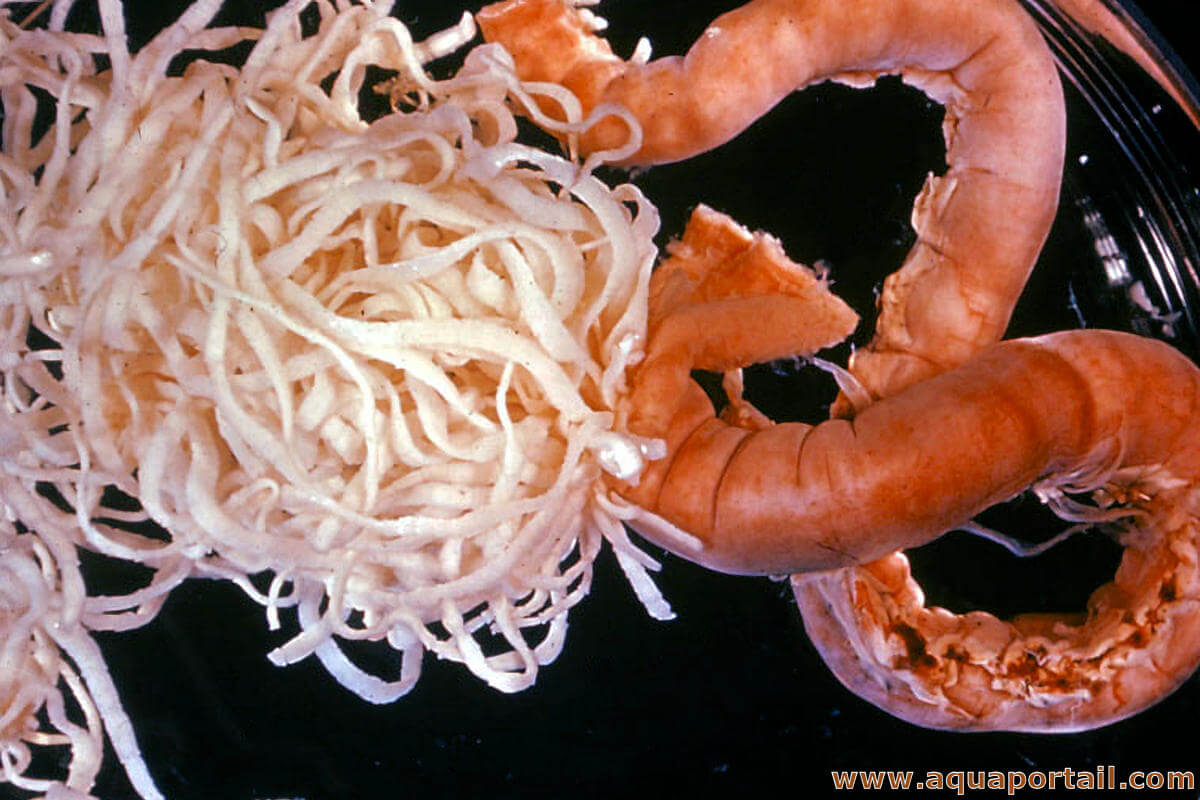
The tapeworm, or solitary worm, is a long, ribbon-like, segmented flatworm, a parasitic cestode of the genus Taenia.
