Bacterial
adjective (adj.)
Definition
A bacterial organism or feature relates to bacteria. In bacteriology, bacterial cultures are grown in Petri dishes, allowing the bacteriologist to study a bacterial medium. Something bacterial can be treated with an antibacterial agent, a bactericide, or an antibiotic.
For example, contamination by a bacterium is called bacterial contamination, a mesosome is a bacterial invagination, and one also speaks of a bacterial nanocompartment, a bacterial infection (as distinct from a viral infection), a bacterial flagellum, etc.
Bacterial types:

Different bacterial shapes.
Explanations
Water is a heavily bacterial environment, especially tap water, for which a bacterial threshold must not be exceeded in order to remain potable.
Note the nuances in meaning compared with infectious and microbial.
See also the definitions of:
Bacteria are found in every habitat on Earth: soil, rock, oceans, and even Arctic snow. Some live in or on other organisms, including plants and animals, including humans. There are roughly as many bacterial cells as human cells in the human body (a ratio close to 1 to 1, revising the older 10-to-1 estimate). Many of these bacterial cells line the digestive tract. Some bacteria live in soil or on dead plant matter where they play an important role in nutrient cycling. Certain types cause food spoilage and crop damage, whereas others are remarkably useful in the production of fermented foods such as yogurt and soy sauce. Relatively few bacteria are parasites or pathogens that cause disease in animals and plants.
Bacterial microcompartment
A bacterial microcompartment (BMC) is an organelle consisting of a shell, a protein coat, enclosing specific enzymes and other proteins in certain bacteria. These microcompartments, sometimes called nanocompartments, typically measure between 40 and 200 nanometers in diameter and are composed entirely of protein.
The function of the outer shell is similar to that of a membrane in that it is selectively permeable. Bacterial microcompartments are functional analogs of eukaryotic lipid-bound organelles. They enclose chemical reactions that benefit from being sequestered from the cytosol. The boundary shell of bacterial microcompartments is made entirely of protein, and its components are highly conserved in both sequence and structure.
Bacterial microcompartments of a carboxysome:
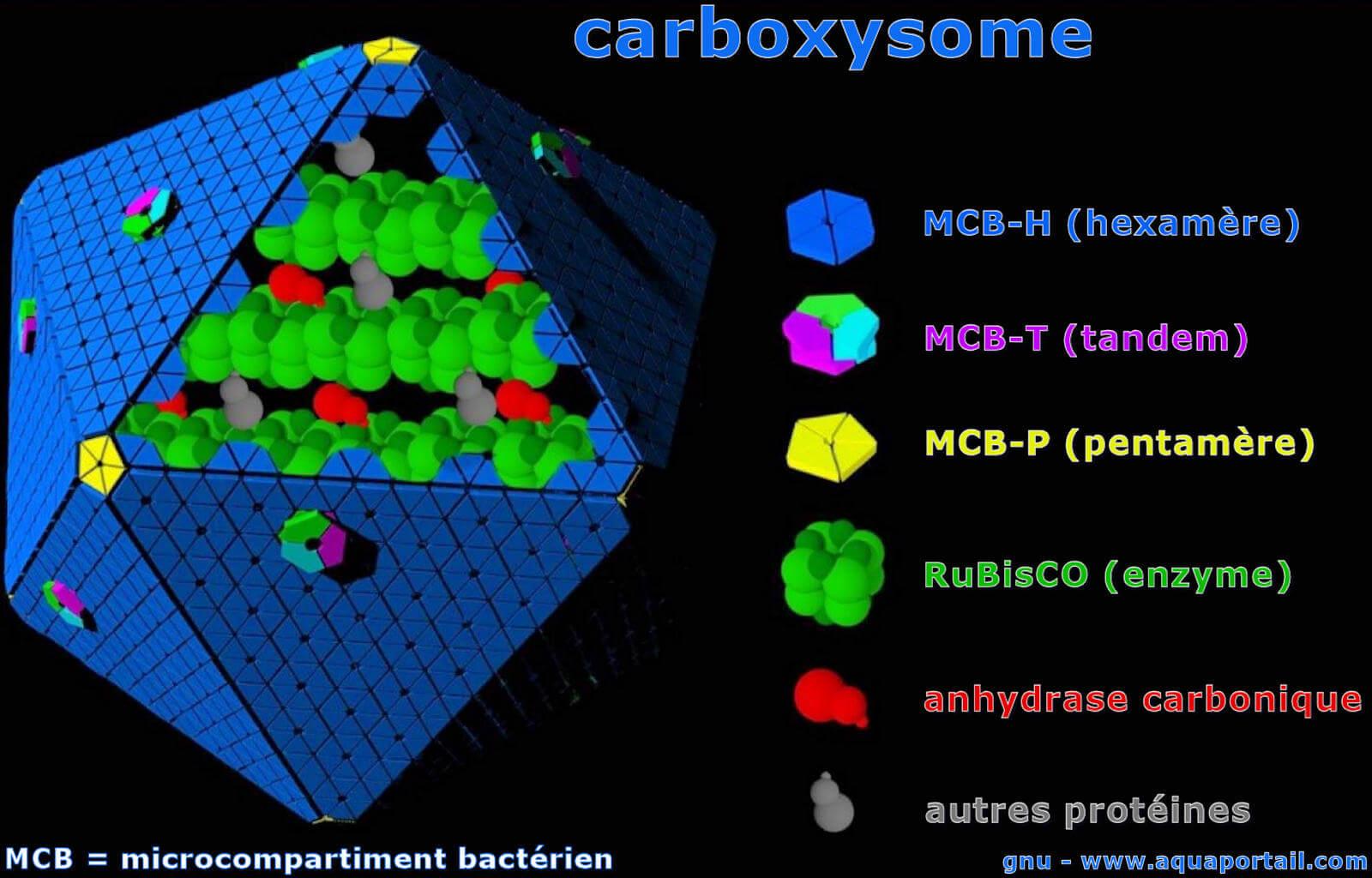
The stylized representation of the carboxysome and bacterial structures illustrates bacterial microcompartments (BMCs) used for propanediol and ethanolamine utilization.
The hexameric microcompartment shell proteins perform distinct roles, depicted in varying shades of blue. The pentameric vertex proteins are shown in magenta. The encapsulated enzymes appear in green, arranged in layers.
Encapsulin nanocompartments and gas vesicles in bacteria and archaea are also proteinaceous organelles, much like the vault complex in eukaryotes. Bacterial microcompartments are linked to the pathogenesis of certain bacteria because they confer a growth advantage. For instance, the human gut is enriched in propanediol and ethanolamine, the initial substrates of specific bacterial microcompartments. Insights gained from understanding their native functions have LED to substantial advances in shell modification for bioengineering purposes. BMC shells can be produced recombinantly, and both shell proteins and cores have been engineered to adopt novel functions.
Except for carboxysomes, in all tested cases, BMCs are encoded in operons expressed only in the presence of their substrate.
See also the endomembrane system, a metabolic pathway, and substrate channeling.
✅ The first BMCs were observed in the 1950s via electron microscopy of cyanobacteria, and were later named carboxysomes after their role in carbon fixation was established. Until the 1990s, carboxysomes were regarded as a curiosity confined to certain autotrophic bacteria.
Synonyms, antonyms
Spanish translation: bacteriano
1 synonym (similar meaning) for "bacterial":
3 antonyms (opposite meaning):
- abacterial
- amicrobial
- antibacterial
Related words and expressions to BACTERIAL are directly connected by general or specific meaning.
The word BACTERIAL is listed on page 1 of words starting with B in the dictionary glossary.
Related to "bacterial"
bacterial artificial chromosome
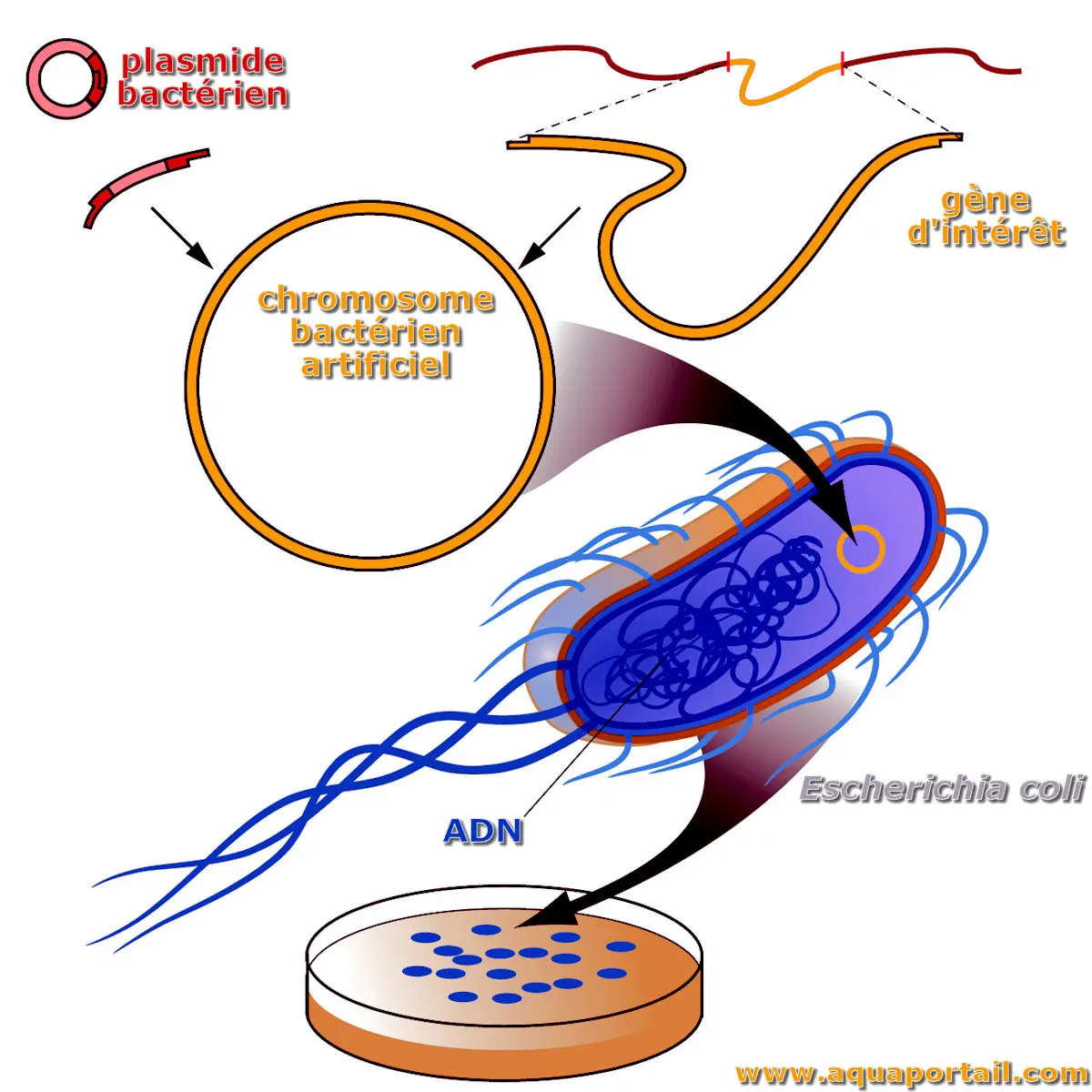
A bacterial artificial chromosome (BAC) is a DNA construct, based on a functional fertility plasmid or F-factor, used for transformation and bacterial cloning...
bacterial flagellum

A bacterial flagellum is a prokaryotic flagellum found in bacteria or monerans. It is essential for motility, adhesion, and colonization, and forms part...
bacterium

A bacterium is a unicellular prokaryotic microorganism, primarily round, spiral, or rod-shaped, that generally lives in soil, water, organic matter...
nanobacterium
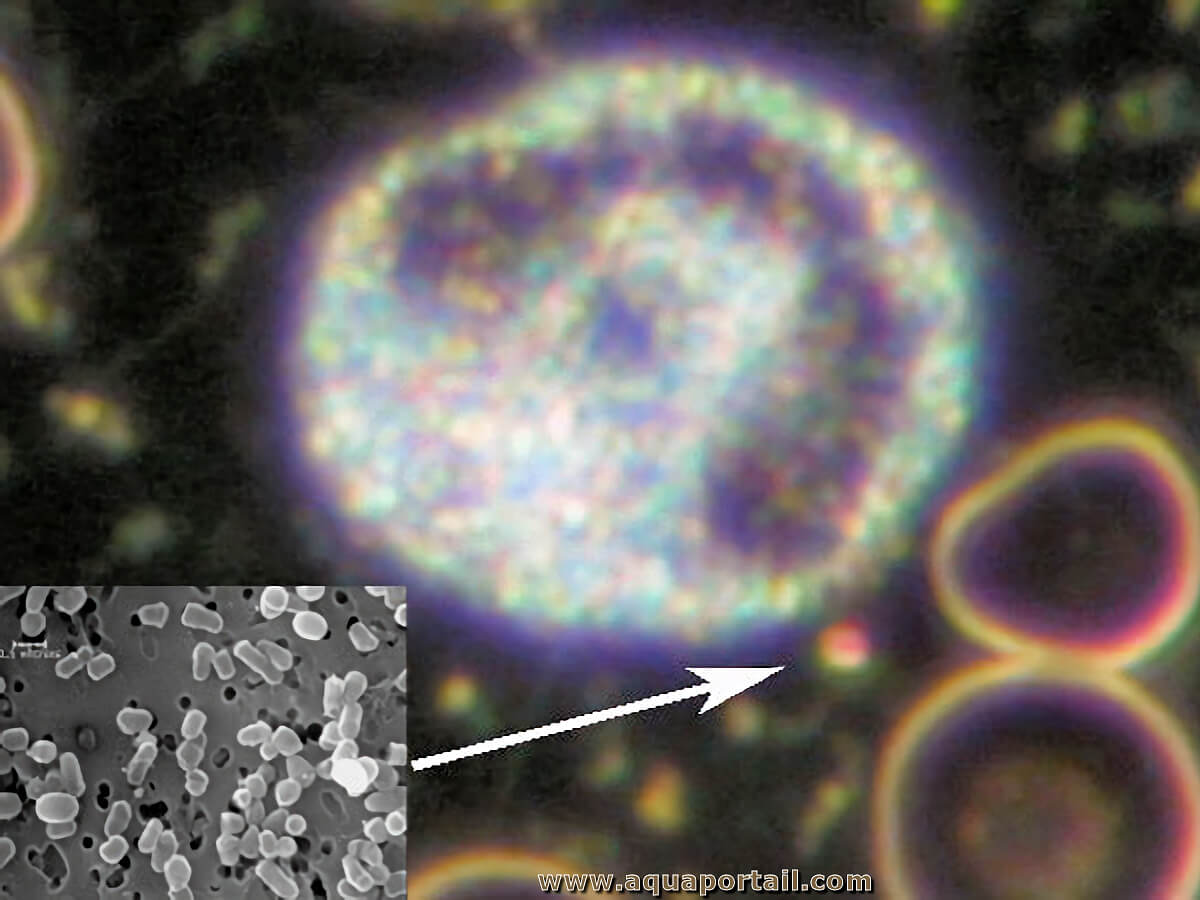
A nanobacterium is a submicron particle initially described as a hypothetical bacterial microorganism the size of a nanobe.
