Tongue
noun (n.)
Definition
In anatomy, the tongue is a muscular organ located in the oropharynx and oral cavity (mouth) of most vertebrates. It plays a major role in phonation, mastication, swallowing, taste, and tooth cleaning, and often performs various other specialized functions.
The tongue is not a single muscle; it is a muscular hydrostat.
A human tongue:

In humans, the tongue also serves spoken language and speech articulation in addition to its physiological roles. Its mobile length inside the mouth is about 10 cm (3.9 in), reaching up to 15–17 cm (5.9–6.7 in) at maximum extension, while its fixed root in the oropharynx adds several more centimeters.
Explanations
In addition to perceiving tastes, the human tongue plays a vital role in articulating speech sounds (phonation). Beneath the tongue lie the openings of several salivary glands, which contribute to the first stage of digestion.
In humans, the tongue is also a source of pleasure in kissing and other intimate behaviors, and is further used to make faces or other facial expressions.
Everything pertaining to the tongue is generally called "lingual" (derived from Latin) or "glossal" (derived from Greek). For example, glossitis is an inflammation of the tongue (of infectious, nutritional, or autoimmune origin) causing a red, swollen, and painful tongue.
⭐ See also glacial tongue.
Human anatomy
The tongue is composed primarily of skeletal muscle and, in mammals, is attached to the hyoid bone, the mandible, and the styloid processes of the temporal bone. The muscles attaching the tongue to the skull are called "extrinsic muscles", whereas those forming the body of the tongue itself are the four pairs of "intrinsic muscles" responsible for moving and reshaping the tongue during chewing and swallowing.
The tongue has a dorsal surface (top, superior, adaxial) and a ventral surface (bottom, inferior, abaxial). The ventral surface lacks lingual papillae, whereas the dorsal surface is covered with papillae. Within the oral cavity, taste buds are responsible for flavor perception. The ventral surface contains the greatest amount of connective tissue in the submucosa, as the dorsal surface is in constant contact with food.
Anatomy of a human tongue:

Anatomical details of the human tongue showing its regions, muscles, and papillae.
The dorsal surface of the tongue can be divided into two regions: an oral part, situated inside the oral cavity, and a pharyngeal part (the posterior third of the tongue) facing the back of the oropharynx. The two parts are separated by a V-shaped groove (the terminal sulcus). The dorsal surface of the anterior two-thirds (oral part) is lined with papillae and has a soft, pink appearance. Four types of lingual papillae exist: filiform, fungiform, circumvallate, and foliate. At the back of the oral tongue, 3 to 14 circumvallate papillae are arranged in a V shape just in front of the sulcus terminalis.
There are no lingual papillae on the underside of the tongue. It is covered by a smooth mucous membrane housing the lingual frenulum in the center. The upper surface of the posterior tongue (pharyngeal part) lacks visible taste buds but appears bumpy due to underlying lymphatic follicles known as "lingual tonsils".
Lingual muscles
The human tongue consists primarily of muscle fibers forming a muscular hydrostat. The tongue is composed of 17 muscles in total. It can be moved forward and backward, up and down, rounded, curled, and shaped using eight paired muscles and one unpaired muscle (on the upper adaxial surface of the tongue).
Through the paired extrinsic muscles, the tongue is anchored to the mandible of the lower jaw, the hyoid bone (at the front of the throat), and the base of the skull. These muscles alter the tongue's position inside the mouth. The extrinsic muscles of the tongue are:
- genioglossus muscles: draw the tongue forward
- hyoglossus muscles: depress and retract the base of the tongue
- styloglossus muscles: draw the tongue upward and backward (aiding sucking and swallowing)
- palatoglossus muscles (anterior pillar): elevate the posterior tongue
The intrinsic muscles within the tongue itself control changes in shape. The intrinsic muscles of the tongue are:
- superior longitudinal muscle (unpaired): curls the tip upward and shortens the tongue
- inferior longitudinal muscles: curl the tip downward and retract the tongue
- verticalis muscles: flatten and widen the tongue
- transversus muscles: narrow and elongate the tongue
- pharyngoglossus fibers: extensions belonging to the superior pharyngeal constrictor
Because the tongue terminates freely at the front beyond the "frenulum", it is the most flexible muscular organ in the body.
Papillae
The tongue is lined with a vast number of papillae, the most common being the filiform papilla. The remaining types allow humans to perceive distinct tastes, all of which can detect sweet, bitter, umami, salty, and sour flavors. In the 20th century, the misconception prevailed that different taste sensations were restricted to separate zones of the tongue, based on a misinterpretation of 19th-century research data.
The tongue receives its primary blood supply via the lingual artery. Additionally, it receives blood from the tonsillar branch of the facial artery, situated between the medial pterygoid muscle and the styloglossus muscle.
Animals
In dogs, beyond its standard roles, the tongue also serves to regulate body heat through panting. Furthermore, both dogs and cats use their tongues for grooming.
A tongue composed of numerous intrinsic and extrinsic muscles is characteristic of tetrapods. In fishes, the floor of the mouth features only a very rudimentary tongue-like structure (basihyal).
Similar organs
In invertebrates, certain organs perform functions broadly analogous to those of the tongue (such as the proboscis in butterflies and the radula in mollusks), though they are not evolutionarily related and therefore are not homologous to the vertebrate tongue.
Linguiform describes a tongue-shaped or strap-shaped structure.
In aquarium keeping, an example is the aquatic plant Cryptocoryne lingua, whose spathe blade is tongue-shaped.
Synonyms, antonyms
Spanish translation: lengua
2 synonyms (similar meaning) for "tongue":
0 antonyms (opposite meaning).
Related words and expressions to TONGUE are directly connected by general or specific meaning.
The word TONGUE is listed on page 1 of words starting with T in the dictionary glossary.
Related to "tongue"
tagma

A tagma is a group of fused segments formed by series of metameres differentiated from the rest of an arthropod's body.
tapeworm
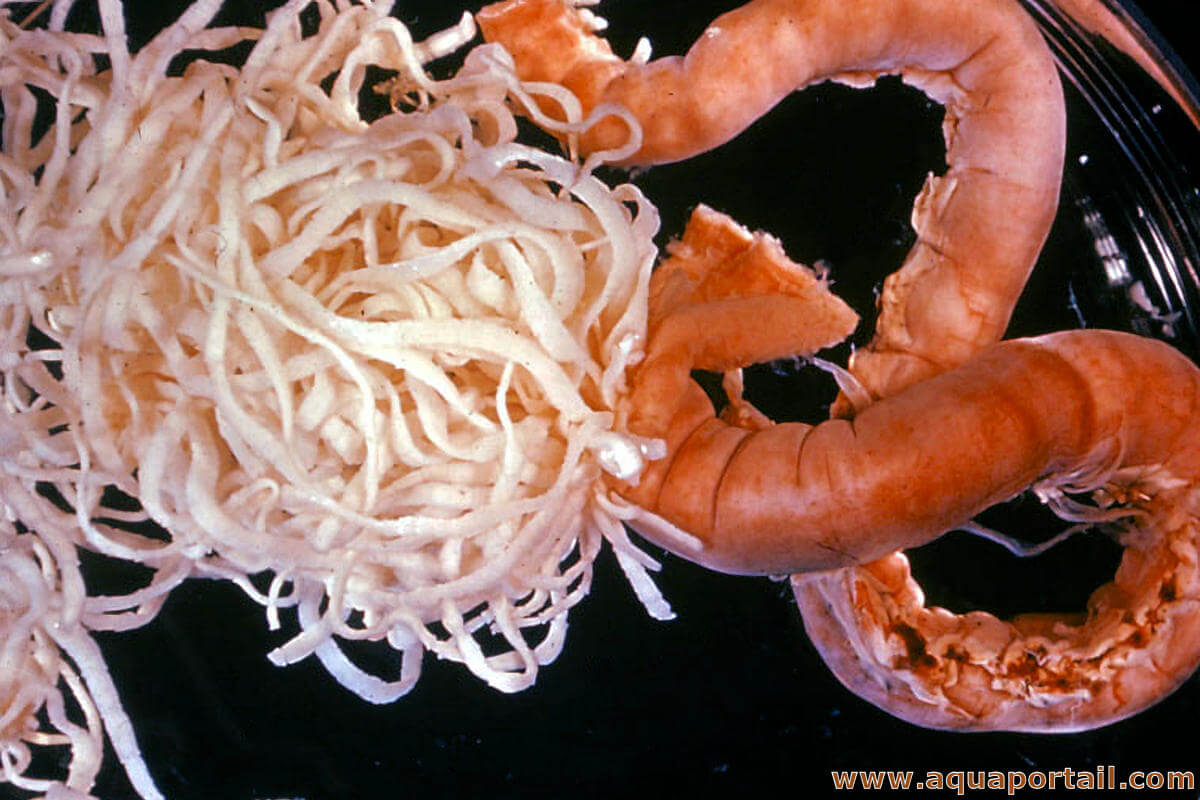
The tapeworm, or solitary worm, is a long, ribbon-like, segmented flatworm, a parasitic cestode of the genus Taenia.
tectonics

Tectonics is a branch of geology that studies the structure of the crust of a planetary body, such as Earth or the Moon, particularly the formation of folds...
teliospore

A teliospore (teleutospore) is a thick-walled, multicellular fungal spore from which the basidium develops.
Simple summary
The tongue designates the muscular organ situated in the mouth, essential for taste, swallowing, and speech articulation. It plays a key role in various functions, notably manipulating food during chewing and transmitting sensory information. The word is also used figuratively to refer to language or speech, reflecting how individuals use their tongue to communicate.
