Tide-generating force
noun phrase (n. phr.)
Definition
The tide-generating force is produced by the combination of gravitational attraction between the Earth and the Moon and the Sun, and the rotation of the Earth-Moon and Earth-Sun systems. It is the resultant of the sum of the attractive forces of the celestial bodies and the opposing inertial force. These forces combine to deform the surface of Earth's ocean into a roughly ovoid shape with two bulges.
Diagram of the tide-generating force:

The tide-generating force causes two ocean tidal bulges produced by the gravitational attraction of the Moon combined with the rotation of the Earth-Moon system on an idealized water-covered Earth.
Explanations
One ocean bulge faces the Moon and the other is on the opposite side of the planet, away from the Moon (figure below). A similar interaction between the Earth and the Sun produces two other ocean bulges that align toward and away from the Sun.
A tidal force is a secondary effect of the force of gravity that is responsible for the existence of tides. Detectable tidal forces on Earth are caused by the Moon and the Sun.
See solar tide, lunar tide, and the solunar process.
Process
At the center of the Earth, the centripetal acceleration provided by the gravitational attraction between the Moon and the Earth is exactly equal to the centrifugal acceleration due to rotation around the common center of mass, which lies inside the Earth. The rotation period around this common center of mass is 27.32 days, one sidereal month.
Everywhere else on Earth, there is an imbalance between the centripetal (inward) and centrifugal (outward) accelerations. Centrifugal acceleration is the same everywhere on Earth, whereas the gravitational force due to the Moon varies across Earth's surface.
This results in the tide-generating force, TGF, since on the side of the Earth facing the Moon, the gravitational force exceeds the centrifugal acceleration, and on the side of the Earth away from the Moon, the centrifugal acceleration exceeds the gravitational force.
At the point on Earth directly beneath the Moon (sublunar point or zenith) and at the point on Earth directly opposite it (the antipode or nadir), the TGF is in the same direction as Earth's gravity, and therefore has little effect since it is so much smaller than g. The "lateral" forces, or horizontal component, of the TGF are called the tractive force.
The equilibrium tide is the tide that would result from the TGFs if the Earth were completely covered with water and responded instantaneously to changing forces (that is, without inertia) and there were no friction. Because of the tractive forces, the equilibrium tide exhibits two bulges, one on each side of the Earth. Thus, you see 2 highs and 2 lows per lunar day. This is called the semidiurnal lunar tidal constituent. It has a period of 12.42 hours.
Origin
According to Isaac Newton (1642–1727), the gravitational attraction between two bodies is directly proportional to the product of the masses of the two bodies and inversely proportional to the square of the distance between them. Simply put, the greater the mass, the greater the attractive force, whereas the greater the distance, the smaller the attractive force.
Although the Sun is 27,000,000 times (27 million) more massive than the Moon, the Moon is much closer to the Earth and for this reason exerts a greater gravitational pull on the Earth. In fact, the Moon's tide-generating force on the Earth is more than twice that of the Sun on the Earth. For now, we will ignore the influence of the Sun and focus on the Moon.
The Moon's gravitational attraction on Earth is primarily responsible for the ocean surface bulge located directly beneath the Moon. On the opposite side of the planet, gravitational attraction is weaker, and the rotation of the Earth-Moon system is primarily responsible for the tidal bulge. The Earth and the Moon revolve around a common center of mass.
Because the Earth is much more massive than the Moon, the center of mass of the system lies within 4,700 km (2,920 mi) of the Earth's center, or 1,700 km (1,056 mi) beneath the Earth's surface. This has been compared to a seesaw with an adult sitting at one end and a child at the other end. The pivot point (center of mass of the adult-child system) must be shifted toward the adult so that the two individuals balance the seesaw.
Newton's first law of motion predicts that a net force must operate in any rotating system, and this net force in the rotating Earth-Moon system gives rise to the tidal bulge on the side of the planet opposite the Moon.
Recall that according to Newton's first law of motion, an object in constant motion in a straight line remains so unless acted upon by an unbalanced (net) force. In a rotating system, the net force confines an object to a curved path (rather than a straight one). Let us take an analogy.
Suppose you are a passenger in a car rounding a curve at high speed. You feel a force pushing you toward the outside of the turning automobile. In fact, you are feeling your body's tendency to continue moving in a straight path while the automobile follows a curved path. In the same way, the rotation of the Earth-Moon system causes the ocean to bulge outward on the side of the planet opposite the Moon.
So far, for tide-generating forces, we have used the equilibrium model of tides, which assumes a frictionless Earth entirely covered with water.
With this model, the ocean bulges always aligned with the celestial body that caused them. Furthermore, any location on the planet carried by Earth's rotation through the bulges would experience a rise and fall in sea level (that is, tides).
If only a single celestial body (Moon or Sun) were present, each day a low-latitude location would experience two high tides (as the bulges pass) and two low tides (halfway between the bulges).
If the positions of the Earth and the other celestial body remained fixed in space, the period of these waves would be the time required for half a rotation of the Earth, about 12 hours.
As the Earth rotates, however, the Moon revolves around the Earth. The Moon orbits the Earth once per lunar month (on average 29.5 days, between new moons) and in the same direction as Earth's daily rotation. Consequently, the Earth must complete more than one full rotation for a specific location on the planet to realign with the advancing Moon.
To catch up with the Moon's advance takes 24 hours plus 1/29.5 of a day, or about 24 hours and 50 minutes. This lunar day (24 hours, 50 minutes) is also called a tidal day. Because the tidal day is longer than the solar day, the times of high and low tide shift by about 50 minutes from one solar day to the next.
The ocean tidal bulges produced by the Moon remain in the same alignment relative to the Moon, but change their latitudinal (north-south) positions on Earth from day to day as they follow the Moon during its monthly revolution around the Earth.
The plane of the Moon's orbit is inclined by 5 degrees relative to Earth's equatorial plane, so that during a lunar month, the Moon's latitudinal position shifts from directly over the equator northward to 28.5 degrees N (5 degrees beyond the tropic of cancer), back to the equator, southward to 28.5 degrees S (5 degrees beyond the Tropic of Capricorn), and then back to the equator where another cycle begins.
When the Moon is at its maximum latitudinal position, the center of one tidal bulge lies just north of the Tropic of Cancer and the center of the other tidal bulge lies on the opposite side of the planet just south of the Tropic of Capricorn. Consequently, a location along or near the Tropic of Cancer or the Tropic of Capricorn experiences only one significant tidal bulge in 24 hours.
Ocean bulges linked to the Sun are produced in the same way as those caused by Earth-Moon interactions. That is, the gravitational attraction between the Earth and the Sun plus the Earth's annual revolution around the mutual center of mass of the Sun and the Earth generate a second set of similar, smaller tidal bulges that are aligned with the Sun.
As noted earlier, because of the Sun's much greater distance from the Earth, the Sun's tidal pull on the ocean is less than half (about 46%) of the Moon's tidal pull. These tidal bulges follow the Sun (just as the lunar bulges follow the Moon), with their latitudinal positions shifting as the Earth follows its annual orbit around the Sun.
The tide-generating force decreases rapidly with increasing distance, so celestial bodies at distances from the Earth greater than the Sun are too far away to exert a significant tidal pull on Earth's ocean.
The tide-generating force (resulting from a combination of gravitational and rotational forces) is inversely proportional to the cube of the distance between the Earth and any other celestial body. Consequently, doubling the distance between two bodies reduces the tide-generating force by a factor of 8 (23).
Synonyms, antonyms
Spanish translation: fuerza generadora de marea
0 synonyms (similar meaning) for "tide-generating force".
0 antonyms (opposite meaning).
Related words and expressions to TIDE-GENERATING FORCE are directly connected by general or specific meaning.
The expression TIDE-GENERATING FORCE is listed on page 1 of words starting with T in the dictionary glossary.
Related to "tide-generating force"
tagma

A tagma is a group of fused segments formed by series of metameres differentiated from the rest of an arthropod's body.
tapeworm
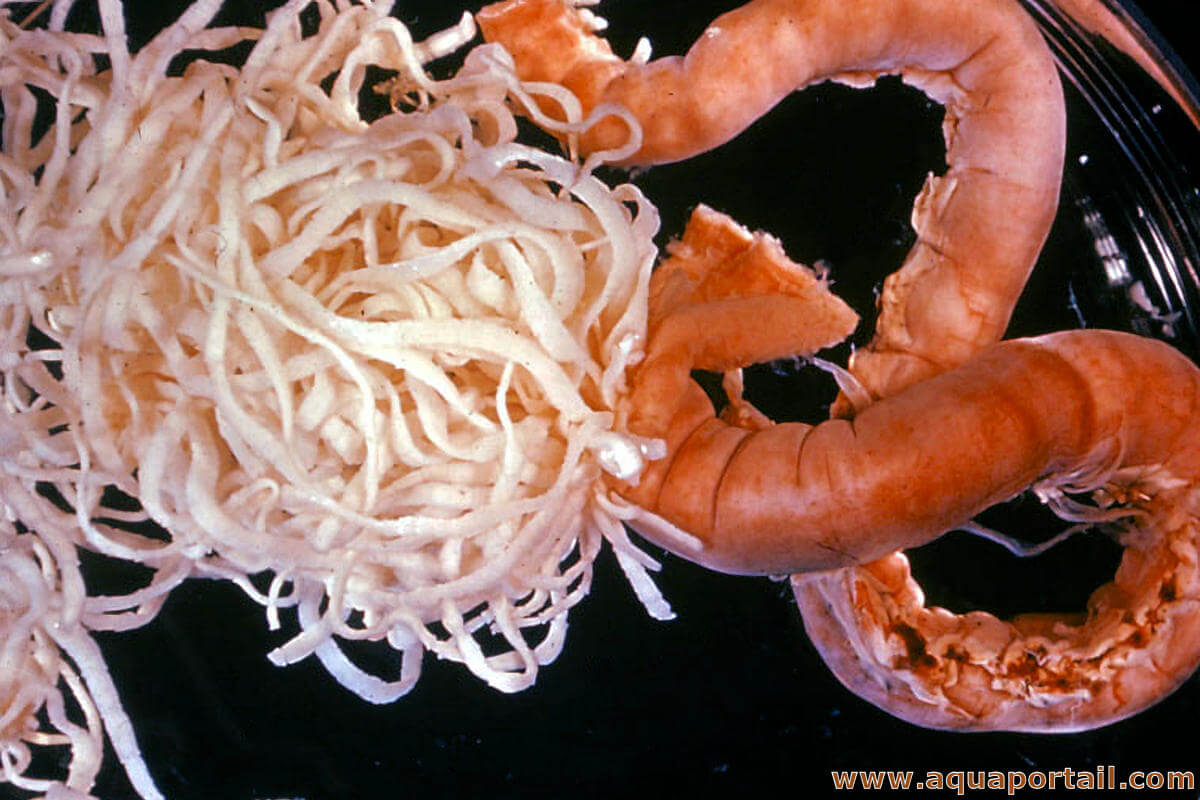
The tapeworm, or solitary worm, is a long, ribbon-like, segmented flatworm, a parasitic cestode of the genus Taenia.
tectonics

Tectonics is a branch of geology that studies the structure of the crust of a planetary body, such as Earth or the Moon, particularly the formation of folds...
teliospore

A teliospore (teleutospore) is a thick-walled, multicellular fungal spore from which the basidium develops.
