Taxon
noun (n.)
Definition
In biology, a taxon is a taxonomic unit recognized by international codes within a given classification, or a systematic unit such as a family, genus, species, etc., used to designate an organism under its scientific name. This conceptual entity is independent of its rank in classical classification.
As an example, the taxon of these plants is Cosmos bipinnatus:

The binomial taxon of this plant is Cosmos bipinnatus. The first word, Cosmos, is the genus (generic taxon) and the second, bipinnatus, is the species within the genus (specific taxon). Its French common name is: cosmos des jardins.
Explanations
A taxon designates a group of living beings constituting a systematic unit of a given hierarchical level (variety, species, genus, family, class, phylum, etc.). The science that studies taxa is taxonomy. A taxon is any systematic unit, regardless of its rank. Taxa are Latinized words, always! When a taxon is replaced by a common name, it loses its universality: it is called the vernacular name.
Classification can be expressed in a dendrogram, where each node represents a possible taxon and taxa are grouped in an inclusion hierarchy.
✅ The nominal taxon is most often, though not always, the basionym or protonym. According to the International Code of Zoological Nomenclature, a nomenclatural taxon is a nomenclatural concept denoted by an available name and based, actually or potentially, on its name-bearing type, but having no defined taxonomic boundaries. A name used in an original description may be valid or a synonym.
The purpose of classifying organisms into formally defined taxa rather than informal groups is to provide groups whose circumscription (what the organisms are composed of) is strict and whose name has universal value, regardless of the language used for communication. Note that taxa exist within a given classification, subject to modifications and discrepancies that may arise; certain questions sometimes remain complex regarding the use of one taxon or another, requiring descriptive taxonomists to specify in what sense the author uses the name.
🚩 The taxon of a species is binomial; it is called a binomen, such as Galium odoratum for sweet woodruff, a plant. For the neon tetra fish commonly called the "blue neon", two scientific taxa are possible: it most often designates Paracheirodon innesi, but may also designate Inpaichthys kerri (though more frequently called the "emperor tetra"). The vernacular name remains ambiguous, and its translation into other languages can seriously lead to identification confusion.
Taxon and taxonomic category
The definition given here corresponds to the taxon definition of the cladistic and evolutionary schools, to which a "name" has been assigned according to the rules written in the international nomenclature codes. Each school of classification groups organisms differently. In the phenetic school, taxa are not groups of relatives, but organisms with similar characteristics. In the cladistic school, only monophyletic groups (grouped by an ancestor and all its descendants) are taxa; in the evolutionary school, paraphyletic groups can also be taxa. In general, a taxon can be said to be a group of organisms associated with a set of attributes that determine the membership of those organisms in that group. In the cladistic school, the set of attributes are the characters inherited from their common ancestor.
In the Linnaean classification system, each taxon also has a taxonomic category hierarchically associated with it within a classification system.
International codes of nomenclature stipulate that taxa have one and only one "correct name", the name to be used to designate the taxon. To achieve this, the author must publish the taxon name in a scientific journal, which must be in Latin, associated with a taxonomic category, a "type", and a description if it is a species. The first name validly published is the "correct name" of the taxon. The name is applied to a taxon that includes the type within its circumscription. In the codes, a taxon is defined by its circumscription, its position (its relationships with other taxa in a classification system), and its taxonomic category.
To classify organisms, taxonomy uses Carl Linnaeus's hierarchical system. In this organizational scheme, each particular group of organisms is a taxon and the hierarchical level in which it is placed is its category. Similarly, in political geography: country, province, and municipality would be categories, while Canada, Ontario, and Toronto would be taxa. Likewise: family, genus, and species are taxonomic categories, while Rosaceae (roses), Rosa, and Rosa canina are examples of taxa in these categories.
It should be noted that the association of a taxon with a certain rank (category) is somewhat relative and limited to the particular scheme (system) used. So much so that a taxon is likely to occupy different categories depending on classification systems (organized by different authors, criteria, etc.); generally, this occurs within the broader categories (family, order, class, etc.).
Ontology of taxa
The ontological status of taxa is one of the most debated problems in the philosophy of biology. There are mainly two currents:
- nominalism, which denies the real existence of taxa in nature, arguing that they are nothing more than mental constructions of the taxonomist. From this perspective, taxa are identified with taxonomic categories
- essentialism, which affirms the reality of taxa, although, depending on the criterion of reality used, the term essentialist encompasses a variety of very different philosophical positions:
- pre-evolutionary metaphysics identifies taxa with the ideal and eternal types created by the Divine. In Linnaean taxonomy, taxa are considered classes of individuals
- the transcendental morphology of naturalist philosophers conceives taxa as types derived from a limited series of structural plans
- many evolutionary biologists have sought criteria to characterize taxa as real entities without falling into fixist essentialism: some authors, applying Simpson's species definition, conceive taxa as evolutionary individuals, meaning taxa are lineages that evolve separately from others and have their own history and evolutionary tendencies.
✅ A typogenesis identifies a period of production of new taxa during evolution, driven by strong selection pressure.
Types of taxa
A taxon is a taxonomic (systematic) group of varying rank represented by the set of entities that share common characteristics. A taxon is formed by uniting various populations and, where applicable, lower-ranking taxonomic units, whose ensemble exhibits characteristics sufficiently distinct from neighboring groups to warrant its establishment as a separate group.
There are two types of taxa:
- natural: justified by the characteristics and evolutionary history of its members, so that it can be said to exist in nature. Phylogenetic systematics accepts as natural taxa each particular species or monophyletic group of organisms, including only those forming a clade or branch of the evolutionary tree. Most systematists also accept as "natural" groups (paraphyletic groups) those whose common ancestor belongs to the group
- artificial: does not exist in nature, i.e., polyphyletic groups, whose common ancestor is not part of the group. For example, algae or protozoa. These groups are not valid in classification, yet they are still used to organize certain categories of scientific information due to historical tradition.
⭐ A monotypic taxon is one that contains only a single member of the immediately subordinate category. For example, a family containing only one genus, regardless of how many species that genus contains.
Absence of a taxon
The absence of a taxon is a synthetic datum deduced from analyzing multiple occurrences of "non-observation" of a taxon or derived from expert assessment taking into account the historical presence of the taxon and analysis of environmental conditions (habitat, food resources, etc.) over a defined territory and time period. The absence of a taxon, when it should be present, should lead to considering the overall functioning of the ecosystem where a cause likely LED to this absence, or even to the extinction of the taxon in question or of certain species.
Synonyms, antonyms
French translation:
taxonSpanish translation: taxón
1 synonym (similar meaning) for "taxon":
0 antonyms (opposite meaning).
Related words and expressions to TAXON are directly connected by general or specific meaning.
The word TAXON is listed on page 1 of words starting with T in the dictionary glossary.
Related to "taxon"
tagma

A tagma is a group of fused segments formed by series of metameres differentiated from the rest of an arthropod's body.
tapeworm
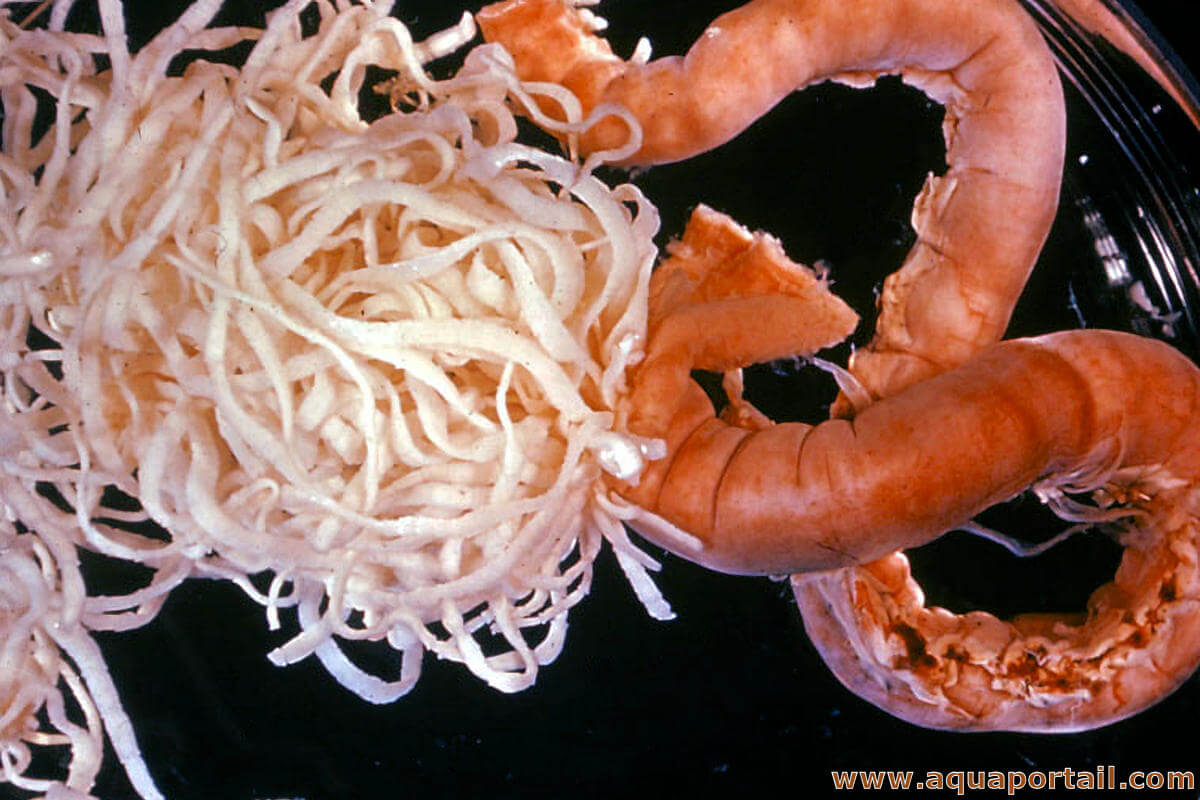
The tapeworm, or solitary worm, is a long, ribbon-like, segmented flatworm, a parasitic cestode of the genus Taenia.
tectonics

Tectonics is a branch of geology that studies the structure of the crust of a planetary body, such as Earth or the Moon, particularly the formation of folds...
teliospore

A teliospore (teleutospore) is a thick-walled, multicellular fungal spore from which the basidium develops.
