Photooxidation
noun (n.)
Definition
Photooxidation (photo-oxidation) is an oxidation that occurs under the effect of light energy (photonic energy), during oxygen production in oxygenic photosynthesis. Photooxidation typically occurs during photophosphorylation or degassing.Photooxidations are oxidation reactions triggered by light. The oxidation reaction rate depends, among other parameters, crucially on light absorption by the oxidized species.
The photooxidation process:
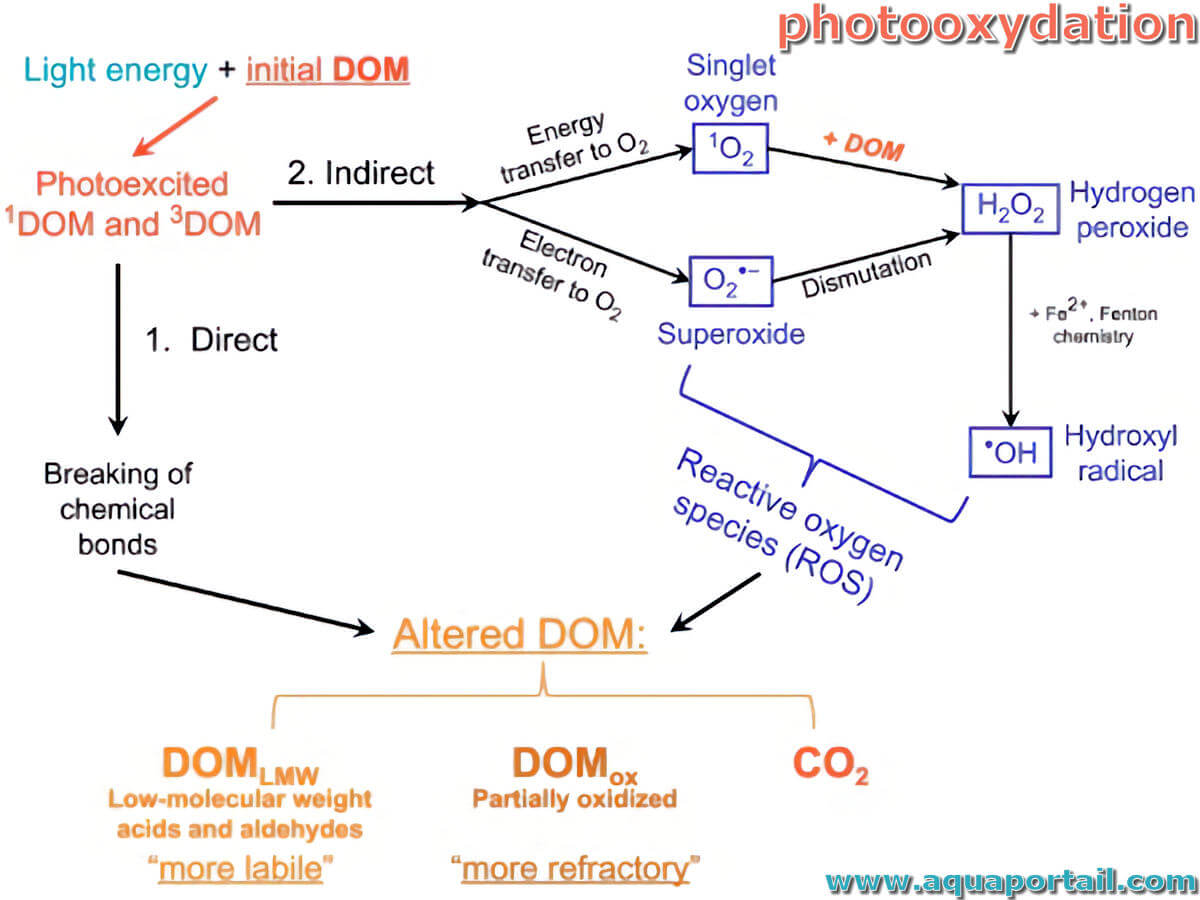
Photooxidation process with photochemical alteration of dissolved organic matter in the watercourse via direct and indirect pathways.
General explanations
A photon excites an electron of a molecule and raises it to a higher energy level. In this excited state, there is generally a low probability that an electron spin flip takes place, meaning the excited molecule transitions to the triplet state.
Now, if dioxygen is in the immediate vicinity (overlap of molecular orbitals) of the molecule, energy can be transferred, i.e., the molecule returns to the ground state and oxygen transitions to the excited state. This results in highly reactive singlet oxygen capable of undergoing an oxidation reaction with the molecule.
Since dioxygen possesses a triplet ground state (which is extremely rare), energy transfer works only from the triplet state of the molecule via Dexter energy transfer, as only then is spin conservation maintained.
See also oxygen evolution, water degassing.
✅ Photooxidation is also the surface degradation of a polymer in the presence of oxygen or ozone. The effect is facilitated by radiant energy such as UV rays or artificial light. This process is the most important factor in polymer weathering. Photooxidation is a chemical change that reduces the molecular weight of the polymer. As a result of this change, the material becomes more brittle, with a reduction in tensile, impact, and elongation strength. Photooxidation is accompanied by discoloration and loss of surface smoothness. High temperatures and localized stress concentrations are factors that significantly increase the photooxidation effect.
Protection against photooxidation
Polyethylene naphthalate (PEN) can be protected by applying a zinc oxide coating, which acts as a protective film reducing oxygen diffusion. Zinc oxide can also be used in polycarbonate (PC) to reduce oxidation and the rate of photo-yellowing caused by solar radiation.
Dyes and/or pigments have certain effects. Adding light-absorbing pigments and UV absorbers (photostabilizers) is one way to minimize photooxidation in polymers. antioxidants are used to inhibit the formation of hydroperoxides in the photooxidation process.
Dyes and pigments are used in polymeric materials to impart color-changing properties. These additives can reduce the degradation rate of polymers. Copper phthalocyanine-based dyes can help stabilize against degradation, but in other situations, such as photochemical aging, they can actually accelerate degradation (acting as catalysts). Excited Cu-phthalocyanine (Cu-Ph) can abstract hydrogen atoms from methyl groups in PC polymers, which increases free radical formation. This acts as a starting point for sequential photooxidation reactions that lead to PC polymer degradation.
Electron-transfer sensitization is a mechanism by which excited electrons transfer charge between Cu-phthalocyanine and PC to form radical anions and radical cations. These species, in the presence of oxygen, can cause aromatic ring oxidation.
Chemical mechanism
Aldehydes, ketones, and carboxylic acids along or at the ends of polymer chains are generated by oxygenated species during photooxidation photolysis. The initiation of photooxidation reactions is due to the presence of chromophore groups in macromolecules. Photooxidation can occur simultaneously with thermal degradation, and each of these effects can accelerate the other.
Photooxidation reactions include chain scission, crosslinking, and secondary oxidative reactions. The following process steps can be considered:
- first step: free radicals are formed by photon absorption
- chain propagation step: free radicals react with oxygen to produce a polymer with a peroxide radical (PO•), which reacts with a polymer molecule to generate a polymer hydroperoxide (POOH) and a new alkyl polymer radical
- chain branching: a polymer with alkoxyl radicals (PO•) and hydroxyl radicals (HO•) is formed by photolysis
- termination (finalization) step: crosslinking is the result of different free radicals reacting with one another.
See also photoantioxidants.
Synonyms, antonyms
Spanish translation: fotooxidación
3 synonyms (similar meaning) for "photooxidation":
- oxidation
- photo-oxidation
- photodegradation
0 antonyms (opposite meaning).
Related words and expressions to PHOTOOXIDATION are directly connected by general or specific meaning.
The word PHOTOOXIDATION is listed on page 1 of words starting with P in the dictionary glossary.
Related to "photooxidation"
photochemistry
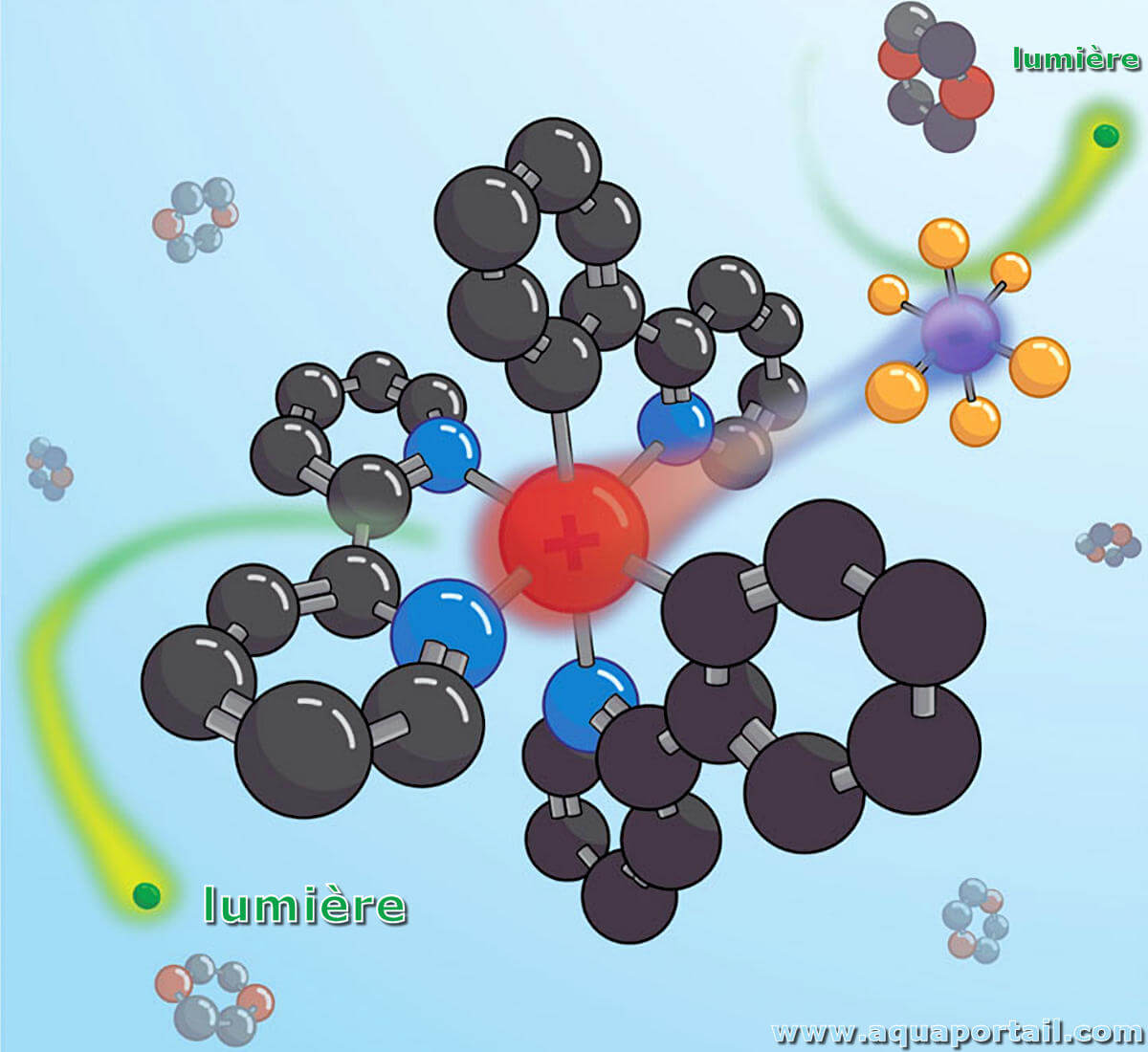
Photochemistry is the study of chemical reactions, isomerizations, and physical behavior that can occur under the influence of visible or ultraviolet light.
photodecomposition

Photodecomposition, a form of photolysis similar to photodissociation, is a chemical decomposition of molecules by the radiant energy of visible light.
photodissociation
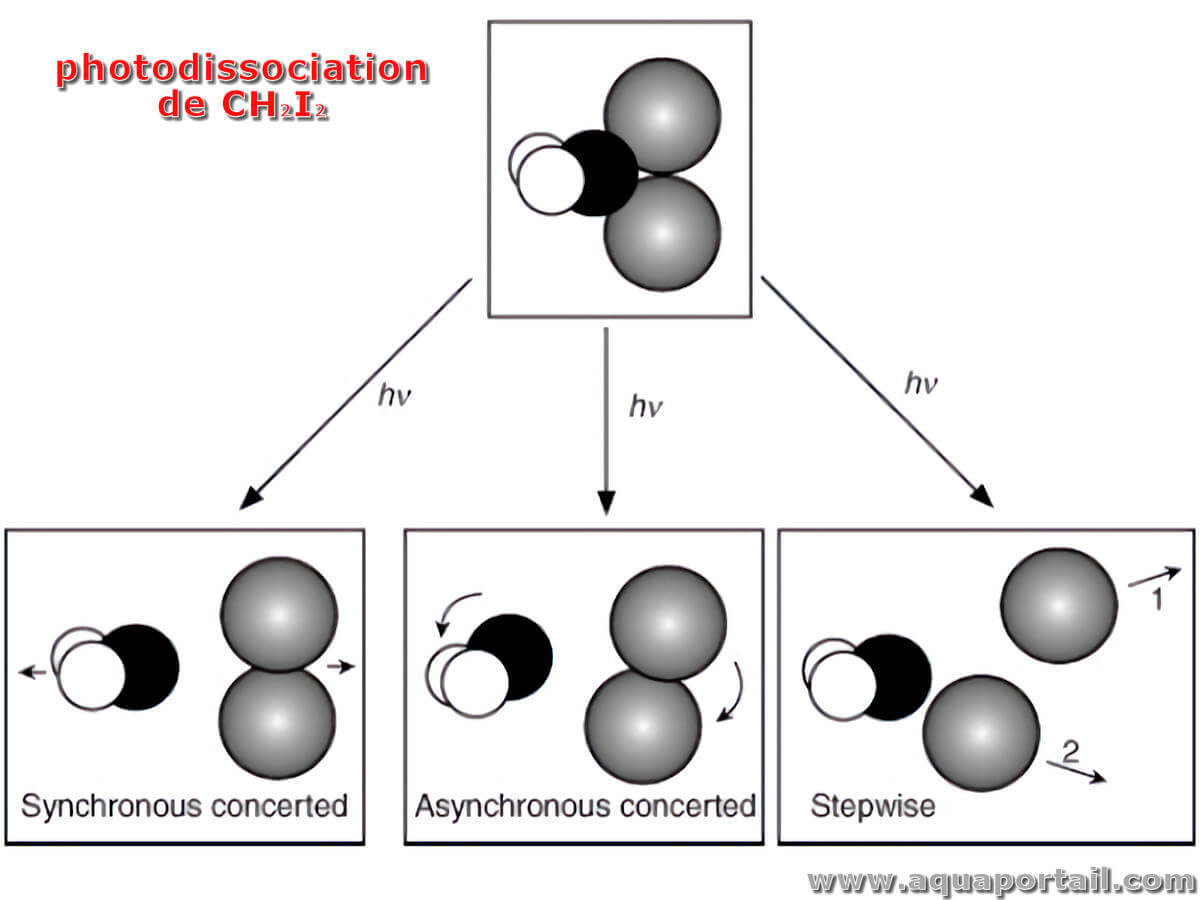
Photodissociation is a chemical reaction that breaks down compounds by bombarding the molecule with photons.
photoperiod

Photoperiod is a regular and defined succession of alternating periods of light (day, diurnal) and darkness (night, nocturnal).
