Corpuscle
noun (n.)
Definition
A corpuscle (literally little body) is a small particle or a small cell. In biology, a corpuscle is a living cell not aggregated into continuous tissues. A red or white blood cell, a lymphatic cell, or a cartilage cell are corpuscles.
The difference between a cell and corpuscles is that the cell is the basic unit of life, whereas corpuscles are the cells that float freely in the blood (erythrocytes and leukocytes) and lymph.
Details of tactile corpuscles of the skin:

Corpuscles in mammalian skin are mechanoreceptors, tactile corpuscles.
Explanations
A corpuscle may also refer to:
- a small floating biological cell, particularly a blood cell or its cellular components
- a nerve ending such as Meissner's corpuscle, a Pacinian corpuscle, a Ruffini corpuscle, or a Merkel corpuscle
- in botany (basal), the basal corpuscle
- a term used by J.J. Thomson to describe the particles now known as electrons
- a term used by Isaac Newton to designate light particles, now known as photons
- in geometry, a basic element of a pulse-transmitting spatial network, see corpuscular geometry
Corpuscle of Stannius
In aquatic zoology, the body or corpuscle of Stannius, in fish, identifies the glands regulating hydromineral exchanges, especially for calcium. The corpuscles of Stannius, found only in bony fish, are sac-like bodies in the kidney. Although they were once considered a form of adrenocortical tissue, they differ from it in their embryological origin as well as their cytological characteristics.
Furthermore, although the corpuscles of Stannius are capable of limited steroid biosynthesis, they cannot convert cholesterol into corticosteroids, a process that begins in adrenocortical tissue. Evidence suggests that these corpuscles secrete a not-yet-characterized substance that plays a role in maintaining ionic homeostasis, perhaps in conjunction with corticosteroid hormones.
✅ Studies are conducted on these corpuscles in river loaches and notably the species Botia lohachata.
Unlike mammals, in which calcium is obtained from dietary sources, fish find calcium readily available in the surrounding aquatic environment. Consequently, calcium regulation in fish is primarily mediated by the hypocalcemic hormone, STC-1. The corpuscles of Stannius (CS), which are teleost-specific endocrine glands associated with the kidneys, synthesize and secrete STC-1. Early studies showed that removal of these glands resulted in the rapid onset of hypercalcemia, clearly highlighting their role in calcium regulation.
Krause's corpuscle
Krause's corpuscle, named after Wilhelm Krause (1833–1910), is a mechanoreceptor located in the upper zone of the dermis. It is a smaller variant of the Pacinian corpuscle.
The curved body has a spherical shape and consists of several layers, the outer layer with permeable chambers and the inner core with the actual receptor. It is a rapidly adapting mechanoreceptor that responds to changes in velocity and, together with the Pacinian corpuscle, is one of the acceleration sensors.
Synonyms, antonyms
Spanish translation: corpúsculo
2 synonyms (similar meaning) for "corpuscle":
0 antonyms (opposite meaning).
Related words and expressions to CORPUSCLE are directly connected by general or specific meaning.
The word CORPUSCLE is listed on page 1 of words starting with C in the dictionary glossary.
Related to "corpuscle"
basilar corpuscle
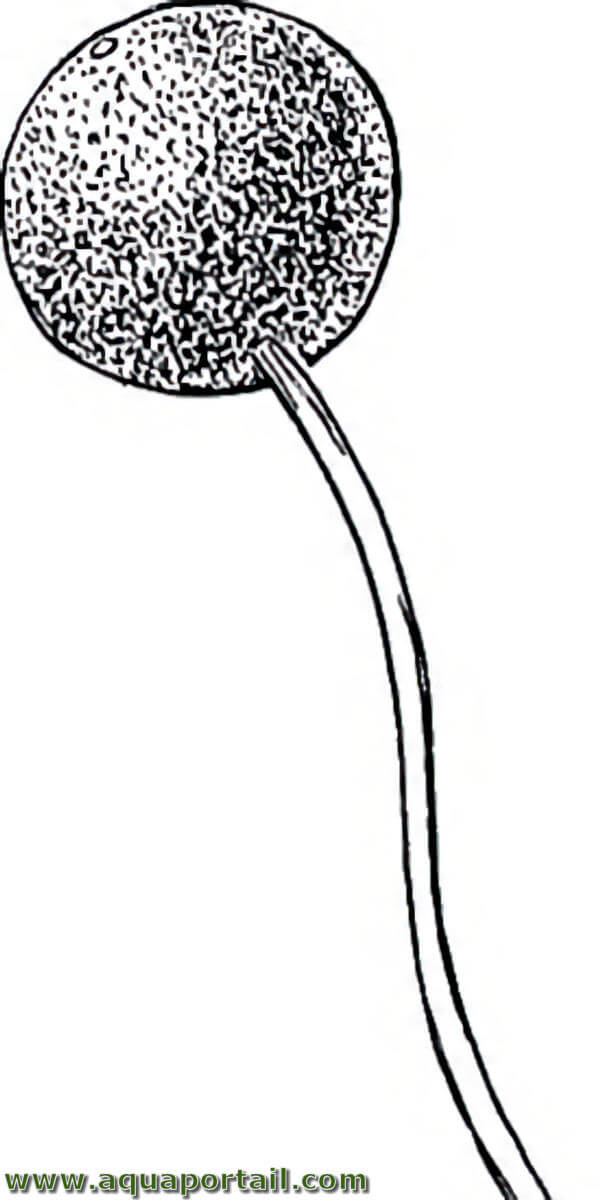
In botany, the basilar corpuscle is a basal part of the flagella of motile cells in chlorophycean algae (chlorophyte green algae).
cactus

A cactus is a thick, fleshy plant that grows in many hot, dry regions of the world. Cacti do not have leaves, and many are covered with spines.
caecilian

A caecilian (gymnophione) is a limbless, burrowing, worm-like amphibian whose legs are vestigial or absent.
calcified

A structure is calcified when calcium carbonate (or calcium salts) has been deposited in it.
