Haploid
noun (n.)
Definition
A haploid organism has cells possessing 1n chromosomes (the basic minimal chromosome number).
A haploid cell carries a single set of unpaired chromosomes, unlike diploids (cells with 2n chromosomes) or polyploids. Predominantly haploid organisms are referred to as haplonts.
Various ploidies, including haploid cells:
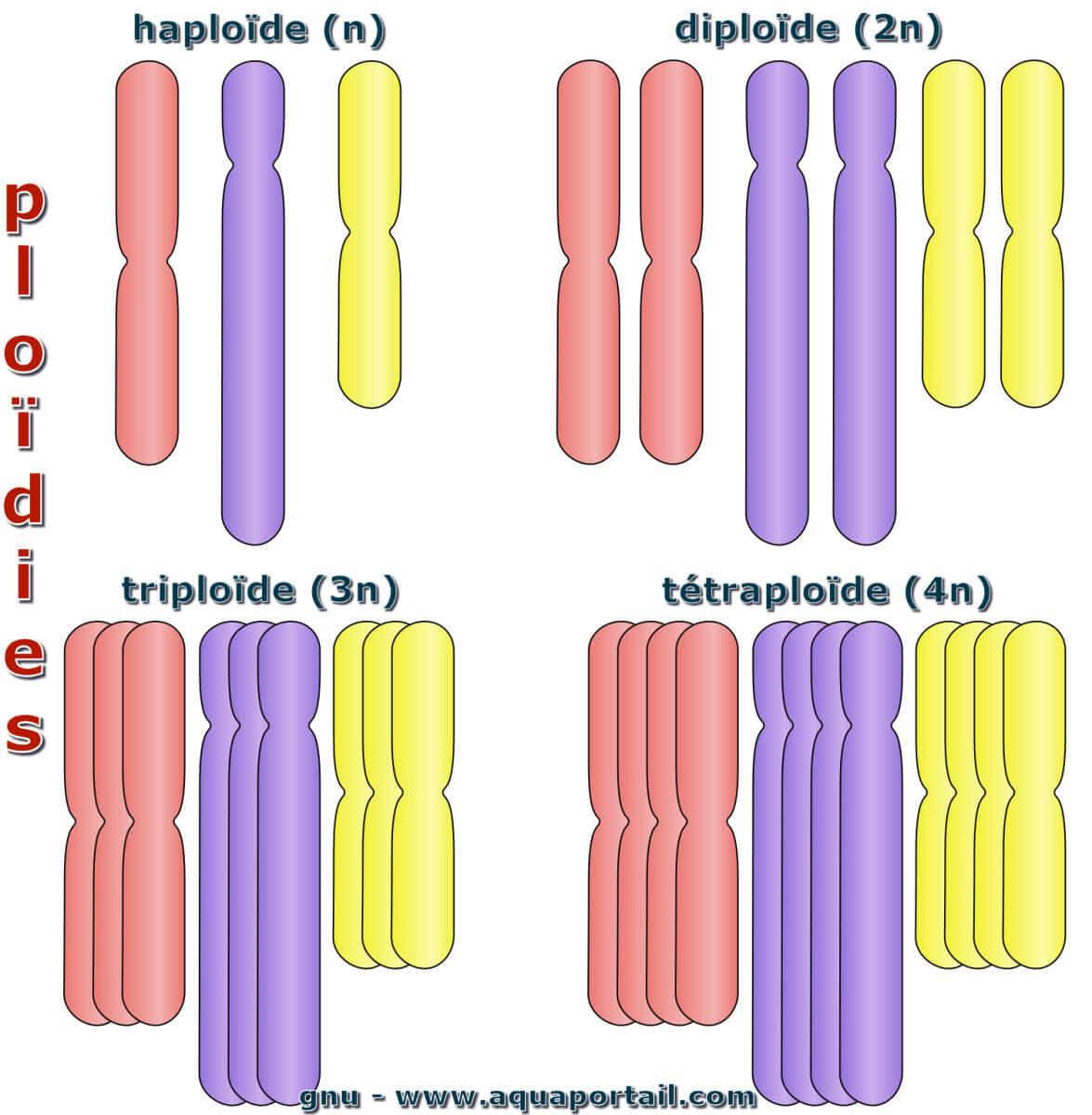
When comparing 4 ploidy levels, the haploid cell is easily distinguished by having only a single complete set of chromosomes.
Explanations
A haploid (monoploid) cell possesses a single complete set of the genetic information characteristic of the species, in one copy. Haploidy (a ploidy level) corresponds to the nuclear state containing a single chromosome complement.
Reproductive cells, such as mammalian eggs and sperm, as well as the vegetative stage of many fungi, bryophytes, and certain algae, contain a single set of chromosomes, whereas most somatic cells of higher organisms typically possess two sets. When gametes unite during fertilization, the fertilized egg contains the normal diploid chromosome number (2n).
The formation of a haploid cell occurs in two ways:
- via mitosis of haploid cells: the parent cell, already haploid, duplicates its chromosomes and partitions them equally into two haploid daughter cells
- via meiosis of diploid cells: the 2n parent cell undergoes two consecutive cell divisions following a single round of DNA replication
Meiosis is divided into meiosis I and meiosis II. Prior to meiosis I, DNA replication occurs so that each of the 46 chromosomes (in Homo sapiens) consists of two sister chromatids (46 duplicated chromosomes).
Following cytoplasmic division, the two daughter cells produced by meiosis I enter meiosis II.
Meiosis II separates the sister chromatids without further DNA replication, yielding four cells with half the chromosome complement of the parent cell—namely haploid spores or gametes.
Individuals of certain species, such as male drones of the honeybee Apis mellifera, develop from unfertilized eggs and are therefore haploid; this sex-determination mechanism is termed haplodiploidy.
Many protists and fungi have entirely haploid somatic cells, unlike vascular plants and animals whose non-reproductive cells are generally diploid (2n). In such diploid organisms, only the sex cells (gametes) carry a single chromosome set, generated through meiosis.
In a haplontic life cycle, only the zygote formed by the fusion of two cells is diploid and typically undergoes meiosis to produce haploid cells that give rise to new individuals via mitosis.
In many protozoans sexual reproduction occurs, whereas in others only binary fission involving nuclear mitosis has been observed; in still others, such as Plasmodium (the causative agent of malaria), multiple mitoses occur within a single cell, producing numerous merozoites (schizozoites) through a process known as schizogony.
Different life cycles occur across organisms. In animals, only sex cells are haploid (diplontic cycle); in ferns, haploid spores produced by meiosis develop into a multicellular individual whose cells are all haploid—the prothallus—which produces gametes by mitosis, a cycle termed haplodiplontic.
Haploid individuals, such as male honeybee drones, result from parthenogenetic reproduction (parthenogenesis) without fusion of gametes (n) into a zygote (2n). In certain plants, apomictic individuals can likewise arise via apomixis.
Synonyms, antonyms
Spanish translation: haploide
1 synonym (similar meaning) for "haploid":
4 antonyms (opposite meaning):
Related words and expressions to HAPLOID are directly connected by general or specific meaning.
The word HAPLOID is listed on page 1 of words starting with H in the dictionary glossary.
Related to "haploid"
diploid
A diploid cell comes from an organism or tissue whose cells possess two sets of chromosomes, denoted 2n, as opposed to haploid with 1n chromosomes...
haplobiont

A haplobiont is an organism represented by a single type of free-living individual in nature, in contrast to a diplobiont.
haplodiplont

A haplodiplont, or haplodiplobiont, is an organism that is partly haploid and partly diploid during its life cycle (for example, Batrachospermum borne...
haplodiplontic
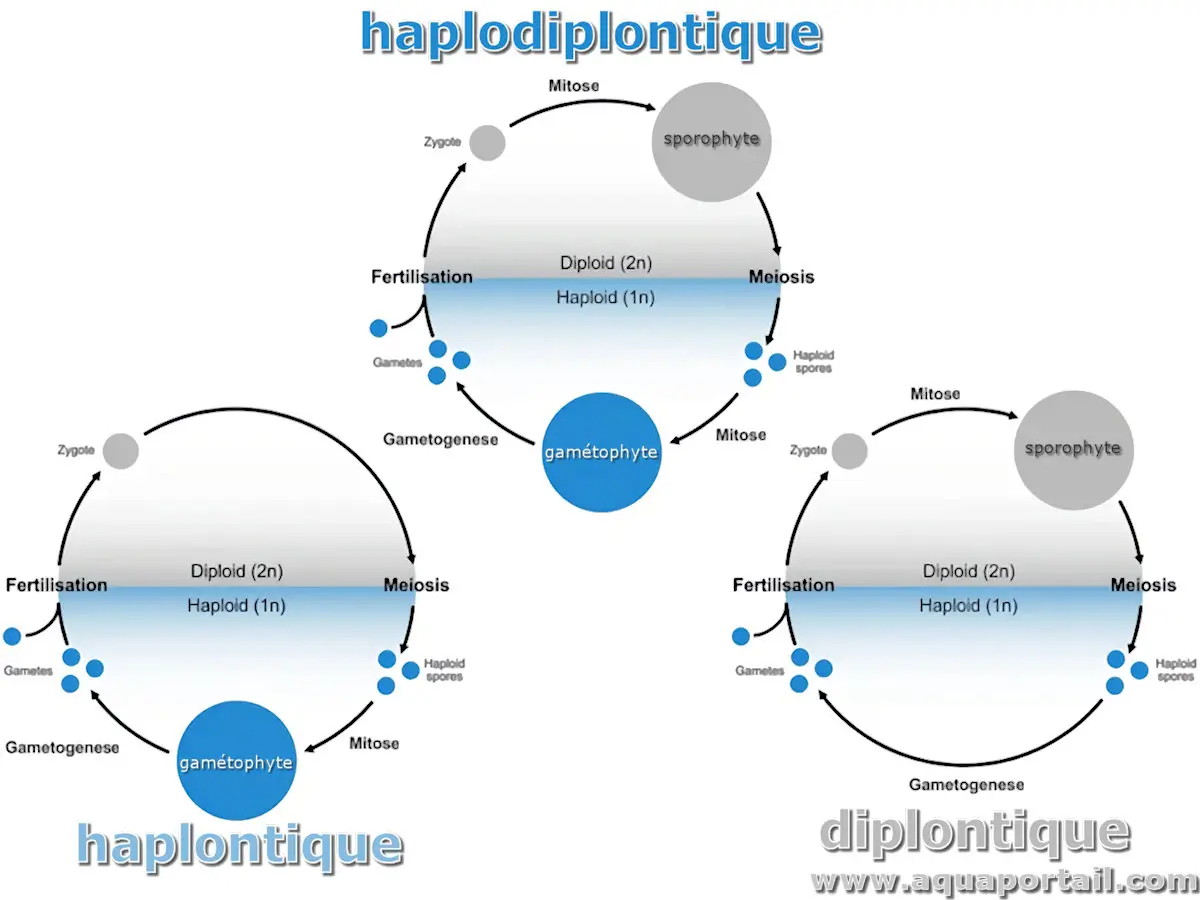
Haplodiplontic, or haplodiplobiontic, describes a developmental life cycle comprising both a haploid phase and a diploid phase, involving an alternation...
