Haplodiplontic
adjective (adj.)
Definition
Haplodiplontic, or haplodiplobiontic, describes a developmental life cycle comprising both a haploid phase and a diploid phase, involving an alternation of generations in haplodiplonts.Haplodiplontic life cycles occur in certain multicellular chlorophytes and in streptophytes, a clade encompassing charophytes and land plants. All land plants possess a haplodiplontic life cycle, with a haploid form alternating with a diploid form in each organism.
The haplodiplontic cycle:
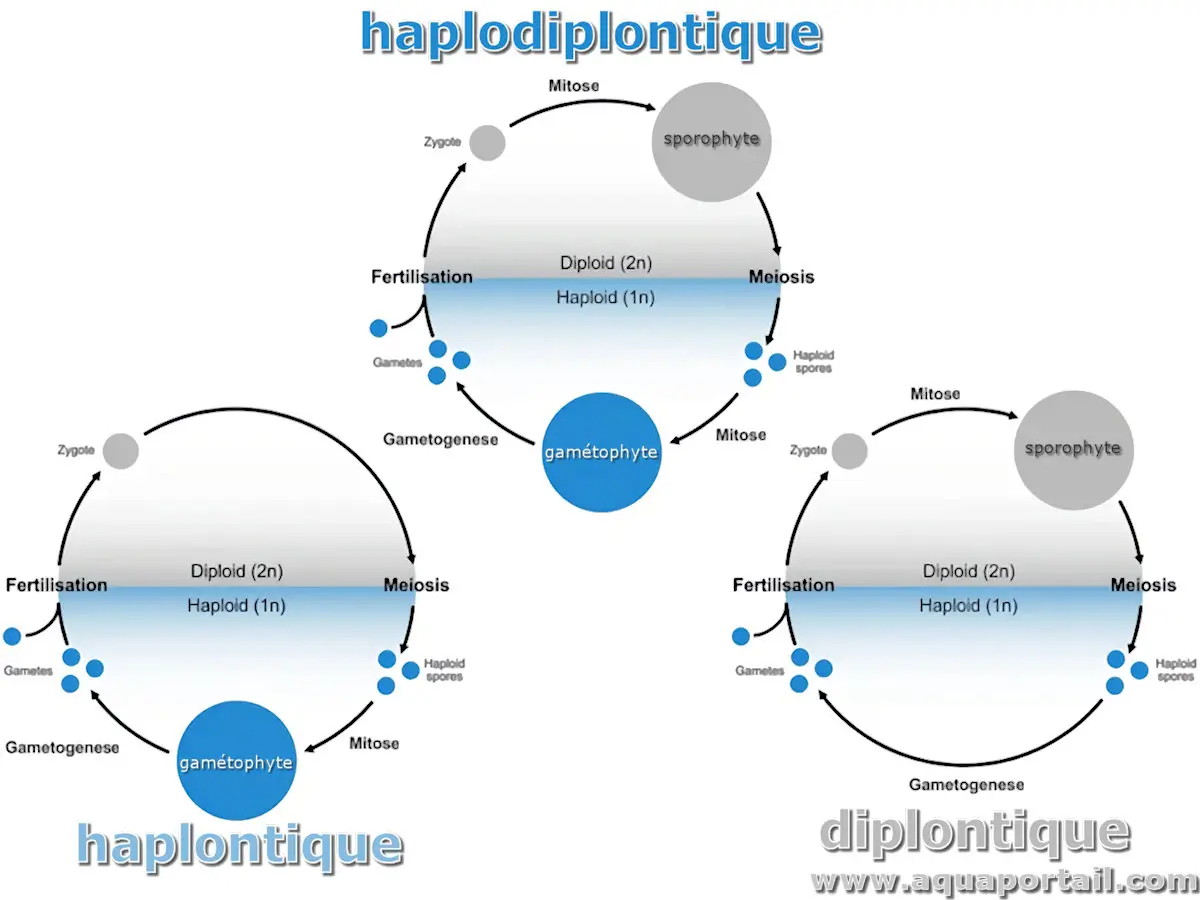
Haplodiplontic life cycles involve mitotic divisions occurring in both the diploid zygote and haploid meiospores, leading to distinct sporophytes and gametophytes that may exist as free-living individuals. In haplontic life cycles, the diploid zygote immediately undergoes meiosis, and the resulting haploid spores divide mitotically to form either a large multicellular haploid organism or multiple unicellular haploid cells. By contrast, organisms with a diplontic life cycle undergo mitotic divisions in the diploid zygote, developing into a multicellular diploid individual or multiple diploid cells; following meiosis in these diploid cells, the resulting haploid cells differentiate directly into gametes.
Explanations
Humans and other animals have a diplontic life cycle, meaning that only the diploid stage is multicellular. In animals, meiosis yields unicellular haploid gametes (egg and sperm), which fuse at fertilization to form a diploid zygote that divides mitotically to produce the next generation. The immediate products of meiosis never divide by mitosis, and no multicellular haploid organism exists in animals.
By contrast, the life cycle of land plants is haplodiplontic, featuring both multicellular haploid and multicellular diploid stages. Mitotic divisions follow both fertilization (diploid stage) and meiosis (haploid stage), resulting in a multicellular diploid individual (the sporophyte) and a multicellular haploid individual (the gametophyte). The haplodiplontic cycle is a fundamental hallmark of land plants.
Diplohaplontic
Diplohaplontic describes the developmental cycle of an organism comprising one haploid phase and either one (digenetic cycle) or two (trigenetic cycle) diploid phases. Diplohaplonts, or haplodiplonts, are living organisms in which alternating haploid and diploid generations succeed one another.
This type of unequal generational alternation is termed heterophasic because the ploidy (nuclear phase) differs between generations. Diplohaplonts include all embryophytes (Embryophyta, or land plants) and most algae, as well as foraminifera among unicellular organisms.
A diplohaplont is characterized by mitotic cell divisions occurring in both the haploid and diploid phases without altering the nuclear phase. The haploid generation reproduces sexually, producing female and male gametes, and is therefore called the gametophyte.
The union of two gametes of opposite sex and fusion of their nuclei (fertilization) produce a diploid zygote, the first cell of the diploid generation. It reproduces asexually by forming haploid spores via reductional division (meiosis) and is thus called the sporophyte, from which the next haploid generation develops.
Both gametophyte and sporophyte are multicellular, though the two generations typically exhibit completely distinct morphologies. Conversely, in haplonts (including certain algae and protozoans), only the zygote is diploid, whereas in diplonts (including most animals), only the gametes are haploid.
Haplodiploidy is a distinct sex-determination system.
Synonyms, antonyms
Spanish translation: haplodiplóntico
3 synonyms (similar meaning) for "haplodiplontic":
- diplohaplontic
- haplodiplobiontic
- haplodiplophasic
2 antonyms (opposite meaning):
Related words and expressions to HAPLODIPLONTIC are directly connected by general or specific meaning.
The word HAPLODIPLONTIC is listed on page 1 of words starting with H in the dictionary glossary.
Related to "haplodiplontic"
haplophasic

A life cycle is haplophasic when the diploid phase is reduced solely to the zygote. All vegetative mitoses (vegetative multiplications) take place during...
haplodiplont

A haplodiplont, or haplodiplobiont, is an organism that is partly haploid and partly diploid during its life cycle (for example, Batrachospermum borne...
haplobiont

A haplobiont is an organism represented by a single type of free-living individual in nature, in contrast to a diplobiont.
diplobiontic
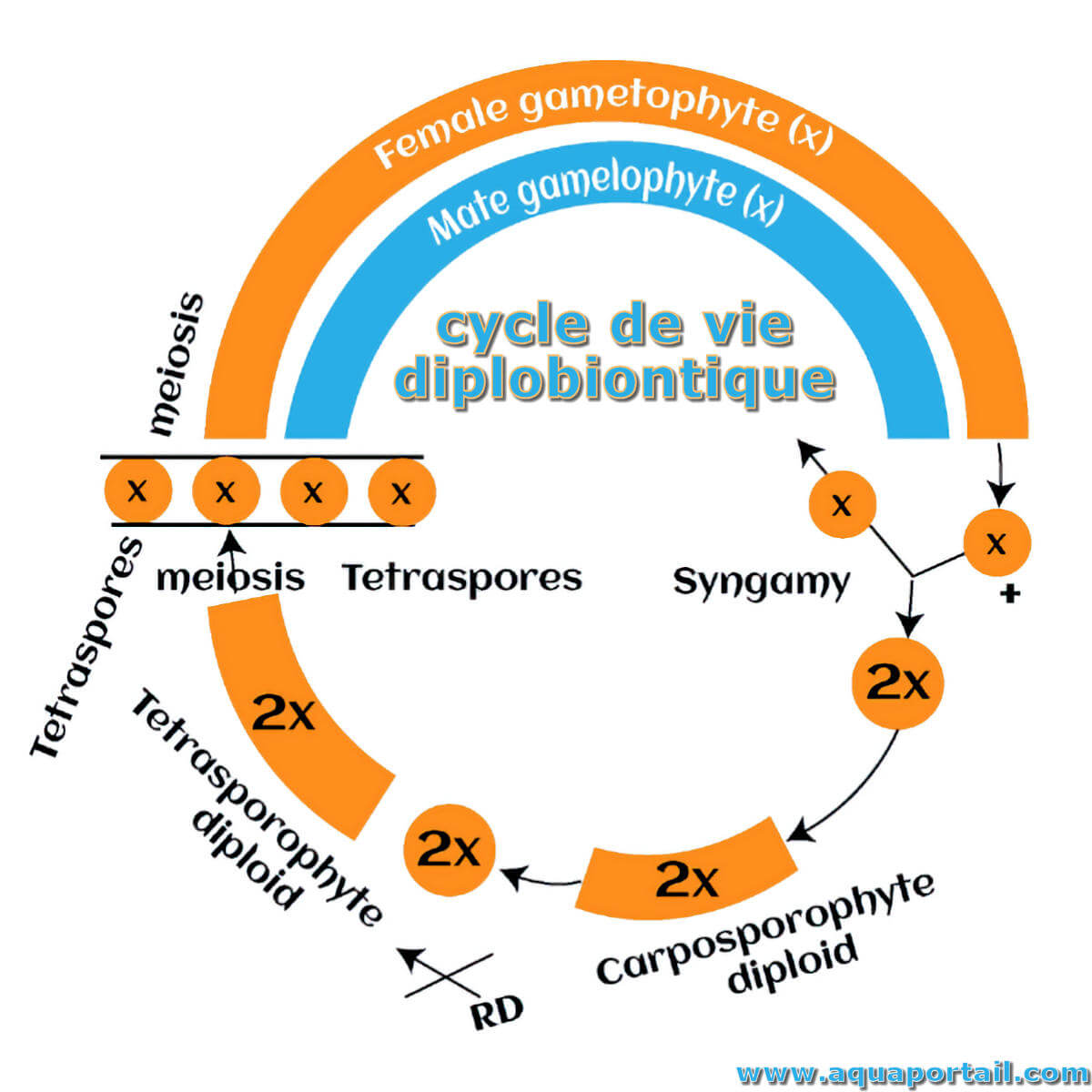
An organism is diplobiontic when it is represented by two types of individuals in nature, as opposed to haplobiontic.
Simple summary
Haplodiplontic characterizes a type of life cycle in which organisms alternate between a multicellular haploid stage (gametophyte) and a multicellular diploid stage (sporophyte). These two stages are distinct and can grow, reproduce, and contribute independently to the life cycle. This form of alternation of generations is common in algae, plants, and certain fungi.
