Axoneme
noun (n.)
Definition
The axoneme is the axial structure of eukaryotic cilia and flagella, fundamentally microtubular, which is the essential element of motility. An axoneme denotes the main, cylindrical, elongated portion of a eukaryotic flagellum, covered by a plasma membrane and composed of nine outer groups of two microfibrils surrounding a tenth central pair. A few exceptions exist, such as the single flagellum of the spermatozoa of certain diatoms, which lacks central tubules.
Diagram of an axoneme:
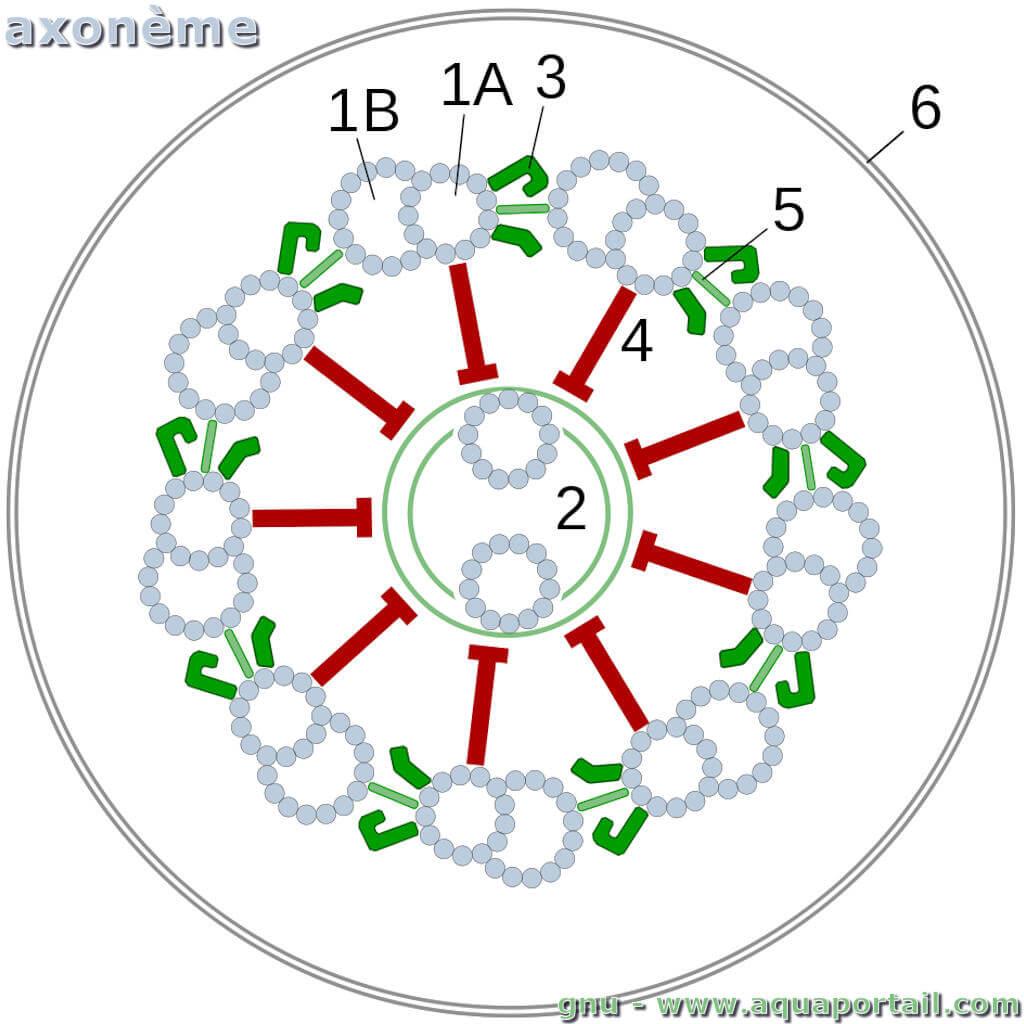
The axoneme (a kind of "axial thread") is a cell biology term referring to the microtubular structure running inside eukaryotic cilia. Nine outer doublet microtubules (A and B tubules with inner and outer dynein arms) surround two single central microtubules in the middle ("9x2 + 2" structure).
Explanations
In other words, the axoneme designates the central core structure of a flagellum or cilium, formed of nine microtubule doublets arranged in a ring around a central pair. They are found, for example, in certain pseudopodia such as axopodia (whereas their absence characterizes filopodia).
The acroneme is the tip of the axoneme. The acroneme is a fine filament-like distal extension of the axoneme containing only the central pair of tubules. In botany, acronous describes a plant organ that does not widen at the base and remains slender.
The axonemal motor protein is dynein. The axial cores of non-motile primary cilia are also called axonemes; they lack the central microtubule pair (9x2 + 0 structure) and dynein. Nexin allows the outer doublet microtubules to slide relative to one another. It is an internal double protein link between the microtubules; without nexin, dynein would disrupt the entire structure.
The axoneme is responsible for the beating movements of flagella and cilia thanks to various proteins such as dynein and nexin.
For example, axonemes occur in motile cilia and in the flagella of spermatozoa.
The length of the axoneme is several micrometers in cilia and can exceed 1 mm (0.04 in) in flagella. Its diameter is 0.2 μm (7.9 × 10⁻⁶ in). The axoneme is surrounded by the outer ciliary membrane, which is continuous with the plasma membrane. All axonemal components reside within the ciliary matrix.
The structure of the axoneme consists of 9 outer microtubule pairs and 1 central pair (9 + 2). The two microtubules of each outer doublet are arranged somewhat obliquely, such that one microtubule (A) lies closer to the center of the axoneme than the other (B). Microtubule A is smaller yet complete, whereas microtubule B is larger yet incomplete, lacking 3 protofilaments in its wall which it shares with A. Microtubule A has 13 protofilaments, while B has only 10.
Microtubule A bears dynein arms oriented in the same direction, arranged clockwise when viewing the axoneme from base to ciliary tip. Dynein is a complex of 10 polypeptide chains, which may vary across cell types, formed by a two- or three-headed globular domain that binds ATP-dependently to the surface of microtubule B of the adjacent doublet, and a thinner stem permanently anchored to the microtubule A to which it belongs. Dynein is a fundamental protein in ciliary motility.
Nexin links the outer microtubule doublets together. Radial spokes are bridges connecting microtubule A of each outer doublet to a protein sheath surrounding the central microtubules. These spokes terminate in a spoke head or projection.
The movement of a cilium or flagellum depends on ATP.
Synonyms, antonyms
Spanish translation: axonema
0 synonyms (similar meaning) for "axoneme".
0 antonyms (opposite meaning).
Related words and expressions to AXONEME are directly connected by general or specific meaning.
The word AXONEME is listed on page 1 of words starting with A in the dictionary glossary.
Related to "axoneme"
abiotic

In biology and ecology, abiotic refers to what is not biotic, that is, not part of living beings.
aboral

Aboral refers to what is situated away from or opposite the mouth in zoology, and especially in marine biology.
absence

Absence refers to non-presence at an expected location, or the complete non-existence of something.
acetyltransferase
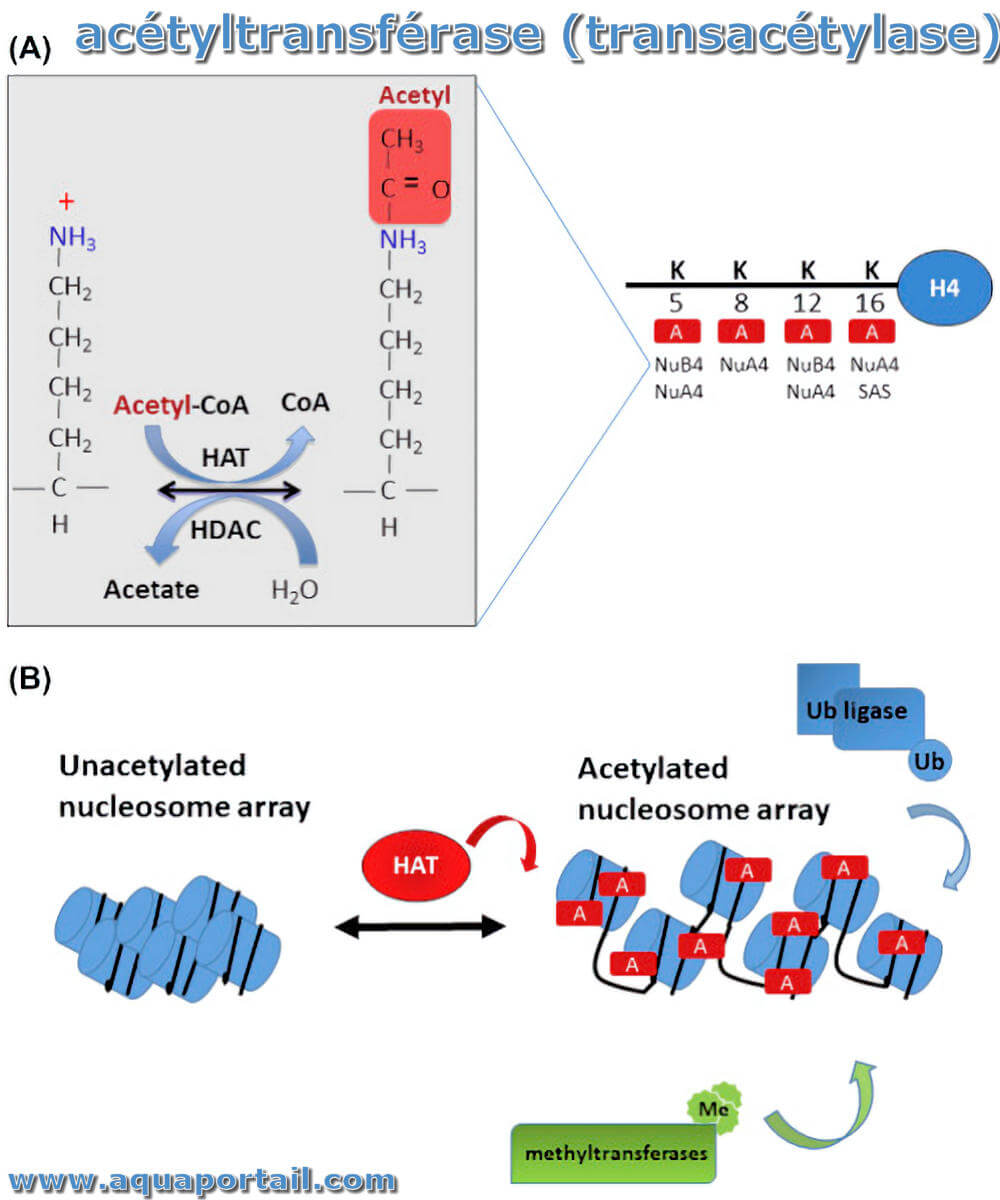
An acetyltransferase is an enzyme that transfers an acetyl group from acetyl-CoA to lysine amino acids.
