Dynein
noun (n.)
Definition
Dynein refers to a protein forming the lateral arms of microtubule doublets in eukaryotic flagella. Along with kinesin, dynein is the most important motor protein associated with microtubules. These massive globular proteins, featuring multiple large heads, act as force generators.There are 2 types: ciliary (ciliary dynein or axonemal dynein) and cytoplasmic (cytoplasmic dynein).
The dynein complex:
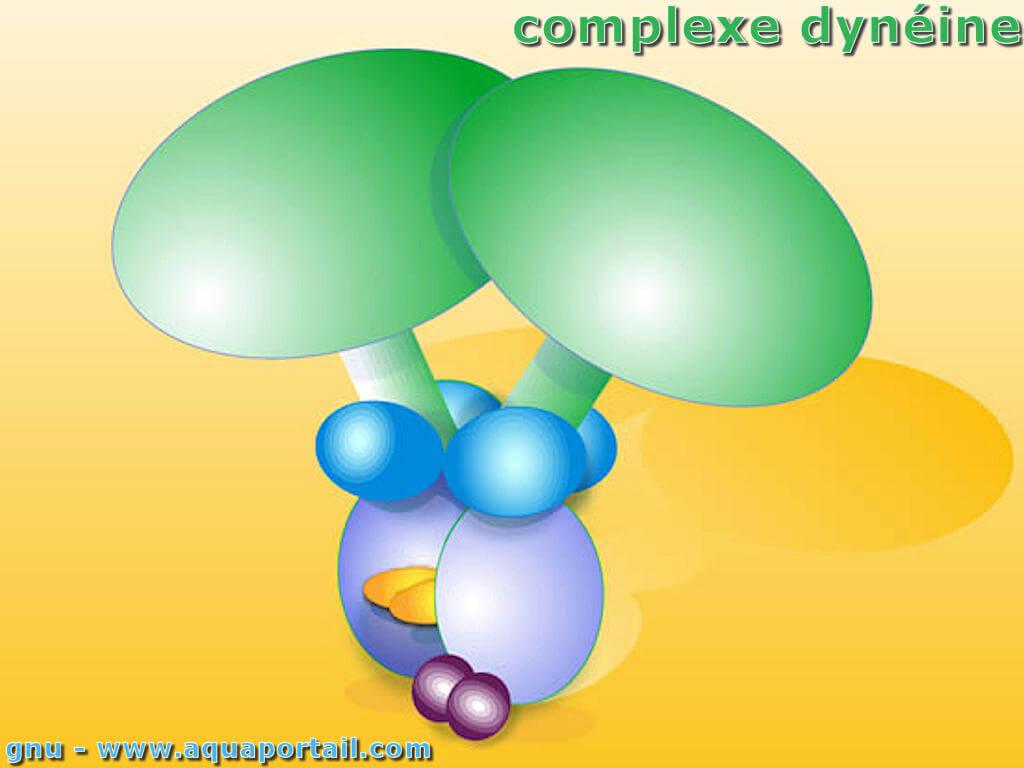
Dynein is a motor protein that moves along microtubules by converting ATP into mechanical energy. Dynein is a member of the AAA ATPase superfamily, whose proteins all share a hexameric ring of AAA domains.
Explanations
Dynein moves toward the "minus end" (negative pole) of the microtubule (retrograde movement). Dynein is key to the retrograde transport of substances within the cell. This is of major importance in the neuronal axon and in the beating of cilia and flagella within axonemes. It also generates force for chromosome movement during mitosis.
Mechanism of action
Dynein refers to a family of motor proteins in eukaryotic cells. In cooperation with other motor proteins such as myosin, they are essential for the intracellular transport of biological cargoes such as biomacromolecules, vesicles, and cellular organelles. Dynein, together with kinesin, travels along microtubule filaments (part of the cytoskeleton) as a carrier of cellular organelles and vesicles. Moreover, motile flagella and cilia rely on dynein as their active force-generating motor component.
✅ Mutations in the DNAL1, DNAI1, DNAH5, and DNAH11 genes can cause rare hereditary disorders such as Kartagener syndrome and primary ciliary dyskinesia.
Molecular structure
Dynein has a molecular organization comparable in function to kinesin: it consists of two identical heavy chains forming two globular heads and a variable number of intermediate and light chains. ATP hydrolysis activity—the cell's energy source—resides within the globular heads. The heavy chains are bound to the intermediate chains, which in turn attach to the light chains. The heavy chain is the most critical subunit, as ATP is converted into mechanical movement there.
Dynein transports vesicles and organelles, so it must interact with their membranes; to do so, it requires a protein complex whose components include dynactin.
The intermediate chain is attached to the heavy chain via the tail domain, which provides the link to the light chain. Binding of an intermediate chain is not required for dynein's motor activity, although it is necessary for transporting organelles.
The light chain is bound at one end to the intermediate chain and at the other end to a vesicle or organelle, for example. This subunit is likewise not required for dynein's intrinsic motor activity.
Types
In addition to cytoplasmic dyneins, axonemal dyneins (or ciliary dyneins) are crucial for maintaining the structure and function of flagella. Structurally, ciliary dyneins are more complex than cytoplasmic ones.
Structural function
The dynein complex consists of two heavy protein chains and accessory subunits. The dynein protein itself comprises a head region capable of binding microtubules and a tail section capable of interacting with other proteins. Energy for transport is derived from the cleavage of adenosine triphosphate (ATP).
Dynein complexes attach to a cargo molecule and then "walk" along a microtubule (similar to myosin on actin). Transport is directional, as dynein moves along the microtubule toward its minus end. Dyneins thus carry their cargo from the cell periphery (generally the plasma membrane) toward the MTOC (microtubule-organizing center, typically near the cell nucleus)—a process known as retrograde transport.
⭐ This property is exploited by certain viruses to travel toward the nucleus (for example, herpes simplex virus via the axons of facial nerves). Transport along microtubules in the opposite direction is carried out by kinesin.
Movement models
There are two proposed models for how dynein generates work force. The lever-arm model assumes that the "stalk" acts as a lever to shift dynein relative to the microtubule. The second is the winch model: the hexameric ring rotates and pulls closer to the tail domain; consequently, the angle between the stalk domain and the microtubule decreases, drawing the microtubule forward.
Strong evidence favors the winch model; for instance, the lever-arm structure may be too flexible to act effectively as a rigid lever.
A model also explains the stepping behavior of cytoplasmic dynein. Unlike the hand-over-hand lever model of myosin, dynein advances via an "uncoordinated stepping" model, meaning the two heavy chains can step independently. Steps can occur toward either the plus or minus end of the microtubule, although cytoplasmic dynein exhibits net movement toward the minus end.
Cilia and flagella
Dynein's significance lies in its direct role in ciliary and flagellar motility. The basal tail of dynein is anchored to one microtubule, while its head binds to an adjacent microtubule doublet. Here, axonemal dynein's sliding motion is constrained because the microtubule doublets forming the axoneme are cross-linked by a protein called nexin. As a result, one microtubule doublet slides relative to its neighbor, causing the entire axoneme structure to bend.
The regulation of coordinated ciliary and flagellar beating remains an area of active investigation.
Study techniques
Typically, dynein has been studied in cell fragments rich in microtubules with highly ordered, frequent vesicular transport—namely neuronal axons, most notably in the giant squid, as well as in pseudopodia. The primary techniques used to study it include purely morphological methods such as scanning or transmission electron microscopy; biochemical techniques such as electrophoresis; biophysical tools such as optical tweezers; fluorescence or enzymatic immunolabeling; and genetic approaches via protein domain deletion.
Synonyms, antonyms
Spanish translation: dineína
0 synonyms (similar meaning) for "dynein".
0 antonyms (opposite meaning).
Related words and expressions to DYNEIN are directly connected by general or specific meaning.
The word DYNEIN is listed on page 1 of words starting with D in the dictionary glossary.
Related to "dynein"
dale

A dale is a small valley or glen that does not (or no longer) contains a watercourse. The concave hollowed space of a dale is not large enough to build...
daphnia
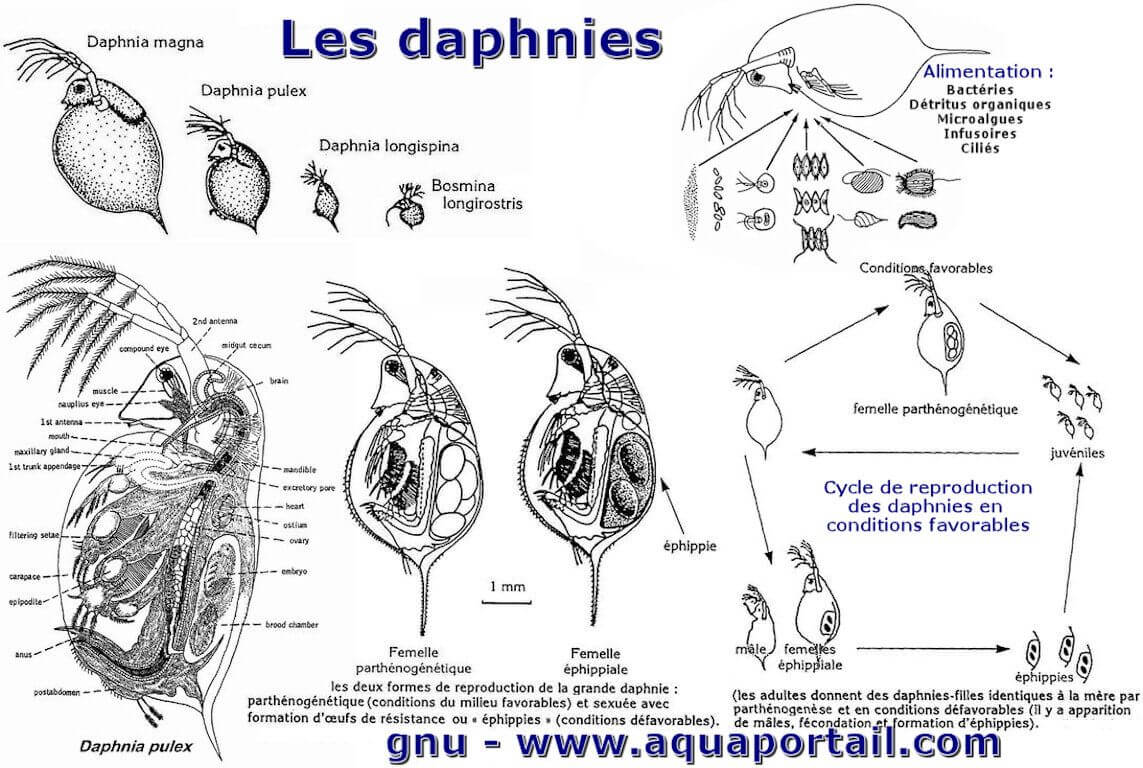
Daphnia is a planktonic branchiopod crustacean of the family Daphniidae, forming a dominant portion of freshwater plankton.
dawn

Dawn marks the transition between night and day, when the sky brightens and morning breaks in the East.
deltoid
Generally, what is deltoid is triangular, having a shape that evokes the uppercase Greek letter delta Δ, delta-shaped.
