Lateral gene transfer
noun phrase (n. phr.)
Definition
Lateral (horizontal) gene transfer refers to a transfer of genetic material not along the lineage, i.e., not from one generation to the next, but horizontally from one organism to another already existing organism. It is a horizontal transfer of genes.
A phylogenetic tree with lateral gene transfers:
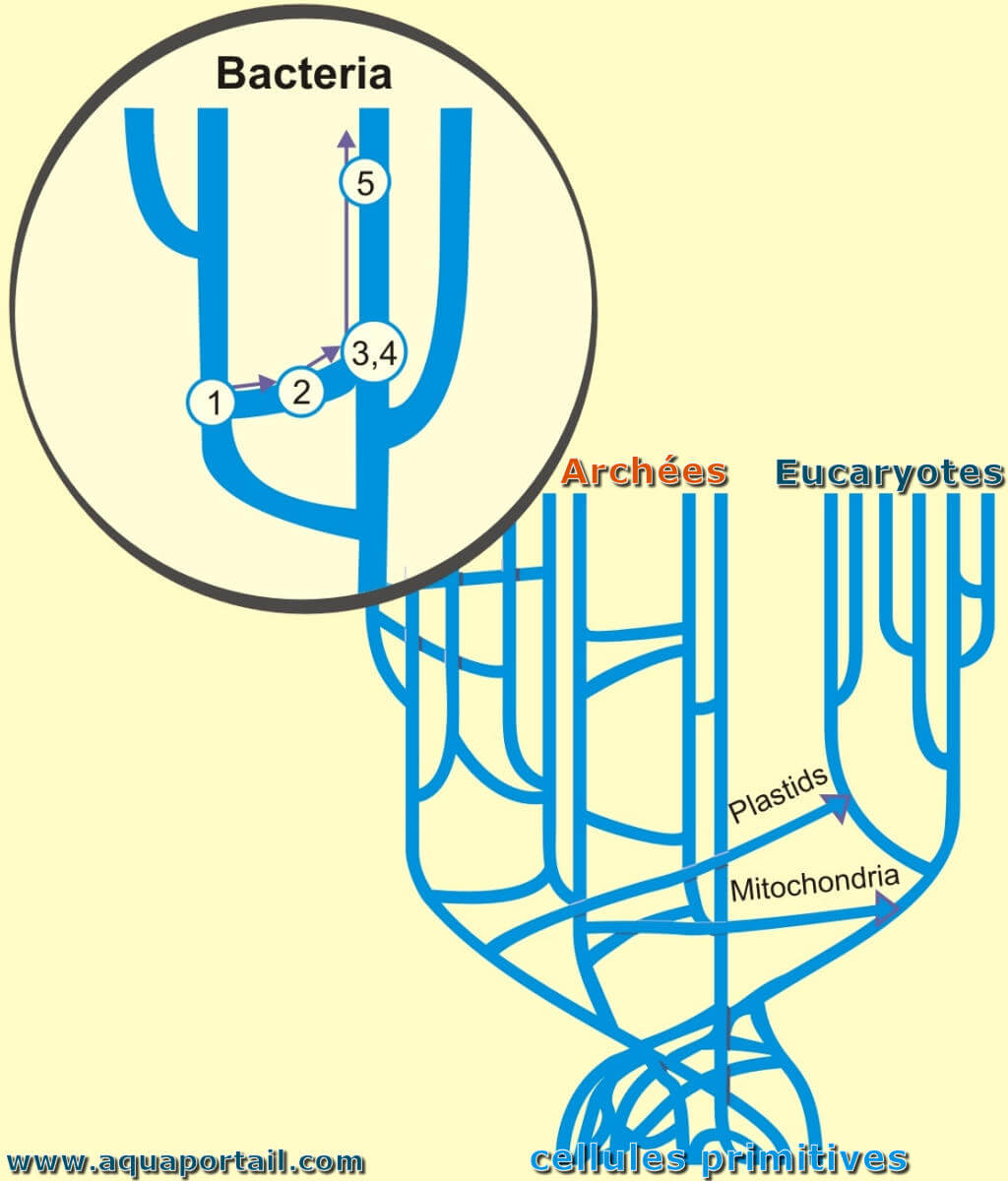
Horizontal gene transfer via chloroplasts and mitochondria can be seen in the lower center of the figure. According to Woese, horizontal gene transfer played the decisive role in the development of the three domains from a consortium of primordial cells with a very small genome.
Explanations
Lateral transfer is the acquisition of a gene or group of genes other than by inheritance (for example, rubisco genes in certain microorganisms). Unlike horizontal gene transfer, vertical gene transfer takes place from ancestor to descendant; gene transfer from ancient genetic remnants already integrated over time is called anachronistic evolution.
Natural lateral gene transfer is primarily observed in prokaryotes, particularly in bacteria that transmit part of their genetic material to another individual via conjugation. Unlike vertical transmission, in which the genetic material of a pathogen is transferred from one infected generation to the next (for example in Wolbachia pipientis), horizontal gene transfer is not linked to a reproductive process.
Genes are often in a mobile form (a vector such as bacteriophages or plasmids). For example, during bacterial conjugation, independent of reproductive processes, genetic material is transferred between individuals of the same species or between individuals of different species. A previously replicated plasmid is transferred into a recipient cell. This results in enriching the recipient organism with new genetic information.
In evolutionary theory
In evolutionary theory, horizontal gene transfer is therefore a way to explain evolutionary leaps, especially in the case of microorganisms. Horizontal gene transfer allows accelerated adaptation to changing environmental conditions, for example by transmitting antibiotic resistance or a virulence factor, sometimes also grouped into pathogenicity islands.
Horizontal gene transfer complicates the determination of phylogenetic trees using molecular clocks. On the other hand, it is postulated that horizontal gene transfer promotes the maintenance of a universal biochemistry and consequently the universality of the genetic code. In other words: horizontal gene transfer safeguards the universality of the genetic code and drives it to become a lingua franca of life on Earth. In this way, genetic exchange or the spread of biological novelty across the biosphere can occur.
Since the complete genomes of a wide variety of bacteria and archaea have been sequenced, gene transfer between distantly related organisms has also been shown to play a major role, particularly when they inhabit overlapping ecological niches. In mesophilic bacteria, which grow best at temperatures between about 20 and 45 °C (68 and 113 °F) and live anaerobically, 16% of the genome was found to originate from horizontal gene transfer. One-third of the genes for chemotrophic metabolism enzymes derive from gene transfer, whereas in the ribosome, proteins have been exchanged horizontally 150 times less frequently. The proportion of genes transferred via horizontal exchange is 2 times lower in aerobic microorganisms. In them too, horizontal gene transfer (HGT) has contributed significantly to their adaptability and the variety of substrates utilized.
Gene transfer from bacteria to archaea has also played an important role. About 5% of the genome of the methanogenic organism Methanosarcina is of bacterial origin. These organisms acquired the ability to utilize acetate and convert it into methane thanks to transferred genes. It is possible that this capacity of methanogenic archaea acquired via HGT contributed to the climate catastrophe about 252 million years ago (Permian-Triassic boundary), which at that time LED to the largest known mass extinction in Earth's history.
The formation of molecular oxygen and its accumulation in Earth's atmosphere were even more decisive in Earth's history. Cyanobacteria were responsible for this oxygenic photosynthesis, releasing O2 from water using light energy. To do this, they use a chemiosmotically coupled electron transport chain in their membranes. It consists of two photosystems that evolved separately in unrelated bacteria and were later brought together in an ancestor of cyanobacteria via HGT.
Genetic engineering
Horizontal gene transfer is an important method in genetic engineering for generating transgenic organisms. Different methods have been used successfully for prokaryotes and eukaryotes, respectively. In prokaryotes, conjugation, transduction, and transformation are used. In eukaryotes, transfection can be performed as an equivalent to transformation in prokaryotes.
Dollo parsimony cannot be applied to prokaryotic genomes, as they are subject to extensive lateral gene transfer.
Gene therapy
The introduction of genetic material into human germ cells, germline therapy, for example to correct a genetic defect, is prohibited in Germany due to the high risks under the 1991 embryo Protection Act. The introduction of therapeutically effective genetic material into somatic cells of an already existing recipient organism (horizontal gene transfer) is permitted, is already successfully used in specific fields, and is known as somatic gene therapy.
Examples of lateral transfers
Transfer of prokaryotic DNA to eukaryotes has so far been directly demonstrated in Agrobacterium tumefaciens (plant cells) and Bartonella henselae (human cells).
An example of horizontal gene transfer in higher organisms is the transfer of carotenoid synthesis genes from a fungus to the pea aphid Acyrthosiphon pisum.
Another example is the acquisition of a cellulase gene by a lineage of nematodes from their bacterial endosymbionts.
In 2012, Ricardo Acuña and colleagues found evidence that the coffee berry borer (Hypothenemus hampei) had acquired the HhMAN1 gene for the digestive enzyme mannanase (mannan, mannose) via horizontal gene transfer from a not-yet-identified bacterium. The enzyme enables the beetle to break down and digest galactomannans, the most important storage carbohydrates in the coffee bean.
A comprehensive search for bacterial genes in the numerous now freely accessible human genome sequences revealed bacterial-origin sequences integrated into certain cancer cells, and in a few cases also in healthy cells.
Related to "lateral gene transfer"
acetyltransferase
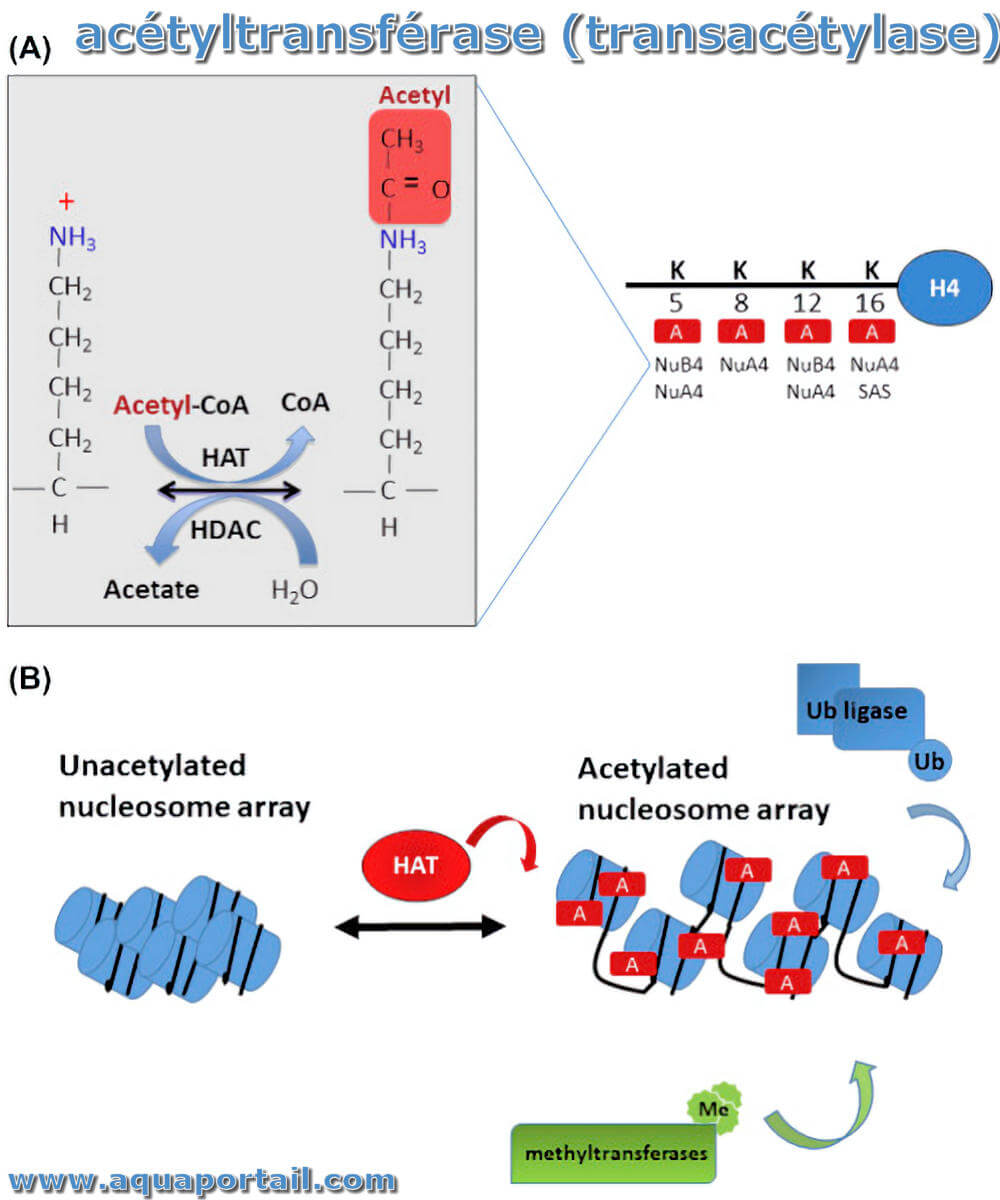
An acetyltransferase is an enzyme that transfers an acetyl group from acetyl-CoA to lysine amino acids.
digenetic

A digenetic life cycle is the life cycle of an organism comprising two generations—a cycle in which, from one individual to an immediate descendant identical...
gametogenesis

Gametogenesis is the process by which cells undergo meiosis to form haploid gametes. It takes place in the gonads (female ovaries or male testes).
generation

A generation is the average span of time between the birth of parents and that of their offspring.
