Parsimony
noun (n.)
Definition
In biology, parsimony is a principle whose postulate holds that the most plausible evolutionary relationships between living organisms are those resulting from the smallest number of evolutionary changes. The relationship is parsimonious, as in minimalist. The principle of parsimony can be seen as an application of Ockham's razor.
Principle of maximum parsimony:
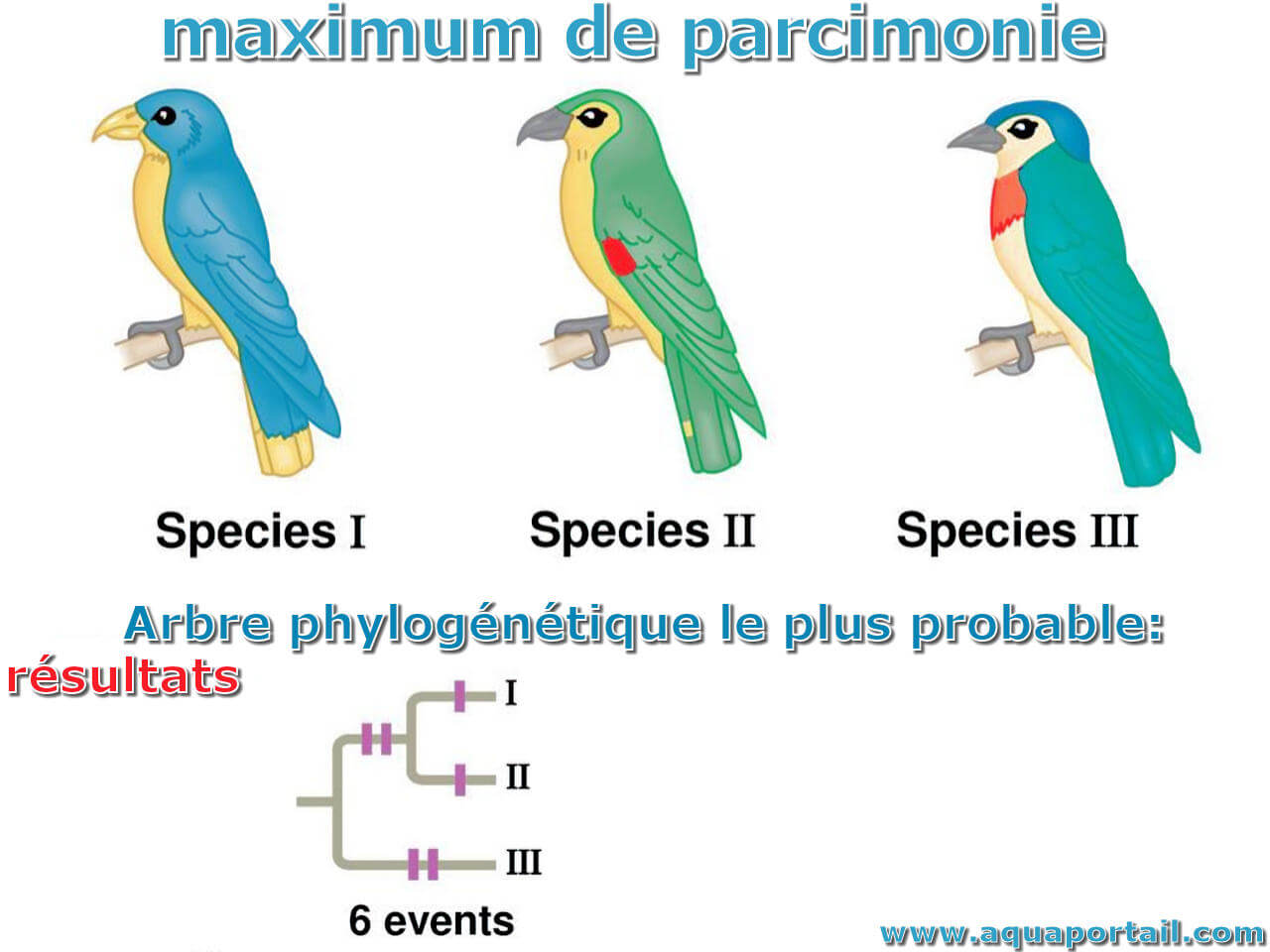
Maximum parsimony is an intuitive and simple criterion, and it is popular for this reason in phylogenetics.
Explanations
Parsimony is defined as extreme frugality or the use of extreme caution in spending money. When you scrutinize every purchase and are very careful about spending even small sums of money, that is an example of parsimony... Great reluctance to spend money unnecessarily.
Financial (monetary) parsimony:

Parsimony is a strong reluctance to spend money or other assets.
More generally, parsimony is a concept of frugality, economy, or caution in arriving at a hypothesis or plan of action. Its meaning can be translated as "less is better". It is a general principle with applications from science to philosophy and all related fields.
In science, parsimony is the preference for the simplest explanation of an observation. This is generally considered the best way to evaluate hypotheses.
Parsimony in biology
Parsimony is also called the rule of simplicity: the idea of parsimony or simplicity in deciding between theories has been absorbed into our culture as the widespread formulation that "the simplest explanation is usually the best".
Parsimony is also a concept used in modern systematics (classification) establishing that when constructing and selecting phylogenetic trees, i.e., clades, the best criterion rests on this principle: the simplest relationship between two taxa is normally correct with a lower number of intermediate steps or evolutionary changes. Cladistic parsimony, or maximum parsimony, is a phylogenetic inference method for constructing types of phylogenetic trees (more precisely, cladograms). Cladograms are branching, tree-like structures that represent lines of descent based on one or more evolutionary changes. Cladistic parsimony is used to support hypotheses that require the fewest evolutionary changes. For certain types of trees, it consistently produces incorrect results regardless of the amount of data collected (this is known as long-branch attraction).
Maximum parsimony in phylogenetics
In phylogenetics, maximum parsimony is an optimality criterion under which the phylogenetic tree requiring the fewest evolutionary changes to explain the observed data is to be preferred. Under the maximum parsimony criterion, the best phylogenetic tree minimizes the amount of homoplasy (evolutionary reversals, convergent evolution, parallel evolution). In other words, according to this criterion, the simplest possible tree that explains the data is considered the best. The principle is similar to Occam's (Ockham's) razor, which states that the best hypothesis to explain a process is the one requiring the fewest assumptions.
Parsimony in physics
In physics, parsimony was an important heuristic in Albert Einstein's formulation of special relativity, in the development and application of the principle of least action by Pierre Louis Maupertuis and Leonhard Euler, and in the development of quantum mechanics by Max Planck, Werner Heisenberg, and Louis de Broglie. In the scientific method, parsimony is an epistemological, metaphysical, or heuristic preference, not an irrefutable principle of logic or a scientific result. When scientists use the idea of parsimony, it only makes sense within a very specific investigative context. Several background assumptions are required for parsimony to connect with plausibility in a particular research problem. The reasonableness of parsimony in one research context may have nothing to do with its reasonableness in another context. It is a mistake to think there is a single overarching principle encompassing diverse subjects.
Parsimony theories are sometimes contrasted with or used to complement eliminativism, rationalism, pseudoscience, and scientific reductionism.
Synonyms, antonyms
Spanish translation: parsimonia
5 synonyms (similar meaning) for "parsimony":
- avarice
- economy
- frugality
- restriction
- thrift
5 antonyms (opposite meaning):
- abundance
- generosity
- prodigality
- profusion
- waste
Related words and expressions to PARSIMONY are directly connected by general or specific meaning.
The word PARSIMONY is listed on page 1 of words starting with P in the dictionary glossary.
Related to "parsimony"
parsimonious

In biology, parsimonious relates to the principle of parsimony, involving a form of meticulous economy akin to avarice, as opposed to abundance.
waste

Waste is any product or substance that is no longer suited for the purpose for which it was intended.
P680-P700
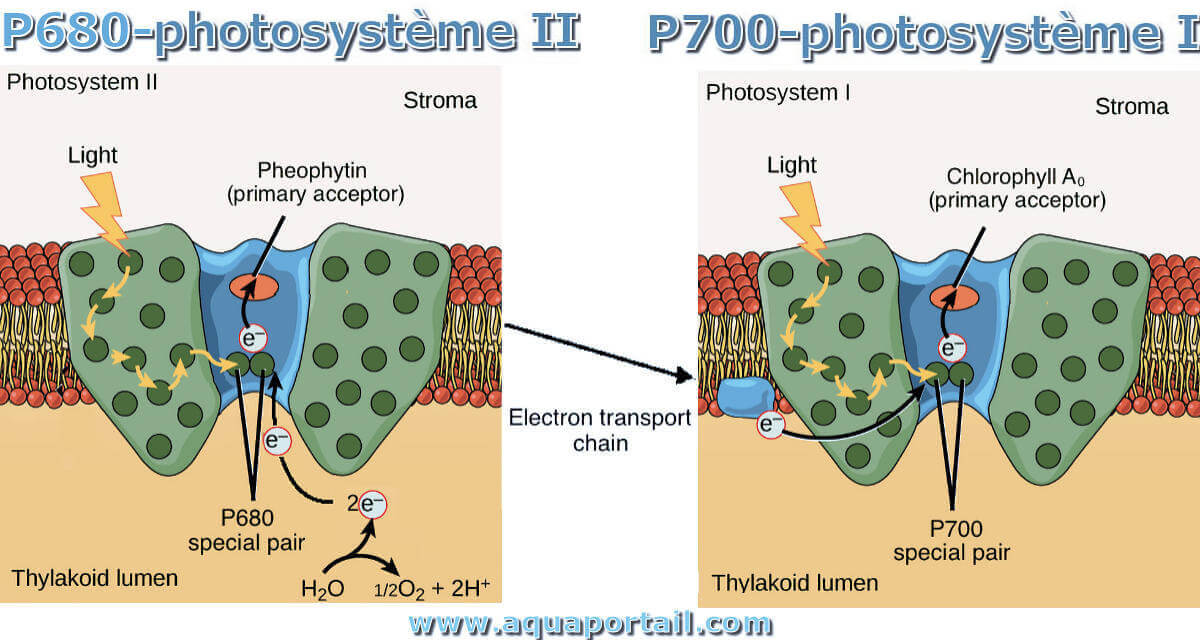
P680-P700 is an association of chlorophyll a molecules absorbing at 680 nm and 700 nm, respectively, possessing particular photochemical properties.
paedomorphosis

Paedomorphosis (juvenilization) is a phylogenetic change involving the retention of juvenile or even larval traits into a later (adult) stage.
