Parenchyma
noun (n.)
Definition
Parenchyma is an unspecialized plant tissue, termed filler tissue, whose cells have thin walls. In biology (histology), parenchyma is the tissue performing the primary function of a given organ.In anatomy, parenchyma is a specific type of tissue within an animal organ that carries out a specific function.
The two parenchymas of a stem:
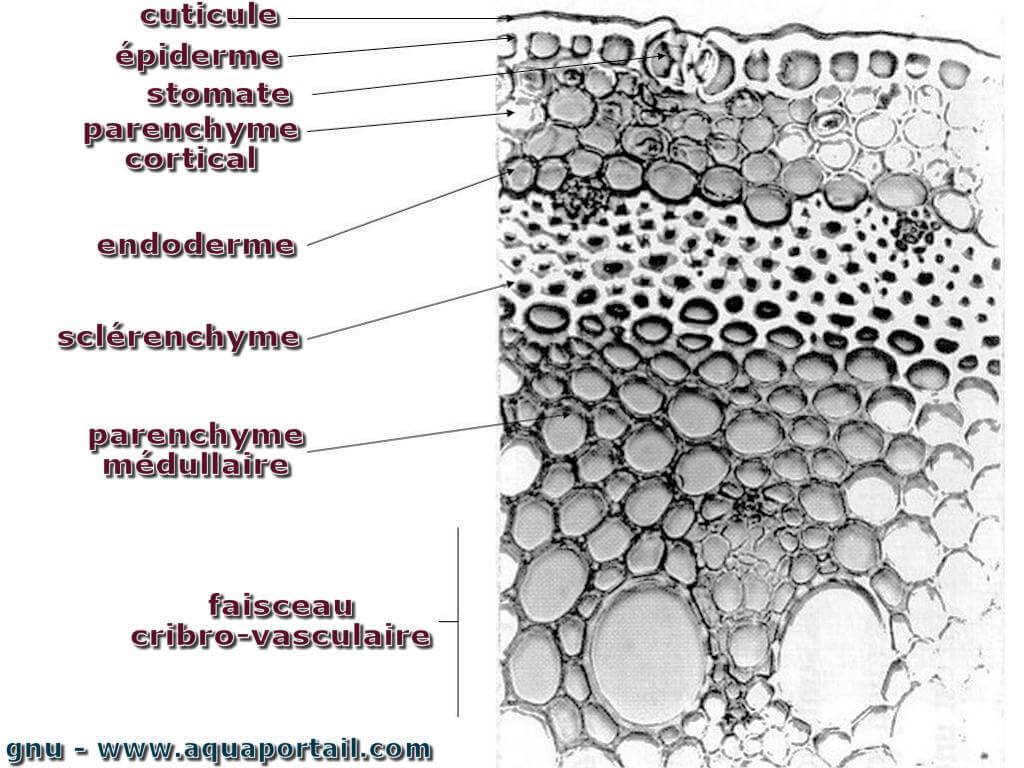
Parenchyma is the opposite of stroma, which serves as structural support for parenchyma.
Explanations
Parenchyma tissues are non-vascular and composed of simple, living, undifferentiated cells modified to perform various functions.
Animal parenchyma
In animal histology, parenchyma is the tissue that performs the organ's specific function. In contrast, stroma is the part formed by supporting tissues (generally connective tissue). Thus, for example, glandular epithelia are recognized as parenchyma, as they constitute the secretory part (adenomere) of a gland.
In animal organisms, parenchyma represents a tissue comprising the main, active, functional mass of a cellular cluster, part of an organ, or an entire organ. It is often structurally associated with one or more tissues having a nutritive and supporting function, called stroma. Examples of parenchymatous tissues include: kidneys (nephrons), lungs (alveoli), and brain (neurons).
Plant parenchyma
In botany, parenchyma is called the ground plant tissue that predominates in most plant organs, forming a continuous whole. An example of parenchyma is the pulp of a fruit.
Parenchyma tissues are located in all plant organs and fill the open spaces left by other organs and tissues. Parenchymatous cells are not highly specialized and their shape can vary widely: more or less isodiametric and faceted, nearly polyhedral or elongated, lobed, etc. cell walls are flexible and thin, composed of cellulose, although they may possess lignified secondary walls.
When it becomes aeriferous or floats at the water surface, plant parenchyma is an aerenchyma. It fills the lacunar space of the lacunar system and forms a network.
Parenchyma can be considered a potential meristem because, although its cells have lost their capacity to divide, under certain conditions they can dedifferentiate and resume cell division.
Parenchyma originates from the procambium, phloem, and ground meristem. Its functions include wound healing and/or regeneration, storage (air and water), transport, photosynthesis, and biosynthesis. See plant tissue.
⭐ Parenchyma forms the bulk of plant tissue, where it may be specialized to function in photosynthesis, storage, or transport. Parenchyma is an integral part of vascular tissue, where it provides an exchange pathway for materials within and between xylem and phloem.
Parenchyma tissue is found in the soft parts of plants, for example, the root cortex, the ground tissue of stems, and the mesophyll of leaves. It also occurs as medullary rays and other tissues in xylem and phloem.
Hydrenchyma
A hydrenchyma is a parenchyma in terrestrial plants, a kind of equivalent to the aerenchyma of aquatic plants. Hydrenchymas store water, particularly in succulent plants, to reduce water loss through transpiration.
This ability to store and retain water takes place in vacuoles with low osmotaxis.
⭐ Many words contain the suffix -chyme: aerenchyma, coenenchyme, collenchyma, mesenchyme, plectenchyme, prosenchyma, pseudoparenchyma, sclerenchyma.
Palisade parenchyma
A palisade parenchyma is the palisade layer, the outermost layer of root cells in contact with the fungal mantle of an ectomycorrhiza, between which hyphae of the Hartig net penetrate.
Synonyms, antonyms
Spanish translation: parénquima
5 synonyms (similar meaning) for "parenchyma":
- aerenchyma
- filler tissue
- ground plant tissue
- hydrenchyma
- parenchymatous tissue
0 antonyms (opposite meaning).
Related words and expressions to PARENCHYMA are directly connected by general or specific meaning.
The word PARENCHYMA is listed on page 1 of words starting with P in the dictionary glossary.
Related to "parenchyma"
parenchymatous

Fleshy, parenchymatous refers to what resembles parenchyma, the ground tissue of higher plants.
pseudoparenchyma
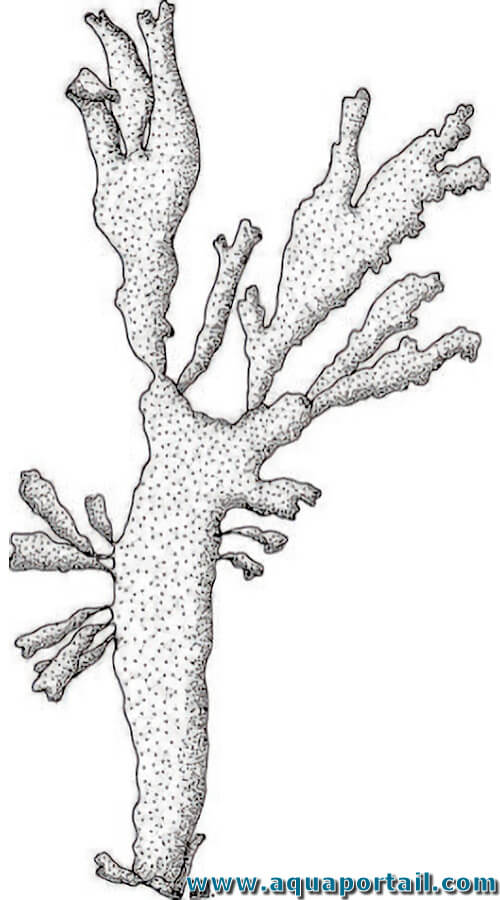
A pseudoparenchyma is a vegetative structure whose uniseriate filaments are appressed and/or interwoven, giving the appearance of forming a parenchyma.
paedomorphosis

Paedomorphosis (juvenilization) is a phylogenetic change involving the retention of juvenile or even larval traits into a later (adult) stage.
painkiller

A painkiller, or analgesic, is a pain reliever, a medication used to soothe or eliminate pain, whether headaches, muscle aches, arthritis, etc.
Simple summary
In botany, parenchyma refers to the ground tissue of plants composed of living cells generally found in leaves, stems, roots, and fruits, performing functions such as photosynthesis, storage, and secretion. In animals, parenchyma refers to the functional and essential parts of an organ, as opposed to its supporting or connective tissues. Hepatocytes of the liver or nephrons of the kidney are examples of parenchymatous cells.
