Rubisco
noun (n.)
Definition
Rubisco is an important enzyme involved in photosynthesis that catalyzes the incorporation of carbon dioxide into ribulose-1,5-bisphosphate and its cleavage into 3-phosphoglycerate. These enzymes act in plants and phototrophic bacteria.Rubisco can make up about 30% of plant proteins and is probably the most abundant protein in the biosphere.
Representation of Rubisco:

Rubisco, shown here in 3D representation, is activated from spinach in an open form with an accessible active site. Active site residues Lys175 are highlighted in pink, and a close-up of the residue is provided on the right for one of the monomers composing the enzyme.
Explanations
This enzyme catalyzes the carboxylation of ribulose-1,5-bisphosphate (the CO2 incorporation phase of the Calvin cycle) or its oxygenation, in chloroplasts and in photosynthetic bacteria.
"Rubisco" is the abbreviation for ribulose-1,5-bisphosphate carboxylase/oxygenase, and is synonymous with carboxydismutase (obsolete) and RuBP carboxylase (obsolete). "rbcL" is the abbreviation designating the "large subunit of Rubisco". See also carboxysome.
Rubisco is a complex composed of two types of subunits, with the large subunit (LS, 53 kDa) encoded by the chloroplast rbcL gene and the small subunit (SS, 14 kDa) encoded by the nuclear RBCS gene family.
Structure
Rubisco in the chloroplasts of plants and algae consists of eight large subunits of size 51–58 kDa and eight small subunits of size 12–18 kDa. The active center of the enzyme is located in the large subunits.
The small subunits can enhance the catalytic activity of the main subunits, but their primary function is to support the structure of the enzyme. The small subunits are not required for Rubisco activity and, for example, in certain purple bacteria they are absent altogether and only two large subunits are present.
Rubisco is formed of eight large subunits (56 kDa) encoded by chloroplast DNA and eight small subunits (14 kDa) encoded by nuclear DNA. The active site is carried by the large subunits.
In plants, algae, cyanobacteria, and phototrophic and chemoautotrophic proteobacteria, the enzyme generally consists of two types of protein subunits, called the large L chain and the small S chain.
rbcL (large subunit of Rubisco)
rbcL is an abbreviation for Rubisco designating the large subunit of Rubisco, a plant gene. Written differently, RbCl (capital "R") is rubidium chloride, an alkali metal halide.
In plants, algae, cyanobacteria, and phototrophic and chemoautotrophic proteobacteria, the enzyme usually consists of two types of protein subunits, called the large chain (L, about 55,000 Da, the apoenzyme) and the small chain (S, about 13,000 Da, the regulatory subunit).
The large-chain gene (rbcL) is encoded by chloroplast DNA in plants. There are generally several related small-chain genes in the nucleus of plant cells, and the small chains are imported into the stromal compartment of chloroplasts from the cytosol by crossing the outer chloroplast membrane.
The enzymatically active substrate (ribulose-1,5-bisphosphate) binding sites are located in the large chains, which form dimers in which amino acids from each large chain contribute to the binding sites.
A total of eight large chains (= 4 dimers) and eight small chains assemble into a larger complex of approximately 540,000 Da. In certain proteobacteria and dinoflagellates, holoenzymes consisting solely of large subunits have been found.
Mechanism
For Rubisco to act as a catalytically active enzyme, the lysine amino acid residue located at the enzymatic activator site must bind carbon dioxide to form a carbamate group that binds active magnesium ions in the enzyme. However, the enzymatic substrate ribulose-1,5-bisphosphate binds tightly to this uncarbamylated side chain and prevents full activation of Rubisco.
Consequently, a second enzyme, Rubisco activase, removes ribulose-1,5-bisphosphate via an ATP-consuming reaction, thereby allowing carboxylation of the side chain and shifting the enzyme into its active conformation. Rubisco activase is therefore a regulatory protein.
Ribulose-1,5-bisphosphate binds to magnesium ions via its ketone group and the hydroxyl group of the adjacent carbon. The magnesium ion is also bound to the aspartic and glutamic acid side chains of the enzyme in addition to the lysine carbamate group. The amino group of lysine removes a proton from the substrate to form an enediolate intermediate.
Following proton transfer, the enediolate reacts via nucleophilic addition with carbon dioxide to form 2-carboxy-3-keto-D-arabinitol-1,5-bisphosphate. This is a highly unstable intermediate that binds a water molecule and forms a gem-diol hydrate, which cleaves into two molecules of 3-phosphoglycerate via a reverse aldol condensation reaction.
Rubisco can also catalyze a secondary reaction in which the enediolate formed from ribulose-1,5-bisphosphate reacts with oxygen instead of carbon dioxide. In this case, one molecule of 3-phosphoglycerate and one molecule of 2-phosphoglycolate are produced. This reaction also requires the lysine side chain to have formed a carbamate. The reaction is thought to proceed via a hydroperoxide intermediate that subsequently decomposes.
In the plant, phosphoglycolate is processed through the metabolic pathway called photorespiration. Photorespiration is more active in hot, dry weather when plants close their stomata to limit water loss.
Conditions and regulatory factors
Rubisco requires a magnesium ion as a cofactor to function. In certain bacteria, magnesium can also be replaced by manganese or iron. Carbon dioxide must bind to the regulatory site to allow metal ion binding. Light also activates Rubisco. The mechanisms of light activation are complex and not fully understood.
Illumination causes protons to move across the thylakoid membrane into the lumen and magnesium ions into the stroma. This creates a proton gradient across the thylakoid membrane, raising the stromal pH to about 8, which is optimal for Rubisco activity and promotes carbamate group formation.
Rubisco is inhibited by numerous organic sugar phosphates. One of the most important inhibitors is 2-carboxy-D-arabinitol-1-phosphate, which resembles the 2-carboxy-3-keto-D-arabinitol-1,5-bisphosphate intermediate of the Rubisco-catalyzed reaction. It binds to the enzyme more than 1,000 times more tightly than ribulose-1,5-bisphosphate and thus blocks its activity. 2-Carboxy-D-arabinitol-1-phosphate accumulates in plant leaves during the night.
When the Sun shines, its radiation activates Rubisco activase, which releases the inhibitor from the enzyme, after which it is degraded by a specific phosphatase.
Alternative carbon fixation pathways
Rubisco is biologically important because it catalyzes the primary chemical reaction by which inorganic carbon enters the organic biosphere. While many autotrophic bacteria and archaea fix carbon via the reductive acetyl-CoA pathway, the 3-hydroxypropionate cycle, or the reverse Krebs cycle, these pathways contribute relatively less to global carbon fixation than that catalyzed by Rubisco.
Phosphoenolpyruvate carboxylase, unlike Rubisco, fixes carbon only temporarily. Reflecting its importance, Rubisco is the most abundant protein in leaves, accounting for 50% of soluble protein in the leaves of C3 plants (20–30% of total leaf nitrogen) and 30% of soluble protein in C4 plants (5–9% of total leaf nitrogen).
Given its major role in the biosphere, genetic engineering of Rubisco in crops is of ongoing interest.
Genetic engineering
Because Rubisco often limits the rate of photosynthesis in plants, it is possible to improve photosynthetic efficiency by modifying Rubisco genes in plants to increase catalytic activity and/or decrease oxygenation rates. This could enhance CO2 biosequestration and serve as both a major climate change strategy and a strategy to boost crop yields.
Approaches studied include:
- transferring Rubisco genes from one organism into another organism
- engineering Rubisco activase from thermophilic cyanobacteria into temperature-sensitive plants
- increasing the expression level of Rubisco subunits
- expressing Rubisco small chains from chloroplast DNA
- modifying Rubisco genes to increase carbon dioxide specificity or otherwise enhance the rate of carbon fixation. Although atmospheric CO2 levels are rising, efforts to increase CO2 specificity continue to be studied.
Mutagenesis in plants
In general, site-directed mutagenesis of Rubisco has had limited success, although mutated forms of the protein have been obtained in tobacco plants with C4 subunits, and a Rubisco with improved kinetic properties has been achieved in rice via nuclear transformation. See site-directed mutagenesis.
One approach is to introduce Rubisco variants with naturally high specificity values, such as those from the red alga Galdieria partita, into plants. This may improve photosynthetic efficiency in crop plants, although potential adverse impacts still need to be investigated. Advances in this field include replacing the tobacco enzyme with that of the purple photosynthetic bacterium Rhodospirillum rubrum.
In 2014, two transplastomic tobacco lines with functional Rubisco from the cyanobacterium Synechococcus elongatus PCC7942 (Se7942) were created by replacing Rubisco with the large and small subunit genes of the Se7942 enzyme, in combination with RbcX or an internal carboxysomal protein, CcmM35. Both mutants showed an increased CO2 fixation rate when measured as carbon molecules fixed per molecule of Rubisco. However, the mutant plants grew more slowly than wild-type plants.
A recent theory explores the trade-off between relative specificity (i.e., the ability to favor CO2 fixation over O2 fixation, which leads to the energy-consuming process of photorespiration) and the rate at which the product is formed. The authors conclude that Rubisco has in fact evolved to reach a point of "near-perfection" in many plants (with widely varying resource availability and environmental conditions), achieving a balance between specificity and reaction rate.
Since photosynthesis is the most effective natural regulator of carbon dioxide in Earth's atmosphere, a biochemical model of the Rubisco reaction is used as a core module in climate change models. Thus, an accurate model of this reaction is essential for a basic understanding of the relationships and interactions within environmental models. A new theory and model of the biochemical reaction of photosynthesis, as well as the limitations of the most widely used photosynthesis model today, are discussed.
Synonyms, antonyms
Spanish translation: Rubisco
1 synonym (similar meaning) for "rubisco":
0 antonyms (opposite meaning).
Related words and expressions to RUBISCO are directly connected by general or specific meaning.
The word RUBISCO is listed on page 1 of words starting with R in the dictionary glossary.
Related to "rubisco"
oxygenase
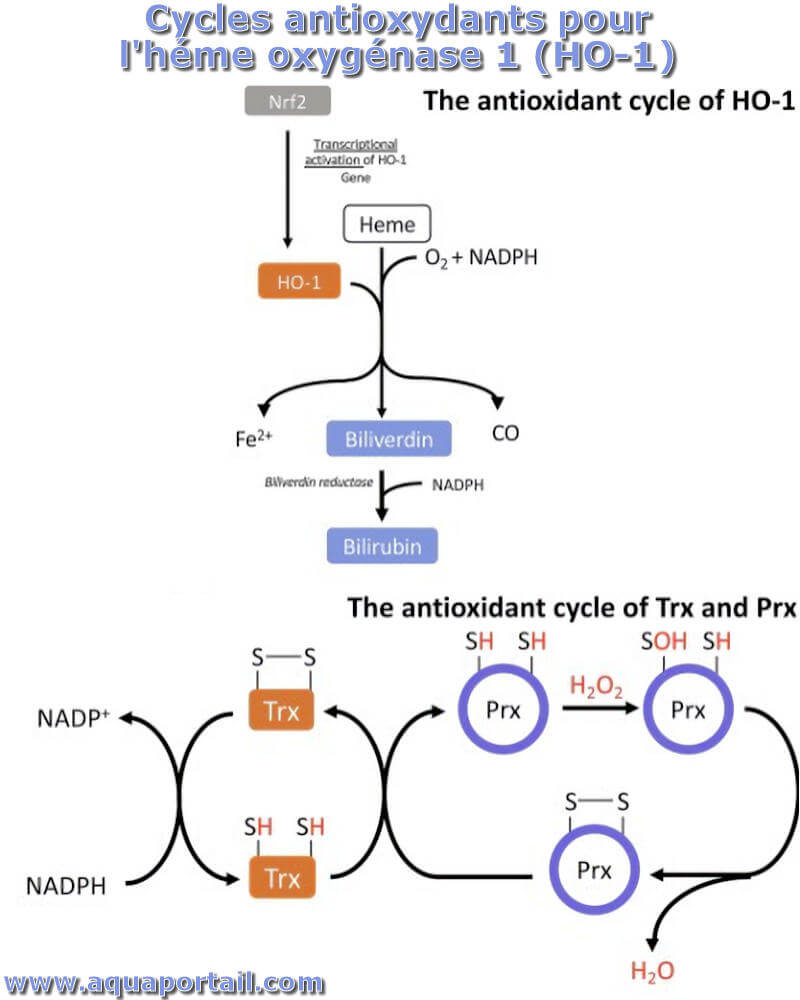
An oxygenase is an enzyme of the oxidoreductase group that catalyzes the addition of one (monooxygenase) or two (dioxygenase) oxygen atoms (dioxygen).
ribulose-1,5-bisphosphate

Ribulose-1,5-bisphosphate carboxylase-oxygenase (RuBP or Rubisco) is a family of enzymes that fixes carbon dioxide during photosynthesis.
ramulus

A ramulus is a small branching of branches or stems of a plant that has undergone a metamorphosis resulting in growth arrest.
rat

A rat is a rodent mammal resembling a large mouse, generally having a pointed snout and a long, sparsely haired tail.
