Carotenoid
noun (n.)
Definition
A carotenoid is a red-to-yellow pigment, including carotene, which imparts color to plant parts such as ripe tomatoes and autumn leaves. Carotenoids occur in plants within chromoplasts.
Living organisms with carotenoids:
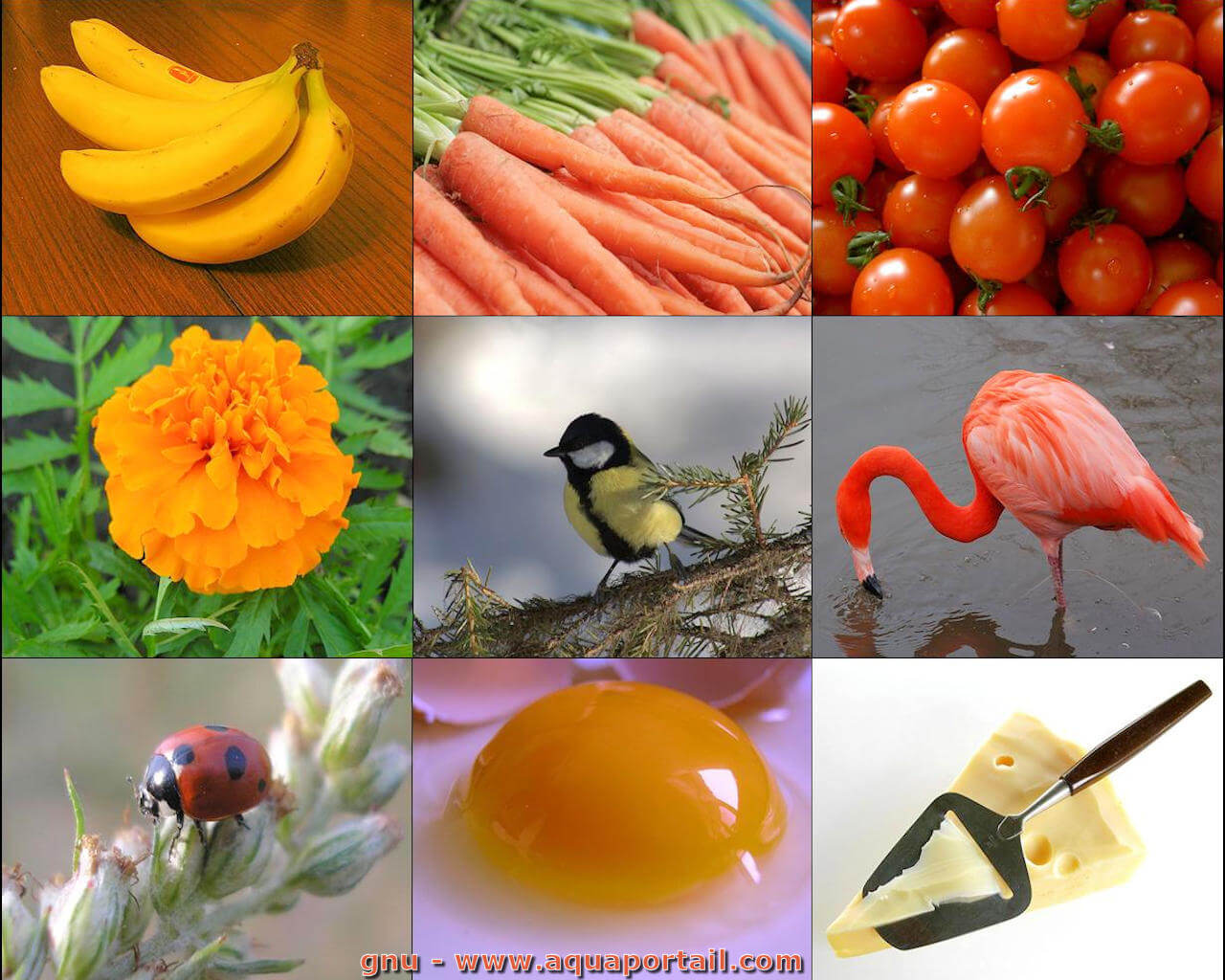
Carotenoids produce yellow-to-orange and pink-to-red coloration not only in carrots. As fat-soluble pigments located near the surface of fruits, flowers, plumage, or chitinous shells, they shape the appearance of diverse plants and animals. egg yolks and foods such as cheese or margarine also owe their characteristic color to carotenoids, sometimes added as food colorings. The red of ladybugs or flamingos and even the yellow of a titmouse derive their hues from carotenoids.
Explanations
A carotenoid is an isoprenoid related to carotenes, sharing characteristics close to those of xanthophylls. Carotenoids participate in converting light energy into chemical energy within photosymbiont cells, green algal chloroplasts, and cyanobacterial thylakoids.
Carotenoids encompass all fat-soluble terpenoid pigments formed by the combination of 8 isoprene units. This broad class of natural lipid-soluble pigments, known as lipochromes, is defined chemically by a common tetraterpene carbon skeleton.
Carotenoids form a group comprising carotenes, xanthophylls, and vitamin A precursors. They are found in chloroplasts, in chromoplasts (lycopene in tomato, zeaxanthin in corn), in certain fungi and bacteria, as well as in cyanobacteria (alongside other pigments such as phycocyanin and allophycocyanin). For example, loroxanthin dodecenoate is a carotenoid pigment.
Carotenoids are a group of accessory pigments present in all photosynthetic organisms. They contain around 40 carbon atoms, often lacking oxygen atoms. They differ chemically from chlorophyll and consist of rings linked by a carbon chain. They absorb light primarily between 460 and 550 nm and appear yellow, red, or orange, reflecting light in their respective wavelengths.
They fulfill two major functions: extending the light-absorption spectrum and protecting the plant from photo-oxidation processes.
✅ In Trentepohlia, chloroplasts are covered by numerous tiny droplets filled with carotenoid pigments, giving these green algae their red or orange coloration.
⭐ The conjugated double-bond system of carotenoids absorbs short-wavelength light and, depending on the number, position, and side chains of the carotenoid, imparts a yellowish to reddish hue.
The more than 800 currently known carotenoids are divided into carotenes and oxygen-containing xanthophylls. Carotenoids belong to the isoprenoids.
Occurrences
Carotenoids occur primarily in archaea (halobacteria), bacteria, plant chromoplasts and plastids, and certain fungi. These organisms are capable of synthesizing the tetraterpene de novo. Additionally, they occur in various animals that ingest plant material containing natural pigments. Carotenoids can be found in snail shells, mussel shells, bird feathers and egg yolks, or in human skin and retina.
With a few exceptions, such as certain species of aphids and spider mites, animals lack the genes for de novo carotenoid synthesis.
Certain carotenoids are authorized in the EU as food additives, bearing E numbers E 160a to 160g and E 161a to 161h. Several are used to impart color to food products.
Structural modification
Typical carotenoids share the core structure of tetraterpenes, composed of eight isoprene units, and thus contain 40 carbon atoms. Their unsaturated hydrocarbon chains may be cyclized at one or both ends (ionone rings) or uncyclized, as in lycopene with the molecular formula C40H56. Further variations arise from dehydrogenation and various oxidation products. Carotenoids are divided into two main groups:
- carotenes, composed exclusively of carbon and hydrogen
- xanthophylls, which are oxygenated derivatives of carotenes.
The absorption maxima of carotenoids typically lie at wavelengths of approximately 400 to 500 nanometers.
Carotenoids are terpenoids whose basic hydrocarbon framework has the formula C40H56.
Botanical functions
A carotenoid is any pigment molecule, typically yellow, red, or orange, that interacts with chlorophylls inside chloroplasts when absorbing light primarily for photosynthesis and photoprotection against excess light damage, and is also found in chromoplasts where it is synthesized and stored.
Photosynthetic autotrophs possess pigments that absorb light energy to synthesize complex organic matter from inorganic sources. Three basic classes of photosynthetic pigments exist: chlorophylls, carotenoids, and phycobilins. Chlorophyll is the primary light-absorbing pigment in the chloroplasts of photoautotrophs such as higher plants.
Some photoautotrophs possess additional pigments to facilitate light harvesting. These act as accessory pigments, transferring absorbed light energy not directly into the photochemical reaction center, but to the primary pigment, chlorophyll. Carotenoids and phycobilins are examples of accessory pigments.
Carotenoids are typically yellow, red, and orange accessory pigments. Unlike water-soluble phycobilins, they are insoluble in water. They reside in chloroplasts, contributing to light harvesting for photosynthesis, and are also found in chromoplasts. Numerous carotenoids exist and are grouped into xanthophylls and carotenes.
Animal-synthesized carotenoids have been observed in aphids and spider mites; these animals are thought to have acquired the biosynthetic genes and capability from fungi.
As provitamin A
Animals and humans cannot synthesize vitamin A de novo and must meet their nutritional requirements through diet. While carnivores obtain vitamin A mainly as retinyl esters or retinol, herbivores rely on certain carotenoids as precursors.
Around fifty carotenoids with known provitamin A activity can be converted into vitamin A in the body, with β-carotene exhibiting the highest activity.
Physiology in humans
Humans can utilize both preformed retinol/retinyl esters and provitamin A carotenoids to meet vitamin A requirements. The provitamin A activity of dietary carotenoids is expressed in retinol equivalents, with roughly 6 mg of β-carotene or 12 mg of mixed carotenoids corresponding to one retinol equivalent.
Carotenoids are also recognized for notable health roles. In the human body, six carotenoids play major roles: β-carotene, α-carotene, lycopene, β-cryptoxanthin, lutein, and zeaxanthin. Most function as antioxidants, potentially helping prevent conditions such as cancer, atherosclerosis, rheumatism, Alzheimer's and Parkinson's diseases, cataracts, and skin aging.
Among all dietary carotenoids, lycopene (for example in tomatoes) exhibits the strongest antioxidant potential and is considered the most effective quencher of highly reactive singlet oxygen. Lycopene also inhibits tumor cell proliferation more effectively than α- or β-carotene.
The anticarcinogenic effect of carotenoids is also theoretically linked to their ability to promote intercellular communication. In particular, β-carotene, cryptoxanthin, and canthaxanthin stimulate cell-to-cell signaling by upregulating connexin synthesis, a protein key to forming gap junctions, whose numbers are reduced in cancer cells.
However, carotenoids should only be considered for prevention, as they have no effect on treating established cancer or preventing relapse. Particularly in patients already diagnosed with cancer, high-dose supplements must be avoided.
In the liver, eyes, skin, and adipose tissue, certain carotenoids accumulate at markedly higher concentrations than in other tissues. In the retina of the eye, within the macula lutea (yellow spot), the carotenoids lutein and zeaxanthin occur in high amounts. These carotenoids are thought to serve as natural protective filters, as the retina—with its oxidation-prone polyunsaturated fatty acids—is particularly vulnerable to free-radical damage.
Like other phytochemicals, carotenoids should not be taken as highly concentrated isolated preparations, but rather in natural association with whole dietary nutrients. High-dose supplementation carries potential risks: while true acute carotenoid toxicity does not occur, β-carotene supplements may increase cancer risk in certain populations.
Technology and synthesis
Among the roughly 700 known natural carotenoids, several hold major industrial importance and are synthesized on an industrial scale: β-carotene, astaxanthin, canthaxanthin, ethyl 8'-apo-β-carotenoate, 8'-apo-β-carotenal, citranaxanthin, lycopene, and zeaxanthin. Industrial production of nature-identical carotenoids was pioneered by Hoffmann-La Roche AG and BASF SE using complex multistep syntheses.
Because mixtures of (E, Z) isomers are frequently formed, photochemical isomerization is commonly used to convert the less desirable (Z) form into the desired (E) form.
Biotechnological production
Carotenoid biosynthesis genes can be introduced into fungi, bacteria, and plants, or rate-limiting enzyme levels increased, to boost carotenoid yield. The yeast Phaffia rhodozyma can be genetically engineered to produce higher levels of astaxanthin as well as non-specific carotenoids.
Zeaxanthin accumulation can also be substantially increased in potato tubers. The transgenic rice variety known as Golden Rice was developed to combat vitamin A deficiency, particularly in developing countries.
Use as a colorant
Carotenoids are frequently added as feed additives to enhance, for example, the flesh color of farmed salmon, which would otherwise appear gray when fed fishmeal pellets in captivity without supplements. Wild salmon naturally acquire the pigment by eating small crustaceans, which in turn consume microalgae containing the xanthophyll astaxanthin.
For similar reasons, zoo flamingos are also fed carotenoids, as they cannot access carotenoid-rich crustaceans and algae in captivity and would otherwise lose their pink plumage. Likewise, egg yolk coloration can be enhanced via poultry feed additives, particularly when hens have limited access to natural carotenoid-rich grasses or corn.
Foods directly colored with carotenoids include margarine and fruit juices.
Synonyms, antonyms
Spanish translation: carotenoide
3 synonyms (similar meaning) for "carotenoid":
0 antonyms (opposite meaning).
Related words and expressions to CAROTENOID are directly connected by general or specific meaning.
The word CAROTENOID is listed on page 1 of words starting with C in the dictionary glossary.
Related to "carotenoid"
carotene

Carotene denotes a terpene pigment, distinct from xanthophylls, ranging from red and orange to yellow, notably found in carrots.
carrot

The carrot is an umbelliferous plant of the species Daucus carota. Carrots belong to the Apiaceae family, known for the cultivated carrot of the subspecies...
tomato
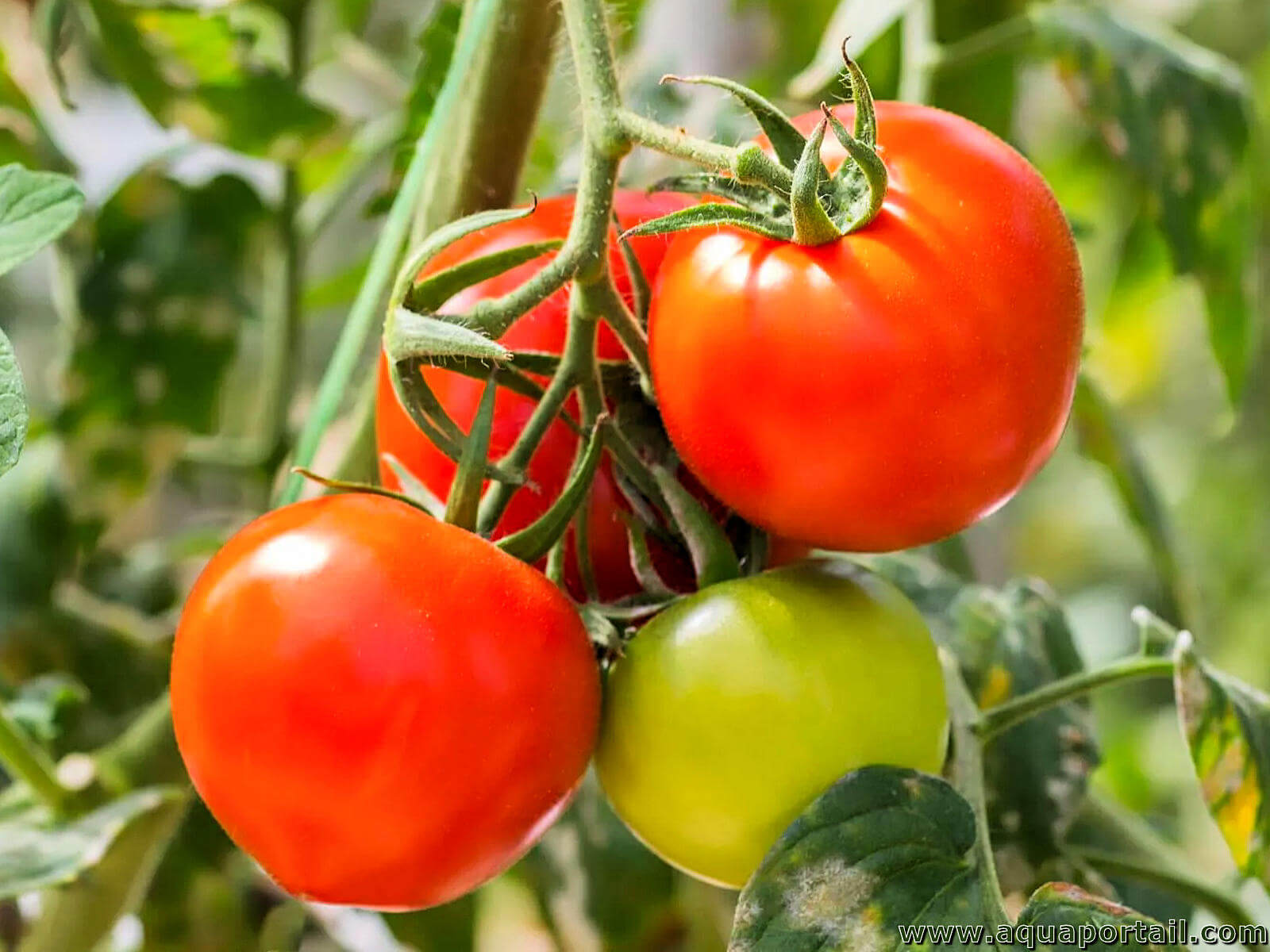
The tomato is the red seed-bearing fruit of the vegetable plant Solanum lycopersicum (Solanaceae).
pyrenoid
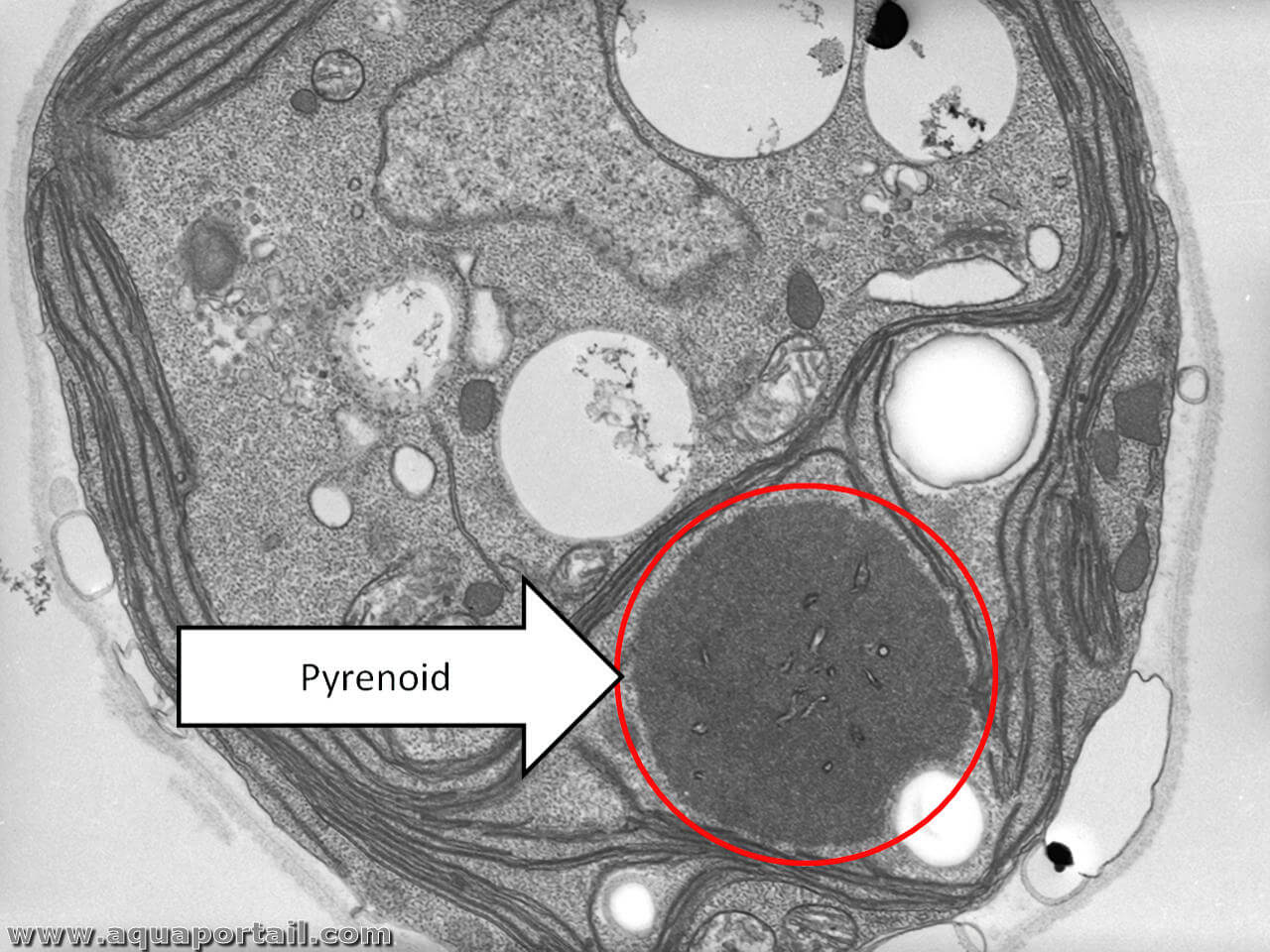
A pyrenoid is a differentiated, more or less complex hyaline zone within the plastid of certain algae and hornworts.
