Carboniferous
noun and adjective (n. / adj.)
Definition
Carboniferous describes what produces or contains carbon or coal. The Carboniferous is a geologic period of the Paleozoic Era, spanning from 359 to 299 Ma (million years ago), between the older Devonian and younger Permian systems. This geologic period corresponds to the time when rock strata containing coal beds were formed.
The Carboniferous Period is divided into two subsystems: the Mississippian and the Pennsylvanian. The Carboniferous was a period of intense coal formation, from which its eponymous name derives. Mississippian sedimentology consists primarily of Carboniferous limestone, whereas the Pennsylvanian is where most coal deposits are found.
A Carboniferous landscape:
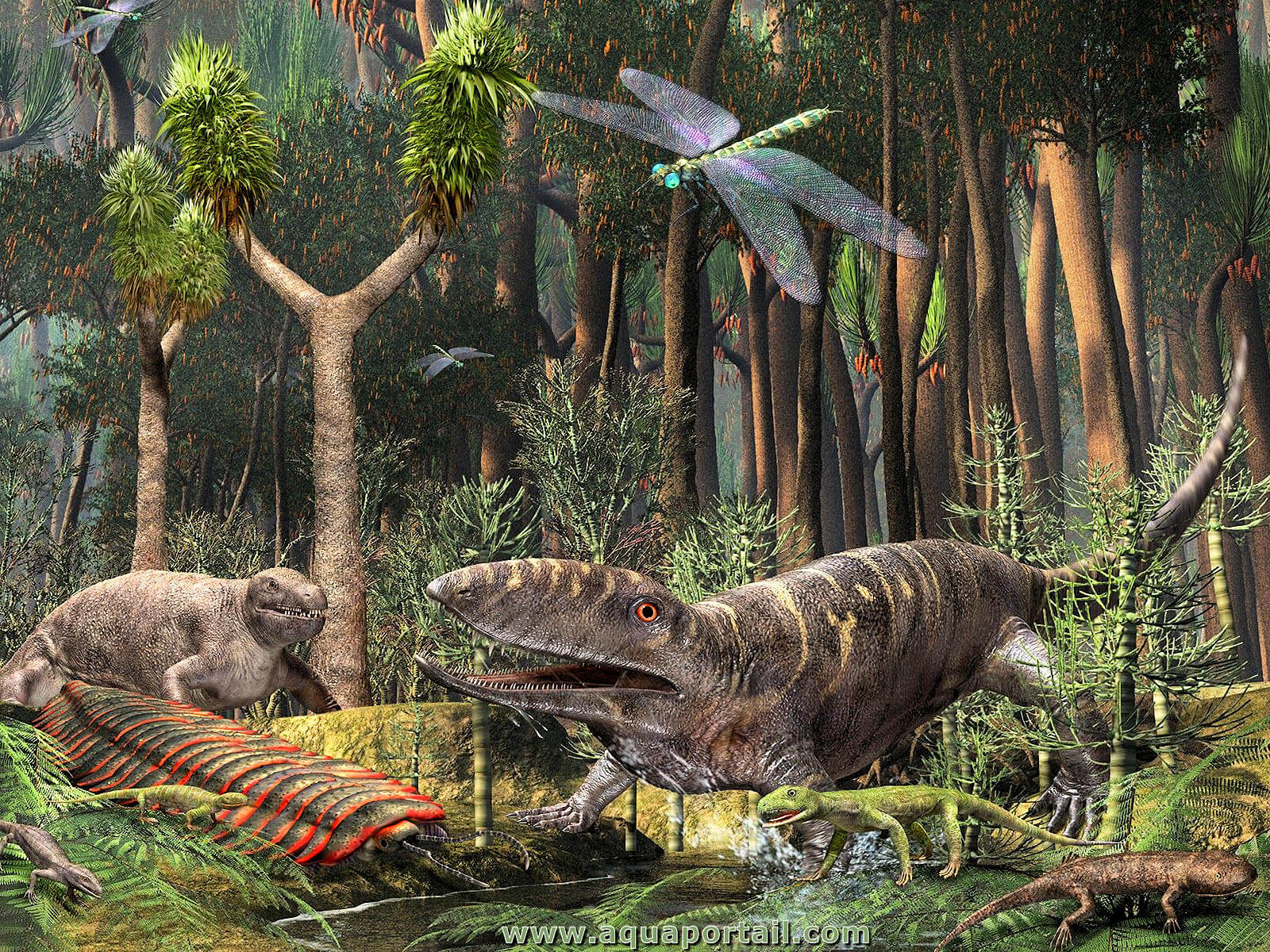
Artist's impression of a Carboniferous landscape, illustrating plant evolution and paleobotany alongside giant dragonflies of the genus Meganeura (75 cm / 29.5 in wingspan).
Explanations
Also known as the Age of Ferns, the Carboniferous is a geologic period of the Paleozoic Era spanning from 359 to 299 Ma, marked by abundant terrestrial vegetation across the continents.
This rapid proliferation of plant life, favored by a widespread tropical climate, abundant rainfall, and emergent landmasses, produced a major enrichment of atmospheric oxygen, which subsequently supported increased respiratory capacity and larger body sizes in animal species.
This evolution was particularly favorable to amphibians and insects, which colonized lands covered by gigantic tree ferns, conifers, and scale-barked trees.
Geologically, this period is characterized by alternating limestones, shales, and sandstones, and above all by coal formation. Vast peat bogs formed in basins and decomposed huge quantities of plants, trees, and mosses, turning into swamps.
sheltered from air and acted upon by primitive bacteria, these peat bogs formed pockets that would become future carbon-rich deposits: coal and bituminous coal.
It was also during this period that previously uniform global climates began to differentiate. In France, the Hercynian folding raised mountain ranges such as the Ardennes, Massif Central, and Vosges, while for the first time the Paris Basin rose above sea level.
✅ Sea levels remained low since the Devonian. Levels dropped again mid-period, causing major marine extinctions, primarily among crinoids and ammonoids.
Gondwana remained glaciated during this time, though this had little effect on the broader global climate, as evidenced by tropical swamps. The assembly of Pangaea drove further mountain building in the Appalachian region, known as the Alleghanian orogeny, while the Hercynian orogeny was underway in Europe.
The Eurasian landmass collided to uplift the Ural mountains during supercontinent assembly. Average temperatures stood at 20 degrees Celsius (68 °F), though mid-Carboniferous cooling lowered this average to twelve degrees Celsius (53.6 °F). Continuous glaciations on Gondwana persisted into the early Permian.
The Carboniferous is characterized by a peak in global atmospheric oxygen levels. This made the atmosphere highly flammable, so wildfires were frequent. Extensive forests and abundant dead plant matter accounted for the vast coal deposits.
Plant life resembled that of the late Devonian, including horsetails, mosses, and ferns, alongside the emergence of Lepidodendrales, or scale trees, which reached unprecedented proportions. Cycads and conifers also evolved during the Pennsylvanian Carboniferous.
In the oceans, Foraminifera, a group of marine protists, made their appearance. Brachiopods and echinoderms enjoyed continued marine success, while trilobites grew increasingly rare over time.
Terrestrial animals evolved rapidly in response to the changing climate. Giant arthropods are famous from this period: the 2.6-meter-long (8.5 ft) millipede Arthropleura foraged on the forest floor, while the giant dragonfly-like Meganeura, with its 75-centimeter (29.5 in) wingspan, took to the skies. Arthropleura is the largest known terrestrial invertebrate, and Meganeura is the largest known flying insect. The giant size of these animals was enabled by the humid, oxygen-rich atmosphere.
Amphibians were more diverse in the Carboniferous than they are today, but they struggled to cope with environmental shifts following the Carboniferous rainforest collapse.
Sharks exploited the ecological vacuum left by the extinction of placoderms. Shark radiation produced unusual forms; Stethacanthus possessed a large, flat-topped dorsal fin.
Reptiles first appeared during the Carboniferous, capitalizing on the gradual decline of amphibians alongside the emergence of synapsids and diapsids. These animals were more advanced thanks to the amniotic egg, which allowed fuller terrestrial colonization because such eggs are better protected than soft amphibian eggs. The earliest known reptile to evolve was Hylonomus from the Pennsylvanian.
Two major events mark the Carboniferous. First is Romer's Gap, a hiatus in the fossil record covering the first 15 million years of the period; it remains unclear whether this reflects a scarcity of ideal fossilization environments or an extinction event.
A drop in oxygen levels also signaled ecological collapse. Ichthyostegalian labyrinthodont amphibians began declining in the early Carboniferous, giving rise to reptiliomorph amphibians.
The Carboniferous rainforest collapse was driven by climate change and arid conditions. Reptiles adapted better to this drier environment than water-dependent amphibians because their scales retained moisture and the amniotic egg did not need to be laid in water to stay hydrated.
Westphalian
The Westphalian is a stage of the Carboniferous within the Paleozoic Era. In absolute terms, the Westphalian lasted from approximately 316.5 million to 305 million years ago.
Its base is defined by the first appearance of the ammonite species Gastrioceras subcrenatum. The name is derived from the region of Westphalia in Germany.
The Westphalian is an Upper Carboniferous stage described from the Ahlen area in Westphalia.
Synonyms, antonyms
Spanish translation: carbonífero
0 synonyms (similar meaning) for "carboniferous".
0 antonyms (opposite meaning).
Related words and expressions to CARBONIFEROUS are directly connected by general or specific meaning.
The word CARBONIFEROUS is listed on page 1 of words starting with C in the dictionary glossary.
Related to "Carboniferous"
Devonian
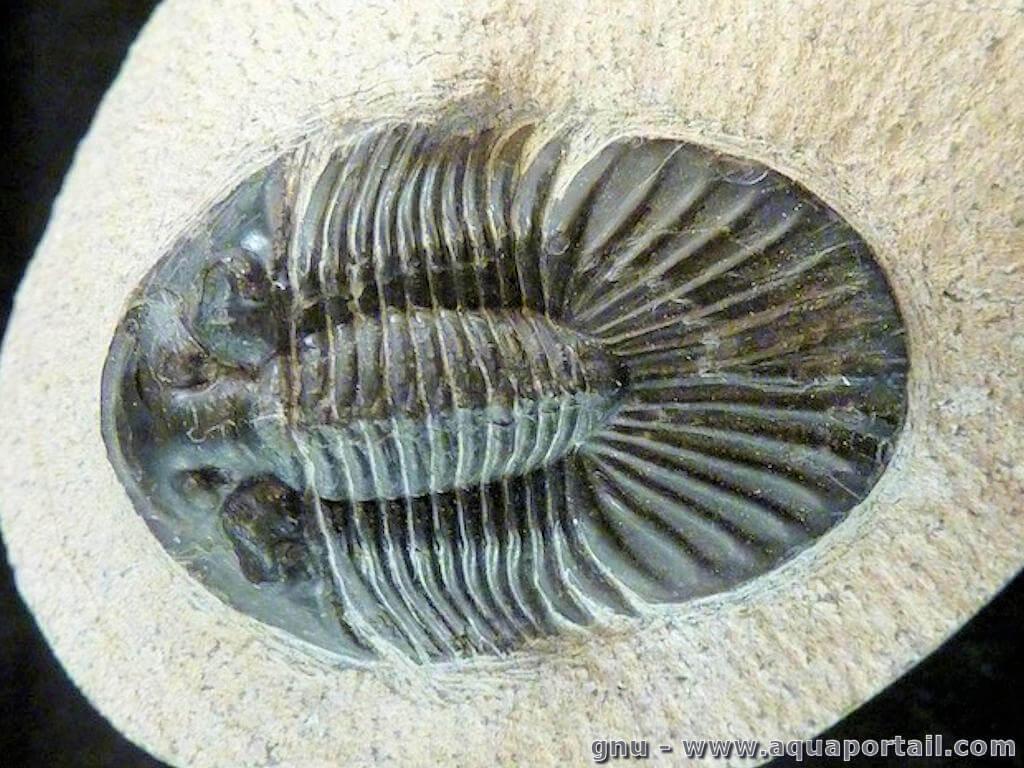
The Devonian is a division of the geologic time scale belonging to the Paleozoic era; the era is divided into six periods, of which the Devonian occupies...
geologic era

A geologic era is a long-duration geochronological division constituting a major subdivision of Earth's history.
Paleozoic
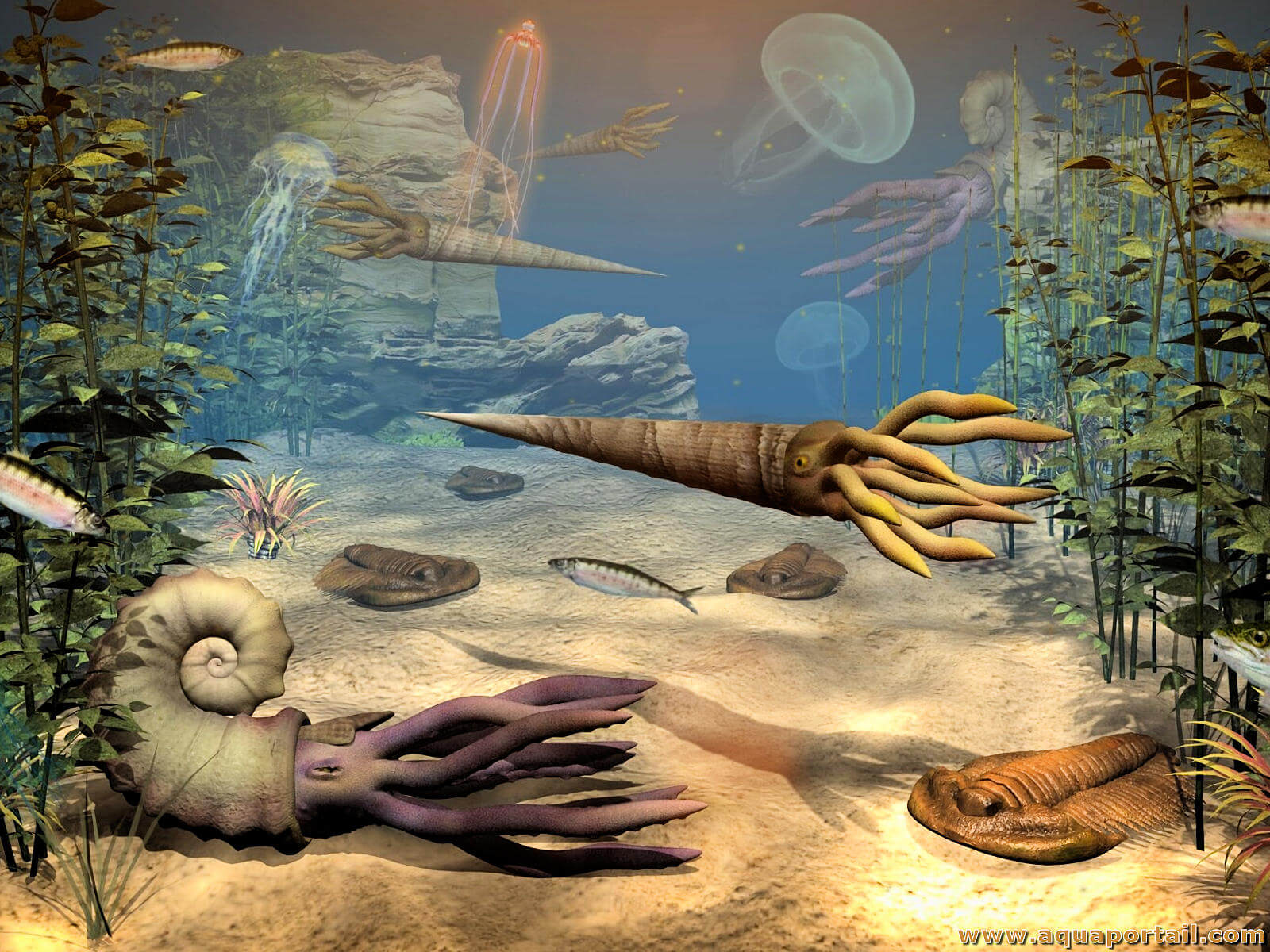
The Paleozoic is a geological era spanning from -541 to -251 Ma. This name, given to the primary era, groups 6 systems : Cambrian, Ordovician, Silurian...
stratigraphic scale

The stratigraphic scale represents a time scale combining the traditional geologic time scale developed over the past 150 years with the reference points...
