Devonian
noun (n.)
Definition
The Devonian is a division of the geologic time scale belonging to the Paleozoic era; the era is divided into six periods, of which the Devonian occupies the fourth position, following the Silurian and preceding the Carboniferous. It began approximately 416 million years ago and ended approximately 359 million years ago.
It owes its name to Devon, a county situated on the Cornish peninsula in southwestern England, where Scottish geologist Roderick Murchison and his English colleague Adam Sedgwick identified this system in the 1830s.
A Devonian trilobite:
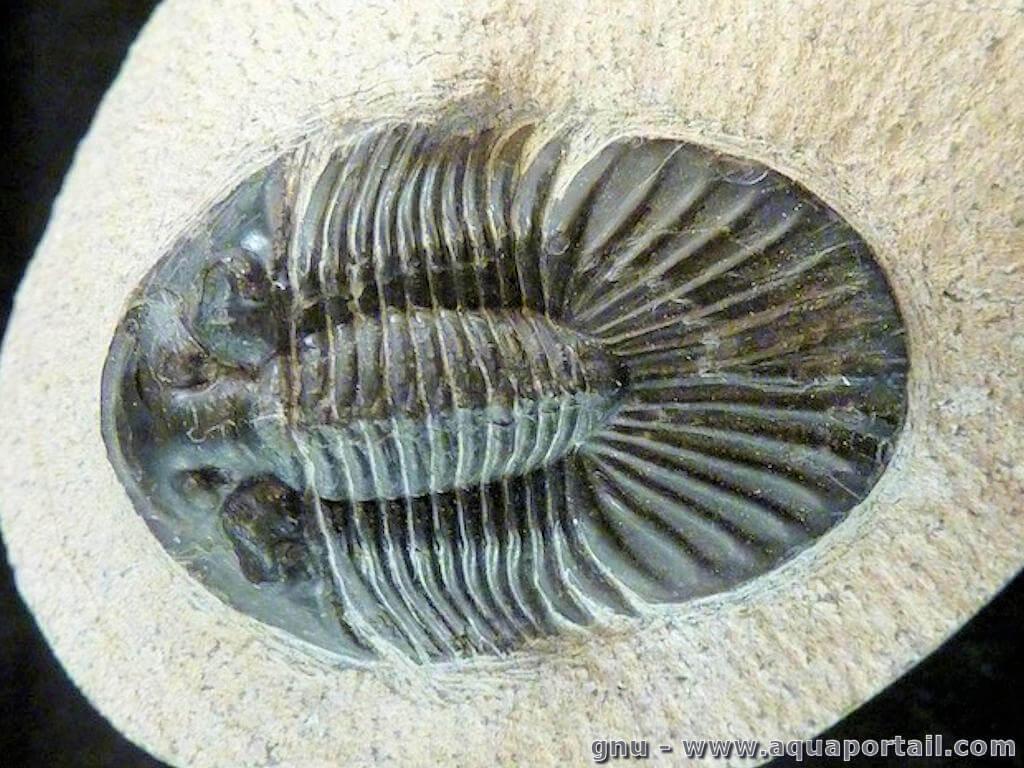
The Devonian is a geological period of the Paleozoic era, spanning from 416 to 359 Ma. It is also known as the age of trilobites.
Overview
Regarding paleogeography, emerged landmasses were distributed between a southern supercontinent, Gondwana, and another in the north near the equator, called Laurussia, which began the period as two colliding cratons, Laurentia and Baltica, initially separated by the Iapetus Ocean. Over time, both later converged to form the single supercontinent called Pangaea.
In the oceans, primitive sharks became more numerous than during the Silurian, and the first lobe-finned fishes and bony fishes appeared. Extensive coral reefs, trilobites, and brachiopods remained common, and the first ammonite mollusks emerged. On land, the first seed plants spread, forming vast forests. During the Devonian period, around 365 million years ago, the first amphibians emerged, while several lineages of terrestrial arthropods also proliferated. At the end of the period occurred the Late Devonian mass extinction, which severely affected marine life. During the Devonian, oil and gas deposits formed in several regions.
Paleogeography
Paleogeography was dominated by the supercontinent Gondwana in the south, the continent Siberia in the north, and the formation of the small supercontinent Euramerica in between. The Devonian period was a time of intense tectonic activity, with Laurussia (the union of Euramerica and Siberia) and Gondwana drawing closer together.
The supercontinent Euramerica (or Laurussia) had been formed at the beginning of the Devonian by the collision of Laurentia and Baltica and was situated in the zone of the Tropic of Capricorn. This is a naturally arid belt which, in the Paleozoic as today, is subject to the convergence of two major atmospheric circulations, the Hadley cell and the Ferrel cell. Within these near-deserts formed the ancient sediments of the Old Red Sandstone, composed of oxidized red iron (hematite) characteristic of arid regions. The formation of the Old Red Sandstone continent (Euramerica) LED to natural barriers and consequently greater provincialism, notably featuring the Appalachian province in the west with a distinctive fauna. The Appalachian Mountains of the United States and the Caledonian Mountains of Great Britain and Scandinavia began to rise. Meanwhile, the western coast of North America was a zone of deltas and estuaries in present-day Idaho and Nevada. A volcanic arc approached the continental shelf in the Late Devonian and began uplifting deep-water deposits, a collision that served as a prelude to the Antler orogeny in the Early Carboniferous.
The remaining continents stayed united in the supercontinent Gondwana. In southern Gondwana appeared a province linked to cold conditions (Malvinokaffric), located in the Paraná Basin, lacking reefs, bryozoans, and ammonites, and dominated by burrowing bivalves. By the end of the Devonian, the separation between the Old Red Sandstone continent and Gondwana was narrowing, and their proximity explains why North America, Europe, and North Africa shared at least 80% of their Devonian genera.
sea levels were high worldwide, and much of the land was submerged beneath shallow seas inhabited by tropical reef organisms. The vast, deep Panthalassa Ocean ("universal ocean", today termed the world ocean) encompassed the remainder of the planet. Smaller oceans included the Paleo-Tethys, Proto-Tethys, Rheic Ocean, and Ural Ocean (which closed upon the collision of Siberia and Baltica).
Evolution of biota
During this period, major innovations occurred in terrestrial biota, notably the first widespread expansion of life onto the continents, which until then had maintained a substantial presence only in the seas. The expansion of land plants contributed, alongside continentalization and orogenic uplift, to a gradual cooling of the climate that triggered the extinction crisis marking the end of the period.
The great diversification of jawed fishes, ammonoids, and eurypterids had a profound impact on many relatively unarmored aquatic animals, contributing to the mid-Paleozoic decline in trilobite diversity (from 80 Ordovician families to 23 Silurian families, and fewer still in the Devonian). Their weakly calcified exoskeletons offered little defense against fish jaws, and trilobites lacked rapid locomotion mechanisms. Added to this was the predation pressure exerted by nautiloids and ammonoids, which continued to evolve successfully. Small unarmored ostracoderms, which went extinct at the end of the Devonian, were likewise easy prey, lacking even the sediment-burrowing ability possessed by at least some trilobite species.
Marine life
Devonian seas supported richly diverse marine life. In the oceans, sponges diversified with the emergence of siliceous sponges, alongside flourishing reefs built by corals, sponges, and benthic algae. A massive reef system, now exposed on land in northwestern Australia, stretched for thousands of kilometers (miles), outlining a Devonian continent. Yet the greatest shift in aquatic ecosystems was the emergence of new nektonic animals, many of them predators. mollusk diversification continued, with the first ammonoids arising from nautiloids in the Early Devonian; nautiloids persisted, albeit with low diversity. Bivalves even invaded freshwater habitats. Trilobites began to decline, though new forms appeared, including some of large size. Eurypterid arthropods remained an important group of predators.
Disarticulated columnals of Laudonomphalus (crinoid).
This was the era of fish expansion, particularly placoderms, as well as selachians (sharks) and osteichthyans, including sarcopterygians—from which terrestrial vertebrates evolved—and actinopterygians, the vertebrate group that currently dominates the seas. Indeed, the Devonian is known as the Age of Fishes. Fossil remains are highly diverse and well preserved, many within freshwater lake deposits. Coelacanth remains already appear from this time. In the Middle Devonian, placoderms began supplanting ostracoderms. From the sarcopterygian lineage arose the genera Ichthyostega and Acanthostega, historically linked to the fish-to-tetrapod transition, which occurred across the Devonian-Carboniferous boundary; some researchers suggest this transition began with Eusthenopteron.
Paleobotany
In the Devonian, vascular plants diversified and spread (with the appearance of stomata and tracheids) to dominate terrestrial vegetation from then on. The Devonian was to land plants what the Cambrian had been to metazoans. The Devonian opened with small vascular plants, the earliest of which, such as Cooksonia, remained tied to wetland habitats.
Another early vascular plant, slightly later than Cooksonia, was Rhynia (also a rhyniophyte), though larger and more complex. It was named because its first fossil was discovered at Rhynie, Scotland. It bore numerous simple sporangia appearing as thickenings at the tips of horizontal stems, and its rhizomes were apparently associated with fungi. One hypothesis on plant evolution holds that terrestrial colonization was made possible through symbiotic associations with fungi.
By the end of the period, continents were dominated by arborescent forms of lycopodiophytes, trimerophytes, sphenophytes, pteridophytes, and progymnosperms. Most of these plants possessed true roots and leaves, and many grew very large. In the Late Devonian, ancestral tree-like plants such as Archaeopteris and giant Cladoxylopsida trees grew with true wood (lignin). For example, Archaeopteris, reaching 20 to 30 m (66 to 98 ft) in height, formed the earliest forests.
The earliest known trees of the genus Wattieza (class Cladoxylopsida) appeared in the Late Devonian around 380 million years ago. Fossilized trunks and foliage of these arborescent plants make up many Paleozoic coal deposits. This rapid emergence of numerous plant groups and growth forms has been termed the "Devonian explosion".
Vascular plants in turn enabled complex food webs outside aquatic environments and the success of the first fully terrestrial animals. Among these were early arthropods, chelicerates, spiders, mites, eurypterids, and scorpions. The codependence between insects and seed plants characterizing the modern world originated in the Late Devonian. The rapid evolution of a terrestrial ecosystem teeming with animals allowed the first vertebrates to pursue life on land.
At the close of the Devonian appeared the first amphibians, still anatomically very close to the fishes from which they derived, though amniotes (reptiles) had not yet emerged.
The development of soils and plant root systems likely altered rates and patterns of erosion and sediment deposition. The "greening" of the continents acted as a carbon dioxide sink, and atmospheric levels of this greenhouse gas may have dropped, potentially cooling the climate and driving the end-Devonian mass extinction.
Devonian extinction
The end of the period is marked by a mass extinction crisis that impacted the seas more severely than the continents across the Frasnian-Famennian boundary, and affected tropical latitudes more strongly than mid-latitudes. Occurring roughly 364 million years ago, it saw most agnathan fishes vanish abruptly.
The corals (tabulate, rugose, and stromatoporoid reef-builders) that had dominated the period went extinct, and coral reefs did not return until the Triassic. Numerous marine taxa suffered sharp diversity losses, with the disappearance of planktonic groups such as graptolites and tentaculitids, alongside acritarchs, ostracods, ammonoids, and fishes (placoderms and ostracoderms went extinct, while lungfishes were heavily impacted).
Furthermore, 85% of brachiopod and ammonoid genera went extinct, along with many types of gastropods and trilobites.
In terrestrial environments, vascular plants appear largely unaffected by this crisis, and polar communities of the Malvinokaffric province suffered minimal losses. Although global cooling is suspected as the primary driver (evidenced by new glacial deposits in Gondwana), the influence of an extraterrestrial impact is not ruled out, with several candidate impact sites proposed. However, the persistence today in intertropical zones of ancient plant lineages (such as the tree ferns mentioned earlier) also suggests that climatic stability across geological time is greater than often assumed.
Synonyms, antonyms
Spanish translation: Devónico
0 synonyms (similar meaning) for "devonian".
0 antonyms (opposite meaning).
Related words and expressions to DEVONIAN are directly connected by general or specific meaning.
The word DEVONIAN is listed on page 1 of words starting with D in the dictionary glossary.
Related to "Devonian"
dale

A dale is a small valley or glen that does not (or no longer) contains a watercourse. The concave hollowed space of a dale is not large enough to build...
daphnia
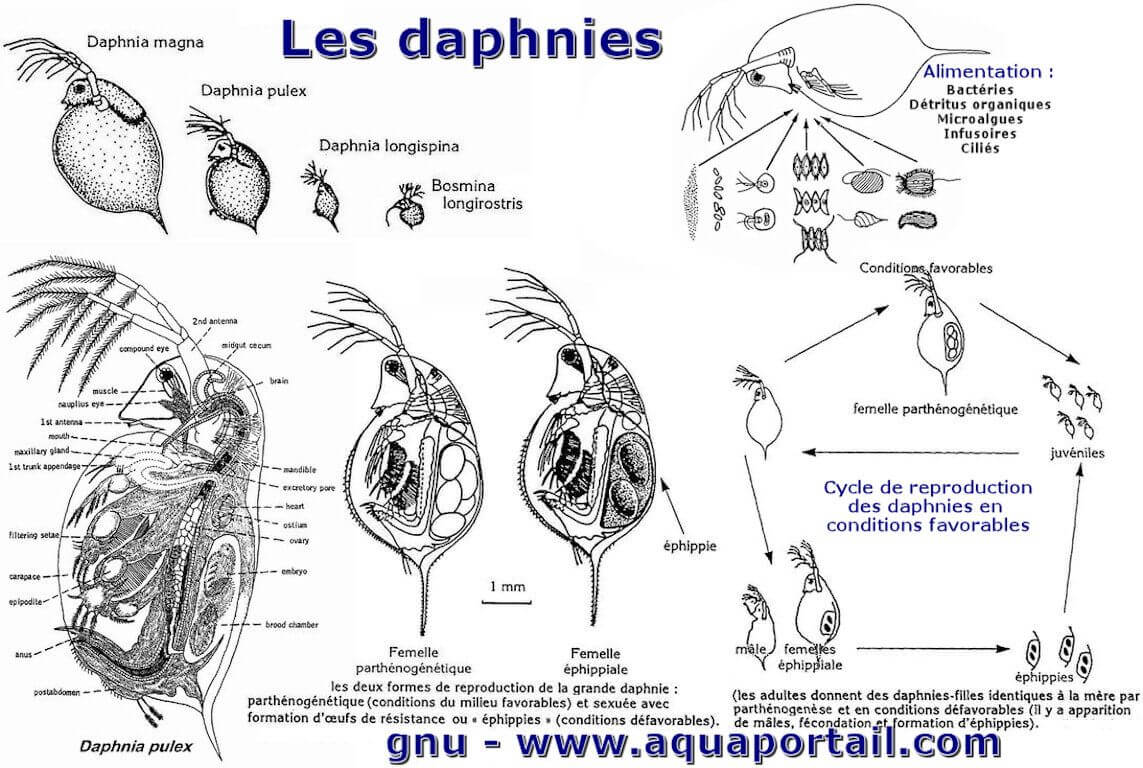
Daphnia is a planktonic branchiopod crustacean of the family Daphniidae, forming a dominant portion of freshwater plankton.
dawn

Dawn marks the transition between night and day, when the sky brightens and morning breaks in the East.
deltoid
Generally, what is deltoid is triangular, having a shape that evokes the uppercase Greek letter delta Δ, delta-shaped.
