Deutoplasm
noun (n.)
Definition
Deutoplasm refers to the reserve nutritive substances accumulated within the cytoplasm of a cell, and specifically the yolk of a developing oocyte or egg. Deutoplasm comprises stored nutritional inclusions (lipids, yolk proteins, glycogen) within the egg cell, as distinguished from active protoplasm (ooplasm).Deutoplasm and deutoplasts in marsupials:

The deutoplasm of an egg (notably in marsupials) accumulates around the nucleus and is denser than the surrounding cytoplasm; during cleavage divisions, it is extruded as deutoplasts.
Explanations
The contents of the ovum, traditionally termed yolk when rich in reserves, differ from the cytoplasm of most somatic cells in appearing more opaque and coarsely granular due to stored nutrient reserves. These consist of lipid droplets and proteinaceous yolk platelets later utilized for the growth and division of embryonic cells. These nutritive granules—the deutoplasm—are suspended within the cytoplasm; in the human oocyte, they are distributed fairly evenly or concentrated near the center, bordered by a clearer peripheral rim of cytoplasm.
The oocyte nucleus (germinal vesicle) occupies a central position within the cytoplasm, though in the ovum of a mature Graafian follicle it is almost invariably slightly eccentric. Proportionately large relative to cell size, its structure resembles that of other eukaryotic nuclei, featuring a distinct nuclear envelope enclosing nucleoplasm, chromatin, and a prominent nucleolus (historically called the germinal spot), which serves as the active site of ribosomal RNA synthesis.
Telolecithal ova exhibit a condition known as polar differentiation—the more or less complete separation of active cytoplasm (ooplasm) and deutoplasm, such that cytoplasm is concentrated at one pole of the egg (the animal pole) and deutoplasm accumulates at the opposite pole (the vegetal pole). The frog egg is a classic example, with its darkly pigmented upper hemisphere marking the cytoplasm-rich animal pole. Because deutoplasm is generally denser than cytoplasm, a polar-differentiated egg free to rotate in water assumes an orientation with the animal pole upward and the vegetal (deutoplasmic) pole downward, whereas pelagic marine teleost eggs float buoyantly due to oil globules.
In a bird's egg (such as a hen's egg), active cytoplasm and deutoplasm remain distinctly segregated without mixing. While still in the ovary, the ovum consists of a massive yellow yolk cell surrounded by the vitelline membrane (zona pellucida), bearing a small whitish spot on its surface called the germinal disc (blastodisc). Measuring roughly 3 to 4 mm in diameter and composed of finely granular cytoplasm with a flattened nucleus, this disc alone gives rise to the embryo proper, while the entire remaining yellow mass of yolk spheres serves purely as nutritive deutoplasm for embryonic nourishment.
Synonyms, antonyms
Spanish translation: deutoplasma
2 synonyms (similar meaning) for "deutoplasm":
1 antonym (opposite meaning):
Related words and expressions to DEUTOPLASM are directly connected by general or specific meaning.
The word DEUTOPLASM is listed on page 1 of words starting with D in the dictionary glossary.
Related to "deutoplasm"
dale

A dale is a small valley or glen that does not (or no longer) contains a watercourse. The concave hollowed space of a dale is not large enough to build...
daphnia
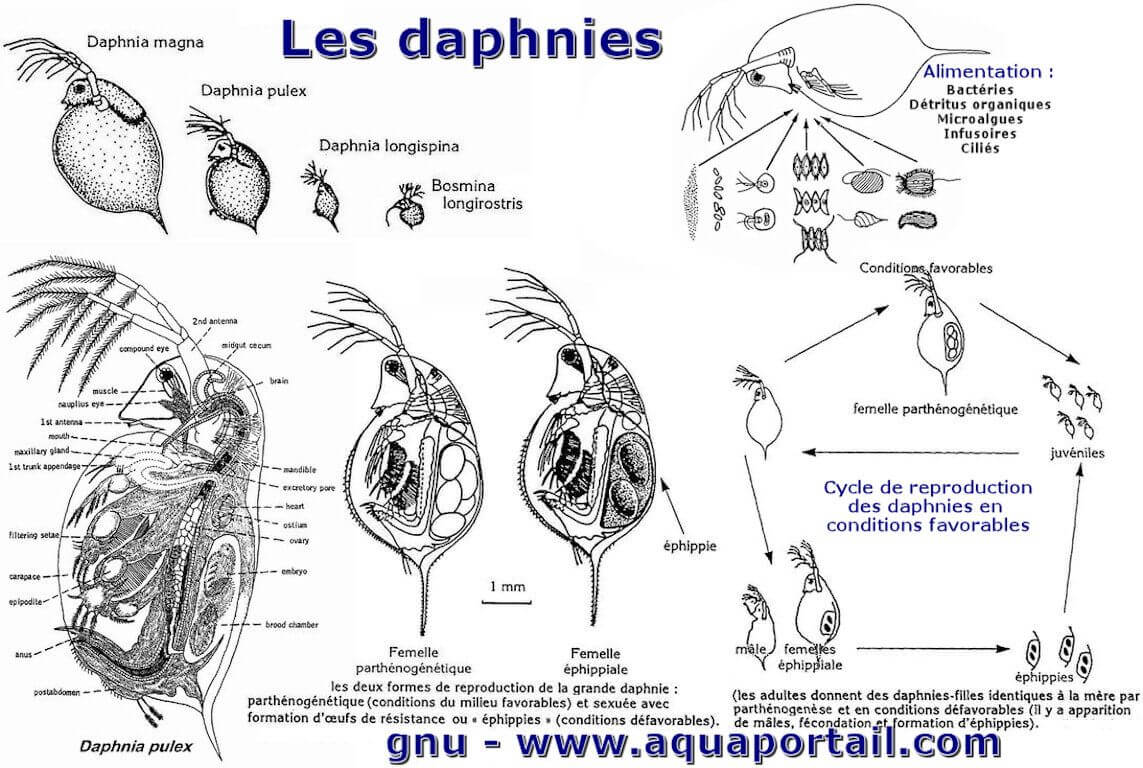
Daphnia is a planktonic branchiopod crustacean of the family Daphniidae, forming a dominant portion of freshwater plankton.
dawn

Dawn marks the transition between night and day, when the sky brightens and morning breaks in the East.
deltoid

Generally, what is deltoid is triangular, having a shape that evokes the uppercase Greek letter delta Δ, delta-shaped.
