Geologic era
noun phrase (n. phr.)
Definition
A geologic era is a long-duration geochronological division constituting a major subdivision of Earth's history. This time unit corresponds to the chronostratigraphic erathem in Earth's stratigraphic record. Eras generally span periods of several hundred million years.
Detailed geologic eras:

Earth's geological history is broken down into hierarchical geological time slices. From largest to smallest, this hierarchy comprises eons, eras, periods, epochs, and ages. All these terms are commonly confused.
Explanations
Geologic eras represent the major geological divisions of Earth's history. According to the stratigraphic scale, four major divisions are distinguished:
- the Precambrian (3.8 billion to 545 million years ago)
- the Primary Era or Paleozoic (545 to 245 million years ago), ending with a major wave of mass extinctions
- the Secondary Era or Mesozoic (245 to 65 million years ago), ending with the extinction of the dinosaurs
- the Tertiary Era or Cenozoic (from 65 Ma to the present, or 65 to 1.8 Ma), generally subdivided with a Quaternary Era (1.8 Ma to the present) in which we still live.
A geologic era is subdivided into a specific number of systems (chronostratigraphic) or periods (geochronological). For example, the Paleozoic Era is subdivided into six systems, whereas the Mesozoic Era is divided into only three systems. Several eras together form an eon.
In the hierarchy of chronostratigraphic units of Earth's history, the eonothem (eon in geochronology) is the highest unit, followed by the erathem (era in geochronology).
⭐ The terms "era, period, or epoch" are often used synonymously in older and popular scientific literature, though only partially correctly. The concept of epoch is much more common.
✅ The first people who needed to understand the geological relationships of different rock units were miners. Mining had held commercial interest since at least Roman times, but it was not until the 16th and 17th centuries that these efforts sparked interest in the relationships between strata (and stratotypes) of different geologic eras.
The boundaries of chronostratigraphic units are defined by isochronous (simultaneous) stratigraphic surfaces established by chronostratigraphic markers (stratotypes), rather than by absolute age. However, only the three youngest eras are defined chronostratigraphically, while the boundaries of older eras are dated by absolute age. This means that eras older than the Paleozoic are not all defined in the same manner as Phanerozoic eras. Nevertheless, the International Commission on Stratigraphy is working to define pre-Paleozoic eras chronostratigraphically as well.
The duration of an era is not fixed by rule, but depends on historical context. Eras, with one exception, always span more than 100 million years, often several hundred million years. In the Proterozoic and Archean, they were established at nearly regular intervals by decision of the International Commission on Stratigraphy.
Synonyms, antonyms
Spanish translation: era geológica
3 synonyms (similar meaning) for "geologic era":
- erathem
- geologic interval
- geologic phase
0 antonyms (opposite meaning).
Related words and expressions to GEOLOGIC ERA are directly connected by general or specific meaning.
The expression GEOLOGIC ERA is listed on page 1 of words starting with G in the dictionary glossary.
Related to "geologic era"
gabelle
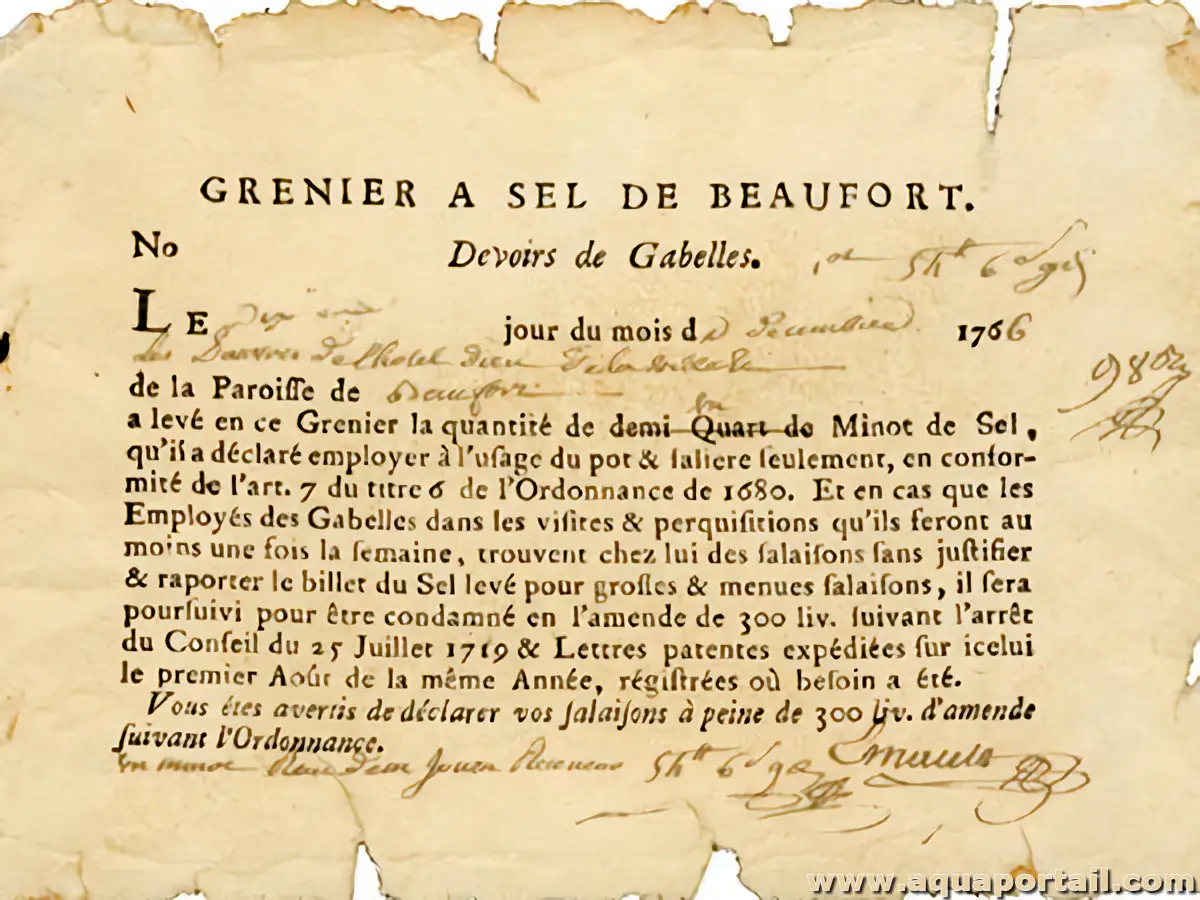
The gabelle was an ancient excise tax on salt. This indirect tax remained the main source of revenue for the French monarchy until the Revolution of 1789...
galactan

A galactan (galactosan) is a polymer composed of L- and D-galactose, a water-soluble hemicellulose made up of branched hydrosoluble polysaccharides.
gametangium

In botany, a gametangium is an organ or cell structure in which gametes are produced, as seen in mosses and liverworts.
gamete

A gamete is a male or female reproductive cell. This sexual cell is produced in the sex glands, or gonads. The male gamete is the spermatozoon, produced...
Simple summary
A geologic era is a significant time division of Earth's history used by geologists and paleontologists to describe large-scale changes affecting the planet's geology and biological evolution. Eras fall within the geologic time scale and are subdivided into periods. They mark major transformations in Earth's conditions and life forms, often characterized by mass extinctions or dramatic climate shifts. The Paleozoic, Mesozoic, and Cenozoic are examples of geologic eras.
